
Telangana Pashupalan Loan Yojana 2026 gives livestock farmers, rural entrepreneurs, and agricultural graduates in Telangana access to government-backed loans from Rs.1 lakh to Rs.2 crore — with subsidies of 25% to 50% on capital cost — to start or expand dairy, goat, sheep, and poultry farming businesses. This guide is for Telangana residents aged 18 and above who want to start a livestock business or expand an existing one using government schemes in 2026. It covers every active state scheme, central government programme, bank loan option, and cooperative society route — with eligibility, subsidy rates, loan amounts, and step-by-step apply instructions.

Telangana Pashupalan Loan Yojana 2026 is a collective term for state, central, bank, and cooperative schemes that provide livestock farmers in Telangana loans from Rs.1 lakh to Rs.2 crore with 25%–50% capital subsidy for dairy, goat, sheep, poultry, and piggery businesses. Apply at nlm.udyamimitra.in (National Livestock Mission), your nearest bank (Pashu KCC), or the Telangana Animal Husbandry Department office.
- State Nodal Agency: Dept. of Animal Husbandry, Dairy Development & Fisheries, Telangana (Minister: Vakiti Srihari, from June 2025)
- Central Nodal Agency: DAHD, Ministry of Fisheries, AH & Dairying, Govt. of India
- Loan Range: Rs.50,000 (Pashu KCC) to Rs.2 crore+ (AHIDF commercial loans)
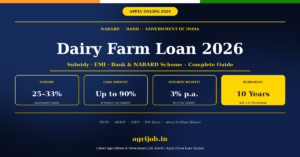
- Subsidy — General Category: 25%–33% capital subsidy (NLM / DEDS)
- Subsidy — SC/ST/Women: 33%–50% capital subsidy (NLM / DEDS / state SC Corp)
- Collateral-Free Limit: Up to Rs.1.60 lakh (Pashu KCC) | Up to Rs.3 lakh for dairy co-op members
- Effective Interest Rate: 4%–7% p.a. after government interest subvention (2%+3%)
- AHIDF Total Fund: Rs.29,110.25 crore — Telangana utilised Rs.8,745 lakh+ under IDF as of 2024
- NLM Subsidy Online Portal: nlm.udyamimitra.in
- Last Updated: October 2026
📋 Table of Contents
- What Is Telangana Pashupalan Loan Yojana 2026?
- Who Should Apply?
- Subsidy & Income Potential — Scheme-Wise Breakdown
- Telangana State Government Schemes
- Central Government Schemes
- Bank Loans for Pashupalan in Telangana 2026
- Cooperative Society Schemes
- Eligibility Criteria & Documents Required
- How to Apply — Step-by-Step Process
- Scheme Comparison: State vs Central vs Bank vs Cooperative
- Pros and Cons of Pashupalan Loan in Telangana
- Important Terms Related to Telangana Pashupalan Loan
- Important Links
- Conclusion
- Key Takeaways
- Frequently Asked Questions
What Is Telangana Pashupalan Loan Yojana 2026 and How Does It Work?
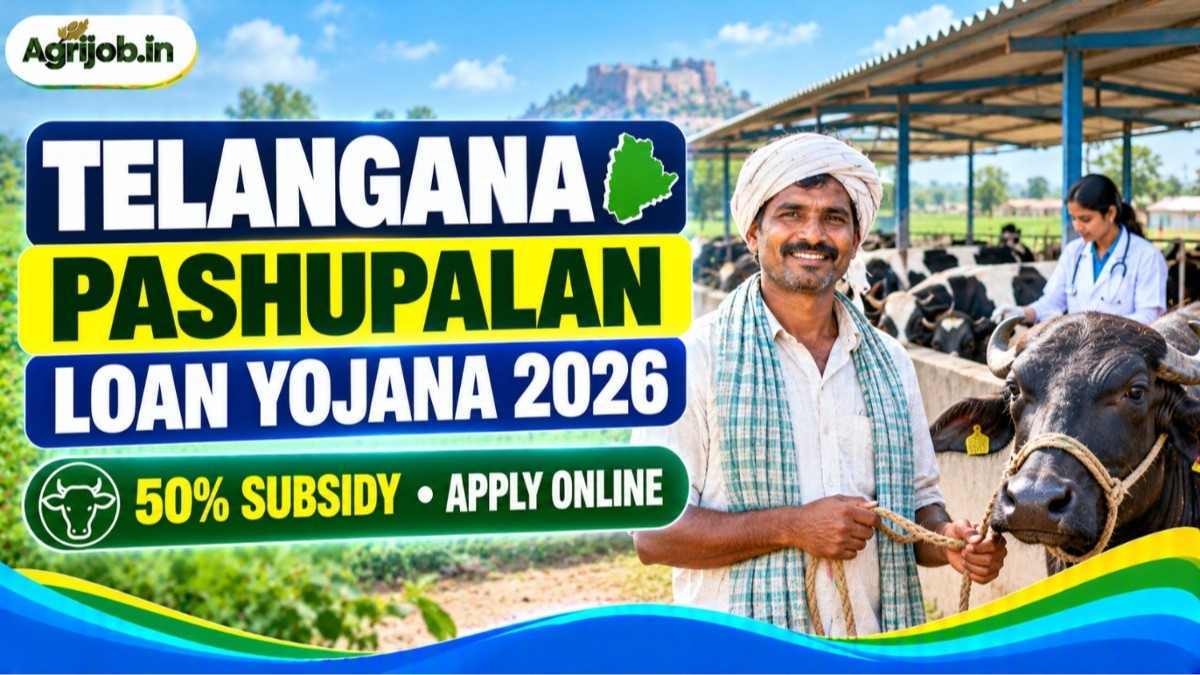
Telangana Pashupalan Loan Yojana 2026 is an umbrella term covering all livestock farming loan and subsidy schemes — state government, central government, nationalised bank, and cooperative society — available to animal husbandry practitioners in Telangana. There is no single scheme with this exact name; rather, it describes the full ecosystem of financial support for dairy, goat, sheep, poultry, and piggery businesses in the state.
Telangana has a livestock population exceeding 2.6 crore animals and contributes significantly to India’s meat and dairy economy. The state government operates through the Department of Animal Husbandry, Dairy Development and Fisheries (headed by Minister Vakiti Srihari as of June 2025) while simultaneously leveraging central schemes like the National Livestock Mission (NLM), AHIDF, and Pashu Kisan Credit Card (KCC) from the Department of Animal Husbandry and Dairying (DAHD), Government of India.

The combined scheme ecosystem covers four pillars: capital subsidy (25%–50% of project cost), interest subvention (2%–5% per annum reduction on bank interest), collateral-free credit (up to Rs.1.60 lakh–Rs.3 lakh under Pashu KCC), and technical support through veterinary departments and training programmes at district level.
Who Should Apply for Telangana Pashupalan Loan Yojana 2026?
- 🐄 Dairy farmers who want to purchase 2–20 high-yielding cows or buffaloes and start selling milk to Vijaya Dairy or local milk unions in Telangana
- 🐐 Goat and sheep rearers — especially from Golla and Kuruma (Yadav) communities — who want to expand their flock or set up a commercial goat breeding unit
- 🐔 Poultry entrepreneurs planning backyard or commercial layer/broiler farms of 500–5,000+ birds who want NLM subsidy or PMEGP loans
- 👩 Rural women and SHG members eligible for 33%–50% enhanced subsidy on dairy and goat units, plus Pavala Vaddi scheme benefits through SC/ST Corporation in Telangana
- 🧑🎓 Agriculture and veterinary graduates aged 22–40 seeking to start livestock businesses rather than compete for jobs
- 🌾 Marginal and small farmers with 0.5 acre or more of land who want to supplement crop income with livestock income of Rs.15,000–Rs.60,000/month
- 🏘️ SC/ST beneficiaries who can access enhanced subsidy through the Telangana Scheduled Castes Co-operative Development Corporation (TSSCCDC) milch animal scheme
- 🤝 FPOs and cooperatives planning large-scale dairy or meat processing infrastructure eligible for AHIDF loans up to Rs.100 crore with 3% interest subvention
Subsidy Rates and Income Potential — Scheme-Wise Breakdown 2026
Every livestock scheme in Telangana carries a different subsidy rate. Here is a complete breakdown by scheme category for 2026, showing loan range, subsidy percentage, and monthly income potential for each livestock activity:
| Scheme / Programme | Loan Amount | Subsidy Rate | Activity Covered | Monthly Income Potential |
|---|---|---|---|---|
| NLM – Goat/Sheep Farm (100 females) | Rs.10 lakh (50% subsidy = Rs.5 lakh back-ended) | 50% | Goat/sheep breeding | Rs.20,000–Rs.40,000 |
| NLM – Poultry (backyard/commercial) | Rs.5 lakh–Rs.25 lakh | 50% | Layer/broiler poultry | Rs.15,000–Rs.60,000 |
| AHIDF (Dairy/Meat Processing) | Rs.1 lakh–Rs.100 crore | 3% interest subvention | Dairy, meat, feed plant | Rs.50,000–Rs.5 lakh |
| NABARD DEDS (Dairy) | Rs.7 lakh–Rs.50 lakh | 25%–33% (back-ended) | Dairy farm 2–20 animals | Rs.18,000–Rs.70,000 |
| Pashu KCC (Working Capital) | Rs.50,000–Rs.3 lakh | 2%+3% interest subvention | Feed, vet, labour costs | Supports existing unit |
| PMEGP (Livestock MSME) | Up to Rs.25 lakh | 25%–35% | Any livestock enterprise | Rs.20,000–Rs.80,000 |
| TG SC Corp – Milch Animals (SC) | Rs.1 lakh–Rs.5 lakh | 50% or Pavala Vaddi | Dairy (SC beneficiaries only) | Rs.12,000–Rs.30,000 |
| TSSGDCF – Sheep/Goat | Subsidised units provided | 75% (Sheep Distribution) | 20 sheep + 1 ram per unit | Rs.8,000–Rs.20,000 |
Telangana State Government Schemes for Pashupalan 2026
Telangana operates several dedicated state schemes for livestock farmers, administered by the Animal Husbandry Department and the Telangana State Sheep and Goat Development Cooperative Federation (TSSGDCF).
1. Telangana Sheep Distribution Scheme (TSSGDCF)
Launched in June 2017 and implemented by the Telangana State Sheep and Goat Development Cooperative Federation (TSSGDCF), this scheme provides 20 sheep and 1 ram per beneficiary family from Golla and Kuruma (Yadav) communities with a 75% government subsidy. A unit of 20 sheep and 1 ram costs approximately Rs.1.25 lakh — the beneficiary pays only Rs.31,250. The government additionally provides 75% subsidy on grass seeds for fodder. Implemented at an estimated cost of Rs.10,000 crore, it targeted 30 lakh Golla-Kuruma families across Telangana. As of 2026, contact the TSSGDCF or your District Animal Husbandry Officer to confirm current phase availability.
2. SC Corporation Milch Animal Scheme (TSSCCDC)
The Telangana Scheduled Castes Co-operative Development Corporation (TSSCCDC) provides high-yielding milch animals to SC/ST individuals and SHG members. Under this scheme, the corporation supplies buffaloes or cows with loan support from commercial banks and interest subvention through the Pavala Vaddi Scheme — which reimburses prompt-repaying borrowers with an incentive based on Government Order G.O.Ms.No.95, Social Welfare Dept., dated 14-09-2009. Beneficiaries must have at least 0.5 acre of land for fodder (though this is flexible for willing applicants). The scheme is implemented jointly with the Animal Husbandry Department and Dairy Development Federation, which also provides market tie-up for milk procurement at remunerative prices.
3. NLM – Rural Backyard Sheep/Goat Unit (Telangana)
Telangana has actively utilized the National Livestock Mission’s Entrepreneurship Development Programme (NLM-EDP) — the state received Rs.4,240.55 lakh in NLM funds since FY 2014-15 with Rs.178.81 crore in approved subsidy. Activities funded in Telangana under NLM include: Rural Backyard Sheep/Goat units (500 units funded in one phase), Genetic Improvement of Sheep (175 rams and 5,774 ewes in one round), Innovative Poultry Projects for broilers and LIT birds, Backyard Poultry Development, Livestock Melas, and Training and Capacity Building in Sheep and Goat Value Chain.
Central Government Schemes Available in Telangana 2026
All central livestock schemes are available to Telangana residents. These are the most financially significant programmes for large and medium livestock enterprises:
4. National Livestock Mission – Entrepreneurship Development Programme (NLM-EDP)
The National Livestock Mission (NLM), implemented under DAHD, Ministry of Fisheries, Animal Husbandry and Dairying, provides a 50% back-ended capital subsidy for setting up commercial goat/sheep farms, poultry units, piggery, and feed and fodder enterprises. Apply at nlm.udyamimitra.in. Key details for 2026:
| Activity | Min Unit Size | Govt Subsidy (50%) | Beneficiary Share | Total Project Cost |
|---|---|---|---|---|
| Goat/Sheep Farm | 100 females + 5 males | Rs.10 lakh | Rs.10 lakh | Rs.20 lakh |
| Goat/Sheep Farm | 200 females + 10 males | Rs.20 lakh | Rs.20 lakh | Rs.40 lakh |
| Goat/Sheep Farm | 500 females + 25 males | Rs.50 lakh | Rs.50 lakh | Rs.100 lakh |
| Poultry (LIT Parent Farm) | 1,000 birds | As per project DPR | 50% of DPR cost | Varies by DPR |
| Piggery | 50 sows + 5 boars | Rs.15 lakh | Rs.15 lakh | Rs.30 lakh |
Important: The NLM subsidy is back-ended — released by NABARD to the lending bank after the beneficiary begins repaying the loan. The borrower does not receive the subsidy upfront. The remaining 50% of project cost must be arranged as a bank loan or own contribution before work starts.
5. Animal Husbandry Infrastructure Development Fund (AHIDF)
The AHIDF is a major central scheme with a revised total outlay of Rs.29,110.25 crore till FY 2025-26. It provides 3% per annum interest subvention to individual entrepreneurs, private companies, MSMEs, FPOs, and dairy cooperatives for setting up dairy processing units, meat processing plants, animal feed plants, breed improvement farms, veterinary vaccine manufacturing, and agri-waste management. Telangana has availed Rs.5,592.89 lakh under this fund as per DAHD data. Loan coverage up to 90% of project cost — minimum Rs.1 lakh, maximum Rs.100 crore. Repayment: up to 120 months including a 24-month moratorium. Apply through SBI or scheduled commercial banks at ahidf.udyamimitra.in.
6. Pashu Kisan Credit Card (Pashu KCC)
The Kisan Credit Card scheme was extended in 2019 to animal husbandry and fisheries. Telangana had 11,752 operative Animal Husbandry KCC accounts with outstanding loans of Rs.280.85 crore as per Lok Sabha data. Key features: collateral-free credit up to Rs.1.60 lakh (extended to Rs.3 lakh for dairy farmers selling milk directly to co-ops under tie-up); interest rate of 7% per annum with 2% interest subvention at disbursement and additional 3% for prompt repayment, reducing effective cost to just 2% p.a.; revolving credit limit for working capital (feed, vet aid, labour, insurance). Apply at any scheduled commercial bank, cooperative bank, or through the e-Gopala app.
7. PM Employment Generation Programme (PMEGP) — Animal Husbandry
PMEGP covers livestock-based MSME units. Subsidy rates: 25% for general category rural applicants, and up to 35% for SC/ST, women, OBC, minorities, ex-servicemen, and differently-abled persons. Maximum project cost: Rs.50 lakh for manufacturing/processing; subsidy thus goes up to Rs.17.5 lakh. PMEGP applies to commercial poultry farms, dairy units, goat farming enterprises, and meat processing units. Apply at the KVIC portal (kviconline.gov.in).
Bank Loans for Pashupalan in Telangana 2026 — SBI, SBH, Nabard & More
Nationalised banks in Telangana offer dedicated livestock loan products, many linked to government schemes for interest subvention. Here are the most accessible options:
State Bank of India — SBI Pashupalan Loan / AHIDF
SBI is the primary implementing bank for AHIDF in Telangana. Under SBI’s pashupalan loan, small livestock keepers can access Rs.1 lakh to Rs.10 lakh without collateral up to Rs.1.60 lakh. For MSME units and dairy cooperatives covered under CGTMSE/NABsanrakshan credit guarantee, collateral is nil for loans up to Rs.10 crore. Interest rate: EBLR + 200 bps for loans above Rs.50 lakh; applicable subvention reduces effective rate. Working capital KCC for poultry, small ruminants, and dairy farmers is available at SBI branches across Telangana’s 33 districts.
NABARD-Refinanced Bank Loans (Dairy Entrepreneurship Development Scheme)
The Dairy Entrepreneurship Development Scheme (DEDS) under NABARD provides back-ended capital subsidy through commercial banks, Regional Rural Banks (RRBs), and cooperative banks. Subsidy: 25% of outlay for general applicants (maximum Rs.1.25 lakh for a 2-animal unit), and 33.33% for SC/ST/women (maximum Rs.1.67 lakh for a 2-animal unit). For larger units (10–20 animals), the subsidy ceiling goes up proportionally. The bank submits the claim to NABARD; the subsidy is adjusted against the outstanding loan once the unit is operational. Interest rates: 9%–12% at lending bank, effectively reduced by the back-ended subsidy. Apply at your nearest bank branch with a project report.
Andhra Pradesh Grameena Vikas Bank (APGVB) / Telangana Grameena Bank
Regional Rural Banks operating in Telangana provide priority sector loans to livestock farmers at concessional rates. They participate in NABARD refinance under DEDS and KCC programmes. Loan amounts: Rs.50,000 to Rs.5 lakh for small dairy and goat units; collateral-free under CGTMSE guarantee for amounts up to Rs.10 lakh. Contact your local RRB branch for scheme-linked livestock loan applications.
Always apply for the Pashu KCC first — it is the fastest disbursing credit product (approval in 2–4 weeks) and gives you working capital immediately. Use the KCC for feed and veterinary costs, then apply for NLM or NABARD subsidy for capital investment (shed, animals, equipment). Running both simultaneously maximises your subsidy benefit and keeps cash flow stable from Day 1.
Cooperative Society Schemes for Pashupalan in Telangana 2026
Cooperative societies are the most accessible route for small and marginal livestock farmers who lack collateral or credit history. Telangana has an active cooperative infrastructure for both dairy and livestock sectors.
Telangana State Sheep and Goat Development Cooperative Federation (TSSGDCF)
The TSSGDCF implements sheep and goat development programmes across Telangana. Member shepherds can access subsidised breeding stock, fodder seed subsidies (75% on grass seeds), and technical veterinary support. The federation works with Sheep Rearer Organisations at village level to coordinate scheme benefits and milk/meat marketing. Membership gives access to state scheme procurement at subsidised rates and priority access to future distribution rounds.
Vijaya Dairy Cooperative / APDDCF
Telangana dairy farmers who are members of Vijaya Dairy (Andhra Pradesh Dairy Development Cooperative Federation) or their village-level milk unions can access KCC up to Rs.3 lakh without collateral under the tie-up arrangement between milk cooperatives and banks. The cooperative guarantees milk procurement, which allows banks to extend higher collateral-free limits to member farmers. This is the single most useful cooperative benefit for dairy farmers in Telangana.
Primary Agricultural Cooperative Societies (PACS)
PACS (Primary Agricultural Cooperative Societies) at village level participate in the NABARD short-term cooperative credit structure and disburse working capital loans to livestock farmers at concessional rates. PACS-level KCC for animal husbandry and dairy activities carry interest subvention benefits. Farmers already members of their local PACS can apply directly at the society office for livestock working capital credit.
National Cooperative Development Corporation (NCDC) — Livestock Units
Under the DIDF/AHIDF component for cooperatives, the NCDC provides loan assistance for dairy processing and livestock infrastructure to state cooperative milk federations and multi-state milk cooperatives operating in Telangana. Interest subvention of 2.5% per annum is available via NABARD and NDDB for eligible cooperative end-borrowers under the scheme framework approved till FY 2025-26.
Eligibility Criteria and Documents Required — All Schemes
Below is the consolidated eligibility criteria that applies across most Telangana Pashupalan loan schemes, with scheme-specific notes:
| Criterion | Requirement | Scheme Notes |
|---|---|---|
| Age | Minimum 18 years; most banks prefer 21–55 | NLM: any adult member per family is eligible |
| Residence | Telangana domicile (Aadhaar address) | All state schemes require Telangana residency |
| Livestock Experience | Preferred but not mandatory for NLM/PMEGP | Banks may ask for a 3-year experience certificate |
| Land / Shed | Own or rented shed; 0.5 acre for SC Corp milch scheme | KCC does not require land; MGNREGA sheds accepted |
| SC/ST Category | Caste certificate mandatory for enhanced subsidy | SC Corp scheme: SC caste certificate is required |
| Credit Score | Positive credit history preferred; CIBIL 650+ for large loans | KCC up to Rs.1.60 lakh does not require CIBIL |
| Bank Account | Active savings account in the lending bank | Mandatory for all schemes; DBT-linked Aadhaar preferred |
| PAN Card | Mandatory for loan amounts above Rs.50,000 | For AHIDF/PMEGP: PAN is always required |
Documents Required: Aadhaar card · PAN card · Bank passbook (last 6 months) · Passport-size photos · Land/shed ownership or rental agreement · Detailed Project Report (DPR) for loans above Rs.1 lakh · Caste certificate (SC/ST/OBC for enhanced subsidy) · Income certificate (for SC Corp scheme) · Experience certificate (if available) · Quotations for animals and equipment · Veterinary certificate for animals already owned
How to Apply for Telangana Pashupalan Loan Yojana 2026 — Step-by-Step
- Identify your scheme — Choose based on your activity, budget, and category. Small farmer starting a goat unit → NLM. Dairy with 5–10 animals → NABARD DEDS + KCC. Large processing unit → AHIDF. SC beneficiary → TSSCCDC scheme.
- Prepare a Detailed Project Report (DPR) — A DPR outlines your project cost, number of animals, shed dimensions, feed cost, projected income, and loan repayment schedule. For NLM, NABARD provides free DPR templates; NABARD district offices in Hyderabad and all Telangana districts can assist.
- Register on the NLM portal (for NLM scheme) — Visit nlm.udyamimitra.in, click “Apply Here,” register with your Aadhaar, and fill in the pre-application form. DAHD and the Telangana State Animal Husbandry Department will screen and evaluate your application.
- Approach your bank with DPR and documents — Submit your DPR, all documents, and the completed loan application form to your nearest SBI, APGVB, cooperative bank, or RRB branch. For Pashu KCC, the process is simplified — just KYC and animal ownership documents are needed.
- Site inspection and technical verification — The bank, jointly with the Animal Husbandry Department officer, inspects your proposed site and verifies the DPR. This step is mandatory for NLM subsidy-linked loans.
- Loan sanction and disbursement — Once verified, the bank sanctions the loan and disburses the amount directly to your account. For animals, disbursement may be in kind through approved vendors.
- Set up the unit and begin repayment — Establish your livestock unit as per the project report. Begin repaying the loan as per the EMI schedule.
- Subsidy release (back-ended schemes) — For NLM and DEDS, the subsidy is released to the bank by DAHD/NABARD after you begin repayment. Your bank adjusts the subsidy against your outstanding principal, reducing the loan balance.
Scheme Comparison: State vs Central vs Bank vs Cooperative 2026
| Feature | State (TSSGDCF/SC Corp) | Central (NLM / AHIDF) | Bank (KCC / DEDS) | Cooperative (PACS / Vijaya Dairy) |
|---|---|---|---|---|
| Loan Amount | Rs.1 lakh–Rs.5 lakh | Rs.1 lakh–Rs.100 crore | Rs.50,000–Rs.2 crore | Rs.25,000–Rs.5 lakh |
| Subsidy | 50%–75% (sheep/SC schemes) | 50% NLM; 3% AHIDF subvention | 2%+3% interest subvention (KCC) | Concessional via NABARD |
| Interest Rate | Low / Pavala Vaddi benefit | Effective 2%–7% after subvention | 2%–7% with subvention | 4%–9% (varies by society) |
| Collateral | Not required for small units | CGTMSE cover up to Rs.10 cr | Nil up to Rs.1.60 lakh (KCC) | Not required for small loans |
| Processing Time | 4–8 weeks | 6–12 weeks (NLM); faster (AHIDF) | 2–4 weeks (KCC) | 1–3 weeks |
| Who It’s Best For | SC/ST, Yadav community, SHG women | Entrepreneurs, FPOs, mid-large units | All active livestock farmers | Existing society members |
| Apply At | District AH Office / TSSGDCF | nlm.udyamimitra.in / bank | Nearest bank branch / e-Gopala | PACS / Vijaya Dairy society |
For most Telangana livestock farmers starting fresh in 2026, the best combination is: Pashu KCC (for immediate working capital) + NLM subsidy application (for capital investment in animals and shed). The KCC gives you cash within 2–4 weeks to buy feed and begin operations; the NLM back-ended subsidy then reduces your total loan burden by 50% over time. SC/ST applicants should also simultaneously apply through the TSSCCDC milch scheme to stack state-level benefits with the central NLM subsidy.
Pros and Cons of Telangana Pashupalan Loan Yojana 2026
Advantages:
- ✅ 50% subsidy on project cost under NLM — one of the highest livestock subsidies available in India
- ✅ Collateral-free credit up to Rs.1.60 lakh under Pashu KCC — accessible to farmers with no assets to pledge
- ✅ Effective interest rate as low as 2% p.a. for dairy KCC holders in cooperative tie-ups after combined subvention
- ✅ Multiple stackable schemes — Pashu KCC + NLM + state SC scheme can be used simultaneously for maximum benefit
- ✅ Online application for NLM via nlm.udyamimitra.in — no need to travel to district office to apply
- ✅ Income potential of Rs.15,000–Rs.60,000/month from a well-managed livestock unit of medium size
Disadvantages:
- ❌ NLM subsidy is back-ended — not disbursed upfront, so the farmer must arrange 100% of funds before starting, then receive the subsidy later
- ❌ DPR preparation is technical — first-time applicants often struggle with project report format; professional assistance or NABARD guidance is needed
- ❌ Subsidy is budget-dependent — NLM states “subsidy will be provided depending on budget availability” — applications may be queued if annual budget is exhausted
- ❌ TSSGDCF sheep distribution — no confirmed new phase as of 2026; applicants must enquire locally about current availability
Important Terms Related to Telangana Pashupalan Loan Yojana 2026
Understanding these key terms will help you navigate the application process and maximize your financial benefit:
- Back-Ended Subsidy: A subsidy not given upfront but released by the government to the lending bank after the borrower begins repaying the loan. The bank then adjusts the subsidy against the outstanding principal, reducing total repayment burden.
- Pashu KCC (Kisan Credit Card for Animal Husbandry): A revolving credit product extended to livestock farmers since 2019. Provides working capital at 7% p.a. reduced to 2% p.a. after subvention. Up to Rs.3 lakh for dairy co-op members without collateral.
- NLM-EDP (Entrepreneurship Development Programme): The component of the National Livestock Mission that provides 50% capital subsidy to individual entrepreneurs and FPOs for sheep, goat, poultry, piggery, and feed businesses.
- AHIDF (Animal Husbandry Infrastructure Development Fund): A Rs.29,110 crore central fund with 3% interest subvention for large dairy, meat, and feed processing investments. Available for entrepreneurs and cooperatives via banks.
- NABARD Refinance: NABARD provides refinance to banks that lend to agriculture and allied sectors, enabling them to offer lower interest rates and larger loan amounts to livestock farmers.
- TSSGDCF: Telangana State Sheep and Goat Development Cooperative Federation — the state body implementing sheep distribution and goat development schemes for Golla-Kuruma communities.
- Pavala Vaddi Scheme: A Telangana state scheme that reimburses SC beneficiaries who repay bank loans on time. The state pays the interest on behalf of prompt repayers, effectively providing a 0% interest benefit.
- DEDS (Dairy Entrepreneurship Development Scheme): A NABARD scheme providing 25%–33% capital subsidy for establishing dairy units of 2–20 milch animals. Implemented through commercial banks with back-ended subsidy release.
- CGTMSE: Credit Guarantee Fund Trust for Micro and Small Enterprises — provides collateral guarantee cover to banks lending to MSME livestock units, enabling banks to lend without demanding physical collateral from the borrower.
- TSSCCDC: Telangana Scheduled Castes Co-operative Development Corporation — provides financial assistance and scheme access to SC beneficiaries for milch animals and livestock units with enhanced subsidies.
Important Links — Telangana Pashupalan Loan Yojana 2026
| Resource | Link |
|---|---|
| NLM Online Application Portal | nlm.udyamimitra.in |
| DAHD Official Schemes Page | dahd.gov.in – AHIDF Schemes |
| Telangana Animal Husbandry Dept (SC Schemes) | india.gov.in – TG SC AH Schemes |
| NABARD Official Website | nabard.org |
| PMEGP Apply Online (KVIC) | kviconline.gov.in – PMEGP |
| Pashu KCC – Vikaspedia Guide | vikaspedia.in – Pashu KCC |
| Agrijob – NABARD Dairy Farm Loan Guide | agrijob.in – NABARD Dairy Loan 2026 |
| Agrijob – Pradhan Mantri Dairy Loan Yojana | agrijob.in – PM Dairy Loan Yojana 2026 |
Conclusion — Final Thoughts on Telangana Pashupalan Loan Yojana 2026
Telangana Pashupalan Loan Yojana 2026 represents one of the most comprehensive livestock financing ecosystems in South India — combining 75% state subsidy on sheep distribution, 50% central NLM capital subsidy, 3% AHIDF interest subvention, and near-zero effective interest on Pashu KCC, all available simultaneously to eligible Telangana farmers. The key to maximising your benefit is identifying which combination of schemes fits your activity, scale, and category — and applying to multiple schemes in parallel rather than one at a time.
Your clearest next step: visit the NLM portal at nlm.udyamimitra.in and submit a pre-application today, then approach your nearest bank branch with Aadhaar and PAN to open or enhance a Pashu KCC. Bookmark this page — we update it whenever official scheme guidelines change.
- Telangana livestock farmers can access loans from Rs.50,000 to Rs.2 crore+ across state, central, bank, and cooperative schemes in 2026
- NLM provides 50% back-ended capital subsidy for goat/sheep/poultry units — Telangana has utilised Rs.4,240+ lakh under NLM since 2014
- SC/ST and women applicants get enhanced 33%–50% subsidy plus Pavala Vaddi interest reimbursement under TG state schemes
- Pashu KCC is the fastest route to credit — collateral-free up to Rs.1.60 lakh, effective rate just 2% p.a. with prompt repayment incentive
- Best strategy: Pashu KCC for working capital + NLM subsidy for capital investment — apply both simultaneously for maximum benefit
- Apply for NLM online at nlm.udyamimitra.in; for KCC, visit your nearest bank or use the e-Gopala app
Frequently Asked Questions About Telangana Pashupalan Loan Yojana 2026
What is the Telangana Pashupalan Loan Yojana 2026?
Telangana Pashupalan Loan Yojana 2026 is a collective name for all livestock loan and subsidy schemes available to Telangana farmers — including the state’s Sheep Distribution Scheme (75% subsidy), the central government’s NLM (50% subsidy), AHIDF (3% interest subvention), NABARD DEDS, Pashu KCC, PMEGP, and TSSCCDC milch animal schemes. There is no single government portal with this exact name; benefits come from multiple agencies working together.
How much loan can I get for animal husbandry in Telangana 2026?
Loan amounts range from Rs.50,000 (Pashu KCC working capital) to Rs.100 crore+ (AHIDF for large processing units). For individual livestock farmers starting a small dairy unit (5–10 animals), typical loan amounts are Rs.3 lakh to Rs.15 lakh; for a commercial goat unit of 100–500 animals under NLM, Rs.10 lakh to Rs.100 lakh is available. The amount depends on your project size, scheme selected, and bank assessment.
What is the subsidy percentage in Telangana Pashupalan Loan Yojana 2026?
Subsidies vary by scheme: 75% on sheep distribution (TSSGDCF state scheme for Yadav community), 50% capital subsidy for goat/sheep/poultry under NLM (general and SC/ST both), 25%–33% back-ended subsidy under NABARD DEDS for dairy units, 3% interest subvention under AHIDF, and 2%+3% effective subvention under Pashu KCC. SC/ST applicants get enhanced rates across almost all schemes.
Is collateral required for Telangana pashupalan loans?
No collateral is required for Pashu KCC up to Rs.1.60 lakh. For dairy farmers who are members of milk cooperatives (Vijaya Dairy or registered milk unions) and sell milk directly to the co-op, collateral-free credit extends up to Rs.3 lakh. For NLM-linked bank loans, CGTMSE or NABsanrakshan credit guarantee covers collateral up to Rs.10 crore for MSME units. Larger AHIDF loans (above Rs.2 lakh for non-MSME categories) require minimum 30% collateral security.
How do I apply for NLM subsidy in Telangana 2026?
Visit nlm.udyamimitra.in, register with your Aadhaar, and complete the pre-application form selecting your livestock activity (goat, sheep, poultry, piggery, or feed). The DAHD and Telangana State Animal Husbandry Department will screen your application, conduct a site inspection, and approve the subsidy. You then take the approval to a participating bank to finalise the loan. The 50% subsidy is released to the bank after you begin repaying the loan.
What is the Telangana Sheep Distribution Scheme 2026 status?
The Telangana Sheep Distribution Scheme was launched in June 2017 under the TSSGDCF, distributing 20 sheep and 1 ram per Golla-Kuruma family with 75% subsidy at a total scheme cost of Rs.10,000 crore. As of 2026, no confirmed new phase has been announced. Eligible Golla and Kuruma community members should contact the TSSGDCF directly or their District Animal Husbandry Officer for the latest updates on new phases or waiting lists.
What is the Pashu KCC interest rate in 2026?
The Pashu Kisan Credit Card (Pashu KCC) carries a base interest rate of 7% per annum. With the government’s 2% interest subvention applied at the time of loan disbursement, the effective rate becomes 5%. If you repay on time (prompt repayment incentive of 3%), the effective annual interest rate drops to just 2% per annum. For dairy farmers in milk cooperative tie-up arrangements, the collateral-free credit limit is Rs.3 lakh at these concessional rates.
Can women farmers in Telangana get extra subsidy for pashupalan loans?
Yes. Women applicants are eligible for enhanced subsidies across multiple schemes. Under NLM, women receive 50% capital subsidy (same as SC/ST) on goat, sheep, poultry, and piggery units. Under PMEGP, women get 35% subsidy (vs 25% for general category) on loans up to Rs.25 lakh. TSSCCDC’s milch animal scheme prioritises SHG women members. Pavala Vaddi (Telangana state interest reimbursement) also benefits women in SC communities who are prompt repayers.
Can I stack multiple pashupalan schemes in Telangana simultaneously?
Yes, in many cases. Pashu KCC (for working capital) can be used alongside an NLM subsidy-linked term loan (for capital investment) — they cover different purposes and are not mutually exclusive. More than one adult family member can independently apply under NLM provided each meets eligibility criteria. However, you cannot claim subsidy from two schemes (e.g., DEDS and NLM) for the same project component. Consult your District Animal Husbandry Officer to plan the optimal scheme combination for your specific unit.
Last Updated: October 2026 | This guide is reviewed and updated regularly for accuracy. Bookmark this page for the latest scheme information. Always verify current figures at official portals — dahd.gov.in, nlm.udyamimitra.in, and nabard.org — before applying.