

Assam’s Lakhimi IVF calf — born on August 22, 2026 — is the world’s first female calf of any indigenous cattle breed produced through In Vitro Fertilisation (IVF), a landmark that rewrites the history of livestock biotechnology in India. This guide is for dairy farmers, livestock entrepreneurs, agriculture students, and policy-watchers across Northeast India and beyond who want to understand exactly what happened, why it matters, and how it could transform the Rs.6,000+ crore Assam dairy economy. In the sections below, you will find the complete story: the IVF process used, the Lakhimi breed’s profile, the Rashtriya Gokul Mission funding behind the lab, the economic implications for farmers, a comparison with conventional breeding, and a full FAQ.

On August 22, 2026, the Assam Veterinary and Fishery University (AVFU) at Khanapara, Guwahati produced the world’s first IVF-born female calf of the indigenous Lakhimi cattle breed — Assam’s only registered native bovine breed, with a population of approximately 79–80 lakh animals. The achievement was carried out under the IVF Laboratory funded by the Rashtriya Gokul Mission (Rs.3,400 crore national scheme) and announced by Chief Minister Himanta Biswa Sarma as a historic convergence of science and indigenous heritage.
- Event Date: August 22, 2026
- Location: IVF Lab, College of Veterinary Science, AVFU, Khanapara, Guwahati
- Breed: Lakhimi — Assam’s only registered indigenous cattle breed
- World Record: First-ever IVF-born female calf of any indigenous Indian breed of this lineage
- Method: OPU-IVF-ET (Ovum Pick-Up, In Vitro Fertilisation, Embryo Transfer)
- Donor: Pure Lakhimi cow (oocyte source); Sire: Pure Lakhimi bull (semen)
- Recipient: Crossbred surrogate heifer
- Funding Scheme: Rashtriya Gokul Mission — Rs.3,400 crore (2021–2026)
- Lakhimi Population: ~79–80 lakh animals across Assam
- CM’s Statement: “A convergence of Sabhyata, Sanskriti and Srijan”
- What Is the Lakhimi IVF Calf and Why Is It Historic?
- Who Should Read This Guide?
- Lakhimi Cattle Breed — Complete Profile and Characteristics
- How IVF-ET Technology Works in Cattle — Step-by-Step
- Rashtriya Gokul Mission — Scheme That Made This Possible
- Economic Impact on Assam Dairy Farmers and Income
- IVF Breeding vs Traditional Artificial Insemination — Comparison
- Pros and Cons of Livestock IVF Technology
- Important Terms Related to Livestock IVF
- Important Dates, Timeline and Links
- Final Thoughts
- Key Takeaways
- Frequently Asked Questions
What Is the Lakhimi IVF Calf and Why Is It Historic?
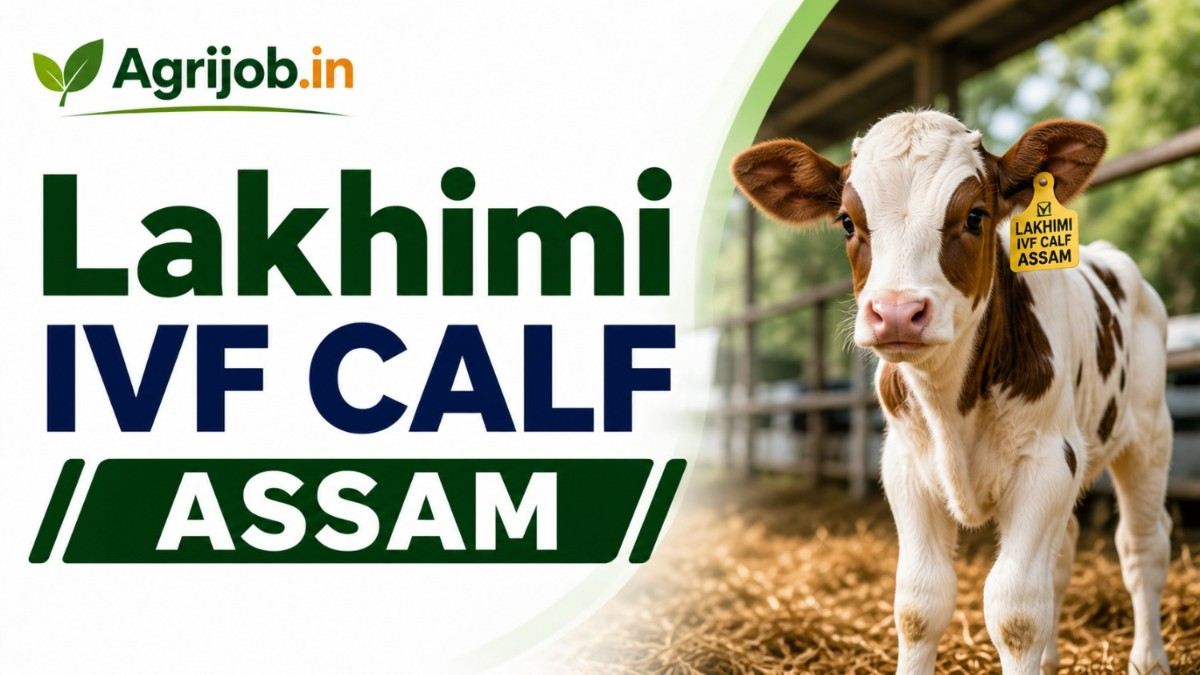
The Lakhimi IVF calf is the world’s first female calf of the Lakhimi cattle breed — Assam’s sole registered indigenous bovine — produced through In Vitro Fertilisation combined with Embryo Transfer (IVF-ET) technology. Announced by Chief Minister Himanta Biswa Sarma on August 22, 2026, this achievement marks a scientific first for India’s Northeast and a milestone for the global conservation of indigenous cattle genetics.
The significance is twofold. First, the Lakhimi breed has never before been reproduced through assisted reproductive technology at this level — making this a genuine world first for the breed. Second, it demonstrates that IVF-ET technology can be successfully deployed under field-level conditions in India’s Northeast, a region with a distinct sub-tropical agro-climatic profile that differs sharply from the plains of Punjab or Gujarat where most IVF cattle research in India has previously occurred.

Earlier in 2026, the same IVF Laboratory at AVFU produced Assam’s first IVF-born calf of any breed — a female Gir calf born in Sonapur, Kamrup district, on March 26, 2026, weighing 23 kg. That birth validated embryo-transfer viability under local conditions. The Lakhimi birth follows as the logical and more significant next step: applying IVF to Assam’s own native breed, not an imported one.
| Parameter | Details |
|---|---|
| Breed | Lakhimi (indigenous, Assam) |
| Date of Achievement | August 22, 2026 |
| Institution | Assam Veterinary and Fishery University, Khanapara, Guwahati |
| Technology Used | OPU-IVF-ET (In Vitro Fertilisation + Embryo Transfer) |
| Embryo Source | Pure Lakhimi donor cow + Pure Lakhimi bull semen |
| Surrogate | Crossbred recipient heifer |
| Significance | World-first IVF female calf of this indigenous breed |
| Funding | Rashtriya Gokul Mission (Government of India) |
Who Should Read This Guide?
- 🐄 Dairy farmers in Assam and Northeast India who rear Lakhimi cattle and want to understand how IVF technology could multiply their herd’s genetic quality and milk productivity.
- 🏦 Livestock entrepreneurs seeking NABARD or Rashtriya Gokul Mission subsidies — IVF heifers now attract a 3% interest subvention on purchase loans under the revised RGM.
- 🎓 Agriculture and veterinary students preparing for ICAR, ASRB, or state PSC exams, where this event is a high-priority current affairs topic for 2026.
- 📰 Policy researchers and government officials tracking the impact of Rashtriya Gokul Mission and livestock biotechnology programmes.
- 🧪 Veterinary scientists and animal biotechnology professionals looking for detailed technical context on the OPU-IVF-ET method as applied to indigenous Indian breeds.
- 🌾 Small and marginal farmers in rural Assam who want to know if and when this technology will reach their farms and what government support is available.
- 📊 Agribusiness investors and dairy sector analysts assessing the long-term productivity and genetic improvement potential in Assam’s dairy economy.
- 🗺 Agriculture journalists and content creators needing accurate, source-cited information about this world-first event.
Lakhimi Cattle Breed — Complete Profile and Characteristics
The Lakhimi cattle breed is found across all districts of Assam and is classified as a dual-purpose breed — used for both milk production and draught work. It is Assam’s only breed registered with the National Bureau of Animal Genetic Resources (NBAGR), ICAR, making it the state’s sole officially recognised indigenous bovine.
| Attribute | Details |
|---|---|
| Breed Type | Dual-purpose (milk + draught) |
| Total Population | ~79–80 lakh animals (Assam-wide) |
| Body Colour | Brown and grey (variable) |
| Body Size | Small-to-medium; short legs; medium hump |
| Daily Milk Yield | 1.00–1.53 litres/day (traditional system) |
| Lactation Length | ~241 days average |
| Lactation Milk Yield | ~327 litres per lactation |
| Fat Content | High (fetches premium price in local markets) |
| Gestation Period | ~276 days |
| Age at First Calving | ~46 months (traditional rearing) |
| Climate Adaptability | Excellent — sub-tropical, humid, floods |
| Disease Resistance | High; thrives under low-input systems |
| Draught Utility | Bullocks are premium draught animals for paddy fields |
Despite its excellent climate adaptability and disease resistance, the Lakhimi breed’s relatively low daily milk yield (1.00–1.53 litres under traditional rearing) has historically deterred commercial dairy investment in Assam. The IVF breakthrough now creates a pathway to genetically select and multiply only the highest-yielding, most productive Lakhimi individuals — without losing the breed’s core resilience traits.
How IVF-ET Technology Works in Cattle — Step-by-Step
The IVF-ET process used for the Lakhimi calf is called OPU-IVF-ET — Ovum Pick-Up, In Vitro Fertilisation, and Embryo Transfer. Unlike Artificial Insemination (AI), which simply places semen inside the cow, IVF-ET allows scientists to select both the best female genetic donor and the best male semen, fertilise outside the body in a lab, and then transfer the resulting embryo into any available surrogate cow.
- Donor Cow Selection: A genetically superior Lakhimi female (the donor) is identified based on milk yield, health, and pedigree. She serves as the oocyte (egg) source.
- Ovum Pick-Up (OPU): A veterinary technician uses ultrasound-guided aspiration to collect oocytes (eggs) directly from the donor cow’s ovaries. This is done without hormone stimulation in modern protocols, meaning the donor can be used repeatedly without harm.
- In Vitro Maturation (IVM): Collected oocytes are placed in a culture medium inside the laboratory and matured for 22–24 hours until they reach the correct developmental stage (Metaphase II).
- In Vitro Fertilisation (IVF): Matured oocytes are fertilised using semen from a pure Lakhimi bull in a controlled lab environment. For the Lakhimi calf, both donor and sire were pure Lakhimi — ensuring 100% indigenous genetic purity.
- In Vitro Culture (IVC): Fertilised embryos are cultured for 7–8 days until they reach the blastocyst stage — ready for transfer.
- Embryo Transfer (ET): The blastocyst-stage embryo is transferred non-surgically into a synchronised crossbred surrogate heifer. The surrogate carries the pregnancy and gives birth, but the calf carries only the donor’s and sire’s genetics.
- Birth: After a gestation period of approximately 276 days, the surrogate heifer gives birth to the IVF-produced Lakhimi female calf.
OPU-IVF-ET can produce 20–40 calves per year from a single superior donor cow, compared to just 1 calf/year through natural breeding and 10–20 calves/year using older MOET technology. Under the Rashtriya Gokul Mission, farmers receive Rs.5,000 per IVF pregnancy as a direct Government of India subsidy — ask your nearest Animal Husbandry office or visit the DAHD portal for eligibility.
Rashtriya Gokul Mission — The Scheme That Made This Possible
The Rashtriya Gokul Mission (RGM), launched in December 2014 by the Ministry of Fisheries, Animal Husbandry and Dairying, is the central government scheme that funded the IVF laboratory at AVFU, Khanapara — directly enabling the Lakhimi IVF calf birth. The revised RGM was approved with a total outlay of Rs.3,400 crore for the 15th Finance Commission cycle (2021–22 to 2025–26), with an additional Rs.1,000 crore added in March 2025.
| RGM Component | Details / Subsidy |
|---|---|
| IVF Pregnancy Subsidy | Rs.5,000 per IVF pregnancy (Government of India share) |
| Sex-Sorted Semen Subsidy | Up to 50% of cost of sex-sorted semen |
| Breed Multiplication Farm | Up to 50% subsidy, max Rs.2 crore capital cost |
| Heifer Rearing Centre | 35% one-time capital cost assistance (new under revised RGM) |
| IVF Heifer Purchase Loan | 3% interest subvention on loans from banks/milk unions (new under revised RGM) |
| AI Coverage | Free AI at doorstep in 605 districts (below 50% baseline coverage) |
| Animals Covered Till Date | 8.39 crore animals; 5.21 crore farmers benefitted |
| Milk Production Growth | 63.55% increase in 10 years; per capita up from 307g to 471g/day |
The Assam Veterinary and Fishery University IVF Lab was specifically established with RGM funding and conducts regular hands-on training in OPU-IVEP and Embryo Transfer for veterinary professionals. The lab is one of a growing network of IVF centres across India that the Government of India is supporting to scale up high-genetic-merit cattle production — particularly for indigenous breeds.
Economic Impact on Assam Dairy Farmers and Income
Assam’s dairy sector contributes significantly to rural livelihoods, with the Lakhimi breed forming the backbone of traditional cattle rearing across the state’s 79–80 lakh bovine population. The IVF breakthrough carries direct economic implications — both immediate and long-term — for farmers, dairy entrepreneurs, and the state’s milk supply chain.
| Economic Factor | Current Status (Traditional) | Potential With IVF Scaling |
|---|---|---|
| Daily Milk Yield (Lakhimi) | 1.00–1.53 litres/day | Genetically superior animals: 2.5–4 litres/day (projected) |
| Calves Per Donor/Year | 1 (natural breeding) | 20–40 (OPU-IVF-ET) |
| Female Calf Ratio | ~50% female births | Up to 90% with sex-sorted semen + IVF |
| Herd Build Time (10 cows) | 10+ years | 2–3 years with IVF multiplication |
| Milk Income (10 cows) | Rs.15,000–Rs.25,000/month | Rs.40,000–Rs.70,000/month (improved genetics) |
| Government Subsidy Available | Limited | Rs.5,000/IVF pregnancy + 3% interest subvention |
India is already the world’s largest milk producer, with total output of 198.4 million metric tonnes annually. However, per-animal productivity remains a key weakness. States with cross-bred cows like Kerala (9.9 kg/day/animal) and Punjab (9.3 kg/day/animal) dramatically outperform the national average. By selectively multiplying only the highest-yielding Lakhimi individuals through IVF, Assam can narrow this gap while preserving the breed’s disease resistance and climate adaptability — a combination no cross-breeding programme can fully replicate.
IVF Breeding vs Artificial Insemination — Which Is Better for Indian Farmers?
Artificial Insemination (AI) has been the backbone of India’s cattle breeding improvement since the 1960s, with 8.39 crore animals covered under the Nationwide AI Programme. IVF represents the next generation — faster, more precise, and capable of producing genetically superior animals at far greater scale, but with higher upfront costs and infrastructure needs.
| Parameter | IVF-ET (OPU-IVF-ET) | Artificial Insemination (AI) |
|---|---|---|
| Calves per donor/year | 20–40 | 1 |
| Female calf ratio possible | Up to 90% (with sex-sorted semen) | ~50% (conventional) / up to 90% (sex-sorted AI) |
| Genetic precision | Both parents selected | Only sire (male) selected |
| Cost per calf produced | Higher (lab + skilled vet needed) | Low (Rs.200–500 per AI dose) |
| Infrastructure required | IVF lab, microscopes, culture media | Liquid nitrogen tank, semen straws only |
| Government subsidy | Rs.5,000/pregnancy (RGM) | Free AI at doorstep (RGM NAIP) |
| Risk of breed dilution | Zero (purebred embryos possible) | Moderate (cross-breeding common) |
| Indigenous breed conservation | Ideal — preserves 100% native genetics | Good, but often used for cross-breeding |
| Surrogate required? | Yes — crossbred or lower-grade cow | No — the cow itself carries the calf |
| Best for | Conservation, rapid scale-up, premium herds | Routine herd improvement, small farms |
For the conservation and rapid multiplication of the Lakhimi breed specifically, IVF-ET is the superior tool. AI — even with sex-sorted semen — cannot select the female genetic parent; IVF can. For small and marginal farmers not yet connected to an IVF centre, AI remains the practical starting point, with IVF-produced heifers likely reaching them within 3–5 years as the RGM IVF network expands. The two technologies are complementary, not competing.
Pros and Cons of Livestock IVF Technology for Indian Farmers
A balanced view is essential for farmers and policymakers evaluating whether to invest in IVF cattle technology. Here are the key advantages and limitations as they stand in 2026.
Advantages of IVF-ET in Cattle Breeding
- ✅ Rapid multiplication: Up to 40 calves per year from one superior female donor — impossible through natural breeding.
- ✅ Genetic precision: Both the dam (mother) and sire (father) are selected for superior traits; AI can only select the sire.
- ✅ Indigenous breed conservation: Purebred Lakhimi embryos can be produced, stored, and transferred — building a cryopreserved genetic bank that protects the breed from extinction risk.
- ✅ Female calf control: When combined with sex-sorted semen, IVF can produce up to 90% female offspring — directly boosting dairy herd productivity.
- ✅ Lower productive cows as surrogates: Non-productive or crossbred cows become economically useful as surrogates, reducing herd maintenance costs.
- ✅ Government-backed: Rs.5,000 per IVF pregnancy subsidy and 3% interest subvention on IVF heifer purchase loans under RGM.
Disadvantages and Challenges
- ❌ Higher cost: IVF procedures require a laboratory, trained embryologists, and specialised equipment — far costlier than a standard AI dose.
- ❌ Skilled manpower shortage: Very few veterinary graduates in India are trained in OPU-IVF-ET — scaling the technology requires urgent investment in veterinary education.
- ❌ Infrastructure dependency: Remote rural areas lack IVF labs and liquid nitrogen delivery chains for cryopreserved embryos.
- ❌ Variable success rates: Field-level IVF pregnancy success rates range 50–70%, meaning not every embryo transfer results in a live birth.
Important Terms Related to Livestock IVF and Indigenous Breed Conservation
Understanding these terms will help farmers, students, and policymakers engage more effectively with livestock biotechnology programmes, scheme applications, and government communications.
- OPU-IVF-ET (Ovum Pick-Up, In Vitro Fertilisation, Embryo Transfer): The complete assisted reproductive technology pipeline used to produce the Lakhimi IVF calf. Produces 20–40 calves/year from one donor cow.
- Lakhimi Cattle: Assam’s sole NBAGR-registered indigenous bovine breed; dual-purpose (milk + draught); population ~79–80 lakh; fat-rich milk commands premium prices.
- Rashtriya Gokul Mission (RGM): Government of India scheme (Rs.3,400 crore, 2021–2026) under DAHD that funds IVF labs, AI networks, breed multiplication farms, and provides Rs.5,000/IVF pregnancy subsidy.
- Embryo Transfer (ET): The process of placing a laboratory-produced embryo into a surrogate cow’s uterus. The surrogate carries and births the calf, which carries only the donor parents’ genetics.
- Sex-Sorted Semen: Semen processed to separate X-chromosome (female) and Y-chromosome (male) sperm cells. When used in IVF or AI, it produces up to 90% female calves — critical for dairy herd management.
- NBAGR (National Bureau of Animal Genetic Resources): The ICAR institute responsible for registering and conserving India’s indigenous livestock breeds. Lakhimi is listed in NBAGR’s official registry.
- Cryopreservation: The process of freezing embryos or semen at -196°C in liquid nitrogen for long-term storage and transport. Allows superior Lakhimi genetics to be distributed across Assam without live animal transport.
- High Genetic Merit (HGM) Heifer: A female calf or heifer produced from two genetically superior parents using IVF. Under revised RGM, farmers receive a 3% interest subvention on loans to purchase HGM IVF heifers.
- Rashtriya Pashudhan Vikas Yojana: The umbrella scheme under which RGM and allied livestock programmes are implemented, with a combined budget supporting cattle, buffalo, sheep, goat, and poultry sectors.
- A2 Milk: Milk from indigenous Indian breeds (Lakhimi, Gir, Sahiwal, Tharparkar) containing A2 beta-casein protein, preferred by health-conscious consumers and commanding Rs.60–Rs.120/litre premium prices in organised retail.
Important Dates, Timeline and Links
Timeline of IVF Milestones in Assam Cattle Breeding
| Date | Milestone |
|---|---|
| December 2014 | Rashtriya Gokul Mission launched by Government of India |
| February 2024 | Assam Veterinary and Fishery University (AVFU) formally constituted at Khanapara, Guwahati |
| March 2025 | Revised RGM approved — Rs.1,000 crore additional; total Rs.3,400 crore; 3% interest subvention on IVF heifer loans introduced |
| March 26, 2026 | Assam’s first IVF calf (any breed) born — female Gir calf, Sonapur, Kamrup district; 23 kg |
| August 22, 2026 | World’s first IVF female calf of Lakhimi breed born at AVFU IVF Lab, Khanapara; announced by CM Himanta Biswa Sarma |
Official and Reference Links
| Resource | Link |
|---|---|
| DAHD — Rashtriya Gokul Mission Official Page | dahd.gov.in/rashtriya-gokul-mission |
| Assam Veterinary and Fishery University (AVFU) | avfu.ac.in |
| NDDB — Assisted Reproductive Technology (IVF/OPU) | nddb.coop/assisted-reproduction |
| ICAR-NBAGR — Lakhimi Breed Registry | icar.org.in |
| Best Dairy Cow Breeds in India 2026 — HF vs Jersey vs Gir vs Sahiwal | agrijob.in — Dairy Breed Comparison Guide |
| Sahiwal Cow 2026 — A2 Milk, Price and Loan Guide | agrijob.in — Sahiwal Cow Complete Guide |
| NABARD Dairy Farm Loan 2026 — Subsidy and Apply | agrijob.in — NABARD Dairy Loan Guide |
| Rashtriya Pashudhan Mission 2026 — Loan and Subsidy | agrijob.in — Pashudhan Mission Guide |
Final Thoughts on Lakhimi IVF Calf Assam 2026
The birth of the world’s first Lakhimi IVF calf on August 22, 2026 is far more than a veterinary milestone — it is the opening of a new chapter for Assam’s 79–80 lakh Lakhimi cattle population and the dairy farmers who depend on them. By combining the genetic precision of IVF with the indigenous strengths of the Lakhimi breed — high-fat milk, disease resistance, and climate adaptability — Assam now has a scientifically validated path to both conserving a unique genetic heritage and improving dairy incomes simultaneously.
For farmers, the immediate next step is to connect with the Assam Animal Husbandry and Veterinary Department and the AVFU IVF Lab to understand when IVF-produced Lakhimi heifers will be available, what costs are involved, and how to access the Rashtriya Gokul Mission’s Rs.5,000/IVF pregnancy subsidy and 3% interest subvention on purchase loans. Bookmark this page — we update it regularly as government data and programme timelines evolve.
- Assam’s AVFU produced the world’s first IVF female calf of the indigenous Lakhimi breed on August 22, 2026 — a livestock biotechnology world first.
- The Lakhimi breed has a population of ~79–80 lakh; IVF can multiply genetically superior animals by 20–40x compared to natural breeding.
- The IVF Lab at AVFU, Khanapara was funded under the Rashtriya Gokul Mission (Rs.3,400 crore, 2021–2026); farmers get Rs.5,000 per IVF pregnancy subsidy.
- The embryo was developed from a pure Lakhimi donor cow and pure Lakhimi bull, then transferred to a crossbred surrogate — ensuring 100% indigenous genetic purity.
- IVF combined with sex-sorted semen can produce up to 90% female calves, directly boosting dairy productivity; India currently produces 198.4 MMT of milk annually.
- Contact the Assam Animal Husbandry Department or visit dahd.gov.in to check eligibility for RGM subsidies and IVF heifer loan subvention.
Frequently Asked Questions About Lakhimi IVF Calf Assam 2026
What is the Lakhimi IVF calf and where was it born?
The Lakhimi IVF calf is the world’s first female calf of the indigenous Lakhimi cattle breed produced through In Vitro Fertilisation and Embryo Transfer (IVF-ET) technology. It was born at the IVF Laboratory of the College of Veterinary Science, Assam Veterinary and Fishery University (AVFU), Khanapara, Guwahati, on August 22, 2026. Chief Minister Himanta Biswa Sarma announced the achievement the same day, calling it a historic convergence of Assam’s science, culture, and civilisation.
What is the Lakhimi cattle breed and why is it important?
The Lakhimi is Assam’s only NBAGR-registered indigenous cattle breed, found across all districts of the state with a population of approximately 79–80 lakh animals. It is a dual-purpose breed valued for its draught capacity (for paddy farming), high-fat milk (which commands premium prices), and exceptional adaptability to Assam’s hot, humid, flood-prone climate. Despite its low average milk yield (1.0–1.5 litres/day in traditional systems), its disease resistance and climate hardiness make it irreplaceable for Assam’s agro-ecological conditions.
How was the world’s first Lakhimi IVF calf produced?
The calf was produced using OPU-IVF-ET technology. Oocytes (eggs) were collected from a genetically superior pure Lakhimi donor cow using ultrasound-guided aspiration. These were fertilised in the laboratory using semen from a pure Lakhimi bull. The resulting embryo was cultured to the blastocyst stage and then transferred into a crossbred surrogate heifer, which carried the pregnancy. The surrogate gave birth to the female Lakhimi calf, which carries 100% pure Lakhimi genetics from both donor parents.
What scheme funded the IVF lab at AVFU Khanapara?
The IVF Laboratory at the College of Veterinary Science, AVFU, Khanapara was established with financial support from the Rashtriya Gokul Mission (RGM), a central government scheme run by the Department of Animal Husbandry and Dairying (DAHD). The revised RGM was approved with a total outlay of Rs.3,400 crore for 2021–2026. Under this scheme, farmers also receive Rs.5,000 per IVF pregnancy as a direct subsidy and a 3% interest subvention on loans to purchase high genetic merit IVF heifers.
What is the difference between IVF and Artificial Insemination in cattle?
Artificial Insemination (AI) places semen from a selected bull directly into a cow’s uterus, producing one calf per year from that cow. IVF-ET (In Vitro Fertilisation and Embryo Transfer) collects eggs from a genetically superior donor cow, fertilises them in a laboratory with selected bull semen, and transfers the resulting embryos to surrogate cows. This allows one superior donor cow to produce 20–40 calves per year. IVF also allows selection of both the dam and sire, while AI only selects the sire. When sex-sorted semen is used in IVF, up to 90% of calves born can be female.
How will the Lakhimi IVF calf benefit dairy farmers in Assam?
The Lakhimi IVF breakthrough benefits Assam’s dairy farmers in multiple ways. It enables the rapid multiplication of only the highest milk-yielding Lakhimi cows — potentially tripling daily milk output within a few breeding generations while preserving the breed’s disease resistance. Higher-yielding cows mean higher monthly dairy income per farmer. The technology also allows cryopreservation and distribution of Lakhimi embryos to remote areas without transporting live animals. Over time, as IVF-produced heifers enter the commercial market with RGM subsidy support, even small and marginal farmers in rural Assam are expected to benefit.
Was this Assam’s first IVF calf of any breed?
No. Assam’s very first IVF-born calf of any breed was a female Gir calf, born on March 26, 2026 at approximately 5:30 AM at a dairy farm in Sonapur, Kamrup district, weighing 23 kg. That birth was achieved by a team from the College of Veterinary Science led by Dr. Manjyoti Bhuyan, in collaboration with scientists from Odisha. The Lakhimi birth in August 2026 is more significant because it is the world’s first for an indigenous breed of this lineage — not just a first for Assam.
Can IVF technology help conserve indigenous cattle breeds in India?
Yes — IVF-ET combined with cryopreservation is one of the most powerful tools available for conserving indigenous cattle breeds. By collecting oocytes from genetically valuable animals and creating a bank of cryopreserved embryos, scientists can preserve the genetic diversity of breeds even if live populations decline sharply. The Rashtriya Gokul Mission explicitly supports this through its National Bovine Genomic Center for Indigenous Breeds (NBGC-IB) and its IVF lab network. For breeds like Lakhimi, whose population pressure comes from low milk yield encouraging farmer shift to cross-breeds, IVF offers a way to improve productivity without losing indigenous genetic identity.
What government subsidies are available for IVF cattle breeding in India 2026?
Under the Rashtriya Gokul Mission (RGM), the following subsidies are available as of 2026: Rs.5,000 per IVF pregnancy paid directly to participating farmers; up to 50% subsidy on the cost of sex-sorted semen; up to 50% capital cost subsidy (max Rs.2 crore) for setting up breed multiplication farms; 35% one-time capital assistance for Heifer Rearing Centres; and a 3% interest subvention on loans taken by farmers to purchase High Genetic Merit (HGM) IVF heifers from banks or milk unions. Free AI at doorstep is also available in 605 districts with below-50% baseline AI coverage under the Nationwide AI Programme.
What is the Assam Veterinary and Fishery University (AVFU)?
The Assam Veterinary and Fishery University (AVFU) is a public veterinary university located at Khanapara, Guwahati, Assam. It was formally constituted in February 2024 by merging the College of Veterinary Science (established 1948) and other veterinary and fishery colleges that were previously under Assam Agricultural University. The IVF Lab at its College of Veterinary Science — funded by the Rashtriya Gokul Mission — is where Assam’s first IVF Gir calf (March 2026) and the world’s first IVF Lakhimi calf (August 2026) were produced. The university’s website is avfu.ac.in.
Last Updated: August 2026. This guide is reviewed and updated regularly as new data from the Department of Animal Husbandry and Dairying (DAHD), Assam Veterinary and Fishery University, and the Rashtriya Gokul Mission becomes available. Bookmark this page for the latest information.
Disclaimer: This article is for informational purposes only. Subsidy figures, scheme eligibility, and programme details are sourced from official government portals as of August 2026 and may be subject to revision. Readers are advised to verify current terms directly with the Department of Animal Husbandry and Dairying (dahd.gov.in) or their nearest Animal Husbandry office before making financial or breeding decisions.