
Sahiwal cow price 2026 ranges from Rs.40,000 to Rs.1,20,000 for a healthy, milking animal, making it one of India’s most accessible high-quality desi dairy breeds. This guide is for small and marginal farmers, FPOs, and first-time dairy entrepreneurs in Bihar, Punjab, Haryana, Rajasthan and Uttar Pradesh who want a heat-tolerant, A2 milk-producing cow with strong government loan support. Below you will find verified milk yield data, current price ranges, step-by-step buying advice, the best states for Sahiwal farming, and every major loan and subsidy scheme active this year — including the Pashu Kisan Credit Card and NABARD’s dairy subsidy framework. This 2026 update is based on the latest ICAR-NBAGR and NDDB breed data.

A Sahiwal cow price in 2026 ranges from Rs.40,000 to Rs.1,20,000 depending on age, lactation stage and milk yield, with elite record-verified animals reaching Rs.4 lakh. This desi Zebu breed produces 8–12 litres of pure A2 milk daily (up to 20 litres for top performers) and remains one of India’s most profitable indigenous dairy breeds, especially in Punjab, Haryana, Rajasthan and increasingly Bihar.
- Origin: Sahiwal district, Punjab (undivided) — now in Pakistan
- Average milk yield: 8–12 litres/day (up to 15–20 litres for well-managed cows)
- Lactation yield: 2,000–3,000 litres per 305-day cycle (NDDB average: 2,325 kg)
- Fat content: 4.5%–5.5% — richer than most exotic breeds
- Price range: Rs.40,000–Rs.1,20,000 (up to Rs.4 lakh for elite record cows)
- Best states: Punjab, Haryana, Rajasthan, Uttar Pradesh; expanding in Bihar via AI
- Loan support: Pashu Kisan Credit Card up to Rs.40,783/cow at ~4% effective interest
- Lifespan: 15–20 years, 8–10 calvings with proper care
- Calving interval: 13–14 months
- Milk type: 100% pure A2 milk (A2 beta-casein only)
- What Is a Sahiwal Cow? (Origin, Identity & A2 Milk)
- Who Should Raise Sahiwal Cows in 2026?
- Sahiwal Cow Milk Yield and Price in India (2026)
- Eligibility and Requirements Before You Buy
- How to Start Sahiwal Cow Farming: Step-by-Step
- Sahiwal Cow vs Gir Cow: Which Desi Breed Wins?
- Pros and Cons of Sahiwal Cow Farming
- Important Terms Every Sahiwal Farmer Should Know
- Best States for Sahiwal Cow Farming in India
- Sahiwal Cow Loan and Subsidy Schemes 2026
- Important Links for Sahiwal Cow Farmers
- Conclusion
- Frequently Asked Questions
What Is a Sahiwal Cow? (Origin, Identity & A2 Milk)
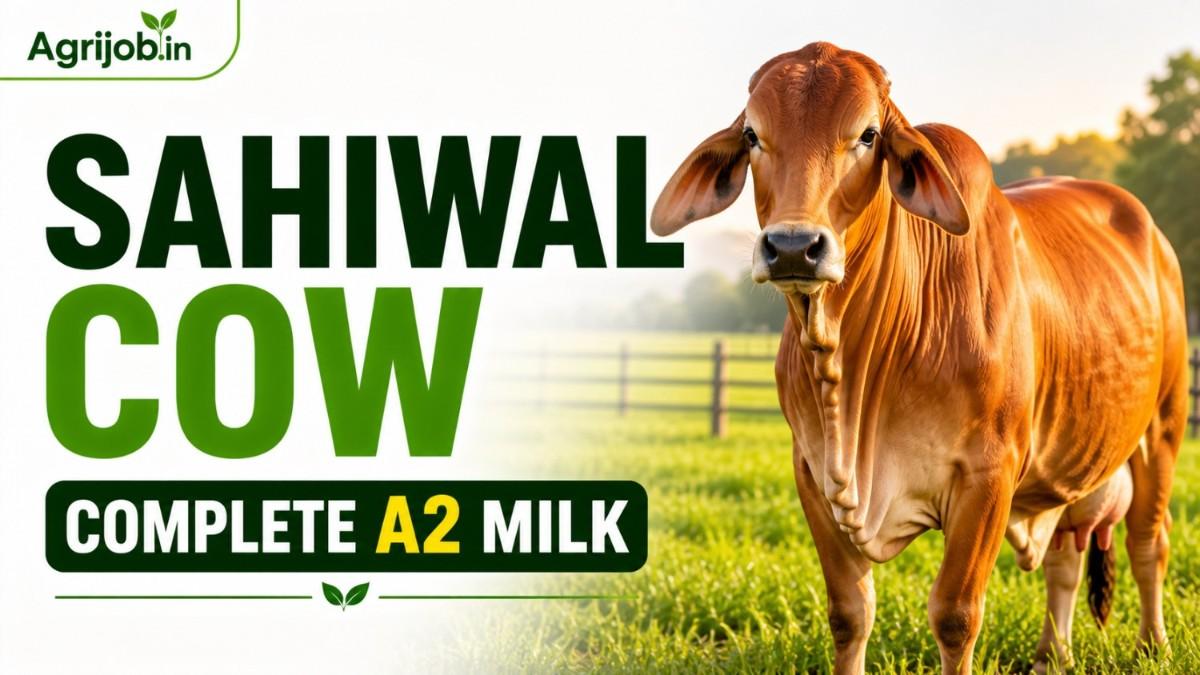
What is a Sahiwal cow? Sahiwal is an indigenous Zebu (Bos indicus) dairy breed native to the Sahiwal district of Punjab, now in Pakistan, and reared across Punjab, Haryana, Rajasthan and Uttar Pradesh in India. Known for its reddish-brown coat, heat tolerance and pure A2 milk, it is widely regarded as India’s best milk-producing indigenous breed.
The breed’s native breeding tract covers the Ferozepur and Amritsar districts of Punjab and the Sri Ganganagar district of Rajasthan. It also carries older regional names — Lambi Bar, Montgomery, Multani and Teli — reflecting its long history as a dual-purpose milk and draught animal before it became a specialised dairy breed. Sahiwal has since been exported to more than two dozen countries across Asia, Africa and the Americas for crossbreeding programmes because of its heat and disease resistance.

Its milk carries only the A2 beta-casein protein, unlike Holstein or Jersey cows that carry the A1 variant. This single genetic difference is why Sahiwal milk, ghee and paneer sell at a premium in India’s growing organic and A2 dairy market.
| Trait | Description |
|---|---|
| Colour | Reddish brown to pale red, sometimes with white patches |
| Body weight | Female: 400–450 kg average; Male: 500–550 kg average |
| Height at withers | 130–140 cm |
| Horns | Short and thick; often rudimentary or absent in females |
| Ears | Long and drooping |
| Udder | Well-developed with large teats, suited to hand milking |
| Hump | Prominent and muscular, typical of Zebu cattle |
| Native breeding tract | Ferozepur & Amritsar (Punjab), Sri Ganganagar (Rajasthan) |
Who Should Raise Sahiwal Cows in 2026?
Sahiwal cow farming suits a wide range of rural profiles, from first-time buyers to cooperative-linked entrepreneurs. Use this list to check if the breed fits your situation before you invest.
- 🧑🌾 Small and marginal farmers in Punjab, Haryana, Rajasthan, UP or Bihar seeking a low-maintenance income source
- 🥛 Aspiring A2 milk entrepreneurs who want to sell premium milk, ghee or paneer directly to health-conscious buyers
- 🏡 First-time dairy farmers who prefer a docile, easy-to-handle breed over high-maintenance exotic cows
- 👩🌾 Women-led Self Help Groups and FPOs applying for Rashtriya Gokul Mission or NABARD dairy subsidy support
- 🐄 Existing dairy farmers wanting to upgrade nondescript cattle through Sahiwal AI or semen programmes
- 🏦 Farmers who already hold, or plan to apply for, a Pashu Kisan Credit Card
- 🌾 Landowners with access to green fodder land looking for an animal suited to hot, humid climates
- 📈 Investors seeking a 15–20 year productive dairy asset with steady breeding and resale value
Sahiwal Cow Milk Yield and Price in India (2026)
Milk yield and price are the two numbers every buyer checks first. A Sahiwal cow produces 8 to 12 litres of milk per day under normal farm conditions, with well-fed, well-managed animals reaching 15 to 20 litres. Over a full 305-day lactation, ICAR-National Dairy Research Institute records from a 29-year Karnal herd study show yields between 1,822 kg and 2,166 kg across parities, while the National Dairy Development Board (NDDB) reports a national average lactation yield of 2,325 kg, ranging from 1,600 kg to 2,750 kg.
| Parameter | Value (2026) |
|---|---|
| Average daily milk yield | 8–12 litres |
| High-performing cows | 15–20 litres/day |
| Lactation yield (305 days) | 2,000–3,000 litres (NDDB average: 2,325 kg) |
| Fat content | 4.5%–5.5% |
| Lactation length | 260–300 days |
| Age at first calving | 37–48 months |
Price depends heavily on milk yield, age, health documentation and pedigree. Here is what buyers across Punjab, Haryana, Rajasthan, UP and Bihar are paying in 2026.
| Cow Category | Price Range (2026) |
|---|---|
| Basic milking cow (5–8 litres/day) | Rs.30,000–Rs.50,000 |
| Standard milking cow (8–12 litres/day) | Rs.50,000–Rs.80,000 |
| High-yield cow (12–18 litres/day) | Rs.80,000–Rs.1,20,000 |
| Elite record-verified cow (18L+, full pedigree) | Rs.2,50,000–Rs.4,00,000 |
| Pregnant heifer (first calving due) | Rs.45,000–Rs.70,000 |
The real financial edge, though, is in the milk itself. Regular cow milk sells for roughly Rs.45–60 per litre in most mandis, but certified A2 Sahiwal milk commands Rs.80–110 per litre in urban and organic markets, and Sahiwal ghee retails between Rs.1,200 and Rs.2,000 per kilogram — as our Gir Cow Ghee vs Desi Cow Ghee A2 comparison also confirms for indigenous breeds.
Eligibility and Requirements Before You Buy
Before you buy a Sahiwal cow or apply for a livestock loan, make sure your farm and paperwork are ready. Lenders and breeders both check these basics.
- Covered shed space of at least 100–150 sq ft per animal, with proper drainage and ventilation
- Access to green fodder land — ideally 0.5 acre per 2 animals — plus dry fodder storage
- Minimum 60 litres of clean drinking water per cow per day
- A feed budget of roughly Rs.150–200 per day per cow for green fodder, dry fodder and concentrate (90–110 kg fresh forage)
- Valid Aadhaar Card, PAN Card, bank account and passport-size photograph for loan applications
- Land ownership or lease documents where the shed and fodder plot are located
- An animal health certificate and mandatory insurance (around Rs.100 premium) for Pashu Kisan Credit Card-linked purchases
| Category | Loan Amount | Effective Interest |
|---|---|---|
| Cow (Pashu KCC) | Rs.40,783 per animal | ~4% (7% minus 3% subvention) |
| Buffalo (Pashu KCC) | Rs.60,249 per animal | ~4% |
| Goat/Sheep (Pashu KCC) | Rs.4,063 per animal | ~4% |
| Collateral-free limit | Up to Rs.1.6–2 lakh | No collateral required |
How to Start Sahiwal Cow Farming: Step-by-Step
- Assess your shed capacity, fodder land and water access before deciding how many animals to buy.
- Verify pedigree and lactation records with an ICAR-registered breeder or your State Livestock Development Board rather than an unverified middleman.
- Apply for a Pashu Kisan Credit Card at the nearest bank branch or milk collection centre to fund the purchase.
- Prepare a Detailed Project Report (DPR) if you plan a 2–10 animal unit and want to claim NABARD’s dairy subsidy.
- Purchase the animal, get it insured, and collect its health certificate and vaccination record at handover.
- Register with your state’s milk cooperative — Sudha in Bihar, Verka in Punjab, or Parag (UP PCDF) in Uttar Pradesh — for assured milk sale at fixed rates.
- Follow a regular artificial insemination (AI) schedule using Sahiwal semen from your nearest state semen station to expand or upgrade your herd.
- Maintain vaccination, deworming and lactation records — they protect resale value and are needed for future subsidy claims.
Before paying full price, ask the seller for the cow’s health card (Nakul Swasthya Patra) and calving-lactation records maintained under the Rashtriya Gokul Mission’s Pashu Sanjivni programme. Checking this one document can save you Rs.20,000–30,000 on a low-yield animal being misrepresented as high-yield.
Sahiwal Cow vs Gir Cow: Which Desi Breed Wins?
Sahiwal and Gir are India’s two most popular indigenous dairy breeds, and both produce pure A2 milk. The table below compares them across the factors that matter most to a buyer.
| Factor | Sahiwal Cow | Gir Cow |
|---|---|---|
| Native region | Punjab (Sahiwal district, now Pakistan) | Gir forest region, Gujarat |
| Avg. daily milk yield | 8–12 litres (up to 15–20L) | 10–15 litres (up to 20L) |
| Lactation yield (305 days) | 2,000–3,000 litres | 1,800–2,700 litres |
| Fat content | 4.5%–5.5% | 4.5%–5% |
| Price range (2026) | Rs.40,000–Rs.1,20,000 | Rs.50,000–Rs.1,50,000 |
| Heat tolerance | Excellent | Excellent |
| Calving interval | 13–14 months | 13–15 months |
| Best for | Punjab, Haryana, Rajasthan, hot plains | Gujarat, Rajasthan, semi-arid regions |
See our full Best Dairy Cow Breeds in India 2026 comparison for how both breeds stack up against Holstein Friesian and Jersey crossbreds.
For Bihar and North Indian plains conditions, Sahiwal has a slight edge with its shorter calving interval and strong heat adaptation, while Gir tends to suit semi-arid western India better. Both deliver pure A2 milk and can remain productive for 15+ years when sourced from an ICAR-registered herd — the buyer’s due diligence matters more than the breed choice.
Pros and Cons of Sahiwal Cow Farming
Pros:
- High-fat A2 milk fetches a premium price of Rs.80–110/litre versus Rs.45–60/litre for regular milk
- Naturally heat and disease resistant, keeping veterinary costs low
- Long productive lifespan of 15–20 years with 8–10 calvings
- Strong government support through Pashu KCC, NABARD subsidy and Rashtriya Gokul Mission
- Docile temperament that makes handling and milking easier for small households
Cons:
- Lower daily yield than exotic or crossbred cows (Holstein gives 30–40 litres/day)
- Longer age at first calving (37–48 months) delays return on investment
- Genuine pure-breed sourcing can be difficult outside Punjab, Haryana and Rajasthan
- Peak yield needs 90–110 kg of fresh green fodder daily, which requires reliable land access
Important Terms Every Sahiwal Farmer Should Know
- A2 Beta-Casein Protein: the milk protein unique to desi Zebu breeds like Sahiwal; it commands a Rs.20–40/litre market premium over regular A1 milk.
- Pashu Kisan Credit Card (PKCC): a livestock-specific credit card offering up to Rs.40,783 per cow at an effective 4% interest rate.
- NABARD DEDS-Pattern Subsidy: a back-ended capital subsidy of 25% (33.33% for SC/ST farmers) for dairy units of 2–10 animals, capped near Rs.1.25 lakh.
- AHIDF (Animal Husbandry Infrastructure Development Fund): a large central fund offering a 3% interest subvention for bigger dairy processing and breeding infrastructure projects.
- Rashtriya Gokul Mission (RGM): the flagship Rs.2,400 crore scheme conserving Sahiwal, Gir, Rathi and other indigenous breeds through AI, IVF and sex-sorted semen.
- 305-Day Lactation Yield: the standardised measure of total milk produced in one lactation cycle, used to compare breed productivity; Sahiwal averages 2,325 kg per NDDB records.
- Back-Ended Capital Subsidy: a subsidy credited to the loan account after a lock-in period rather than paid upfront, lowering the farmer’s effective repayment.
- Sex-Sorted Semen (Gausort): indigenous AI technology producing a much higher share of female calves, now available at facilities like Bihar’s Purnea Semen Station.
- Milch Breed: cattle bred and maintained primarily for milk production rather than draught power; Sahiwal is India’s top indigenous milch breed.
- Nakul Swasthya Patra: the digital animal health card under RGM’s Pashu Sanjivni programme, recording vaccination, breeding and productivity history for every registered animal.
Best States for Sahiwal Cow Farming in India
Punjab, Haryana and Rajasthan remain the native breeding tracts and the strongest states for buying pure Sahiwal stock, but the Rashtriya Gokul Mission is now spreading Sahiwal genetics through artificial insemination well beyond these borders.
| State | Why It Leads |
|---|---|
| Punjab | Native breeding tract (Ferozepur, Amritsar); state Kisan Credit Limit scheme for pashupalak at 4% interest |
| Haryana | Pashu Kisan Credit Card originated here; ICAR-NDRI Karnal research herds; strong milk cooperative network |
| Rajasthan | Sri Ganganagar native breeding tract; arid-adapted stock; large indigenous livestock population |
| Uttar Pradesh | UP Nandi Baba Milk Mission subsidy layered with NABARD dairy support; large PCDF/Parag cooperative network |
| Bihar | Purnea Semen Station stocks Sahiwal frozen semen for AI upgrade; Sudha Dairy cooperative; Bihar Pashupalan Loan Yojana offers up to 50% subsidy |
| Madhya Pradesh | Expanding Gokul Gram network and RGM breed multiplication farms |
For Bihar farmers specifically, our Bihar Pashupalan Loan Yojana 2026 guide covers the state’s own subsidy of up to 50% on cattle purchase, which can be combined with central schemes for a larger effective discount.
Sahiwal Cow Loan and Subsidy Schemes 2026
Five central schemes cover almost every stage of Sahiwal cow farming in 2026, from buying your first animal to building a larger dairy unit.
- Pashu Kisan Credit Card (PKCC): up to Rs.40,783 per cow, interest of 7% reduced to an effective ~4% after the 3% central subvention, collateral-free up to Rs.1.6–2 lakh, repaid in 6 instalments over 5 years.
- NABARD DEDS-pattern subsidy: a 25% back-ended capital subsidy (33.33% for SC/ST farmers) on establishing dairy units of 2–10 animals, including indigenous breeds like Sahiwal, Gir and Rathi, capped near Rs.1.25 lakh for a 10-animal unit.
- AHIDF (Animal Husbandry Infrastructure Development Fund): a large central fund with a 3% interest subvention, aimed at bigger dairy processing, cold-chain and breeding infrastructure rather than single-animal purchase.
- Rashtriya Gokul Mission (RGM): conservation-focused support including up to 50% capital subsidy (capped at Rs.2 crore) for entrepreneurs setting up breed multiplication farms, plus subsidised sex-sorted semen for herd upgrades.
- State schemes: Bihar Pashupalan Loan Yojana (up to 50% subsidy, Rs.2–10 lakh), Punjab’s Kisan Credit Limit for pashupalak (Rs.3 lakh at 4% interest), and UP’s Nandi Baba Milk Mission.
Our dedicated NABARD Dairy Farm Loan 2026 guide and Pradhan Mantri Dairy Loan Yojana 2026 overview walk through eligibility, documents and the full application process for each of these schemes in detail. As per the official notification, subsidy ceilings and interest subvention rates can be revised mid-year — always check nabard.org and dahd.gov.in for the latest confirmed figures before applying.
| Scheme | Typical Processing Time |
|---|---|
| Pashu Kisan Credit Card | Card issued within 15 days of document verification |
| NABARD dairy subsidy (DEDS-pattern) | Subsidy released after first loan instalment and lock-in period |
| Rashtriya Gokul Mission (RGM) Phase III | Implemented through 2025–26, with further extension under review |
Important Links for Sahiwal Cow Farmers
| Link Name | URL |
|---|---|
| Rashtriya Gokul Mission — Official Portal | dahd.gov.in |
| Kisan Credit Card (Animal Husbandry) Guidelines | dahd.gov.in/division/kcc |
| ICAR-NBAGR Sahiwal Breed Standard (PDF) | nbagr.icar.gov.in |
| NDDB Sahiwal Breed Profile | nddb.coop |
| NABARD Dairy Farm Loan 2026 (Agrijob Guide) | agrijob.in |
| Bihar Pashupalan Loan Yojana 2026 (Agrijob Guide) | agrijob.in |
| Dairy Farm Business Plan India 2026 (Agrijob Guide) | agrijob.in |
| More Dairy Farm Guides | agrijob.in/category/dairy-farm |
Conclusion
Sahiwal cow farming in 2026 remains one of the most reliable entry points into India’s A2 milk economy, combining a manageable Rs.40,000–Rs.1,20,000 price tag with steady 8–12 litre daily yields and strong disease resistance. For farmers in Punjab, Haryana, Rajasthan and increasingly Bihar, the combination of Pashu Kisan Credit Card financing and NABARD’s dairy subsidy framework makes this desi breed more accessible than ever. Verify pedigree and health records before you buy, apply for your Pashu Kisan Credit Card at the nearest bank or milk collection centre, and bookmark this guide — we update it whenever official scheme figures change.
- Sahiwal cow price in 2026 ranges Rs.40,000–Rs.1,20,000; elite record cows reach Rs.4 lakh.
- Average milk yield is 8–12 litres/day at 4.5–5.5% fat — pure A2 protein throughout.
- Punjab, Haryana and Rajasthan are the native breeding tracts; Bihar is expanding via Purnea’s frozen semen station.
- Pashu Kisan Credit Card offers up to Rs.40,783 per cow at an effective 4% interest rate.
- NABARD-pattern dairy subsidy covers 25–33.33% of project cost for 2–10 animal units.
- Always verify pedigree and health records before purchase to avoid overpaying.
Frequently Asked Questions About Sahiwal Cow Price 2026
What is the Sahiwal cow price in India in 2026?
A healthy Sahiwal cow costs between Rs.40,000 and Rs.1,20,000 in 2026, depending on age, milk yield and pedigree. Elite, record-verified animals with full health documentation can fetch Rs.2.5 lakh to Rs.4 lakh from organised breeders.
How much milk does a Sahiwal cow give per day?
A Sahiwal cow typically gives 8 to 12 litres of milk per day under normal farm conditions. Well-managed animals with balanced feeding can produce 15 to 20 litres daily, with a full lactation yield of 2,000 to 3,000 litres over 305 days.
Is Sahiwal cow milk A2 milk?
Yes, Sahiwal cow milk is naturally pure A2 milk because the breed carries only the A2 beta-casein gene, unlike exotic breeds such as Holstein and Jersey that carry the A1 protein. This makes Sahiwal milk popular for organic and A2-certified dairy businesses.
Which states are best for Sahiwal cow farming?
Punjab, Haryana and Rajasthan are the native breeding tracts and remain the best states for Sahiwal cow farming, followed by Uttar Pradesh. States like Bihar are expanding Sahiwal genetics through frozen semen stations such as Purnea under the Rashtriya Gokul Mission.
What loan schemes are available for buying a Sahiwal cow?
The Pashu Kisan Credit Card offers up to Rs.40,783 per cow at an effective 4% interest rate with no collateral required up to Rs.1.6–2 lakh. NABARD’s dairy subsidy framework additionally covers 25% (33.33% for SC/ST farmers) of the project cost for units of 2 to 10 animals.
How long does a Sahiwal cow live and how many calves does it produce?
A Sahiwal cow lives 15 to 20 years with proper care and can give 8 to 10 calvings during its productive life. Its calving interval of 13 to 14 months is shorter than most other indigenous breeds, which improves lifetime milk income.
Sahiwal cow vs Gir cow — which is more profitable?
Both breeds are profitable A2 milk producers, but Sahiwal generally has a shorter calving interval and marginally better heat tolerance, while Gir often shows slightly higher peak yields in western India. The better choice depends on your state, fodder availability and local breeder access.
What is the fat content of Sahiwal cow milk?
Sahiwal cow milk has a fat content of 4.5% to 5.5%, higher than most exotic dairy breeds. This high fat content makes it especially valuable for ghee, paneer and other traditional dairy products.
Can Sahiwal cows survive in hot and humid climates like Bihar?
Yes, Sahiwal cows are naturally heat-tolerant and disease-resistant, making them well suited to Bihar’s hot and humid plains. The Purnea Semen Station in Bihar already stocks Sahiwal frozen semen to help local farmers upgrade their herds through artificial insemination.
How do I identify a pure Sahiwal cow before buying?
Look for a reddish-brown to pale-red coat, a well-developed udder, drooping ears and a moderate hump typical of Zebu cattle, along with documented lactation and health records. Buying from an ICAR-registered breeder or your State Livestock Development Board significantly reduces the risk of an unverified crossbred animal being sold as a pure Sahiwal.
Last Updated: August 2026. This guide is reviewed regularly using ICAR-NBAGR, NDDB and DAHD data. Scheme figures may change — always verify final terms on the official portal before applying.
Disclaimer: This article is for general informational purposes only and does not constitute financial or veterinary advice. Cattle prices, loan terms and subsidy amounts vary by state, bank and individual animal. Please confirm current figures with your nearest bank branch, State Animal Husbandry Department, or the official NABARD/DAHD portal before making a purchase or loan decision.