

Food processing business India 2026 is one of the most backed sectors by the Government of India right now — with over Rs.6,520 crore allocated under PMKSY, a Rs.10,000 crore PM FME scheme offering 35% subsidy up to Rs.10 lakh, and a Rs.10,900 crore PLI Scheme all running simultaneously. Whether you want to start a spice grinding unit, a pickle brand, a flour mill, or a full agro-processing cluster, this guide gives you the complete picture: which government scheme to apply for, how to get your FSSAI food license, exactly how much machinery will cost for different unit types, and the step-by-step process to go from idea to a running, subsidy-backed food processing enterprise. This guide covers scheme eligibility, FSSAI license fees, machinery cost tables, who should apply, and a full FAQ for aspiring food entrepreneurs.

- India’s Food Processing Sector – Size, Growth & 2026 Opportunity
- Key Facts at a Glance – Food Processing Business India 2026
- PMKSY Scheme 2026 – Components, Subsidy & How to Apply
- PM FME Scheme – 35% Subsidy Up to Rs.10 Lakh for Micro Units
- FSSAI License for Food Processing – Types, Fees & Process 2026
- Food Processing Machinery Cost India 2026 – Unit-Wise Breakdown
- How to Start a Food Processing Business – Step-by-Step Guide
- Who Should Start a Food Processing Business in India?
- Food Processing vs Raw Agri Trading – Which Earns More?
- High-Value Food Processing Business Terms You Must Know
- Frequently Asked Questions (FAQ)
India’s Food Processing Sector – Size, Growth & 2026 Opportunity
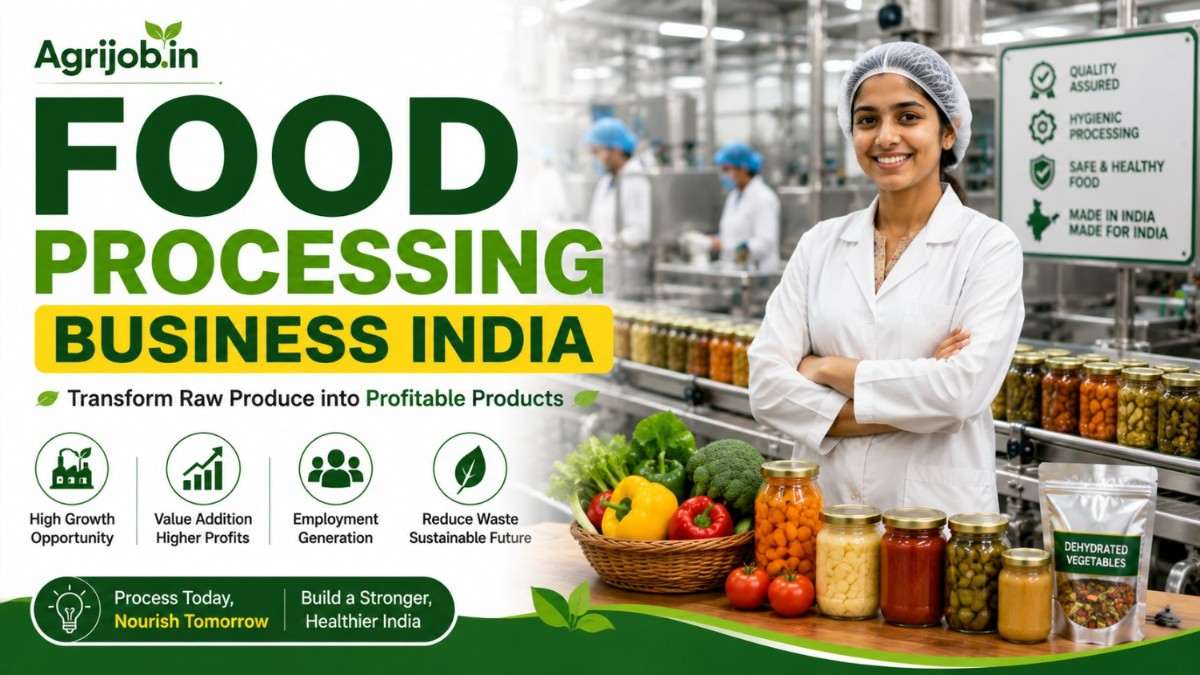
India’s food processing industry is valued at over USD 330 billion and is growing at 8–10% annually, making it one of the largest in the world. The sector accounts for approximately 13% of India’s total exports and employs over 2 crore people, with significant room to grow — processed food currently makes up only about 17% of India’s total agricultural output, compared to 25% in the USA and nearly 50% in China. This gap is the opportunity.
In 2026, the Indian government is backing this sector with unprecedented financial firepower. PMKSY’s Rs.6,520 crore outlay is funding cold chains, food irradiation units, NABL-accredited testing labs, and agro-processing clusters across all states. The PM FME scheme has already formalized over 1.5 lakh micro food enterprises. And the PLI Scheme for Food Processing (PLISFPI), with a Rs.10,900 crore total outlay, has already generated over 3.39 lakh jobs against a target of 2.5 lakh — with 69 out of 168 approved applicants being MSMEs. For an entrepreneur wanting to launch a food processing business in India in 2026, the combination of rising domestic demand, strong export growth, and deep government subsidy support makes this the right moment to start.

Key Facts at a Glance – Food Processing Business India 2026
| Governing Ministry | Ministry of Food Processing Industries (MoFPI), Govt. of India |
| Key Scheme (Large Units) | PMKSY – Rs.6,520 crore outlay (2021–22 to 2025–26) |
| Key Scheme (Micro Units) | PM FME – 35% subsidy, max Rs.10 lakh; Rs.10,000 crore total |
| FSSAI Basic Registration Fee | Rs.100/year (turnover up to Rs.12 lakh) |
| FSSAI State License Fee | Rs.2,000–Rs.5,000/year |
| FSSAI Central License Fee | Rs.7,500/year |
| Small Unit Machinery Cost | Rs.8 lakh – Rs.25 lakh (spice/flour/snack/pickle) |
| Minimum Promoter Contribution (PM FME) | 10% of project cost |
| India’s Food Processing Industry Value | USD 330+ billion; growing at 8–10% annually |
| Official Portal | pmfme.mofpi.gov.in | sampada-mofpi.gov.in |
PMKSY Scheme 2026 – Components, Subsidy & How to Apply
Pradhan Mantri Kisan SAMPADA Yojana (PMKSY) — full form: Scheme for Agro-Marine Processing and Development of Agro-Processing Clusters — is the flagship umbrella scheme of MoFPI for building modern food processing infrastructure across India. The Union Cabinet approved a total outlay of Rs.6,520 crore for PMKSY during the 15th Finance Commission cycle (2021–22 to 2025–26), including an additional Rs.1,920 crore approved in July 2025 for food irradiation units and NABL-accredited testing labs. The scheme is demand-driven — not state, district, region, or crop specific — meaning any eligible entity from any state can apply.
Active PMKSY Component Schemes in 2026
| Component Scheme | Purpose | Subsidy / Grant | Eligible Applicants |
|---|---|---|---|
| Creation/Expansion of Food Processing & Preservation Capacities (Unit Scheme) | New or expanded processing units for fruits, vegetables, meat, dairy, spices, cereals | Up to 35% grant (max Rs.50 lakh for general; Rs.75 lakh for NE/hilly states) | Individuals, firms, companies, SHGs, FPOs, cooperatives |
| Integrated Cold Chain and Value Addition Infrastructure (ICCVAI) | Cold storages, pre-cooling units, refrigerated transport, food irradiation units | Up to 35% grant (max Rs.10 crore) | Companies, partnerships, cooperatives, SHGs |
| Creation of Infrastructure for Agro-Processing Clusters (APC) | Group of minimum 10 food processing units in a cluster with common infrastructure | Up to Rs.10 crore per project | SPV formed by group of food processors |
| Food Safety and Quality Assurance Infrastructure (FSQAI) | Setting up NABL-accredited food testing laboratories | Up to 50% grant (Rs.1,920 crore allocation for 100 labs) | Govt. labs, NABL-accredited labs, research institutions |
| Operation Greens (TOP to TOTAL) | Reduce price volatility for tomato, onion, potato & other horticultural crops | 50% subsidy on transport & storage costs | Processors, FPOs, cooperatives, agencies |
How to apply for PMKSY: Applications for PMKSY component schemes are submitted online at sampada-mofpi.gov.in. Applicants must prepare a Detailed Project Report (DPR), obtain land documents, get bank loan in-principle approval, and submit the application with all supporting documents. Applications are processed through state nodal agencies and MoFPI regional offices. Since 2018–19, financial assistance of Rs.2,513.27 crore has been provided to 553 food processing projects under PMKSY — demonstrating consistent disbursement.
PM FME Scheme – 35% Subsidy Up to Rs.10 Lakh for Micro Units
For small and micro food entrepreneurs, the PM Formalisation of Micro Food Enterprises (PM FME) Scheme is the most accessible and most impactful government programme in 2026. Launched as part of the Atmanirbhar Bharat Abhiyan with a total Rs.10,000 crore outlay, the scheme targets the formalisation and upgrading of 2 lakh micro food processing units across India. It has a special focus on SC/ST entrepreneurs, women-led units, FPOs, SHGs, and units in aspirational districts.
PM FME Scheme Key Benefits
- 💰 35% Credit-Linked Capital Subsidy on eligible project cost — maximum ceiling of Rs.10 lakh per individual micro unit
- 🏦 Bank Loan Coverage: Remaining 55% of project cost financed by a scheduled bank; beneficiary contributes minimum 10%
- 👩🤝👩 SHG Seed Capital: Rs.4 lakh per Self-Help Group for working capital and purchase of small tools and equipment
- 🏭 FPO/SHG/Cooperative Grant: 35% credit-linked grant for capital investment across the entire value chain with no upper ceiling per project
- 🏗️ Common Infrastructure: 35% grant for common facilities (lab, packaging, storage, incubation centre) — maximum Rs.3 crore
- 📋 Formalisation Support: Handholding for GST registration, FSSAI license, Udyam registration, and HACCP/hygiene standard adoption
- 🎓 Capacity Building: Free skill training in food safety, standards, quality improvement, and DPR preparation
- 🛡️ Credit Guarantee: Loans up to Rs.5 crore covered under CGTMSE (for MSMEs); MUDRA credit guarantee for smaller loans
| Beneficiary Type | Subsidy Rate | Maximum Subsidy | Min. Own Contribution |
|---|---|---|---|
| Individual Micro Enterprise | 35% of project cost | Rs.10 lakh | 10% of project cost |
| SHG (Seed Capital) | Rs.4 lakh flat per SHG | Rs.4 lakh | NIL |
| FPO / SHG / Producer Cooperative (Value Chain) | 35% of project cost | No upper ceiling | 10% of project cost |
| Common Infrastructure (Shared Facilities) | 35% of project cost | Rs.3 crore | 10% of project cost |
Practical example: If you set up a spice grinding unit with a total project cost of Rs.15 lakh, under PM FME you receive Rs.5.25 lakh as subsidy (35%), contribute Rs.1.5 lakh yourself (10%), and the bank finances the remaining Rs.8.25 lakh as a term loan. Your effective personal investment in a Rs.15 lakh business is just Rs.1.5 lakh — one of the most leveraged entry points in Indian agri-business.
FSSAI License for Food Processing – Types, Fees & Process 2026
Every food processing business in India — regardless of size — must obtain an FSSAI (Food Safety and Standards Authority of India) license before commencing operations. Operating without a valid FSSAI license attracts a penalty of up to Rs.5 lakh and imprisonment of up to 6 months under Section 63 of the Food Safety and Standards Act. The 2026 amendments to the FSSAI framework introduced auto-upgrade of licenses when turnover thresholds are crossed, and automatic suspension for missed fee payments or annual returns.
| FSSAI License Type | Annual Turnover / Eligibility | Government Fee/Year | Processing Time | Issuing Authority |
|---|---|---|---|---|
| Basic Registration | Up to Rs.12 lakh; petty food businesses, home-based units, street vendors | Rs.100 | 7–10 working days (Tatkal: 48 hours) | Local / Municipal Authority |
| State License | Rs.12 lakh–Rs.20 crore; mid-scale manufacturers & processors in one state | Rs.2,000–Rs.5,000 | 30–60 days (inspection required) | State Food Safety Authority |
| Central License | Above Rs.20 crore; importers, exporters, multi-state operators, e-commerce food platforms | Rs.7,500 | 60–90 days | Central FSSAI, New Delhi |
How to Apply for FSSAI License Online in 2026
- 🌐 Visit the FoSCoS portal (foscos.fssai.gov.in) — the official FSSAI licensing and compliance system
- 📝 Create a new account using your mobile number and email ID
- 🏭 Select your state and Kind of Business (KoB) — this step determines whether you need Basic, State, or Central license. Choose KoB carefully: wrong selection leads to rejection
- 📋 Fill Form A (for Basic Registration) or Form B (for State/Central License) with complete business and premises details
- 📁 Upload required documents: Photo ID, address proof of premises, constitution document (GST/Udyam certificate), Food Safety Management System (FSMS) plan (for State/Central), layout of the food processing unit
- 💳 Pay the government fee online (Rs.100 to Rs.7,500 per year). You may opt for 1–5 year license at once — total fee is annual fee × number of years chosen, non-refundable
- 🔍 For State and Central licenses, an FSSAI inspection of your premises will be scheduled under the risk-based inspection framework before issuance
- 🏅 Download your 14-digit FSSAI license certificate from the FoSCoS portal after approval. Display it prominently at your processing unit and include the number on all product labels
Food Processing Machinery Cost India 2026 – Unit-Wise Breakdown
Understanding the food processing machinery cost in India is critical before preparing your DPR for a bank loan or government subsidy application. Costs vary significantly by product type, production capacity, and automation level. Here is a realistic unit-wise breakdown based on 2026 market prices:
1. Spice Grinding & Packaging Unit
| Equipment | Capacity | Estimated Cost (Rs.) |
|---|---|---|
| Pulveriser / Spice Grinder | 100–200 kg/hr | 2,50,000 – 4,00,000 |
| Vibro Sifter / Grading Machine | — | 80,000 – 1,50,000 |
| Ribbon Blender / Mixing Drum | 100–200 kg | 60,000 – 1,00,000 |
| Vertical Form Fill Seal Packaging Machine | 30–60 pouches/min | 1,50,000 – 3,00,000 |
| Digital Weighing Scale & SS Tables | — | 40,000 – 80,000 |
| Dust Collector & Exhaust System | — | 30,000 – 60,000 |
| Total Machinery Cost | Rs.6,10,000 – Rs.10,90,000 |
2. Flour Mill (Atta / Maida / Besan) Unit
| Equipment | Capacity | Estimated Cost (Rs.) |
|---|---|---|
| Grain Cleaning Machine | 500–1,000 kg/hr | 80,000 – 1,50,000 |
| Roller Mill / Stone Chakki Grinder | 200–500 kg/hr | 3,00,000 – 8,00,000 |
| Flour Sifter / Plansifter | — | 1,00,000 – 2,50,000 |
| Flour Packing Machine (auto weighing) | 1–5 kg packs | 1,50,000 – 3,00,000 |
| Storage Bins & Conveyors | — | 50,000 – 1,00,000 |
| Total Machinery Cost (Small Scale) | Rs.6,80,000 – Rs.16,00,000 |
3. Pickle / Jam / Sauce Processing Unit
| Equipment | Details | Estimated Cost (Rs.) |
|---|---|---|
| Fruit & Vegetable Washer | SS 304 drum washer | 50,000 – 1,20,000 |
| Chopper / Slicer / Dicer | Electric, 100–300 kg/hr | 60,000 – 1,50,000 |
| SS Cooking Vessel / Jacketed Kettle | 200–500 litre | 80,000 – 2,00,000 |
| Bottle / Pouch Filling Machine | Semi-auto or auto | 1,00,000 – 2,50,000 |
| Capping / Sealing Machine | — | 40,000 – 80,000 |
| Labelling Machine | — | 60,000 – 1,50,000 |
| Total Machinery Cost | Rs.3,90,000 – Rs.9,50,000 |
Indicative Total Project Cost by Unit Type
| Unit Type | Machinery Cost | Civil Works / Shed | Working Capital (3 months) | Total Project Cost | PM FME Subsidy (35%) |
|---|---|---|---|---|---|
| Spice Grinding & Packing | Rs.7–11 lakh | Rs.2–3 lakh | Rs.2–3 lakh | Rs.11–17 lakh | Rs.3.85–5.95 lakh |
| Flour Milling (small scale) | Rs.7–16 lakh | Rs.3–5 lakh | Rs.2–4 lakh | Rs.12–25 lakh | Rs.4.2–8.75 lakh (max Rs.10 L) |
| Pickle / Sauce / Jam | Rs.4–10 lakh | Rs.1.5–3 lakh | Rs.1.5–2.5 lakh | Rs.7–15.5 lakh | Rs.2.45–5.42 lakh |
| Snack Food / Namkeen | Rs.8–15 lakh | Rs.2–4 lakh | Rs.2–3 lakh | Rs.12–22 lakh | Rs.4.2–7.7 lakh (max Rs.10 L) |
| Cold-Pressed Oil Unit | Rs.6–12 lakh | Rs.2–3 lakh | Rs.2–3 lakh | Rs.10–18 lakh | Rs.3.5–6.3 lakh |
How to Start a Food Processing Business in India – Step-by-Step Guide
- 🎯 Choose Your Product and Market: Select a product category based on local raw material availability, market demand, and your own expertise. Spices, flour, pickle, snacks, and cold-pressed oils are ideal for beginners due to low minimum viable scale and high consumer demand.
- 📋 Prepare a Detailed Project Report (DPR): Your DPR must include product details, production capacity, machinery list with costs, land and building plan, raw material sourcing strategy, 5-year financial projections, and loan repayment schedule. IIFPT and state food processing departments offer free DPR assistance to PM FME applicants.
- 🏢 Register Your Business: Register as a Sole Proprietorship, Partnership, LLP, or Private Limited Company. Get GST registration and Udyam registration (for MSME benefits — free at udyamregistration.gov.in). Udyam registration is mandatory for PM FME and PMKSY subsidy eligibility.
- 🔐 Obtain FSSAI License: Apply for the appropriate FSSAI license (Basic, State, or Central) on the FoSCoS portal. Your production cannot begin without this. Apply for State License if your projected turnover exceeds Rs.12 lakh.
- 💻 Apply for PM FME / PMKSY Subsidy: Register on pmfme.mofpi.gov.in (for micro units) or sampada-mofpi.gov.in (for larger units). Submit your DPR and await in-principle approval before incurring project expenditure.
- 🏦 Secure Bank Loan: Approach SBI, Bank of India, NABARD-affiliated RRBs, or cooperative banks with your DPR and subsidy approval letter. Under PM FME, the bank provides 55% of project cost as a term loan — collateral-free for loans up to Rs.10 lakh under MUDRA/CGTMSE schemes.
- 🏗️ Set Up Premises & Install Machinery: Construct or lease a food-grade processing shed (SS 304 contact surfaces, adequate drainage, ventilation, hygienic washrooms). Purchase machinery from reputed manufacturers with installation, calibration, and after-sales support included. Obtain at least 3 quotations.
- ▶️ Commence Production & Claim Subsidy: After commissioning your unit and completing initial production, submit utilisation certificates and inspection reports to claim your PM FME or PMKSY subsidy tranches. Subsidy is disbursed directly to your bank account via DBT in installments linked to project milestones.
Who Should Start a Food Processing Business in India in 2026?
A food processing business in India is accessible to a wide range of people. Here are 8 profiles ideally positioned to start and succeed in 2026:
- 🌾 Farmers with Surplus Produce — spice growers, horticulture farmers, and cereal farmers who can forward-integrate to process their own produce and capture value-addition margins instead of selling at mandi prices
- 👩🤝👩 Women SHG Members — eligible for Rs.4 lakh seed capital under PM FME with no own contribution required; ideal for home-based and community food processing units in rural areas
- 🧑🎓 Food Technology & Agriculture Graduates seeking self-employment with technical knowledge advantage in product development, quality control, and FSSAI compliance
- 🏭 Existing Traders in Mandis who buy and sell commodities but have never added value — one processing step (grinding, sorting, packaging) can double or triple their price realisation
- 🌿 Organic Certified Farmers — organic processed food (spices, flour, oils) commands 2–4x premium on domestic e-commerce platforms and export markets; ideal for NPOP-certified farmers
- 📱 Agri-Startups and Young Entrepreneurs wanting to build regional food brands with D2C online sales (Flipkart, Amazon, ONDC) using food processing as the core business model
- 🏘️ SC/ST and Aspirational District Entrepreneurs — PM FME gives priority allocation and higher state-level support to aspirational districts; these applicants often face less competition in the scheme queue
- 🤝 Farmer Producer Organisations (FPOs) with established procurement networks that want to upgrade to processing and branded output to improve member income and reduce middlemen dependency
Food Processing vs Raw Agri Trading – Which Earns More?
| Parameter | Food Processing Business | Raw Agri Commodity Trading |
|---|---|---|
| Profit Margin | 15–35% net (value-added premium) | 2–5% net (commodity market) |
| Price Control | High — you set your brand’s price | Zero — mandi price determines income |
| Government Subsidy | Very High — PM FME, PMKSY, PLI, APEDA FAS | Minimal |
| Export Potential | High — processed food exports growing 13% CAGR | Moderate — commodity price competition |
| Perishability Risk | Low — processing extends shelf life | High — fresh produce spoilage 15–40% |
| Branding & Loyalty | Brand equity builds over time | No brand differentiation possible |
| Capital Requirement | Rs.10–25 lakh (with 35% subsidy effectively Rs.3–7 lakh own funds) | Rs.5–20 lakh working capital |
| Employment Creation | 5–20 skilled/semi-skilled jobs per unit | 1–3 unskilled jobs |
| Best For | Long-term wealth; brand building; export ambitions | Short-term cash flow; bulk volume |
High-Value Food Processing Business Terms You Must Know
- 🏭 PMKSY (Pradhan Mantri Kisan SAMPADA Yojana): India’s flagship food processing infrastructure scheme with Rs.6,520 crore outlay; covers cold chains, processing clusters, food irradiation units, and NABL labs.
- ✅ PM FME (PM Formalisation of Micro Food Enterprises): Rs.10,000 crore scheme giving 35% capital subsidy up to Rs.10 lakh to individual micro food processing units; flagship scheme for small food entrepreneurs.
- 🔬 FSSAI (Food Safety and Standards Authority of India): Statutory body under MOHFW that issues food business licenses (Basic/State/Central) and sets quality, hygiene, and labelling standards for all food in India.
- 📜 HACCP (Hazard Analysis and Critical Control Points): International food safety management system that identifies and controls biological, chemical, and physical hazards in food production; required for export and larger FSSAI licenses.
- 🏅 NABL Accreditation: National Accreditation Board for Testing and Calibration Laboratories certification; NABL-accredited lab reports are accepted for FSSAI license applications, export compliance, and dispute resolution.
- 🌿 NPOP (National Programme for Organic Production): India’s mandatory organic certification administered by APEDA; NPOP-certified produce can be labeled and sold as “organic” in domestic and export markets.
- 💳 PLI Scheme for Food Processing (PLISFPI): Rs.10,900 crore Production Linked Incentive scheme offering 4–10% incentive on incremental sales; primarily for mid-to-large scale food processors seeking to scale up production significantly.
- 🔢 Udyam Registration: Free online registration for MSMEs at udyamregistration.gov.in; mandatory to access PM FME, PMKSY, PLI subsidies, CGTMSE collateral-free loans, and priority sector lending from banks.
- 📦 Value Addition: The process of transforming a raw agricultural commodity (chilli, wheat, groundnut) into a higher-priced processed product (chilli powder, branded atta, cold-pressed peanut oil) — the foundation of food processing economics.
- 🏗️ DPR (Detailed Project Report): Comprehensive business plan document required by banks and government schemes; includes technical specifications, cost estimates, financial projections, and repayment schedules.
Frequently Asked Questions (FAQ)
What is the PMKSY scheme for food processing in India?
PMKSY (Pradhan Mantri Kisan SAMPADA Yojana) is a Central Sector umbrella scheme implemented by MoFPI with an approved outlay of Rs.6,520 crore for 2021–22 to 2025–26. It provides credit-linked grants and subsidies for setting up food processing units, cold chains, agro-processing clusters, and food safety infrastructure. Active components in 2026 include the Unit Scheme (up to 35% grant, max Rs.75 lakh for NE/hilly states), Integrated Cold Chain scheme, and Food Safety and Quality Assurance Infrastructure. Apply at sampada-mofpi.gov.in.
What subsidy is available under PM FME scheme for food processing in 2026?
Under the PM FME Scheme, individual micro food processing units receive a 35% credit-linked capital subsidy with a maximum ceiling of Rs.10 lakh. The beneficiary contributes a minimum 10% of project cost, and the remaining 55% is financed by a bank loan. FPOs, SHGs, and cooperatives receive 35% grants for full value-chain investment with no per-project ceiling. SHGs also receive Rs.4 lakh seed capital for working capital and small tools with no own contribution required.
What type of FSSAI license does a food processing business need in India?
The FSSAI license type depends on annual turnover: Basic Registration (Rs.100/year) for businesses with turnover up to Rs.12 lakh; State License (Rs.2,000–Rs.5,000/year) for mid-sized manufacturers operating within one state; and Central License (Rs.7,500/year) for large manufacturers, importers, exporters, or multi-state businesses. From April 1, 2026, FSSAI introduced automatic license tier upgrade when a business crosses its category’s turnover threshold.
How much does food processing machinery cost in India for a small unit?
A basic small-scale food processing equipment setup in India costs Rs.8 lakh to Rs.25 lakh depending on product type and automation. A spice grinding unit costs Rs.6–11 lakh in machinery; a pickle or sauce line Rs.4–10 lakh; a small flour mill Rs.7–16 lakh. With PM FME’s 35% subsidy (max Rs.10 lakh) and a bank loan covering 55%, an entrepreneur’s own contribution for a Rs.15 lakh spice unit is effectively just Rs.1.5 lakh.
Is food processing a profitable business in India in 2026?
Yes, food processing is highly profitable in India in 2026. The industry is worth USD 330+ billion and growing at 8–10% annually. Small units like spice grinding and pickle making deliver net margins of 15–30%, far exceeding commodity trading margins of 2–5%. Government subsidies under PM FME and PMKSY reduce effective capital deployment, while the PLI Scheme for Food Processing has already exceeded its Rs.7,000 crore investment target and generated 3.39 lakh jobs.
What licences are required to start a food processing unit in India?
Mandatory licences include: FSSAI License (Basic/State/Central from foscos.fssai.gov.in), GST Registration, Udyam Registration (free at udyamregistration.gov.in), Trade Licence from local municipal authority, NOC from State Pollution Control Board (for certain product types), and Fire Safety NOC. For export-oriented units, APEDA RCMC and IEC from DGFT are additionally required. FSSAI must be obtained before production begins.
How do I apply for PMKSY or PM FME scheme for my food processing business?
For PM FME, register at pmfme.mofpi.gov.in and submit your project details with DPR. For PMKSY component schemes, apply via sampada-mofpi.gov.in. In both cases, prepare a Detailed Project Report, obtain bank loan in-principle approval, and register with Udyam and FSSAI. Do not incur project expenditure before receiving scheme approval — pre-approval expenses are ineligible for subsidy reimbursement.
Which food processing business is best for beginners in India in 2026?
The best food processing businesses for beginners in India in 2026 are: spice grinding and packaging (Rs.8–12 lakh total investment, 20–25% margins), pickle and preserve making (Rs.5–10 lakh, excellent branding scope), flour milling and branded atta (Rs.12–20 lakh, stable daily demand), snack food manufacturing (Rs.12–18 lakh, high urban demand), and cold-pressed edible oils (Rs.8–15 lakh, booming health-food market). All are PM FME-eligible for 35% subsidy.
For more agri-business startup resources, explore our related guides on Agri Export Business India 2026 – APEDA Registration Guide and Dairy Farm Business Plan India 2026 – 10-Cow Setup Guide.
This guide is regularly reviewed and updated for accuracy. Bookmark this page for the latest PMKSY scheme updates, PM FME notifications, and food processing business resources for 2026. Last Updated: June 2026.