
Pradhan Mantri Pashudhan Bima Yojana 2026 is India’s centrally sponsored livestock insurance scheme that protects farmers against the financial shock of losing their cattle, buffalo, sheep or goats. Implemented by the Department of Animal Husbandry & Dairying (DAHD), the scheme subsidises up to 50% of the insurance premium — and in Himalayan and North-Eastern states, the Central Government covers up to 90%. This guide is for Indian farmers, dairy producers, pastoralists, and animal husbandry entrepreneurs who own livestock and want financial protection against death losses due to disease, accident, or natural calamity. Below you will find everything — who qualifies, what the premium costs, how to file a claim in 15 days, and where to apply online.

Pradhan Mantri Pashudhan Bima Yojana 2026 is a Central Government livestock insurance scheme under DAHD that subsidises 50% of the insurance premium for crossbred and high-yielding cattle and buffalo, with up to 2 animals insured per beneficiary at their full market value, and claims settled within 15 days of submitting required documents.
- Scheme Type: Centrally Sponsored Scheme (CSS)
- Implementing Ministry: Ministry of Fisheries, Animal Husbandry & Dairying (DAHD)
- Animals Covered: Crossbred/high-yielding cattle, buffalo; extended to goat, sheep, pig, yak & mithun under NLM
- Premium Subsidy (General States): 50% borne by Central Government
- Premium Subsidy (Himalayan/NE States): Up to 90% borne by Central Government
- Farmer Premium Share (Latest NLM Update 2026): As low as 15% in select regions
- Max Animals Per Beneficiary: 2 large animals (subsidy restricted); small animals (goat/sheep) counted as 1 unit per 10 head
- Maximum Premium Rate: 4.5% for 1-year policy; 12% for 3-year policy
- Claim Settlement Window: 15 days from submission of requisite documents
- Insurance Cover Value: Full current market price of the animal (assessed jointly by vet + beneficiary + insurer)
- Implementing Agencies: State Livestock Development Boards (SLDBs) / State Animal Husbandry Departments
- Official Portal: dahd.gov.in | nlm.udyamimitra.in
What Is Pradhan Mantri Pashudhan Bima Yojana and Why It Matters in 2026
Pradhan Mantri Pashudhan Bima Yojana is a Central Government-backed livestock insurance scheme implemented by the Department of Animal Husbandry, Dairying & Fisheries (DAHD) to protect farmers and cattle rearers from financial loss when their animals die due to accident, disease, or natural calamity. First piloted in 2005–06 across 100 selected districts, the scheme was regularised from 2008–09 onward and has been progressively expanded under the National Livestock Mission (NLM) with enhanced subsidy structures and more animal species. In 2026, less than 1% of India’s cattle population carries insurance — making this scheme one of the most underpenetrated yet critical financial safety nets in rural India. With the NLM’s 2026 update now enabling farmers in several states to pay as little as 15% of the premium, the scheme has never been more affordable or accessible.
Who Should Apply for Pashudhan Bima Yojana?
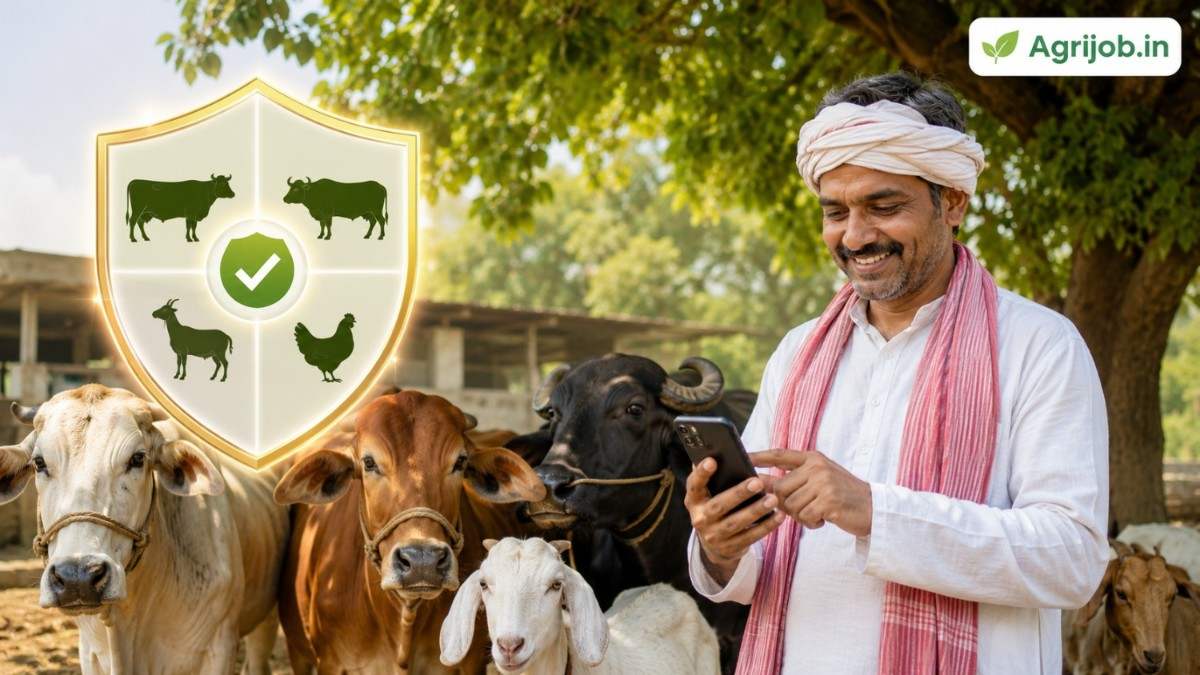
- 🐄 Dairy farmers who own crossbred or high-yielding cows or buffaloes producing at least 1,500 litres per lactation — the core beneficiary group under the central scheme.
- 🐐 Goat and sheep farmers covered under state-level and NLM extensions of the Pashudhan Bima scheme.
- 🌾 Small and marginal farmers for whom the death of a single animal represents a financial crisis equal to several months of income.
- 🏦 Farmers with livestock-backed loans — insured animals strengthen credit profiles with banks and cooperative lenders.
- 👩🌾 Women SHGs and Lakhpati Didi beneficiaries under NLM — government gives priority to women-led animal husbandry groups for insurance coverage.
- 🗺️ Farmers in flood-prone and forest-adjacent areas — particularly in Bihar, Assam, Uttar Pradesh and Odisha where livestock losses to disease and floods are disproportionately high.
- 🏔️ Himalayan and North-Eastern state farmers — eligible for up to 90% Central Government premium subsidy, making coverage nearly free.
- 📋 SC/ST and BPL livestock owners — several states additionally waive the farmer’s share of the premium entirely for these categories.
Premium Rates, Subsidy & Insurance Coverage Value
The insurance premium under Pradhan Mantri Pashudhan Bima Yojana is capped by DAHD guidelines and heavily subsidised by the Central Government. The animal is insured at its full current market value, jointly assessed by the veterinary practitioner, beneficiary, and insurance company representative at the time of policy issuance.

| Policy Duration | Max Premium Rate (of Insured Value) | Govt Subsidy (General States) | Govt Subsidy (Himalayan/NE) | Farmer’s Share |
|---|---|---|---|---|
| 1-Year Policy | Up to 4.5% | 50% | Up to 90% | 50% (or as low as 15% in some states) |
| 3-Year Policy | Up to 12% | 50% | Up to 90% | 50% (or lower with state top-up) |
As a practical example: a crossbred cow valued at ₹60,000 attracts an annual premium of approximately ₹2,100 (at 3.5%). With the 50% Central Government subsidy of ₹1,050, the farmer pays only ₹1,050 per year to insure that animal. In states like Bihar, where the government contributes 75%, the farmer pays just ₹525 for ₹60,000 of coverage. Under the 2026 NLM update, some regions allow farmers to pay as little as 15% — bringing out-of-pocket costs to under ₹350 for a full-year policy.
| Animal Type | Example Market Value | Annual Premium (3.5%) | Farmer Pays (50% subsidy) | Farmer Pays (75% subsidy) |
|---|---|---|---|---|
| Crossbred Cow | ₹40,000–₹60,000 | ₹1,400–₹2,100 | ₹700–₹1,050 | ₹350–₹525 |
| Buffalo (HYB) | ₹50,000–₹80,000 | ₹1,750–₹2,800 | ₹875–₹1,400 | ₹437–₹700 |
| Milch Cow (Exotic Breed) | ₹80,000–₹1,00,000 | ₹2,800–₹3,500 | ₹1,400–₹1,750 | ₹700–₹875 |
| Goat/Sheep (per unit) | Up to ₹4,000 per head | As per insurer | State scheme dependent | State scheme dependent |
Eligibility Criteria for Pradhan Mantri Pashudhan Bima Yojana
- Animal Type: Crossbred and high-yielding cattle/buffalo only under the central scheme. Female cattle/buffalo must yield at least 1,500 litres of milk per lactation to qualify as “high-yielding.”
- Animal Health: The animal must be healthy and certified fit by a registered veterinary practitioner at the time of enrollment. Animals with existing disease are excluded.
- Vaccination Status: Animals must be vaccinated against major diseases as per the veterinary officer’s recommendation before policy issuance.
- Animal Age: Typically 2–10 years (state schemes may vary; calves and very old animals are generally excluded).
- Exclusion — Double Insurance: Animals already covered under any other government insurance scheme or plan scheme cannot be enrolled under this scheme simultaneously.
- Subsidy Limit: The 50% Central Government premium subsidy is restricted to a maximum of 2 animals per beneficiary, for one policy cycle of up to 3 years.
- No Restriction on Additional Animals: Farmers may insure more animals at their own cost (without the Central subsidy), subject to the insurer’s terms.
- Identification Requirement: Each insured animal must carry an ear tag (traditional or microchip-based) applied at policy issuance. “No tag — No claim” is a hard rule.
- Documents Required: Aadhaar card, land/animal ownership records, bank account details (for DBT claim payment), veterinary health certificate, and animal photographs showing visible ear tag.
How to Apply for Pradhan Mantri Pashudhan Bima Yojana — Step-by-Step Process
- Contact your district’s State Livestock Development Board (SLDB) or State Animal Husbandry Department: These are the designated implementing agencies. Your district’s senior Animal Husbandry officer is the contact point for enrollment. In Bihar, UP, Haryana and other states, you can also visit the nearest Pashu Chikitsalay (veterinary hospital).
- Get your animal assessed and certified: A registered veterinary practitioner will examine your cattle/buffalo, confirm health status, determine current market value, and issue a Veterinary Health Certificate — the mandatory document for policy issuance.
- Ear-tag your animal: The insurance company (selected by the SLDB through competitive bidding) will apply an ear tag at their cost. The tag number is recorded on the policy and is essential for any future claim.
- Submit the proposal form: Fill the duly signed proposal form with your Aadhaar number, bank account details (for DBT), and animal details. Attach the vet certificate, animal photograph, and identity proof.
- Pay your share of the premium: Pay 50% (or the subsidised amount applicable in your state) to the insurance company or its agent. The SLDB remits the government’s 50% subsidy share directly to the insurer, so your policy activates once your portion is paid.
- Receive your policy document: The insurer issues the policy, which you must keep safely — it is required for claim settlement along with the ear tag.
- Online application (NLM portal): Under the National Livestock Mission, applications can also be submitted online at nlm.udyamimitra.in. Create your profile, upload documents, and submit. Applicable for entrepreneurship-linked livestock insurance components.
Always opt for the 3-year policy when enrolling — it is significantly more cost-effective than annual renewals and ensures your animal remains insured through flood or drought cycles. The Central Government subsidy under the 3-year policy covers 50% of the total 12% premium cap, meaning your out-of-pocket cost can be as low as 6% of the animal’s value spread across 3 years. Also, get your animal photographed with the ear tag clearly visible at enrollment — you will need this photo again if a claim arises.
How to File a Livestock Insurance Claim — 7-Step Process
- Report the death immediately (within 24 hours): Inform the insurance company and the nearest veterinary officer as soon as your insured animal dies. Late reporting can lead to claim rejection.
- Do not dispose of the animal: The carcass must be kept intact for post-mortem examination. Moving or burying the animal before the vet’s inspection can invalidate your claim.
- Post-mortem by veterinary officer: The Animal Husbandry Department veterinarian conducts a post-mortem and prepares a report stating cause of death.
- Surrender the ear tag: The ear tag of the deceased animal must be surrendered to the insurance company. “No tag — No claim” is strictly enforced.
- Submit the claim form with documents: File the duly completed claim form with the following: post-mortem report, death certificate from a qualified vet, insurance policy document, surrendered ear tag, Aadhaar card, bank account details, and photographs of the dead animal (ear tag clearly visible).
- Insurance company verification: The insurer’s surveyor verifies the documents, cross-checks the tag number, and processes the claim.
- Claim payment via DBT (within 15 days): Upon successful verification, the insured amount is credited directly to the farmer’s bank account within 15 working days. Any delay in payment attracts a penalty (under NLM guidelines, delays beyond the mandated period are reportable to IRDAI).
Pashudhan Bima Yojana vs Private Cattle Insurance — Key Differences
| Feature | Pradhan Mantri Pashudhan Bima Yojana (Govt) | Private Cattle Insurance (e.g., HDFC Ergo, New India) |
|---|---|---|
| Premium Subsidy | 50%–90% Central Govt subsidy | No government subsidy |
| Premium Cap | 4.5% (1 yr) / 12% (3 yr) | Market-linked; typically 3%–6% annually |
| Animal Eligibility | Crossbred/high-yielding cattle & buffalo | All breeds; cows, bulls, buffaloes, calves |
| Max Animals (subsidised) | 2 per beneficiary | Unlimited (commercially) |
| Cover Value | Full current market price (jointly assessed) | Sum insured as declared and accepted by insurer |
| Claim Settlement | 15 days (mandated by DAHD) | Varies by insurer; typically 15–30 days |
| Identification | Ear tag (govt-issued at insurer’s cost) | Ear tag + photograph (proposer’s cost) |
| Accessibility | Through SLDB/Animal Husbandry Dept | Direct from insurer, agent, or online |
| Best For | Small/marginal farmers, SC/ST, BPL households | Commercial dairy farms, large livestock owners |
For small and marginal farmers owning 1–2 high-yielding cows or buffaloes, the government Pashudhan Bima Yojana is the clear choice — the 50% (or higher) subsidy makes it far more affordable than private insurance. Farmers owning larger herds or exotic/high-value breeds should additionally explore private cattle insurance from AIC (Agriculture Insurance Company of India), New India Assurance, or HDFC Ergo for animals not covered under the central scheme’s subsidy limits.
Advantages and Disadvantages of Pradhan Mantri Pashudhan Bima Yojana
Advantages:
- 50%–90% premium subsidy makes livestock insurance highly affordable for small farmers
- Animal insured at full current market value — no underinsurance risk
- Ear-tagging cost borne by the insurance company, not the farmer
- 15-day claim settlement timeline is mandated and enforceable through IRDAI
- Under NLM 2026 updates, insurance limit expanded to 10 cattle units per household (up from 5)
Disadvantages:
- Central subsidy restricted to only 2 animals per beneficiary; additional animals must be insured at full cost
- Limited to crossbred and high-yielding cattle/buffalo under the central scheme — indigenous breeds have limited coverage in many states
- Scheme availability varies by district; currently implemented in 100 selected districts, not nationwide uniformly
- Low awareness among farmers means a large proportion of eligible animals remain uninsured
Important Terms Related to Pradhan Mantri Pashudhan Bima Yojana
- Livestock Insurance Scheme (LIS): The predecessor to the current framework, piloted in 100 districts from 2005–06 and later regularised; the foundation on which Pradhan Mantri Pashudhan Bima Yojana is built.
- National Livestock Mission (NLM): The umbrella Central Sector Scheme under which livestock insurance, entrepreneurship subsidies, and breed improvement are funded. NLM portal: nlm.udyamimitra.in.
- State Livestock Development Board (SLDB): The State Implementing Agency (SIA) for the scheme in most states. Responsible for selecting insurers, managing subsidy funds, and coordinating enrollment.
- High-Yielding Animal: Under DAHD guidelines, a female cattle/buffalo yielding at least 1,500 litres of milk per lactation qualifies as high-yielding and is eligible for the central scheme’s subsidy.
- Ear Tag: A uniquely numbered identification device fixed to the insured animal’s ear. Mandatory for policy issuance and claim settlement. “No tag — No claim” is non-negotiable.
- Veterinary Health Certificate: Issued by a qualified government or Veterinary Council of India (VCI)-registered private vet. Confirms health status, age, market value, and breed of the animal before enrollment.
- IRDAI: Insurance Regulatory and Development Authority of India. The nodal authority for any grievance against insurance companies regarding claim delays or deficiencies.
- DBT (Direct Benefit Transfer): All claim payments are made directly to the beneficiary’s bank account linked to Aadhaar, ensuring transparency and eliminating middlemen.
- Agriculture Insurance Company of India (AIC): One of the primary public sector insurers empanelled for livestock insurance; also implements PM Fasal Bima Yojana for crops.
- NLM Insurance Limit (2026 Update): Expanded from 5 to 10 cattle units per household, with government committing ₹37.92 crore for insuring 21 lakh animals in the latest disbursement.
Important Links — Pradhan Mantri Pashudhan Bima Yojana
| Resource | Link |
|---|---|
| Official DAHD Livestock Insurance Page | dahd.nic.in — Livestock Insurance |
| NLM Online Application Portal | nlm.udyamimitra.in |
| DAHD Official Website | dahd.gov.in |
| AIC (Agriculture Insurance Company) Livestock | aicofindia.com |
| IRDAI — Insurance Grievances | irdai.gov.in |
| Government Schemes India Portal | india.gov.in |
Conclusion: Is Pashudhan Bima Yojana Worth It for Indian Farmers?
Pradhan Mantri Pashudhan Bima Yojana 2026 is one of India’s most financially efficient safety nets for livestock owners — yet it reaches fewer than 1% of eligible animals. With the Central Government covering 50%–90% of your premium and claims paid within 15 days via DBT, the cost of protecting a ₹60,000 cow can be as low as ₹350–₹1,050 per year. If you own crossbred or high-yielding cattle or buffalo, enrolling before your next lactation season is the single most practical step you can take to protect your income. Visit your nearest Animal Husbandry Department office or check the NLM portal at nlm.udyamimitra.in to start your application today.
- Pradhan Mantri Pashudhan Bima Yojana provides 50% premium subsidy on livestock insurance for crossbred/high-yielding cattle and buffalo under DAHD.
- In Himalayan and North-Eastern states, the Central Government covers up to 90% of the premium — bringing farmer cost to near zero.
- Annual premium is capped at 4.5% of the animal’s market value; a ₹60,000 cow costs as little as ₹525 per year to insure after subsidy.
- Maximum 2 animals are covered with the Central subsidy per beneficiary; 2026 NLM update expanded household insurance limit to 10 cattle units.
- Claims must be filed within 24 hours of death and settled within 15 working days via Direct Benefit Transfer to the farmer’s bank account.
- Apply offline via your district SLDB/Animal Husbandry Department or online at nlm.udyamimitra.in for NLM-linked components.
Frequently Asked Questions About Pradhan Mantri Pashudhan Bima Yojana 2026
What is Pradhan Mantri Pashudhan Bima Yojana?
Pradhan Mantri Pashudhan Bima Yojana is a Centrally Sponsored Scheme implemented by the Department of Animal Husbandry, Dairying & Fisheries (DAHD) to provide livestock insurance protection to Indian farmers. The scheme subsidises 50% of the insurance premium for crossbred and high-yielding cattle and buffaloes, insuring them at their full current market value against death due to disease, accident, or natural calamity.
Which animals are covered under Pradhan Mantri Pashudhan Bima Yojana?
The central scheme primarily covers crossbred and high-yielding cattle and buffaloes. High-yielding is defined as female animals producing at least 1,500 litres of milk per lactation. Under NLM and state-level extensions of the Pashudhan Bima framework, goats, sheep, pigs, yaks, and mithuns are also covered in many states.
How much premium do farmers pay under this scheme?
Farmers pay 50% of the premium in general states, with the Central Government covering the remaining 50%. The maximum premium rate is 4.5% annually. For a cow valued at ₹60,000, the annual premium is approximately ₹2,100, of which the farmer pays only ₹1,050. In Himalayan and NE states, the government covers up to 90%, reducing the farmer’s cost to around ₹210 per year for the same animal. Under 2026 NLM updates, some regions allow farmer contributions as low as 15%.
How many animals can I insure with government subsidy?
The Central Government subsidy is restricted to a maximum of 2 large animals (cattle/buffalo) per beneficiary for one policy cycle of up to 3 years. Under the 2026 NLM update, the household insurance limit has been expanded to 10 cattle units. Farmers can insure additional animals at their own cost without the subsidy restriction.
What documents are required to enroll under Pashudhan Bima Yojana?
Required documents include: Aadhaar card, bank account details (for DBT claim payment), a Veterinary Health Certificate from a qualified vet confirming health status and current market value, photographs of the animal showing the ear tag, and animal ownership records. For SC/ST/BPL beneficiaries, the relevant category certificate is also required for additional state-level premium waivers.
How do I file a claim if my insured animal dies?
Report the death to the insurance company and nearest veterinary officer within 24 hours. Do not dispose of or bury the carcass before the vet conducts a post-mortem. Submit the claim form with the post-mortem report, vet’s death certificate, insurance policy, surrendered ear tag, Aadhaar card, and bank details. The insurer must settle the claim within 15 working days via Direct Benefit Transfer to your bank account.
What is the “No Tag — No Claim” rule?
“No tag — No claim” means that if your insured animal does not have the government-issued ear tag at the time of death, your insurance claim will be rejected regardless of other documents. The ear tag is the primary identification method for insured animals. The cost of applying the tag is borne by the insurance company at enrollment, but maintaining it is the farmer’s responsibility.
Can I insure indigenous (desi) breeds under Pradhan Mantri Pashudhan Bima Yojana?
The central scheme currently covers crossbred and high-yielding breeds. However, DAHD has proposed extending the scheme to indigenous cattle breeds, yak, and mithun in expanded districts. Several states — including Madhya Pradesh, Bihar, and Uttar Pradesh — have state-level schemes (MP Pashudhan Bima, Bihar Pashu Bima, UP Kamadhenu Pashu Bima) that specifically include indigenous breeds.
Where can I apply for Pashudhan Bima Yojana online?
For the National Livestock Mission insurance component, apply online at nlm.udyamimitra.in. For the core centrally sponsored livestock insurance scheme, contact your district’s State Livestock Development Board or the nearest Animal Husbandry Department office. Several states including Rajasthan have mobile apps (Mangla Pashu Bima app) and state portals for online registration.
What happens if the insurance company delays my claim payment?
Under DAHD guidelines, claim payment must be made within 15 working days. If the insurer delays, the farmer can file a complaint with the Insurance Regulatory and Development Authority of India (IRDAI) through irdai.gov.in or call the IRDAI Bima Bharosa helpline at 155255. DAHD also monitors claim settlement rates and can penalise non-performing insurers at the state level through the SLDB contract.
Last Updated: July 2026 | This guide is reviewed and updated regularly. Bookmark this page for the latest changes to premium rates, subsidy percentages, and enrollment windows.
Disclaimer: This article provides general information about government livestock insurance schemes in India. Specific premium rates, subsidy percentages, and eligibility criteria may vary by state and implementation district. Always verify current details with your district’s Animal Husbandry Department or the official DAHD portal at dahd.gov.in before enrolling.