
Kerala Pashupalan Loan Yojana 2026 gives farmers, rural entrepreneurs, and animal husbandry workers access to government-backed loans of up to Rs.10 lakh with subsidies ranging from 25% to 50% of the project cost. This guide is for Kerala residents — farmers, women SHG members, rural youth, and SC/ST applicants — who want to start or expand cow, goat, poultry, or dairy farming with financial support in 2026. You will find the complete scheme overview, subsidy percentages, eligibility, documents, step-by-step application process, comparison of all active loan schemes, and direct links to the official Ksheerasree portal (ksheerasree.kerala.gov.in) and the Department of Animal Husbandry Kerala (ahd.kerala.gov.in).

Kerala Pashupalan Loan Yojana 2026 offers animal husbandry loans up to Rs.10 lakh with a 25%–50% back-ended capital subsidy under central schemes like NLM and NABARD DEDS, channelled through KLDB and nationalised banks. Kerala dairy farmers additionally access the state’s Milk Shed Development Programme (MSDP) and the Ksheerasree portal for subsidy applications.
- Scheme Name: Kerala Pashupalan Loan Yojana 2026 (Animal Husbandry Loan)
- Implementing Bodies: Department of Animal Husbandry Kerala (ahd.kerala.gov.in), Dairy Development Department (dairydevelopment.kerala.gov.in), KLDB, NABARD
- Maximum Loan Amount: Rs.10 lakh (NLM/DEDS units); up to Rs.10 crore under AHIDF for large dairy infrastructure
- Subsidy (General): 25% back-ended capital subsidy (NABARD/DEDS pattern)
- Subsidy (SC/ST): 33.33% back-ended capital subsidy
- NLM Subsidy: 50% capital subsidy for eligible livestock entrepreneurship units
- Interest Rate: From 8.05% p.a. (SBI); effective 4% under KCC interest subvention
- AHD Budget 2026–27: Rs.1,221.77 crore (revised)
- Dairy Development Budget 2026–27: Rs.225.74 crore (revised)
- Official Application Portal: ksheerasree.kerala.gov.in
- Minister Responsible: Bindu Krishna, Minister for Animal Husbandry and Dairy Development, Kerala
- E-DBT Beneficiaries (Ksheerasree): 5,05,851 farmers (as per portal data)
- What Is Kerala Pashupalan Loan Yojana 2026?
- Who Should Apply for This Scheme?
- Subsidy & Loan Amounts – Full Breakdown
- Eligibility Criteria & Requirements
- How to Apply Online – Step-by-Step Process 2026
- Kerala Pashupalan Loan Schemes – Comparison Table
- Pros and Cons of Kerala Pashupalan Loan Yojana
- Important Terms Related to Kerala Animal Husbandry Loans
- Important Dates & Timelines
- Important Links
- Conclusion
- Key Takeaways
- Frequently Asked Questions
What Is Kerala Pashupalan Loan Yojana 2026?
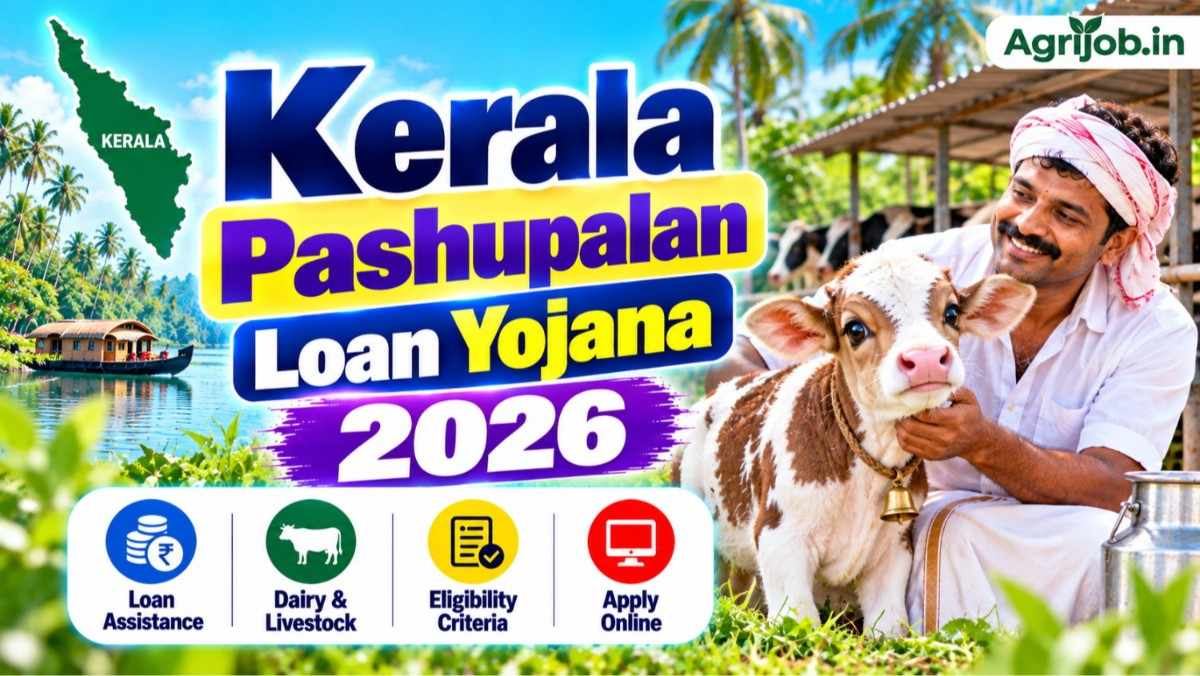
Kerala Pashupalan Loan Yojana 2026 is the collective term for government-backed animal husbandry and dairy loan schemes available to Kerala farmers, covering cow farming, buffalo rearing, goat farming, poultry, sheep rearing, and allied activities. These schemes are implemented by the Kerala Department of Animal Husbandry (ahd.kerala.gov.in) with an annual budget of Rs.1,221.77 crore, the Kerala Dairy Development Department (dairydevelopment.kerala.gov.in) with a budget of Rs.225.74 crore for 2026–27, and channelled via the Kerala Livestock Development Board (KLDB) in partnership with NABARD-affiliated scheduled commercial banks.
The term “Pashupalan Loan Yojana” in Kerala refers to three active layers of support: (1) central government schemes like the National Livestock Mission (NLM) offering 50% capital subsidy, and the NABARD DEDS-pattern loans offering 25–33% back-ended subsidy; (2) the state-run Milk Shed Development Programme (MSDP) implemented through the Ksheerasree portal for dairy-specific assistance; and (3) Kisan Credit Cards (KCC) for dairy working capital at an effective 4% interest rate. Kerala is one of India’s most active states for dairy loan disbursement, with over 5 lakh e-DBT beneficiaries on the Ksheerasree platform alone, and over 6.39 lakh applications filed as of 2026.

Kerala’s animal husbandry sector is significant: the state has approximately 13.41 lakh cattle, 13.59 lakh goats, and over 2.71 crore fowls as per the 20th Livestock Census. The state currently meets about 70% of its milk demand internally — approximately 27.91 lakh tonnes annually — and the Pashupalan Loan Yojana is a key policy instrument to close the remaining 30% deficit while increasing rural income.
Who Should Apply for Kerala Pashupalan Loan Yojana 2026?
This scheme is designed for a wide range of applicants across Kerala. If you belong to any of the profiles below, you should strongly consider applying in 2026:
- 🐄 Small and marginal farmers who currently own 2–5 cattle and want to scale to a 10-cow dairy unit with MSDP/DEDS subsidy support and low-interest bank loans.
- 👩 Rural women and women SHG members — Kerala’s Dairy Development Department actively prioritises women applicants under MSDP and Ksheerasree; SC/ST women receive up to 70% premium subsidy under Gau Samridhi Plus insurance.
- 🌾 SC/ST farmers who qualify for the higher 33.33% back-ended subsidy under NABARD DEDS and up to 50% under NLM, significantly reducing the loan repayment burden.
- 🎓 Agriculture and veterinary graduates looking to start a modern dairy farm or animal husbandry unit as a business, targeting Rs.50,000–Rs.1,50,000/month revenue from a 10–20 cow unit.
- 🐐 Goat and sheep farmers who want to establish small ruminant units with NLM’s 50% capital subsidy, applied through KLDB and the district Animal Husbandry office.
- 🏡 Rural homestead farmers in Kerala who want to add 2–5 cows or a small poultry unit as supplementary income alongside their existing crop farming activities.
- 🧑💼 Unemployed rural youth (18–40 years) seeking to start self-employment in animal husbandry with NABARD or NLM-linked dairy entrepreneurship loans.
- 🏛️ Farmer Producer Organisations (FPOs) and Dairy Cooperatives in Kerala that wish to access the AHIDF or DIDF infrastructure fund for building processing and chilling units.
Subsidy & Loan Amounts – Full Breakdown
The financial benefits under Kerala Pashupalan Loan Yojana 2026 vary by scheme, unit size, and borrower category. Every applicant should identify the right scheme layer before approaching a bank — the combination of schemes can dramatically reduce your effective loan cost.
| Scheme | Loan Amount | Subsidy (General) | Subsidy (SC/ST) | Interest Rate |
|---|---|---|---|---|
| NABARD DEDS-Pattern (10 animals) | Up to Rs.5 lakh | 25% (max Rs.1.25 lakh) | 33.33% (max Rs.1.67 lakh) | 8.05%+ p.a. |
| National Livestock Mission (NLM) | Up to Rs.10 lakh | 50% capital subsidy | 50% capital subsidy | Bank rate; subsidised |
| AHIDF (Large dairy infra) | Up to Rs.10 crore | 3% interest subvention (8 years) | 3% interest subvention | ~6.5% effective |
| Kisan Credit Card (KCC) – Dairy | Working capital limit | Interest subvention to 4% | Same | 4% effective (prompt repay) |
| MSDP (10-cow unit, Kerala state) | Full unit cost via bank loan | State subsidy (as per DPR) | Enhanced state support | Bank-linked |
| Gau Samridhi Plus (Insurance) | Cattle insurance | 50% premium subsidy | 70% premium subsidy | N/A (insurance scheme) |
Under the MSDP scheme, Kerala’s Dairy Development Department provides assistance for purchasing up to 10 milch cow units, heifer rearing units (5-heifer and 10-heifer), milking machine purchase, and construction or modernisation of cattle sheds. The maximum financial assistance under the Subhiksha Kerala component for indigenous desi cows (Gir, Sahiwal, Vechur, Sindhi) is Rs.36,500 per beneficiary. Under NLM, the 50% subsidy is back-ended — meaning it is credited to your loan account after the unit is set up and inspected, reducing your outstanding principal directly.
For a standard 10-cow dairy unit in Kerala with a project cost of Rs.5 lakh under NABARD DEDS pattern: a general category farmer receives a Rs.1.25 lakh subsidy (25%), while an SC/ST farmer receives Rs.1.67 lakh (33.33%). Under NLM for a Rs.10 lakh goat or sheep farming unit, the 50% subsidy means Rs.5 lakh is effectively a grant — the farmer repays only Rs.5 lakh plus interest. Since 2014–15, the Central Government has released Rs.2,687.32 lakh to Kerala under NLM alone, confirming active and funded scheme availability in the state.
Eligibility Criteria & Requirements
To qualify for Kerala Pashupalan Loan Yojana 2026, applicants must meet the following criteria. Requirements differ slightly by sub-scheme, so read carefully before applying.
- Residency: Must be a permanent resident of Kerala (valid Aadhaar or ration card with Kerala address)
- Age: 18 to 60 years (relaxation for SC/ST/women as per scheme guidelines)
- Occupation: Farmer, dairy worker, rural entrepreneur, SHG member, FPO member, or agriculture graduate
- Land Ownership / Lease: For 10-cow MSDP units — minimum 50 cents of land for fodder cultivation; for 20-cow units — minimum 1 acre
- Loan Eligibility: Applicant must obtain a formal bank sanction letter from KLDB or a NABARD-affiliated scheduled commercial bank before NLM/MSDP subsidy can be claimed
- Bank Account: Active savings/current account linked with Aadhaar (mandatory for e-DBT subsidy transfer)
- Dairy Cooperative Membership: For MSDP and Ksheerasree schemes — the applicant or area must be covered by a Dairy Cooperative Society (DCS)
Application Fee Table:
| Category | Application Fee | Processing Fee |
|---|---|---|
| General | Nil (Ksheerasree portal — free) | As per bank norms |
| SC/ST | Nil | Waived in most cases |
| Women / SHG | Nil | Waived in most cases |
| FPO / Cooperative | Nil (government scheme) | As per bank norms |
Documents Required:
- Aadhaar card (applicant and co-borrower if any)
- Ration card or proof of Kerala residency
- Land ownership documents or lease agreement (minimum 50 cents for 10-cow unit)
- Bank passbook / account statement (last 6 months)
- Passport-size photographs
- Caste certificate (for SC/ST enhanced subsidy)
- Detailed Project Report (DPR) — required for NLM and AHIDF applications
- Bank loan sanction letter (mandatory before submitting subsidy application)
- Cattle insurance proof (for MSDP cow units — 3-year insurance mandatory)
- Dairy cooperative membership certificate (for Ksheerasree/MSDP)
How to Apply Online – Step-by-Step Process 2026
The application process for Kerala Pashupalan Loan Yojana 2026 follows a multi-step sequence. Complete each step in order — skipping steps (especially the bank sanction before subsidy submission) is the most common reason for rejection.
- Identify your scheme: Decide which loan scheme suits your unit — NABARD DEDS pattern (2–10 cows), NLM (goat/sheep/poultry unit, 50% subsidy), MSDP (Kerala state dairy scheme), or KCC (working capital). Your unit type determines which bank and which department you approach.
- Register on Ksheerasree portal: Visit ksheerasree.kerala.gov.in and complete farmer registration using your Aadhaar and mobile number. This step is mandatory for all MSDP and dairy subsidy applications in Kerala.
- Prepare your Detailed Project Report (DPR): For NLM and AHIDF applications, prepare a DPR covering unit size, cost estimate, land details, breed selection, and projected income. KLDB branch officers or your District Animal Husbandry Office can assist with DPR preparation free of charge.
- Obtain bank loan sanction: Approach KLDB, SBI, Federal Bank, or another NABARD-affiliated scheduled commercial bank with your DPR. Obtain a formal sanction letter. This step is mandatory — the subsidy cannot be claimed without a prior bank sanction letter.
- Submit application to District Animal Husbandry Office: Submit your application along with the DPR and bank sanction letter to your District Animal Husbandry Office. For NLM, register at nlm.udyamimitra.in and submit there as well.
- Site inspection: A KLDB or DAHD official will inspect your proposed site and verify DPR details. Applications with incomplete land documents or missing bank sanction letters are returned at this stage. Ensure all documents are in order before the inspection date.
- Set up the unit: Construct the shed and purchase the animals using the sanctioned bank loan. NLM and NABARD DEDS do not release subsidy funds before the unit is set up and verified.
- Post-setup inspection and subsidy release: After the unit is complete and inspected by a KLDB or AHD official, the subsidy amount is released via NABARD/state treasury as an e-DBT transfer directly into your bank account or credited to your loan account, reducing the outstanding principal.
Apply for the Kisan Credit Card (KCC) simultaneously with your main pashupalan loan. KCC provides revolving working capital for animal feed, veterinary expenses, and fodder purchases at an effective 4% interest rate for prompt repayers — dramatically cutting your monthly operating cost. Ask your KLDB branch officer about combining KCC with the main dairy loan before the bank sanction stage.
Kerala Pashupalan Loan Schemes – Comparison Table
Choosing the right scheme layer is the most important financial decision for a new animal husbandry applicant in Kerala. The table below compares all active schemes side by side.
| Parameter | NABARD DEDS-Pattern | National Livestock Mission (NLM) | MSDP (Kerala State) | AHIDF (Large Infra) |
|---|---|---|---|---|
| Unit Type | Dairy (2–10 cows) | Goat, sheep, poultry, dairy | Dairy (cow units, heifer) | Dairy processing plants, feed units |
| Max Loan | Rs.5 lakh (10 cows) | Rs.10 lakh | As per DPR (bank-linked) | Rs.10 crore |
| Subsidy % | 25% / 33.33% SC-ST | 50% capital subsidy | State scheme (variable) | 3% interest subvention |
| Subsidy Type | Back-ended (post-setup) | Back-ended (post-setup) | Direct / e-DBT | Interest subvention (8 yrs) |
| Implementing Bank | KLDB / Nationalised banks | KLDB / SCBs | Kerala Bank / KLDB | NABARD + Scheduled banks |
| Portal | Bank + AHD office | nlm.udyamimitra.in | ksheerasree.kerala.gov.in | ahidf.udyamimitra.in |
| Who Applies | Individual farmers | Entrepreneurs, FPOs, SHGs | Dairy farmers (cooperative members) | MSMEs, FPOs, private companies |
| Best For | Small dairy farmers scaling up | Goat/sheep/poultry startups | Kerala dairy cooperative members | Large-scale dairy entrepreneurs |
For most Kerala small farmers starting a 5–10 cow dairy unit: the MSDP Kerala state scheme via the Ksheerasree portal is your first stop, combined with a KLDB bank loan. If you are starting a goat or sheep rearing unit, NLM’s 50% subsidy is the most generous option available in 2026 and is actively funded in Kerala. Large-scale dairy entrepreneurs (Rs.50 lakh+ investment) should explore the AHIDF corpus. Always combine your main unit loan with a KCC for working capital.
Pros and Cons of Kerala Pashupalan Loan Yojana 2026
Like any financial scheme, Kerala’s animal husbandry loan ecosystem has clear strengths and genuine limitations that applicants should understand before committing.
✅ Advantages
- High subsidy rates: NLM offers 50% capital subsidy — one of the highest in any sector — meaning nearly half your investment is a grant, not a debt.
- Digital application via Ksheerasree: Kerala’s Ksheerasree portal (ksheerasree.kerala.gov.in) enables end-to-end online applications, subsidy tracking, and e-DBT transfer to Aadhaar-linked bank accounts — reducing corruption and delays significantly.
- Low effective interest via KCC: Combining pashupalan loan with Kisan Credit Card reduces working capital cost to 4% effective interest — much lower than any private or NBFC loan.
- Free cattle insurance: The Gau Samridhi Plus scheme provides cattle insurance with 50–70% premium subsidy, protecting your investment from unexpected animal death losses.
- Strong institutional support: KLDB branches across all districts, block-level Dairy Extension Units (DEUSUs), and the AHD at every panchayat make Kerala one of the best-supported states for animal husbandry financing.
⚠️ Disadvantages
- Subsidy is back-ended: Under NLM and NABARD DEDS, the subsidy is released only after the unit is set up and inspected — you must arrange full upfront bank financing first, which can be a barrier for applicants with low collateral.
- DEDS discontinued: The original NABARD Dairy Entrepreneurship Development Scheme (DEDS) was formally discontinued after FY 2020–21. Farmers should confirm the current equivalent scheme and subsidy availability with their district AHD office before applying, as references online may be outdated.
- Fodder land requirement: The MSDP 10-cow unit requires at least 50 cents of land for fodder cultivation — a constraint for landless farmers or those with very small plots in Kerala’s densely settled districts.
Important Terms Related to Kerala Animal Husbandry Loans
Understanding these high-CPC terms will help you navigate Kerala’s pashupalan loan landscape more confidently and communicate correctly with bank officers and department officials.
- KLDB (Kerala Livestock Development Board): The primary state-level institution implementing NLM and NABARD-linked animal husbandry loans in Kerala. KLDB branches in every district act as the nodal agency for DPR processing, site inspection, and subsidy channelling.
- MSDP (Milk Shed Development Programme): Kerala state’s flagship dairy loan scheme administered through the Dairy Development Department. MSDP supports 2-cow, 5-cow, 10-cow, and 20-cow units with linked bank loans and state subsidy, applied exclusively via the Ksheerasree portal.
- NLM (National Livestock Mission): Central government scheme under DAHD offering a 50% back-ended capital subsidy for eligible livestock entrepreneurship units including dairy, goat, sheep, and poultry — the highest subsidy available in the pashupalan sector.
- NABARD (National Bank for Agriculture and Rural Development): The refinancing institution that channels dairy farm loan subsidies to commercial banks and Regional Rural Banks for on-lending to farmers. NABARD does not lend directly to farmers — apply through your bank.
- AHIDF (Animal Husbandry Infrastructure Development Fund): Rs.29,110 crore central fund for large dairy processing infrastructure loans (up to Rs.10 crore) with 3% annual interest subvention for 8 years. Targeted at MSMEs, FPOs, and private dairy entrepreneurs.
- KCC (Kisan Credit Card for Dairy): Working capital revolving credit for dairy farmers covering feed, veterinary, and fodder costs. Effective interest rate is 4% per annum for prompt repayors under the interest subvention scheme.
- Ksheerasree: Kerala’s official online portal (ksheerasree.kerala.gov.in) for dairy farmer registration, subsidy application, e-DBT tracking, and grievance filing. Over 5 lakh e-DBT beneficiaries have been served via this platform.
- Back-ended Subsidy: A subsidy released after the unit is set up and inspected, credited directly into the borrower’s loan account to reduce outstanding principal — not paid upfront. All NLM and NABARD DEDS subsidies are back-ended.
- DPR (Detailed Project Report): Mandatory document for NLM and AHIDF applications, covering unit size, cost, breed, land, infrastructure plan, and projected cash flow. Required before bank sanction and before submitting to the AHD office.
- Gau Samridhi Plus: Kerala government’s cattle insurance scheme offering coverage of Rs.50,000–Rs.70,000 per cow with 50% premium subsidy (general) and 70% (SC/ST), administered by the Dairy Development Department.
Important Dates & Timelines 2026
| Event / Activity | Date / Period |
|---|---|
| Ksheerasree Fodder Scheme applications (2026–27) open | Active (last date was 7 September 2026 — check portal for next round) |
| NLM Application window (rolling) | Year-round via nlm.udyamimitra.in |
| AHIDF corpus validity | Extended to 31 March 2026; check NABARD for FY 2026–27 extension |
| AHD Kerala Budget 2026–27 (revised) | Rs.1,221.77 crore allocated |
| Dairy Development Dept Budget 2026–27 | Rs.225.74 crore allocated |
| KCC renewal cycle | Annual — renew before the card expiry date at your issuing bank |
| MSDP 2026–27 scheme applications | Register on ksheerasree.kerala.gov.in when new round opens |
Important Links
| Link Name | URL |
|---|---|
| Ksheerasree Official Portal (Apply Online) | ksheerasree.kerala.gov.in |
| Department of Animal Husbandry Kerala | ahd.kerala.gov.in |
| Dairy Development Department Kerala | dairydevelopment.kerala.gov.in |
| NLM Application Portal (National) | nlm.udyamimitra.in |
| NABARD Official Site | nabard.org |
| NABARD Dairy Farm Loan Guide (Agrijob.in) | NABARD Dairy Farm Loan 2026 – Complete Guide |
| PM Dairy Loan Yojana (Agrijob.in) | Pradhan Mantri Dairy Loan Yojana 2026 – All 6 Schemes |
| Dairy Farm Loan 2026 Complete Guide (Agrijob.in) | Dairy Farm Loan 2026 – EMI, Subsidy & Apply |
Conclusion
Kerala Pashupalan Loan Yojana 2026 provides one of the most well-supported animal husbandry financing ecosystems in India, combining state schemes like MSDP and Gau Samridhi Plus with central programmes like NLM (50% subsidy) and NABARD DEDS-pattern loans (25–33% subsidy) — all accessible through the digital Ksheerasree portal. Whether you are a small dairy farmer wanting to scale from 2 to 10 cows, a goat farmer looking for the highest subsidy available, or an entrepreneur building a dairy processing unit, the right scheme exists in Kerala’s 2026 framework.
Register on ksheerasree.kerala.gov.in today, get your DPR prepared with KLDB’s free support, and submit your bank loan application before the next scheme window closes. Bookmark this page — we update it every time official scheme guidelines or subsidy rates change.
- Kerala Pashupalan Loan Yojana 2026 offers subsidies from 25% (general NABARD) up to 50% (NLM) on animal husbandry project costs.
- Over 5.05 lakh Kerala dairy farmers have already received e-DBT subsidies via the Ksheerasree portal — the scheme is active and funded in 2026–27.
- SC/ST applicants receive the highest subsidy: 33.33% under NABARD DEDS-pattern and 50% under NLM, plus 70% premium subsidy on cattle insurance.
- The bank loan sanction from KLDB or a nationalised bank must come BEFORE the subsidy application — skipping this step is the most common rejection reason.
- Apply online at ksheerasree.kerala.gov.in for MSDP/dairy schemes, and at nlm.udyamimitra.in for goat/sheep/poultry NLM units.
Frequently Asked Questions About Kerala Pashupalan Loan Yojana 2026
What is Kerala Pashupalan Loan Yojana 2026?
Kerala Pashupalan Loan Yojana 2026 refers to the combined set of central and state government animal husbandry loan schemes available to Kerala farmers, including NABARD DEDS-pattern loans (25–33% subsidy), National Livestock Mission (50% subsidy), the state’s MSDP dairy scheme, and the AHIDF large infrastructure fund. Applications for dairy schemes are made through ksheerasree.kerala.gov.in, while NLM applications go through nlm.udyamimitra.in, both supported by KLDB branches across all Kerala districts.
How much subsidy do I get under Kerala Pashupalan Loan Yojana 2026?
The subsidy depends on the scheme and your category. Under NABARD DEDS-pattern loans, general category farmers receive 25% back-ended subsidy (maximum Rs.1.25 lakh on a 10-cow unit), and SC/ST farmers receive 33.33% (maximum Rs.1.67 lakh). Under the National Livestock Mission (NLM), all eligible applicants receive 50% capital subsidy on goat, sheep, poultry, or dairy entrepreneurship units up to Rs.10 lakh project cost. Kerala state’s MSDP scheme provides additional state-level subsidy for dairy cooperative members, with a maximum of Rs.36,500 for Subhiksha Kerala desi cow units.
How do I apply online for Kerala Pashupalan Loan Yojana 2026?
For dairy and MSDP schemes, visit ksheerasree.kerala.gov.in, register as a farmer using your Aadhaar, select the applicable scheme under “Availing Subsidy,” prepare your DPR, get a bank sanction letter from KLDB or a nationalised bank, and submit your application along with all required documents. For NLM-linked goat, sheep, or poultry units, register at nlm.udyamimitra.in and submit your application to the District Animal Husbandry Office after getting bank sanction. Site inspection follows before the subsidy is released.
What is the interest rate on Kerala animal husbandry loans in 2026?
Interest rates on Kerala pashupalan loans start from approximately 8.05% per annum at SBI for general agricultural loans. KLDB offers competitive rates for livestock loans across all 14 districts. Under the Kisan Credit Card (KCC) linked to dairy working capital, prompt-repaying borrowers can access an effective 4% interest rate due to the central government’s interest subvention scheme. AHIDF loans for large dairy infrastructure carry an approximately 6.5% effective rate with a 3% interest subvention from the government. Always confirm the current rate at your KLDB or bank branch before signing the loan agreement.
Who is eligible for Kerala Pashupalan Loan Yojana 2026?
Any permanent Kerala resident aged 18–60 who is a farmer, rural entrepreneur, dairy cooperative member, SHG member, agriculture graduate, or FPO member can apply. SC/ST applicants receive enhanced subsidy. For MSDP dairy schemes, the applicant must be covered by a Dairy Cooperative Society and must have at least 50 cents of land for fodder cultivation (for a 10-cow unit). Dairy cooperative membership and an Aadhaar-linked bank account are mandatory for e-DBT subsidy transfer.
What documents are needed for Kerala pashupalan loan application?
Required documents include: Aadhaar card, ration card or Kerala residency proof, land ownership documents or lease agreement (minimum 50 cents for 10-cow MSDP unit), bank passbook with last 6 months statements, passport-size photographs, caste certificate (for SC/ST enhanced subsidy), Detailed Project Report (DPR), formal bank loan sanction letter from KLDB or nationalised bank, cattle insurance proof (3-year insurance mandatory for MSDP cow units), and dairy cooperative membership certificate.
Is the NABARD DEDS scheme still active in Kerala in 2026?
The original NABARD Dairy Entrepreneurship Development Scheme (DEDS) was formally discontinued after FY 2020–21 as per NABARD’s official records. However, DEDS-pattern subsidies continue to be referenced in the context of dairy loans — what this means in practice is that NABARD and state governments continue to operate similar 25–33% back-ended capital subsidy structures through NLM and AHIDF. Farmers should verify with their KLDB branch or District Animal Husbandry Office whether the specific DEDS subsidy component is currently available for their unit type in 2026, as guidelines are updated periodically.
What is the Ksheerasree portal and how does it help Kerala dairy farmers?
Ksheerasree (ksheerasree.kerala.gov.in) is the official web-enabled application platform of the Kerala Dairy Development Department, jointly developed with NIC (National Informatics Centre). It provides end-to-end digital services for dairy farmers including online farmer registration, subsidy scheme applications for MSDP and fodder programmes, Aadhaar-linked e-DBT subsidy transfer, grievance filing and tracking, and scheme MIS dashboards. As of 2026, over 5 lakh Kerala dairy farmers have received e-DBT subsidy transfers through this portal, making it one of the most successful state dairy tech platforms in India.
Can I get a loan for goat farming under Kerala Pashupalan Loan Yojana 2026?
Yes. Goat farming and sheep rearing are covered under the National Livestock Mission (NLM), which provides a 50% capital subsidy on eligible units up to Rs.10 lakh project cost. In Kerala, NLM is implemented by KLDB, and applications are submitted through nlm.udyamimitra.in. The process requires a DPR, bank sanction from a KLDB or NABARD-affiliated bank, submission to the District Animal Husbandry Office, site inspection, unit setup, and post-setup inspection before the 50% subsidy is released. NLM is actively funded in Kerala — Rs.2,687.32 lakh has been released to the state since 2014–15.
What cattle breeds can I purchase under Kerala dairy loan schemes?
Under MSDP and the Subhiksha Kerala scheme (for indigenous cow support), applicants can purchase approved milch animals including crossbred HF and Jersey varieties (which form approximately 82% of Kerala’s cattle population) and indigenous breeds like Gir, Sahiwal, Vechur, and Sindhi. The Subhiksha Kerala programme specifically supports purchase of desi cows (Gir, Sahiwal, Vechoor, Sindhi) with a maximum financial assistance of Rs.36,500 per beneficiary. All purchased cattle under MSDP must be insured for a minimum of 3 years, and only milch cows are permitted for purchase under the scheme.
Last Updated: September 2026 | This guide is reviewed and updated regularly. Bookmark this page for the latest Kerala Pashupalan Loan Yojana 2026 scheme data, subsidy rates, and portal links.
Disclaimer: This article is for informational purposes only. Subsidy percentages, scheme guidelines, interest rates, and eligibility criteria are subject to change by the Government of Kerala, NABARD, or central government authorities. Always verify current terms with the official Ksheerasree portal (ksheerasree.kerala.gov.in), your KLDB branch, or the District Animal Husbandry Office before making any financial commitment.