

Post-harvest loss reduction technology is the single most impactful investment a fresh fruit grower can make in 2026 — because growing the fruit is only half the battle. According to the FAO, approximately 45% of all fresh produce is lost or wasted annually along the global supply chain, with fruits specifically recording a staggering 61% loss rate post-harvest. In India, the NABCONS study commissioned by the Ministry of Food Processing Industries estimated annual post-harvest losses across all agricultural commodities at Rs.92,600 crore — with fruits and vegetables bearing the largest share of those losses.

This guide is for fresh fruit growers, orchard managers, FPO leaders, cold chain investors, and agri-entrepreneurs who want to cut losses, extend shelf life, and improve farm income using proven technologies — with real data on costs and returns. We cover cold storage, controlled atmosphere, modified atmosphere packaging, 1-MCP ethylene inhibitors, edible coatings, and IoT monitoring — ranked by ROI potential for Indian conditions in 2026.
Post-harvest loss reduction technology in 2026 delivers measurable ROI for fresh fruit growers — cold chain investments alone reduce mango post-harvest losses from 32% down to 9%, while controlled atmosphere (CA) storage extends apple shelf life by 6–12 months. For most Indian fruit growers, a tiered approach starting with pre-cooling and cold storage — supported by government subsidies of 35–50% under PMKSY — offers the fastest payback period of 3–5 years.
- India’s Annual Post-Harvest Loss (Fruits): 19% of total production value (ICAR, 2023)
- Total Economic Loss Across All Crops: Rs.92,600 crore per year (NABCONS/MoFPI)
- Global Fresh Produce Waste: ~$88 billion annually (Avery Dennison/CEBR, 2026)
- Guava — Highest Loss Crop in India: 15.05% total post-harvest loss (NABCONS 2020–22)
- Cold Chain ROI (Mango): Losses reduced from 32% to 9% with pre-cooling + refrigerated transport
- CA Storage Shelf-Life Extension: Apples storable 6–12 months (vs 1–2 months ambient)
- MAP Shelf-Life Gain: 50–200% extension depending on commodity
- Government Subsidy Available: 35–50% of project cost under PMKSY and MIDH
- India Cold Chain Market 2025: INR 2,535 billion — projected INR 6,191 billion by 2034 (CAGR 10.43%)
- IoT Monitoring Impact: Reduces spoilage by 20–35% when integrated with cold chain (2026 data)
- What Is Post-Harvest Loss Reduction Technology?
- Who Should Adopt These Technologies?
- Cold Storage and Cold Chain Technology — ROI Analysis
- Controlled Atmosphere (CA) Storage — Best for Premium Fruit
- Modified Atmosphere Packaging (MAP) — Low-Cost Shelf-Life Extension
- 1-MCP and Ethylene Inhibitors — Chemical ROI for Climacteric Fruits
- Edible Coatings — The Organic Alternative
- IoT and Smart Monitoring Technology
- Technology Comparison: Which Delivers the Best ROI?
- Advantages and Disadvantages of Post-Harvest Technology Adoption
- How to Get Started: Step-by-Step for Indian Fruit Growers
- Important Terms Related to Post-Harvest Technology
- Government Schemes and Important Links
- Conclusion
- Key Takeaways
- Frequently Asked Questions
What Is Post-Harvest Loss Reduction Technology?
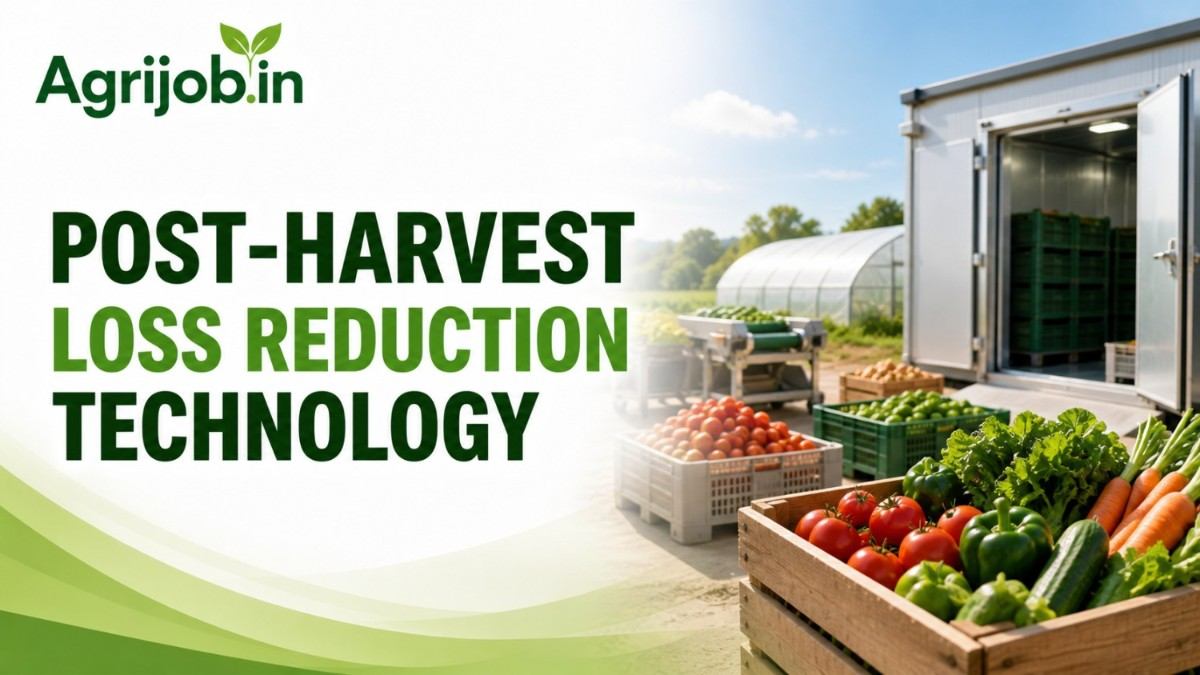
Post-harvest loss reduction technology refers to the full spectrum of methods, equipment, and systems applied after fruit is harvested — from the field to the point of sale — to slow spoilage, extend shelf life, maintain quality, and prevent economic waste. These technologies target the core drivers of deterioration: temperature, respiration rate, ethylene production, microbial growth, and mechanical injury.

The principle behind every major post-harvest technology is the same: reduce the biological activity of the fruit without destroying it. Fruits continue to breathe, ripen, and lose moisture after harvest. Left unchecked, these processes lead to softening, decay, color loss, and ultimately a product that never reaches the consumer. A single hour of delay at warm field temperatures can cost a produce item a full day of shelf life — even if it is stored perfectly afterward.
The major categories of post-harvest loss reduction technology in 2026 include: cold storage and pre-cooling, controlled atmosphere (CA) storage, dynamic controlled atmosphere (DCA), modified atmosphere packaging (MAP), ethylene inhibitors like 1-MCP, edible coatings and wax treatments, UV-C irradiation, and IoT-based smart monitoring systems. Each has a different cost profile, application window, and ROI range.
Who Should Adopt Post-Harvest Loss Reduction Technology?
Post-harvest technology is not one-size-fits-all. The right solution depends on crop type, scale, budget, and market — here is who benefits most:
- 🍎 Orchard owners and apple growers in Himachal Pradesh and J&K — CA and DCA storage can extend apple shelf life up to 12 months, allowing price-timed selling and export market access.
- 🥭 Mango growers in UP, Maharashtra, Andhra Pradesh, and Gujarat — Pre-cooling chambers and ripening rooms combined with 1-MCP treatment dramatically reduce the 19% post-harvest loss rate currently recorded for mangoes.
- 🍓 Strawberry, grape, and berry producers — MAP packaging extends strawberry shelf life from 4–5 days to up to 14 days, critical for domestic retail and export timelines.
- 🧺 Farmer Producer Organisations (FPOs) and Cooperatives — Shared cold storage and pack house infrastructure under PMKSY subsidies provide economies of scale unavailable to individual small farmers.
- 🏭 Agri-entrepreneurs and cold chain investors — The Indian cold chain market is growing at 10.43% CAGR and is chronically undersupplied, creating a 35+ million MT capacity gap (NCCD data).
- 🚚 Exporters targeting premium international markets — European and Gulf buyers mandate CA storage and MAP packaging for high-value Indian fruits; technology adoption opens new revenue channels.
- 🌾 State government horticulture departments and MIDH scheme beneficiaries — Subsidies of 35–50% under PMKSY, MIDH, and NHB schemes make cold storage infrastructure economically viable for the first time for many growers.
- 📱 AgriTech startups and precision agriculture practitioners — IoT-based cold chain monitoring and AI-driven quality grading represent scalable SaaS models for post-harvest management.
Cold Storage and Cold Chain Technology — ROI Analysis 2026
Cold storage is the foundation of every effective post-harvest loss reduction strategy. Temperature management is the most commercially impactful technology available — and all other post-harvest solutions (CA, MAP, 1-MCP, edible coatings) are supplementary to good temperature control. Pre-cooling is the first and most critical step: rapidly removing field heat from freshly harvested fruit prevents a cascade of quality loss that no downstream technology can reverse.
For Indian mango growers specifically, investments in pre-cooling and refrigerated transport have been shown to reduce post-harvest losses from 32% down to as low as 9% — a loss reduction of 23 percentage points that directly translates to marketable revenue. At current farm-gate prices, this recovery can add Rs.30,000–Rs.80,000 per acre per season for premium mango varieties.
| Cold Storage Type | Cost per MT (India, 2026) | Shelf-Life Gain | Best For |
|---|---|---|---|
| Basic Cold Room (0–5°C) | Rs.8,000–12,000/MT | 3–5× ambient | Apples, citrus, pomegranate |
| Multi-Commodity Cold Store | Rs.12,000–18,000/MT | 4–6× ambient | Mixed fruits and vegetables |
| Pre-Cooling Chamber (Forced Air) | Rs.4,000–8,000/MT | Critical first step | All tropical and subtropical fruits |
| Ripening Chamber | Rs.5,000–9,000/MT | Controlled ripening | Mango, banana, papaya |
| CA Storage (Controlled Atmosphere) | Rs.20,000–35,000/MT | 6–12 months for apples | Premium apples, kiwi, pears |
The Indian cold chain market was valued at INR 2,535 billion in 2025 and is projected to reach INR 6,191 billion by 2034, growing at 10.43% CAGR. Despite this growth, India has approximately 37 million MT of cold storage capacity against 104 million MT of perishable production — a structural shortfall that keeps post-harvest losses artificially high. Basic cold storage earns Rs.150–250 per pallet per month; CA storage commands Rs.500–800 per pallet — giving investors a clear premium-tier revenue opportunity.
Controlled Atmosphere (CA) Storage — Best for Premium Fruit
Controlled Atmosphere (CA) storage manipulates the gaseous environment inside a sealed storage unit — typically reducing oxygen to around 2% (from 21% in normal air) and increasing carbon dioxide to 2–2.5% — to make fruit metabolically dormant, dramatically slowing ripening, decay, and quality loss.
CA storage is most commercially proven for apples and pears, where it extends shelf life from the typical 1–2 months achievable with basic refrigeration to 6–12 months of storeable quality. Dynamic Controlled Atmosphere (DCA) is an advanced version that adjusts gas levels in real-time based on the fruit’s changing physiological status — reducing the risk of low-oxygen injury while maximising shelf-life extension.
The economics of CA storage in India are increasingly favourable in 2026. CA storage commands 3–5× per-pallet pricing versus basic cold storage. Revenue per pallet position for CA storage runs Rs.500–800 per pallet per month versus Rs.150–250 for basic cold storage — giving CA facility operators a strong premium margin. When combined with 1-MCP treatment, some apple cultivars can be stored at higher temperatures with equivalent quality outcomes, generating additional energy savings.
Modified Atmosphere Packaging (MAP) — Scalable Shelf-Life Extension
Modified Atmosphere Packaging (MAP) extends the shelf life of fresh fruit by replacing the air inside the packaging with a carefully calculated blend of gases — typically nitrogen, carbon dioxide, and controlled levels of oxygen — tailored to each fruit’s respiration rate. Unlike CA storage, which requires a sealed room, MAP works at the individual pack or carton level, making it accessible to growers and traders without large infrastructure investments.
The shelf-life gains from MAP are significant and well-documented. Research published in the journal Comprehensive Reviews in Food Science and Food Safety (2026) confirms that MAP can extend the shelf life of fruits and vegetables by 50–200% depending on the commodity and storage conditions. Strawberries stored in MAP at 5% O₂ and 15% CO₂ can be held for up to 14 days without quality loss — compared to just 4–5 days under normal atmospheric conditions.
| Fruit | Shelf Life (Ambient) | Shelf Life with MAP | Extension Factor |
|---|---|---|---|
| Strawberry | 4–5 days | Up to 14 days | ~3× |
| Fresh dates | 10–14 days | 44–53 days | 3–4× |
| Table grapes | 7–10 days | 30–45 days | 3–4× |
| Cherry | 5–7 days | 21–28 days | ~4× |
| Mango (ripe) | 3–5 days | 10–18 days | 3× |
MAP systems do require upfront investment in gas control equipment, packaging machinery, and ongoing quality monitoring — but the ROI through waste reduction and access to export and modern retail markets is well established. For Indian growers targeting supermarket chains, e-commerce platforms, and Gulf exports, MAP is increasingly a mandatory requirement rather than an optional upgrade.
1-MCP and Ethylene Inhibitors — ROI for Climacteric Fruits
1-Methylcyclopropene (1-MCP) is a powerful post-harvest tool that works by binding irreversibly to the ethylene receptors in fruit tissue, blocking the ripening signal that drives quality decline in climacteric fruits — apples, pears, mangoes, bananas, papayas, kiwi, peaches, and tomatoes. Applied as a gas in a sealed chamber for a defined period, 1-MCP effectively pauses the ripening clock without altering nutritional quality or flavour profiles.
The commercial product SmartFresh (AgroFresh) has been the dominant 1-MCP delivery system globally and is now used on a large scale across apple and pear industries in Europe, the Americas, and increasingly South Asia. Studies confirm that 1-MCP treatment of tomatoes results in approximately a 70% increase in time to ripen at 5 µL/L concentration after 1 hour of exposure. On ripe tomatoes, a 25% increase in post-harvest life was observed with 20 µL/L treatment — with no significant impact on taste or nutritional content.
For Indian apple growers in Himachal Pradesh and J&K, combining 1-MCP with CA storage represents the gold standard for maximum shelf-life extension and premium price realisation. When used together, these technologies can prevent post-harvest disorders, reduce fruit decay incidence, and allow growers to time their sales to price peaks — rather than distress-selling immediately after harvest when market oversupply depresses prices.
Edible Coatings — The Sustainable, Low-Cost Option
Edible coatings are thin layers (less than 0.3 mm) of biodegradable materials — including carnauba wax, shellac, chitosan, alginate, and plant-based extracts — applied to the fruit surface to create a semi-permeable barrier that controls moisture loss, gas exchange, and oxidation. A 2026 paper published in Applied Fruit Science (Springer) specifically examined edible coatings for prolonging post-harvest shelf life, confirming their commercial viability as a lower-cost alternative to synthetic packaging.
Edible coatings work by mimicking and enhancing the natural wax layer that fruits develop during growth — a wax that is largely removed during post-harvest washing and brushing operations, leaving fruit more vulnerable to water loss and disease. For organic produce, edible coatings are particularly valuable because they eliminate the need for synthetic fungicides. Green post-harvest technologies including LED irradiation, UVC treatment, and edible coatings are increasingly preferred by premium organic buyers and export markets demanding clean-label produce.
IoT and Smart Monitoring Technology for Post-Harvest Management
IoT-enabled smart monitoring systems represent the newest category of post-harvest loss reduction technology with rapidly improving ROI. These systems use wireless sensors to track temperature, relative humidity, gas atmosphere (O₂, CO₂, ethylene levels), vibration, and shock in real time — across cold storage facilities, refrigerated transport, and pack houses — feeding data to cloud-based dashboards that flag deviations and trigger corrective actions before spoilage occurs.
A 2026 report from Agrijob.in on cold chain infrastructure India confirms that IoT real-time temperature monitoring alone reduces spoilage by 20–35% when properly integrated with cold storage operations. AI-driven methods for ripeness classification and bruise detection have achieved over 95% accuracy in recent studies (Springer, Food Engineering Reviews, April 2026), reducing post-harvest losses by 20–40% in commercial settings where digital twin-IoT integrations are deployed alongside cold chain infrastructure.
For smallholder fruit growers and FPOs in India, low-cost intelligent evaporative cooling systems using Arduino-based IoT platforms with solar-powered fans and SMS-based remote monitoring have demonstrated the ability to extend tomato shelf life from 4 days to 12 days — saving 85% of energy costs compared to standard refrigeration. This signals that IoT post-harvest solutions are beginning to reach cost points accessible to small-scale producers.
Do not invest in advanced CA storage or MAP packaging before first securing a reliable pre-cooling setup. The biggest and most recoverable post-harvest losses happen in the first 2 hours after harvest — when field heat accelerates deterioration faster than any storage technology can reverse. A well-placed forced-air pre-cooler is the highest-ROI single investment available to most Indian fruit growers and is eligible for MIDH subsidy support.
Post-Harvest Technology Comparison: Which Delivers the Best ROI?
Choosing the right post-harvest loss reduction technology requires matching investment level, shelf-life needs, crop type, and market access. The table below compares the six major technologies head-to-head across key decision dimensions.
| Parameter | Cold Storage / Cold Chain | CA Storage | MAP Packaging | 1-MCP Treatment | Edible Coatings | IoT Monitoring |
|---|---|---|---|---|---|---|
| Capital Cost | Rs.8,000–18,000/MT | Rs.20,000–35,000/MT | Rs.3–8 lakh per line | Low (chemical cost) | Very Low | Rs.50,000–5 lakh setup |
| Shelf-Life Gain | 3–6× ambient | Up to 12 months (apples) | 50–200% extension | 25–70% extension | 20–50% extension | Prevents 20–35% loss |
| Subsidy Available | Yes (35–50% PMKSY) | Yes (35–50% NHB/MIDH) | Limited | No direct subsidy | No direct subsidy | Limited (PMKSY tech) |
| Best Crops | All fruits | Apple, pear, kiwi | Berries, grapes, cherry | Apple, mango, banana | Citrus, mango, guava | All cold chain crops |
| Payback Period | 3–5 years (with subsidy) | 5–8 years | 1–3 years | 1–2 seasons | 1 season | 2–4 years |
| Skill Required | Medium | High | Medium | Low-Medium | Low | Medium-High |
| Market Access Opened | All domestic + export | Export + premium domestic | Retail + export | Any channel | Organic + premium | All channels |
For most fresh fruit growers in India in 2026, the optimal sequence is: (1) install pre-cooling infrastructure first — highest immediate ROI; (2) add basic cold storage with IoT monitoring — government subsidy makes this affordable; (3) integrate MAP packaging for export or retail channels; (4) layer in 1-MCP treatment for climacteric fruits during peak production; and (5) consider CA storage only for premium apple, kiwi, or pear operations with dedicated export markets. Edible coatings are the best entry point for small and organic growers with limited capital. No single technology replaces good temperature management — every other solution is supplementary.
Advantages and Disadvantages of Post-Harvest Technology Adoption
Post-harvest technology delivers clear benefits but also comes with real-world constraints that Indian growers must plan for honestly.
Advantages:
- ✅ Recovers 20–35% of produce that would otherwise be lost — directly boosting farm income without increasing cultivation area
- ✅ Enables price-timed selling — cold storage allows growers to wait for price recovery instead of distress-selling at harvest gluts
- ✅ Opens export and modern retail channels — MAP and CA storage meet supermarket and international buyer quality standards
- ✅ Reduces food waste and improves national food security — India loses 74 million tonnes of food annually (ICAR); technology adoption directly reduces this burden
- ✅ Government subsidies reduce capital barriers — PMKSY, MIDH, NHB, and AIF schemes bring effective investment cost down by 35–50%
- ✅ Improves negotiating power with buyers — growers with storage capacity cannot be forced to sell at distress prices
Disadvantages:
- ❌ High upfront capital cost — CA storage at Rs.20,000–35,000 per MT is prohibitive for smallholders without subsidy access
- ❌ Energy costs are a major ongoing burden — Indian cold storage energy costs are $60+ per cubic metre per year vs $30 in Western countries (energy represents 28% of Indian cold storage operating expenses)
- ❌ Skill and technical capacity gaps — DCA and CA storage require trained operators; incorrect atmosphere management can destroy entire lots
- ❌ Not suitable for all crops — CA storage can damage sensitive crops with high CO₂ sensitivity; 1-MCP effectiveness varies by variety and ripening stage
- ❌ Infrastructure dependency — IoT monitoring and CA storage are only as reliable as the power supply; Indian electricity outages remain a real operational risk
How to Adopt Post-Harvest Technology: Step-by-Step for Indian Fruit Growers
- Audit your current post-harvest losses by stage. Before investing, quantify where losses actually occur — harvesting (4–8%), transportation (5–8.5%), storage (3.5–5.7%), or retail (5–15%) — using the NABCONS stage-wise loss framework. This data will tell you which technology delivers the highest ROI for your specific operation.
- Prioritise pre-cooling infrastructure as your first investment. Install a forced-air pre-cooler or hydro-cooler at the farm or packhouse level before any other technology. This single step prevents the irreversible quality damage that happens in the first hours after harvest and sets the foundation for every downstream technology to work effectively.
- Register under PMKSY or MIDH schemes through your State Horticulture Department. Apply for the 35–50% capital subsidy available under Pradhan Mantri Kisan Sampada Yojana (PMKSY) or Mission for Integrated Development of Horticulture (MIDH) before committing capital. The National Horticulture Board (NHB) processes applications for cold storage and CA facilities above 5,000 MT; state departments handle smaller projects.
- Choose cold storage type based on your primary crop and holding period. Basic refrigerated cold room for 3–6 month holding; CA storage only if you are targeting 6–12 month apple or kiwi storage with confirmed export or premium domestic buyers. Do not over-invest in CA if your primary market is local mandis.
- Integrate IoT temperature and humidity sensors from day one of cold storage operation. A basic IoT monitoring setup (Rs.50,000–1 lakh for a small facility) pays for itself in the first season by catching temperature deviations before spoilage occurs. Solar-powered units are available for off-grid rural facilities.
- Add MAP packaging for crops entering modern retail or export channels. Consult with your packaging supplier on the correct gas mix for each fruit variety — MAP gas formulations are crop-specific and incorrect mixtures can accelerate rather than slow spoilage. Verify packaging integrity with gas analysis before commercial deployment.
- Layer in 1-MCP treatment for climacteric fruit varieties where export or long-haul transport is involved. Engage a certified AgroFresh or licensed 1-MCP service provider; treatment protocols vary by variety, maturity stage, and target storage duration. Do not substitute with home-built systems — concentration control is critical.
Important Terms Related to Post-Harvest Loss Reduction Technology
Understanding these high-value terms helps growers, investors, and policy professionals communicate accurately with technology providers, subsidy officers, and buyers:
- Climacteric Fruit: Fruits that continue ripening after harvest through ethylene production — including mango, apple, banana, pear, papaya, kiwi, and peach. These are the primary targets for 1-MCP treatment and CA storage.
- Non-Climacteric Fruit: Fruits that do not ripen further after harvest — including citrus, grapes, strawberry, and pomegranate. Cold storage and MAP are the primary technologies for these crops.
- Pre-Cooling: The rapid removal of field heat from freshly harvested produce. The most critical single step in the entire post-harvest chain; delays in pre-cooling cause irreversible quality loss.
- Controlled Atmosphere (CA) Storage: A sealed storage environment where O₂ levels are reduced to approximately 2% and CO₂ is elevated to 2–2.5%, making fruit metabolically dormant. Extends apple shelf life to 12 months.
- Dynamic Controlled Atmosphere (DCA): Advanced CA that adjusts gas levels in real time based on the fruit’s physiological state, further extending shelf life while preventing low-oxygen injury.
- Modified Atmosphere Packaging (MAP): Gas-flushed packaging (N₂, CO₂, O₂ blend) that slows respiration and microbial growth inside individual packs; extends shelf life by 50–200%.
- 1-MCP (1-Methylcyclopropene): A gaseous ethylene inhibitor that blocks ethylene receptors in fruit tissue, pausing the ripening process. Commercially available as SmartFresh (AgroFresh) and other licensed products.
- Edible Coating: A thin biodegradable film (shellac, carnauba wax, chitosan, alginate) applied to fruit surfaces to reduce moisture loss and gas exchange, extending shelf life without synthetic chemicals.
- Cold Chain: The complete temperature-controlled system from farm to retailer — including pre-cooling, cold storage, refrigerated transport, and retail refrigeration. A break anywhere in the chain negates all upstream investments.
- PMKSY: Pradhan Mantri Kisan Sampada Yojana — the central government scheme providing 35–50% capital cost subsidy for cold storage, pack houses, processing units, and CA storage infrastructure.
Government Schemes and Important Links
| Link / Resource | URL |
|---|---|
| Pradhan Mantri Kisan Sampada Yojana (PMKSY) — Official | mofpi.gov.in |
| National Horticulture Board — Cold Storage Subsidy | nhb.gov.in |
| Mission for Integrated Development of Horticulture (MIDH) | midh.gov.in |
| FAO — Food Loss and Waste Database | fao.org |
| NABCONS Post-Harvest Loss Study (MoFPI) | mofpi.gov.in — NABCONS Report |
| ICAR — Post-Harvest Technology Resources | icar.org.in |
| Cold Chain Infrastructure India 2026 — Complete Investment Guide | Agrijob.in — Cold Chain Guide |
Conclusion
Post-harvest loss reduction technology in 2026 is no longer optional for fresh fruit growers who want to compete — in domestic modern retail, export markets, or simply to recover the income that is currently rotting between farm gate and consumer. With India losing over Rs.92,600 crore of agricultural produce annually and fruit recording the highest post-harvest loss rates of any commodity, every percentage point of loss recovered through technology translates directly to farmer income.
The evidence is clear: cold storage and pre-cooling deliver the fastest and most broadly applicable ROI; CA storage is transformative for premium apple and kiwi operations; MAP opens export channels for berries, grapes, and tropical fruits; 1-MCP is the most cost-effective single-season intervention for climacteric fruit growers; and IoT monitoring prevents the invisible losses that accumulate from temperature deviations in storage and transport. Government subsidies of 35–50% under PMKSY, MIDH, and NHB schemes have made this technology tier more accessible than ever before.
Start with a pre-cooling audit, apply for available subsidies before investing capital, and scale your technology stack to match your crop, market, and budget. Bookmark this page — we update it as new scheme guidelines, technology costs, and ROI data become available.
- India loses Rs.92,600 crore annually in post-harvest losses — fruits record the highest losses at 19% of production value (ICAR/NABCONS 2023).
- Pre-cooling is the highest-ROI first investment — it reduces mango post-harvest losses from 32% to 9% and sets the foundation for all downstream technologies.
- CA storage extends apple shelf life to 6–12 months; MAP packaging extends strawberry shelf life from 4–5 days to 14 days — both open export and premium retail markets.
- Government subsidies of 35–50% under PMKSY, MIDH, and NHB schemes make cold storage infrastructure economically viable for FPOs and commercial growers — apply before investing capital.
- IoT monitoring reduces cold chain spoilage by 20–35%; AI-driven quality grading achieves 95% accuracy in ripeness classification — both are rapidly becoming affordable for mid-scale operations.
- Start with pre-cooling → add cold storage with IoT → add MAP or 1-MCP based on your market channel → consider CA storage only for confirmed premium export volumes.
Frequently Asked Questions About Post-Harvest Loss Reduction Technology 2026
What is the biggest cause of post-harvest loss in fresh fruit in India?
The biggest causes of post-harvest loss in Indian fresh fruit are inadequate cold chain infrastructure, mechanical injury during harvest and transport, and the lack of pre-cooling at the farm level. The NABCONS study (2020–22) commissioned by MoFPI found that guava recorded India’s highest fruit post-harvest loss at 15.05%, with 11.59% occurring at the farm operations stage alone — primarily due to rapid ripening, rough handling, and the absence of cold storage. Inadequate cold storage capacity is structurally the largest driver: India has only 37 million MT of cold storage against 104 million MT of perishable production.
How much does controlled atmosphere (CA) storage cost in India in 2026?
Controlled atmosphere storage in India costs approximately Rs.20,000–35,000 per metric tonne of capacity as of 2026 benchmarks, covering civil work, insulation, refrigeration plant, and gas control systems (land cost excluded). This is significantly higher than basic cold storage at Rs.8,000–18,000 per MT. However, the National Horticulture Board (NHB) provides a capital subsidy of 35% in general areas and 50% in North East, hilly, and scheduled areas for CA storage projects above 5,000 MT. CA storage commands Rs.500–800 per pallet per month in rental revenue — 3–5× the rate of basic cold storage — making the premium investment viable for apple and kiwi operations targeting 6–12 month storage cycles.
Is 1-MCP (SmartFresh) treatment approved and safe to use on fruits in India?
Yes. 1-MCP (1-Methylcyclopropene), commercially available as SmartFresh from AgroFresh, has been evaluated by the EPA (USA) and international food safety bodies. Research confirms its acute toxicity, systemic toxicity, and environmental profile are extremely favourable. 1-MCP treatment has no significant effect on the nutritional quality or flavour of treated fruits, and it is approved for use on a wide range of fruits including apples, pears, mangoes, bananas, tomatoes, kiwi, and cherries. Users should follow licensed application protocols and dosing guidelines — concentration control is critical for efficacy and varies by variety and maturity stage.
What government subsidies are available for post-harvest technology in India?
Indian fruit growers and agri-entrepreneurs can access multiple subsidy schemes for post-harvest infrastructure in 2026. Pradhan Mantri Kisan Sampada Yojana (PMKSY) provides 35–50% capital subsidy for cold storage, pack houses, CA storage, and primary processing centres. Mission for Integrated Development of Horticulture (MIDH) specifically covers mango, banana, and horticultural crop post-harvest infrastructure. The National Horticulture Board (NHB) administers credit-linked back-ended subsidies for cold storage above 5,000 MT. The Agriculture Infrastructure Fund (AIF) provides low-interest loans with 3% interest subvention for cold chain and post-harvest management investments. Applications are filed through state horticulture departments or directly through the PMKSY portal at mofpi.gov.in.
How much can MAP packaging extend the shelf life of strawberries?
Modified Atmosphere Packaging (MAP) can extend strawberry shelf life from the typical 4–5 days under ambient conditions to up to 14 days — approximately a 3× extension — when stored in MAP with 5% O₂ and 15% CO₂ at appropriate cold storage temperatures. This extension is sufficient to enable interstate transport, modern retail distribution, and short-haul export to neighbouring countries. MAP shelf-life extension for fruits and vegetables ranges from 50–200% depending on the crop and storage conditions, according to research published in Comprehensive Reviews in Food Science and Food Safety (2026).
Can small and marginal fruit growers access post-harvest technology in India?
Yes, though the most capital-intensive technologies like CA storage remain out of reach for individual smallholders. The most accessible entry points for small and marginal fruit growers include: (1) edible coatings — very low cost, applicable at farm level; (2) low-cost evaporative cooling chambers — studies from India demonstrate shelf-life extension from 4 to 12 days at a fraction of refrigeration cost; (3) shared FPO cold storage — PMKSY subsidises collective infrastructure; and (4) pack house linkage programmes run by MIDH in major horticultural states. Government-backed programmes and FPO aggregation models are progressively making cold chain access viable for producers with less than 5 acres of orchard.
What is the payback period for cold storage investment for a fruit grower in India?
With PMKSY or MIDH subsidies (35–50% of capital cost) and a standard cold storage facility handling mixed fruits at a renting rate of Rs.150–250 per pallet per month, most Indian cold storage projects achieve a payback period of 3–5 years on the net post-subsidy investment. For CA storage facilities serving the premium apple market (Rs.500–800 per pallet per month), payback typically runs 5–8 years from the full pre-subsidy capital base. MAP packaging lines typically pay back in 1–3 years due to lower capital costs and the direct waste reduction savings they generate from their first season of operation.
How does IoT monitoring help reduce post-harvest losses?
IoT monitoring systems use wireless temperature, humidity, ethylene, and gas sensors to track cold chain conditions in real time — flagging deviations the moment they occur rather than discovering spoilage after the fact. Research confirms that IoT real-time temperature monitoring reduces cold chain spoilage by 20–35% when properly integrated with cold storage operations. In fresh fruit and vegetable supply chains, temperature abuses of even a few hours can cost days of shelf life — IoT systems prevent these hidden losses by enabling immediate corrective action. Advanced IoT-AI integrations combining digital twin modelling with sensor data can also predict remaining shelf life for each lot, enabling smarter inventory management and retailer fulfillment.
Last Updated: August 2026 | This guide is reviewed and updated regularly as new scheme guidelines, technology costs, and ROI data become available. Bookmark this page for the latest information on post-harvest loss reduction technology for Indian fruit growers.
Disclaimer: This article is for general informational purposes only. Technology costs, subsidy rates, and scheme eligibility conditions change frequently. Verify current details directly with MoFPI, NHB, MIDH, and your state horticulture department before making investment decisions. This article does not constitute financial, legal, or technical advice.