
Tamil Nadu Pashupalan Loan Yojana 2026 – 50% Subsidy & Apply Online
Tamil Nadu Pashupalan Loan Yojana 2026 is a network of state, central government, cooperative, and bank schemes that together offer livestock farmers loans of up to Rs.10 lakh with subsidies ranging from 25% to 100% — making it one of the most accessible animal husbandry financing ecosystems in South India. Whether you want to start a dairy farm, rear goats or sheep, set up a poultry unit, or expand an existing livestock business, Tamil Nadu has a specific scheme for you in 2026. This guide covers every major scheme — state government, central government, NABARD, cooperative society (PCARD), and commercial bank — with eligibility, subsidy details, and step-by-step apply instructions.

Under Tamil Nadu Pashupalan Loan Yojana 2026, farmers can access livestock loans from Rs.20,000 (PCARD cooperative banks) to Rs.10 crore (AHIDF). The National Livestock Mission (NLM) gives a 50% capital subsidy (up to Rs.50 lakh for goat/sheep), the Vetri Magalir scheme provides 5 goats FREE (100% subsidy) to eligible rural women, and PM Pashu KCC gives working capital credit at an effective 4% interest per year.
- Largest Loan Available: Rs.10 crore under AHIDF (Animal Husbandry Infrastructure Development Fund)
- Maximum Subsidy (Capital): 50% under NLM — up to Rs.50 lakh for goat/sheep farms
- Free Livestock Scheme: 5 goats/sheep under Vetri Magalir scheme (100% subsidy, announced 5 Aug 2026)
- Working Capital Loan: PM Pashu KCC — effective interest rate of 4% per annum on timely repayment
- PCARD Bank Loan: Rs.20,000 (2 buffaloes) to Rs.24,500 (21 goats) via cooperative banks
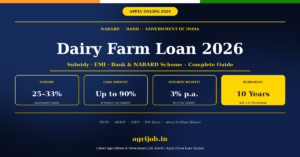
- NABARD Back-Ended Subsidy: 25% (General) / 33.33% (SC/ST) on dairy projects
- AHIDF Interest Subvention: 3% per annum — effective rate reduced significantly for entrepreneurs
- State Budget (Vetri Magalir): Rs.110 crore allocated for ~30,000 beneficiaries (2026–27)
- Nodal Agencies: TN Animal Husbandry Dept, NABARD, NLM portal, SBI/PCARD banks
- Official Portal: tn.gov.in | nlm.udyamimitra.in
📋 Table of Contents
- What Is Tamil Nadu Pashupalan Loan Yojana 2026?
- Who Should Apply for TN Pashupalan Loan?
- Tamil Nadu State Government Schemes (2026)
- Central Government Schemes Available in Tamil Nadu
- NABARD Dairy Farm Loan — Subsidy & Eligibility
- PCARD Cooperative Society Loan for Animal Husbandry
- Commercial Bank Loans for Livestock in Tamil Nadu
- Subsidy & Loan Amount Comparison Table
- Eligibility Criteria for TN Pashupalan Loan 2026
- Documents Required to Apply
- How to Apply — Step-by-Step Process
- Advantages & Disadvantages
- Important Links
- Conclusion
- Frequently Asked Questions
What Is Tamil Nadu Pashupalan Loan Yojana 2026?

Tamil Nadu Pashupalan Loan Yojana 2026 is not a single scheme but a comprehensive ecosystem of livestock financing programs operating at four levels: the Tamil Nadu state government, the Government of India (central schemes), NABARD (the apex rural development bank), and cooperative/commercial banks. Together, they fund dairy farming, goat and sheep rearing, poultry units, pig farming, animal feed plants, and veterinary infrastructure for farmers, rural women, SC/ST communities, entrepreneurs, and agribusiness enterprises across all 38 districts of Tamil Nadu.

The Tamil Nadu Department of Animal Husbandry, Dairying and Fisheries — headed by Minister S. Kamali after the 2026 state election — is the primary nodal agency for implementing state-level schemes. It works alongside NABARD, the National Livestock Mission (NLM) portal, and Primary Cooperative Agriculture and Rural Development (PCARD) banks to disburse subsidies and loans to over 30,000 beneficiaries annually. Tamil Nadu ranks 8th in milk production nationally, and Aavin (Tamil Nadu Cooperative Milk Producers’ Federation) remains the backbone of the state’s dairy value chain.
Who Should Apply for TN Pashupalan Loan 2026?
- 🐄 Small and marginal farmers in Tamil Nadu who want to buy milch cattle (cows or buffaloes) to supplement farm income
- 🐐 Rural women and SHG members looking to start goat or sheep rearing — especially eligible for the Vetri Magalir free-goat scheme
- 🏚️ Destitute widows, deserted women, transgender persons, and persons with disabilities in rural areas — primary beneficiaries of the Vetri Magalir Goat Rearing Scheme (100% subsidy)
- 👨🌾 SC/ST farmers who get an enhanced 33.33% back-ended subsidy under NABARD-supported dairy loan programs
- 🚀 Agri-entrepreneurs and MSMEs wanting to set up dairy processing, meat processing, or animal feed plants — eligible for AHIDF up to Rs.10 crore
- 🤝 Farmer Producer Organizations (FPOs), SHGs, and cooperatives planning large livestock units under the NLM scheme (50% subsidy up to Rs.50 lakh)
- 💳 Existing livestock farmers needing working capital for feed, veterinary care, and medicines — covered under PM Pashu KCC at 4% effective interest
- 🏦 Any Tamil Nadu resident aged 18+ engaged in or planning to engage in dairy, poultry, goat, sheep, pig, or rabbit rearing
Tamil Nadu State Government Pashupalan Schemes 2026
The Government of Tamil Nadu operates multiple dedicated animal husbandry schemes for different beneficiary categories. Three flagship state schemes are active in 2026:
1. Vetri Magalir Goat Rearing Scheme 2026 (100% Subsidy)
Announced on 5 August 2026 in the Tamil Nadu Revised Budget Estimates 2026-27 by Finance Minister N. Marie Wilson, the Vetri Magalir Goat Rearing Scheme (வெற்றி மகளிர் ஆடுகள் வளர்ப்புத் திட்டம்) provides 5 goats or sheep completely free — a 100% subsidy — to the most vulnerable groups. The state has allocated Rs.110 crore for approximately 30,000 eligible beneficiaries across Tamil Nadu in 2026-27. This is separate from earlier goat distribution schemes and has no repayment requirement.
| Feature | Details |
|---|---|
| Eligible Groups | Destitute widows, deserted women, transgender persons, persons with disabilities (rural areas only) |
| Benefit | 5 goats or sheep — 100% subsidy (no repayment) |
| Budget Allocation | Rs.110 crore (2026-27) |
| Number of Beneficiaries | ~30,000 |
| Nodal Department | Animal Husbandry, Dairying, Fisheries and Fishermen Welfare Dept, Govt. of Tamil Nadu |
| Application Mode | To be notified via Animal Husbandry Department offices |
| Announced On | 5 August 2026 (Revised Budget 2026-27) |
2. TN Milch Cow Distribution Scheme (Subsidised)
Under this scheme, the Tamil Nadu government distributes milch cows, goats, and sheep to poor rural beneficiaries at 50% to 75% subsidised cost. SC/ST beneficiaries under the Adi Dravidar Welfare Directorate receive milch animals, calves, and sheep at 50–75% subsidy along with animal health cover and artificial insemination support. Livestock Inspectors and Veterinary Doctors at the nearest Veterinary Hospital are the entry points for this scheme.
3. Kaalnadaigal Kaappom — Livestock Insurance Scheme
Tamil Nadu’s livestock insurance programme, Kaalnadaigal Kaappom, protects farmers against the financial loss of animal death. This is a critical complement to any pashupalan loan — banks often require livestock insurance as a condition for releasing the loan. The Animal Husbandry Department facilitates enrolment through veterinary hospitals across the state.
Central Government Schemes for Tamil Nadu Pashupalan 2026
Tamil Nadu farmers are eligible for all major central government animal husbandry schemes. Four are particularly important in 2026:
A. National Livestock Mission (NLM) — 50% Capital Subsidy
The National Livestock Mission (NLM), implemented by the Department of Animal Husbandry and Dairying (DAHD) under the Ministry of Fisheries, Animal Husbandry and Dairying, is the most generous subsidy scheme available to Tamil Nadu farmers in 2026. Under the Entrepreneurial Development Programme (EDP) component, eligible applicants receive a 50% capital subsidy on their total project cost, subject to the following ceilings:
| Livestock Activity | Maximum Project Cost | Maximum Subsidy (50%) |
|---|---|---|
| Goat / Sheep Farming | Rs.1 crore | Rs.50 lakh |
| Poultry (layer/broiler) | Rs.50 lakh | Rs.25 lakh |
| Pig Farming | Rs.1 crore | Rs.50 lakh (up to Rs.30 lakh by some sources) |
| Fodder Production Unit | Rs.1 crore | Rs.50 lakh |
| Breed Multiplication Farm | Rs.4 crore | Rs.2 crore (50%) |
Eligible applicants include individuals, FPOs, SHGs, Joint Liability Groups (JLGs), Farmer Cooperative Organizations (FCOs), and Section 8 companies. Applications are submitted exclusively online at nlm.udyamimitra.in. Applicants must have training or experience in livestock farming, land for the project, and a bank loan sanction letter.
B. Animal Husbandry Infrastructure Development Fund (AHIDF) — 3% Interest Subvention
The AHIDF is a central sector scheme under the PM Atmanirbhar Bharat Abhiyan with a total fund allocation of Rs.15,000 crore, implemented till 31 March 2026 for loan disbursals. In Tamil Nadu alone, approved AHIDF projects totalled Rs.2,321.29 crore as per the Lok Sabha question answered in February 2026. Key features: loan coverage up to 90% of project cost, minimum Rs.1 lakh, maximum Rs.100 crore; 3% interest subvention per annum credited directly to the lending bank; repayment of up to 120 months including a 24-month moratorium; and 25% credit guarantee coverage for MSME borrowers. Eligible activities include dairy and meat processing infrastructure, animal feed plants, breed multiplication farms, veterinary vaccine facilities, and animal waste management.
C. PM Pashu Kisan Credit Card (PM Pashu KCC) — 4% Effective Interest
The erstwhile Dairy Entrepreneurship Development Scheme (DEDS), now continued through NABARD refinance under a restructured framework, provides 25% back-ended subsidy for general category borrowers and 33.33% for SC/ST farmers on dairy projects. It covers 2–10 milch animal starter units. The subsidy is back-ended — released by NABARD to the lending bank after the farmer repays a portion of the loan — and is not deducted upfront from the loan disbursement.
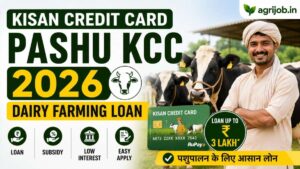
The PM Pashu Kisan Credit Card — an extension of the Kisan Credit Card scheme to animal husbandry since 2019 — provides revolving working capital credit to all livestock farmers in Tamil Nadu. Banks lend at 7% per annum, the Government provides a 2% interest subvention, and farmers who repay on time receive an additional 3% Prompt Repayment Incentive (PRI), bringing the effective interest rate down to just 4% per annum. Credit limit for new cardholders is Rs.2 lakh; existing KCC holders can access up to Rs.3 lakh. Eligible activities include milch animal rearing, sheep rearing, goat rearing, poultry layer/broiler farming, pig rearing, and rabbit rearing. Apply at jansamarth.in or any bank branch. As of January 2025, thousands of KCCs had been sanctioned in Tamil Nadu for animal husbandry activities.