

What Is UGC NET 2026 and Why It Matters
UGC NET 2026 is India’s most important national eligibility test for postgraduate candidates who want to become Assistant Professors or earn the prestigious Junior Research Fellowship (JRF). Conducted by the National Testing Agency (NTA) on behalf of the University Grants Commission (UGC), the exam is held twice a year — in June and December — across 87 subjects and hundreds of cities. Lakhs of master’s degree holders appear each cycle, making it one of the most competitive academic tests in the country.

This guide is for postgraduate students, research aspirants, and working professionals across India who want a complete, updated picture of UGC NET 2026 — covering eligibility, subjects, exam pattern, salary/stipend, career scope, and result dates for both the June and December 2026 sessions.
UGC NET 2026 is conducted twice a year by NTA for 87 subjects. The June 2026 session was held from 22–30 June 2026, and the December 2026 session is tentatively scheduled for December 31, 2026–January 7, 2027. Qualifying candidates become eligible for Assistant Professor positions (basic pay ₹57,700/month) or JRF stipend of ₹37,000–₹42,000/month for research scholars.
- Conducting Body: National Testing Agency (NTA) on behalf of UGC
- Official Website: ugcnet.nta.nic.in
- Frequency: Twice a year (June & December sessions)
- June 2026 Exam Dates: 22 June – 30 June 2026 (CBT mode)
- December 2026 Exam (Tentative): 31 Dec 2026 – 7 Jan 2027
- Total Subjects: 87 subjects (2 new added in June 2026 — Statistics & Forestry)
- Total Marks: 300 (Paper 1: 100 marks + Paper 2: 200 marks)
- Exam Duration: 3 hours (single sitting, no break)
- Negative Marking: None — attempt all questions
- JRF Stipend: ₹37,000/month (first 2 years) → ₹42,000/month (from year 3)
- Assistant Professor Basic Pay: ₹57,700/month (7th CPC, Level 10)
- Application Fee (General): ₹1,150 | OBC-NCL: ₹600 | SC/ST/PwD: ₹325
- December 2026 Notification: Expected October 2026 on ugcnet.nta.nic.in
📋 Table of Contents

- What Is UGC NET 2026 and Why It Matters
- Who Should Apply for UGC NET 2026?
- UGC NET 2026 Salary, JRF Stipend & Pay Scale
- UGC NET 2026 Eligibility Criteria – Qualification, Age & Marks
- UGC NET 2026 Total Subjects – Complete List of 87 Papers
- How UGC NET 2026 Works – Exam Pattern & Marking Scheme
- UGC NET vs CSIR NET vs SET – Key Differences
- Pros and Cons of Appearing for UGC NET 2026
- Important Terms Related to UGC NET 2026
- UGC NET 2026 Important Dates & Timeline
- Important Links for UGC NET 2026
- Conclusion
- Key Takeaways
- Frequently Asked Questions About UGC NET 2026
Who Should Apply for UGC NET 2026?
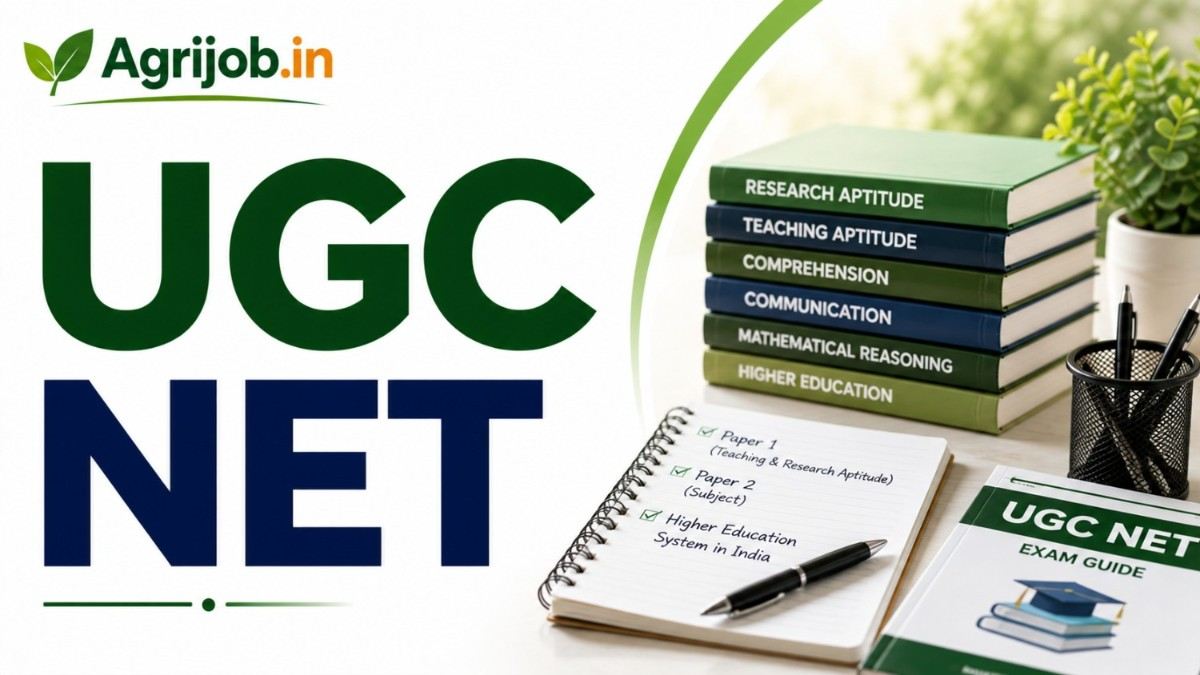
UGC NET 2026 is designed for a wide range of postgraduate candidates. Here are the profiles that benefit most from qualifying this exam:
- 🎓 Master’s degree holders in any UGC-recognized subject who want to teach in colleges or universities across India
- 🔬 Research aspirants who want a fully funded PhD through the JRF stipend of ₹37,000–₹42,000 per month
- 📚 Final-year postgraduate students who want to appear provisionally before their result is declared
- 👩💼 Working professionals with a master’s degree looking to transition into academia or research organizations like CSIR, ICAR, or DRDO
- 🏛️ PhD applicants who want preference during admissions at central universities and IITs/NITs
- 💡 Candidates targeting EdTech, content development, and academic publishing who want a UGC-recognized credential on their CV
- 🌐 4-year Bachelor’s degree holders with 75% marks (70% for reserved categories) under the new NEP-aligned UGC norms who are eligible for JRF
- 👨🏫 Private college teachers who want government college positions, which legally require UGC NET qualification
UGC NET 2026 Salary, JRF Stipend & Pay Scale
One of the biggest motivators for cracking UGC NET 2026 is the financial reward it unlocks. Depending on whether you qualify for JRF or Assistant Professor eligibility, your income trajectory differs significantly. Here is the complete pay structure:
| Post / Role | Pay Level (7th CPC) | Basic Pay | Estimated In-Hand Salary |
|---|---|---|---|
| Assistant Professor (Entry Level) | Level 10 | ₹57,700/month | ₹75,000 – ₹1,13,000/month |
| Senior Assistant Professor | Level 11 | ₹68,900/month | ₹90,000 – ₹1,30,000/month |
| Associate Professor | Level 13A | ₹1,31,400/month | ₹1,50,000 – ₹1,80,000/month |
| Professor | Level 14 | ₹1,44,200/month | ₹1,70,000 – ₹2,10,000/month |
| JRF Fellowship (Year 1–2) | Fellowship | ₹37,000/month | ₹37,000 + HRA (where applicable) |
| Senior Research Fellowship (Year 3+) | Fellowship | ₹42,000/month | ₹42,000 + HRA (where applicable) |
JRF Annual Contingency Grant: JRF scholars also receive an annual contingency grant of ₹10,000 (humanities/social sciences) or ₹12,000 (sciences/engineering) for research expenses such as books, travel, and consumables. There is no TDS on the JRF stipend as per the Income Tax Act, so the in-hand amount equals the stipend amount.
In private colleges and universities, Assistant Professor salaries vary between ₹30,000 and ₹1,00,000 per month depending on the institution’s ranking, city, and funding. Government college positions follow the 7th CPC pay scale exclusively.
UGC NET 2026 Eligibility Criteria – Qualification, Age & Marks
UGC NET 2026 eligibility covers educational qualification, minimum percentage, age limit, and subject selection rules. Every applicant must verify all conditions before submitting the form.
Educational Qualification
- Master’s degree or equivalent from a UGC-recognized university/institution is mandatory
- General/EWS candidates must have a minimum of 55% aggregate marks in the qualifying Master’s degree
- Reserved category candidates (SC/ST/OBC/PwD/Transgender) require a minimum of 50% aggregate marks
- Final-year postgraduate students can apply provisionally — they must complete their degree within 2 years of the NET result date
- 4-year Bachelor’s degree holders with 75% marks (70% for reserved) are eligible for JRF and PhD admission under revised UGC norms (NEP 2020 alignment)
- Foreign Master’s degrees must be recognized by the Association of Indian Universities (AIU)
Age Limit for UGC NET 2026
| Category | Age Limit for JRF | Age Limit for Assistant Professor |
|---|---|---|
| General / Unreserved | Maximum 30 years | No upper age limit |
| General (Female) | Maximum 35 years (5-yr relaxation) | No upper age limit |
| OBC-NCL | Maximum 35 years (5-yr relaxation) | No upper age limit |
| SC / ST | Maximum 35 years (5-yr relaxation) | No upper age limit |
| PwD | Maximum 35 years (5-yr relaxation) | No upper age limit |
| LLM Degree Holders | Additional 3 years relaxation on top of applicable limit | No upper age limit |
Application Fee Structure
| Category | Application Fee |
|---|---|
| General / Unreserved | ₹1,150 |
| General-EWS / OBC (Non-Creamy Layer) | ₹600 |
| SC / ST / PwD / Third Gender | ₹325 |
Payment can be made online via credit card, debit card, net banking, or UPI. The fee once paid is non-refundable and non-transferable.
UGC NET 2026 Total Subjects – Complete List of 87 Papers
UGC NET 2026 is offered for 87 subjects (up from 85, with Statistics and Forestry newly added for the June 2026 cycle). Paper 1 is common for all candidates; Paper 2 is subject-specific. Candidates must appear in the Paper 2 subject corresponding to their postgraduate specialization.
The 87 subjects span across humanities, social sciences, commerce, sciences, law, fine arts, linguistics, and interdisciplinary areas. Below is a subject-wise overview organized by broad domain:
| Domain | Key Subjects Included |
|---|---|
| Humanities & Languages | English, Hindi, Sanskrit, Urdu, Bengali, Tamil, Telugu, Punjabi, Kannada, Odia, Marathi, Gujarati, Malayalam, Assamese, Nepali, Manipuri, Kashmiri, Sindhi, Rajasthani, Persian, Arabic, French, German |
| Social Sciences | Political Science, Economics, Sociology, History, Geography, Psychology, Public Administration, Social Work, Anthropology, Tribal & Regional Language/Literature |
| Commerce & Management | Commerce, Management, Tourism Administration & Management, Labour Welfare/Personnel Management/IR/Labour & Social Welfare/HRM |
| Science & Technology | Computer Science & Applications, Electronic Science, Environmental Sciences, Earth Science, Life Sciences, Chemical Sciences, Physical Sciences, Home Science, Statistics (new 2026) |
| Law | Law |
| Education | Education, Physical Education, Library & Information Science, Yoga |
| Fine Arts & Performing Arts | Music, Dance, Fine Arts, Mass Communication & Journalism, Women Studies, Buddhist, Jaina, Gandhian & Peace Studies |
| Agriculture & Allied | Agriculture, Forestry (new 2026), Animal Husbandry & Veterinary Science |
| Interdisciplinary | Folklore, Museology & Conservation, Population Studies, Comparative Literature, Archaeology |
Candidates whose postgraduate subject is not directly listed can appear in a closely related subject, as per NTA guidelines. The updated subject list including names, codes, and syllabus changes for 2026 is available at ugcnet.nta.nic.in.
How UGC NET 2026 Works – Exam Pattern & Marking Scheme
The UGC NET 2026 exam comprises two papers conducted in a single uninterrupted 3-hour Computer-Based Test (CBT) session. Both papers are held simultaneously — there is no break between them. Understanding the structure is critical before building your preparation plan.
| Parameter | Paper 1 | Paper 2 |
|---|---|---|
| Nature | Common for all candidates | Subject-specific |
| Total Questions | 50 MCQs | 100 MCQs |
| Total Marks | 100 | 200 |
| Marks per Question | +2 correct | 0 wrong | +2 correct | 0 wrong |
| Negative Marking | None | None |
| Mode | Computer-Based Test (CBT) | Computer-Based Test (CBT) |
| Language | English / Hindi | English / Hindi |
Paper 1 covers 10 units: Teaching Aptitude · Research Aptitude · Reading Comprehension · Communication · Reasoning (including Maths) · Logical Reasoning · Data Interpretation · ICT · People, Development & Environment · Higher Education System — 5 questions per unit, 10 marks each.
How to Apply for UGC NET December 2026 – Step-by-Step
- Visit the Official Website: Go to ugcnet.nta.nic.in once the December 2026 notification is released (expected October 2026).
- New Registration: Click “New Candidate Registration”, enter your name, date of birth, mobile number, and email ID to generate your Application Number and password.
- Fill the Application Form: Enter personal details, academic qualifications, select your Paper 2 subject, choose exam city preferences, and verify Aadhaar/identity details as per NTA guidelines.
- Upload Documents: Upload a scanned passport-size photograph (10–200 KB) and signature (4–30 KB) in JPG/JPEG format as per NTA specifications.
- Pay the Application Fee: Pay via UPI, net banking, credit card, or debit card as per your category (₹1,150 / ₹600 / ₹325).
- Final Submission: Re-verify all entered details and click “Final Submit”. Editing is not allowed post-submission (except during the correction window).
- Download Confirmation Page: Save and print the confirmation page with your Application Number and payment receipt for future reference.
- Correction Window: Use the NTA correction window (announced after the application period closes) to fix any errors in personal or academic details.
Since there is zero negative marking in UGC NET 2026, never leave any question blank. Even a guess on all 150 questions gives you a 25% statistical chance per item. Spend no more than 1 minute per question in Paper 1, and approximately 1.2–1.3 minutes per question in Paper 2 to complete the full exam within the 3-hour window.
UGC NET vs CSIR NET vs SET – Key Differences
Many candidates confuse UGC NET with CSIR NET or the State Eligibility Test (SET). Here is a clear side-by-side comparison to help you choose the right exam:
| Parameter | UGC NET 2026 | CSIR NET 2026 | SET (State Level) |
|---|---|---|---|
| Conducting Body | NTA (for UGC) | NTA (for CSIR) | State authority (varies) |
| Subjects Covered | 87 subjects (humanities, social sciences, sciences) | 5 science subjects (Life, Chemical, Physical, Mathematical, Earth Science) | State-specific subjects |
| Exam Frequency | Twice a year (June & December) | Twice a year (June & December) | Once a year (varies by state) |
| JRF Stipend | ₹37,000–₹42,000/month | ₹37,000–₹42,000/month + ₹20,000 contingency grant | Not applicable (no JRF) |
| Assistant Professor Eligibility | National (all UGC-approved colleges) | National (science colleges) | State colleges only |
| PhD Admission Preference | Yes — most universities | Yes — CSIR labs & universities | Limited to state universities |
| Application Fee (General) | ₹1,150 | ₹1,150 | Varies by state (₹500–₹1,500) |
| Validity (Assistant Professor) | Lifetime | Lifetime | Varies by state (often 5 years) |
| Best For | Humanities, social sciences, commerce candidates | Pure science researchers | Candidates targeting state colleges only |
For candidates in humanities, social sciences, law, education, and commerce, UGC NET is the only nationally recognized eligibility test. For science graduates choosing between UGC NET and CSIR NET, CSIR NET offers a larger annual contingency grant (₹20,000 vs ₹10,000–₹12,000), making it financially superior for research scholars. However, UGC NET offers a far broader range of subjects and is valid for a wider pool of government college vacancies. Candidates from science backgrounds should ideally appear for both.
Pros and Cons of Appearing for UGC NET 2026
Advantages of UGC NET 2026
- ✅ Lifetime validity for Assistant Professor eligibility — once qualified, you never need to reappear for teaching eligibility
- ✅ JRF provides full financial support for PhD — ₹37,000/month stipend ensures you can pursue research full-time without a financial burden
- ✅ Opens government college and central university positions, which offer job security, pension, and 7th CPC pay scales
- ✅ Recognized by private universities, EdTech companies, research organizations, PSUs, and publishing houses as a mark of academic credibility
- ✅ No negative marking — eliminates the risk of attempting all 150 questions, which improves overall scoring potential significantly
Disadvantages of UGC NET 2026
- ❌ Qualifying does not guarantee a job — UGC NET is an eligibility test, not a direct recruitment exam; candidates must apply separately for vacancies
- ❌ Highly competitive cut-offs — historically only single-digit to low double-digit percentages of total applicants qualify, especially for JRF
- ❌ Vast syllabus — Paper 2 covers the entire postgraduate curriculum of the chosen subject, which requires months of dedicated preparation
- ❌ JRF age limit is restrictive — candidates above 30 years (General male) cannot apply for JRF, limiting the fellowship benefit to younger applicants
Important Terms Related to UGC NET 2026
Knowing these key terms will help you navigate the UGC NET 2026 process and maximize your preparation and career outcomes:
- JRF (Junior Research Fellowship): A government-funded research stipend of ₹37,000/month for the first 2 years, awarded to the top-ranking qualified candidates in each subject-category combination. JRF holders can pursue a funded PhD at any recognized university or research institution.
- SRF (Senior Research Fellowship): An upgrade from JRF after 2 years of satisfactory research, carrying a monthly stipend of ₹42,000. Candidates must have their work assessed by a review committee to be elevated to SRF status.
- Assistant Professor Eligibility: Qualification that makes a candidate eligible to apply for teaching positions in UGC-recognized colleges and universities across India. This eligibility carries lifetime validity — no renewal required.
- CBT (Computer-Based Test): The online mode in which UGC NET 2026 is conducted. Candidates answer MCQs on a computer at designated exam centers. No pen or paper is used.
- NTA (National Testing Agency): The government body responsible for conducting UGC NET, NEET, JEE, CUET, and other national-level exams on behalf of respective regulatory authorities.
- UGC (University Grants Commission): The statutory body that regulates higher education in India and sets the eligibility standards for Assistant Professors and JRF holders.
- Contingency Grant: An annual research expense allowance — ₹10,000 for humanities/social sciences and ₹12,000 for sciences — given to JRF fellows over and above the monthly stipend.
- Percentile-Based Merit: The qualification method used by NTA — candidates must score above minimum qualifying marks (40% aggregate for General, 35% for reserved) AND rank within the top percentile of their subject-category pool to be declared qualified.
- 7th CPC (Central Pay Commission): The salary framework under which government college Assistant Professors are paid. Level 10 entry pay is ₹57,700/month, rising through annual increments.
- NEP 2020 (National Education Policy): The policy framework that introduced 4-year bachelor’s degree holders with 75% marks as eligible for UGC NET JRF and PhD admissions, expanding the eligible candidate base significantly from 2026 onward.
UGC NET 2026 Important Dates & Timeline
| Event | June 2026 Session | December 2026 Session (Tentative) |
|---|---|---|
| Notification Release | 29 April 2026 | First week of October 2026 |
| Application Window Opens | 29 April 2026 | October 2026 |
| Last Date to Apply | 24 May 2026 | November 2026 (tentative) |
| Application Correction Window | After close of form | After close of form |
| Admit Card Release | 3rd week of June 2026 | December 2026 (tentative) |
| Exam Dates | 22 June – 30 June 2026 | 31 December 2026 – 7 January 2027 |
| Provisional Answer Key | Post-exam (July 2026) | January 2027 (tentative) |
| Final Answer Key | July–August 2026 | January–February 2027 |
| Result Declaration | Expected August 2026 | February 2027 (tentative) |
| Scorecard / Certificate | After result (ugcnet.nta.nic.in) | After result declaration |
Note: December 2026 dates are tentative based on NTA’s established patterns. Always verify on the official portal at ugcnet.nta.nic.in before taking any action.
Important Links for UGC NET 2026
| Resource | Link |
|---|---|
| UGC NET Official Website (NTA) | ugcnet.nta.nic.in |
| University Grants Commission (UGC) Official | ugc.gov.in |
| NTA Official Website | nta.ac.in |
| Ministry of Education, India | education.gov.in |
| UGC NET Syllabus PDF (Paper 1 & Paper 2) | Available on ugcnet.nta.nic.in after notification |
| NTA UGC NET Helpdesk | nta.ac.in/ContactUs |
Conclusion
UGC NET 2026 remains the gold standard for academic and research careers in India, offering two clear pathways — a funded PhD through JRF (₹37,000–₹42,000/month) or a lifetime-valid teaching credential for Assistant Professor positions (₹57,700/month basic pay). With 87 subjects now covered across both June and December sessions, nearly every postgraduate specialization has a pathway through this exam. The December 2026 session notification is expected in October 2026 on ugcnet.nta.nic.in — bookmark that portal and begin your preparation now to stay ahead of the competition.
- UGC NET 2026 is conducted by NTA twice a year for 87 subjects — June (22–30 June 2026) and December (tentatively 31 Dec 2026–7 Jan 2027)
- JRF fellowship pays ₹37,000/month for 2 years, upgraded to ₹42,000/month as Senior Research Fellow from year 3
- Assistant Professor eligibility has no upper age limit and carries lifetime validity once granted
- Total exam = 300 marks (Paper 1: 100 + Paper 2: 200), 3-hour CBT, zero negative marking — attempt all 150 questions
- Minimum 55% in Master’s for General/EWS candidates (50% for reserved categories) is the core educational eligibility requirement
- December 2026 notification expected October 2026 — check ugcnet.nta.nic.in and bookmark this page for updates
Frequently Asked Questions About UGC NET 2026
What is UGC NET 2026 and who conducts it?
UGC NET 2026 is the University Grants Commission National Eligibility Test, conducted by the National Testing Agency (NTA) twice a year — in June and December. It determines eligibility for Junior Research Fellowship (JRF), Assistant Professor positions, and PhD admissions in Indian universities and colleges. The official website is ugcnet.nta.nic.in.
How many subjects are there in UGC NET 2026?
UGC NET 2026 is conducted for 87 subjects. Two new subjects — Statistics and Forestry — were added for the June 2026 cycle, taking the total from 85 to 87. The subjects span humanities, social sciences, commerce, law, sciences, education, fine arts, and agriculture-allied disciplines. Candidates appear in the Paper 2 subject matching their postgraduate specialization.
What is the eligibility for UGC NET 2026?
Candidates must hold a Master’s degree from a UGC-recognized university with a minimum of 55% aggregate marks (50% for SC/ST/OBC/PwD/Transgender categories). Final-year postgraduate students can apply provisionally. Under NEP 2020-aligned norms, 4-year Bachelor’s degree holders with 75% marks (70% for reserved) are also eligible for JRF and PhD admissions.
What is the age limit for UGC NET JRF 2026?
For Junior Research Fellowship (JRF), the maximum age limit is 30 years for General (male) candidates. Female candidates and reserved category candidates (OBC/SC/ST/PwD/Transgender) receive a 5-year relaxation, making their upper age limit 35 years. LLM degree holders get an additional 3-year relaxation on top of the applicable limit. There is no upper age limit for Assistant Professor eligibility.
What is the UGC NET 2026 JRF stipend amount?
The UGC NET JRF fellowship pays ₹37,000 per month for the first two years of research. From the third year onward, upon satisfactory assessment, the fellowship is upgraded to Senior Research Fellowship (SRF) at ₹42,000 per month. JRF scholars also receive an annual contingency grant of ₹10,000 (humanities) or ₹12,000 (sciences) for research expenses. There is no TDS deduction on this fellowship amount.
When will the UGC NET June 2026 result be declared?
The UGC NET June 2026 exam was conducted from 22–30 June 2026. The result is expected in the first week of August 2026 on the official website ugcnet.nta.nic.in. Candidates will be able to check their result using their Application Number and Date of Birth. The result will specify whether a candidate has qualified for JRF, Assistant Professor only, or PhD admission eligibility.
What is the exam pattern for UGC NET 2026?
UGC NET 2026 has two papers held in a single 3-hour CBT session without any break. Paper 1 has 50 MCQs (100 marks) covering teaching and research aptitude, common to all candidates. Paper 2 has 100 subject-specific MCQs (200 marks). Each correct answer earns 2 marks; there is no negative marking for wrong or unattempted answers. The combined total is 300 marks.
What is the scope after qualifying UGC NET 2026?
Qualifying UGC NET 2026 opens multiple career pathways. JRF qualifiers can pursue a fully funded PhD at central universities, IITs, or research organizations like CSIR, ICAR, and DRDO. Assistant Professor qualifiers can apply for teaching positions in government and private colleges nationwide. Additional career options include EdTech content development, educational consultancy, academic publishing, think tanks, and PSU research roles — all of which prefer UGC NET-qualified candidates.
What is the minimum qualifying marks for UGC NET 2026?
The minimum qualifying marks for UGC NET 2026 are 40% aggregate (of Paper 1 and Paper 2 combined) for General/EWS candidates and 35% aggregate for reserved category candidates. However, clearing the minimum does not guarantee qualification — NTA applies a percentile-based merit cut-off within each subject-category combination, so the actual qualifying score varies each cycle depending on exam difficulty and total aspirants.
Is UGC NET 2026 eligibility valid for lifetime?
Yes, the Assistant Professor eligibility awarded after qualifying UGC NET carries lifetime validity — it never expires and does not need to be renewed. JRF eligibility, however, is time-bound: candidates must enroll in a recognized PhD program within a stipulated period (generally 2–3 years from result declaration) to avail the fellowship. The NTA scorecard and eligibility certificate serve as official proof of qualification for all future job applications.
When will the UGC NET December 2026 notification be released?
The UGC NET December 2026 notification is expected to be released in the first week of October 2026 by NTA on ugcnet.nta.nic.in. Based on established patterns, the December 2026 session exam is tentatively scheduled between 31 December 2026 and 7 January 2027, with results expected in February 2027. Candidates should regularly check the official portal for confirmed dates once the notification is out.
Last Updated: August 2026 | This guide is reviewed and updated regularly for accuracy. Bookmark this page for the latest UGC NET 2026 updates. All data sourced from ugcnet.nta.nic.in, ugc.gov.in, and nta.ac.in — always verify on the official portal before applying.
Disclaimer: This article is for informational purposes only. Salary figures, stipend amounts, eligibility criteria, and exam dates are sourced from official NTA and UGC portals as of August 2026. UGC NET is an eligibility examination and does not guarantee direct employment. Candidates are advised to check the official notification at ugcnet.nta.nic.in before applying. Agrijob.in is not affiliated with NTA or UGC.