

Precision Livestock Farming 2026 – IoT Ear Tags ROI for 200-Head Beef Operations
Precision livestock farming is transforming how 200-head beef operations detect disease, manage labor, and maximize profitability in 2026 — and IoT ear tags are at the center of this revolution. Smart ear tags equipped with IoT sensors now track body temperature, activity, rumination, and GPS location 24/7, alerting producers to health deviations 5–14 days before visible symptoms appear. This guide covers everything beef cattle producers need to know: how these systems work, which brands lead the market, a real-world ROI breakdown for a 200-head herd, and how to calculate payback period before you invest a single dollar.

With the cattle ear tag sensor market projected to reach $1.09 billion in 2026 and growing at 13.8% CAGR, adoption is accelerating fast — and operations that delay risk falling behind on both productivity and USDA traceability compliance. This complete guide covers: system types, cost per animal, ROI methodology, top brands, implementation steps, and frequently asked questions.
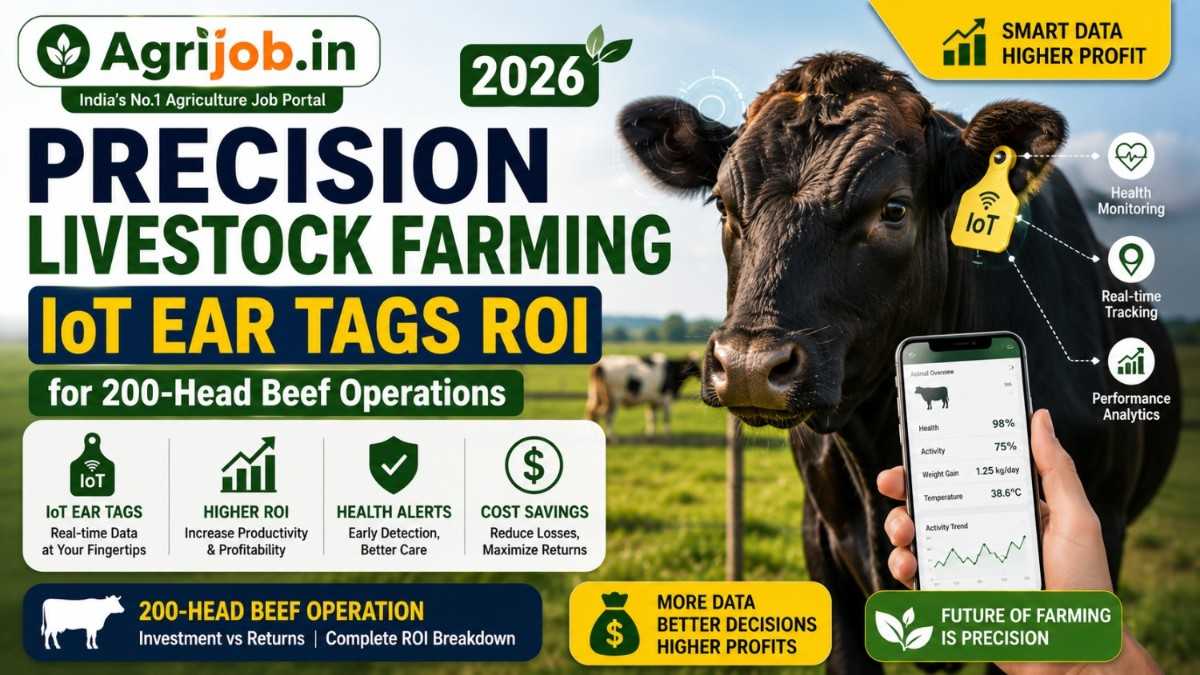
- Market Size (2026): Cattle ear tag sensor market — $1.09 billion globally
- Market CAGR: 13.8% (2025–2030)
- Disease Detection Lead Time: 5–14 days before visible clinical symptoms
- Disease Outbreak Reduction: Up to 20–22% with real-time health tracking
- Mortality Reduction: Up to 22% with continuous monitoring systems
- Typical System Cost (200-Head Herd): $300–$1,200 per animal (hardware + setup)
- Monthly Software Subscription (200 animals): $1,200–$4,800/month
- Average ROI Payback Period: 12–24 months for most beef operations
- Labor Savings: Up to 71% reduction in pen-checking labor (SenseHub Feedlot trial data)
- USDA Traceability: RFID/EID tags mandatory for interstate cattle movement (USDA ADT rule)
- Top Brands (2026): Allflex SenseHub, Quantified AG, Ceres Tag, CowManager, HerdDogg
📋 Table of Contents

- What Is Precision Livestock Farming (PLF)?
- Who Should Use IoT Ear Tags for Beef Cattle?
- ROI Breakdown for a 200-Head Beef Operation
- Eligibility & System Requirements
- How IoT Ear Tags Work — Step-by-Step
- IoT Ear Tags vs Traditional Visual Monitoring
- Pros and Cons of Precision Livestock Farming Technology
- Top IoT Ear Tag Brands for Beef Cattle in 2026
- Important Dates & Regulatory Timeline
- Important Links & Resources
- Frequently Asked Questions
What Is Precision Livestock Farming (PLF)?
Precision livestock farming is the application of IoT sensors, data analytics, AI, and automated monitoring systems to manage individual animals and entire herds with data-driven precision, replacing manual observation with continuous, real-time insight. Unlike traditional herd management — which relies on a producer visually scanning cattle for signs of illness — PLF systems stream biometric data from wearable sensors on every animal to a cloud platform that flags deviations from each animal’s baseline behavior.
At its core, PLF enables a 200-head beef operation to function as if it had a trained technician monitoring each animal around the clock. When a steer’s activity drops, its rumination falls below baseline, or its ear temperature rises by 1.5°C, an automated alert fires to the producer’s mobile device — often 5 to 14 days before that animal would show clinical signs of illness visible to the human eye. This early intervention window is where the technology’s economic value is most concentrated.
The Precision Livestock Farming Market was valued at $4.79 billion in 2025 and is projected to reach $5.43 billion in 2026, expanding to $16.76 billion by 2035 at a 13.35% CAGR. North America holds 35% of global market share, driven by USDA regulatory mandates and the scale of U.S. commercial beef operations.
| PLF Technology | What It Monitors | Key Benefit for Beef Cattle |
|---|---|---|
| IoT Smart Ear Tags | Temperature, activity, rumination, GPS location | Early disease detection, location tracking |
| RFID EID Ear Tags | Unique animal ID, traceability data | Interstate compliance, record automation |
| GPS Ear Tags | Real-time GPS coordinates, grazing patterns | Reduces muster labor, virtual fencing |
| Rumen Boluses | Internal temperature, pH, motility | Bloat/acidosis early warning |
| Smart Collars | Activity, rumination, GPS, heart rate | Estrus detection, health monitoring |
| Automatic Weigh Platforms | Daily weight gain with EID integration | Optimizes slaughter timing, feed efficiency |
Who Should Use IoT Ear Tags for Beef Cattle?
IoT ear tags deliver the strongest financial return for operations where the cost of undetected illness is high and labor availability is limited. Here are the producer profiles that benefit most from precision livestock farming technology in 2026.
- 🐄 200-Head Cow-Calf Operations: Calving alerts, neonatal health monitoring, and early mastitis/scours detection protect your most valuable asset — new calves. A single calf death that technology could have prevented represents $800–$1,500 in lost revenue.
- 🏗️ Stocker/Backgrounder Operations: Newly received calves face the highest BRD risk in the first 30–45 days. IoT monitoring during this high-risk window dramatically reduces treatment costs and mortality.
- 🌾 Grass-Fed & Pasture-Based Operations: GPS ear tags eliminate time-consuming daily musters across large acreage. SDSU research shows significant labor savings when bulls and cows are tracked via GPS in extensive rangeland systems.
- 👷 Labor-Constrained Operations: Ranchers facing worker shortages use IoT tags as a force-multiplier — the SenseHub Feedlot trial showed a 71% reduction in pen-checking labor, allowing one person to manage what previously required three.
- 📊 Data-Driven Beef Producers: Producers targeting premium markets (grass-fed certification, export traceability, breed registries) use EID and IoT data to document individual animal performance history.
- 🔬 Progressive Operations Reducing Antibiotics: Targeted early treatment via IoT alerts reduces the need for blanket antibiotic metaphylaxis, lowering antibiotic resistance risk and meeting buyer requirements for antibiotic-free programs.
- 🏦 Producers Seeking Insurance Premium Reductions: Some insurers have begun offering premium discounts for ranches with documented automated monitoring systems, recognizing the risk-reduction benefits.
- 🌍 Export-Oriented Beef Operations: USDA’s Animal Disease Traceability framework now mandates EID for interstate cattle movement over 18 months. Export markets increasingly require 48-hour traceback capability that only electronic systems provide.
ROI Breakdown for a 200-Head Beef Operation
The financial case for precision livestock farming in a 200-head beef herd hinges on four measurable value streams: reduced mortality, lower treatment costs, labor savings, and improved reproductive performance. Here is a realistic annual ROI breakdown based on published research, trial data, and industry benchmarks for a mid-size U.S. beef operation as of 2026.
System Cost Estimate — 200-Head Herd
| Cost Item | Entry-Level System | Mid-Range System | Premium System |
|---|---|---|---|
| IoT ear tags (per animal) | $7–$79 (BLE/GPS) | $150–$300 (health + GPS) | $300–$500 (full biometric) |
| Tags for 200 animals (total) | $1,400–$15,800 | $30,000–$60,000 | $60,000–$100,000 |
| Gateway / infrastructure | $500–$2,000 | $2,000–$5,000 | $5,000–$15,000 |
| Software subscription (annual) | $3,600–$7,200 | $7,200–$18,000 | $14,400–$57,600 |
| Installation & setup | $500–$1,000 | $1,000–$3,000 | $3,000–$8,000 |
| Total Year 1 Cost | $6,000–$26,000 | $40,200–$86,000 | $82,400–$180,600 |
Annual Savings Estimate — 200-Head Beef Herd
| Savings Category | Basis | Annual Saving (200 Head) |
|---|---|---|
| Mortality reduction (22% fewer deaths) | Avg. market weight steer $1,400–$1,800; baseline 2–4% death loss | $5,600–$14,400 |
| Reduced treatment & vet costs | 20% reduction in disease outbreaks; avg. BRD treatment $150–$300/head | $6,000–$12,000 |
| Labor savings (pen checking / mustering) | 71% reduction in daily pen observation labor; 1 FTE labor cost ~$45,000/yr | $15,000–$31,950 |
| Improved feed conversion (9% ADG gain) | Better health = faster gain; value of 10–15 additional lb/head @ $1.80/lb | $3,600–$5,400 |
| Reproductive performance (estrus detection) | Improved conception rate 5–10%; value per additional calf ~$800 | $8,000–$16,000 |
| Reduced retreatment costs | Earlier detection = lower-cost intervention; 30–40% fewer retreatments | $2,000–$6,000 |
| Total Annual Savings | $40,200–$85,750 |
For a mid-range system investment of approximately $40,000–$86,000 in Year 1 generating $40,000–$85,750 in annual savings, most 200-head beef operations achieve ROI within 12–24 months. Operations already experiencing significant BRD or reproductive challenges typically reach payback inside 12 months.
If you are new to precision livestock farming, start with a Bluetooth activity entry tag system at $7–$79 per animal. Deploy on your highest-risk pen (newly received calves or late-gestation cows) for one full cycle and document savings before scaling to full-herd biometric monitoring. This phased approach gives you real data from your own operation before committing to a mid-range or premium system.
Eligibility & System Requirements
Before investing in precision livestock farming technology, confirm that your operation meets the infrastructure and regulatory requirements for successful system deployment in 2026.
- Herd Size: IoT ear tag systems are economically viable for herds of 50 animals or more; the cost-per-animal curve improves significantly at 200+ head.
- Connectivity: Cellular (4G LTE/5G), LoRaWAN, or satellite connectivity required. LoRaWAN gateways cover 1–5 mile radius in open pasture — suitable for most extensive beef operations where cellular coverage is limited.
- Power Source: Solar-powered gateways available for off-grid locations. Modern tags feature 3–10 year battery life or solar charging to reduce maintenance burden.
- USDA Premises ID: Required to purchase USDA-approved RFID tags (840 AIN tags) for interstate compliance under the Animal Disease Traceability (ADT) rule.
- RFID Reader Equipment: Fixed panel readers at chutes/gates or portable wand readers required for initial setup and processing integration. Budget $500–$3,000 for readers.
- Farm Management Software: Compatible livestock management software (CattleMax, AgriWebb, Hi Pro Feeds, or proprietary platform from tag manufacturer) needed to analyze and act on sensor data.
- Staff Training: Minimum 4–8 hours of training for operation staff to interpret dashboards, respond to alerts, and maintain hardware. Most vendors include onboarding.
| Requirement | Minimum Specification |
|---|---|
| Herd Size | 50+ head (optimal: 200+ head for best cost-per-animal ratio) |
| Connectivity | LoRaWAN, 4G LTE, NB-IoT, or Satellite (e.g. Starlink) |
| Gateway Coverage | 1–5 mile radius per gateway (solar-powered options available) |
| RFID Reader | Portable wand or fixed panel reader; ISO 11784/11785 compliant |
| USDA Compliance | Premises ID + 840 AIN RFID tag for interstate cattle movement |
| Tag Battery Life | 3–10 years (replaceable or solar-powered designs available) |
| Tag IP Rating | IP67 or IP69K minimum for field durability |
| Platform Integration | Open API preferred for integration with existing farm software |
How IoT Ear Tags Work — Step-by-Step
Understanding the technology stack behind precision livestock farming helps producers evaluate vendors, troubleshoot connectivity issues, and maximize the value of their investment. Here is how a complete IoT ear tag system functions from sensor to smartphone alert.
- Tag Attachment: An IoT ear tag — containing an accelerometer, infrared thermistor, and RFID/BLE/GPS antenna — is applied to the animal’s ear using a standard USDA-approved tagging applicator. The process takes seconds and causes no more discomfort than a traditional visual tag.
- Continuous Data Collection: Once activated, the tag collects data at programmed intervals (typically every 2–10 minutes). Parameters monitored include: body temperature (via infrared), activity level (via accelerometer), rumination behavior (chewing vibration detection), and GPS coordinates (where equipped).
- Baseline Profiling: During the first 5–7 days, AI algorithms in the platform establish each individual animal’s behavioral and physiological baseline — accounting for breed, age, season, and daily rhythms. This individual profiling is what makes modern systems far more accurate than generic threshold-based alerts.
- Local Data Transmission: Each tag transmits data to a nearby gateway or antenna (mounted on a post, building, or water point) via LoRaWAN, BLE, or NB-IoT radio protocol. Gateway coverage typically extends 1–5 miles in open terrain without requiring cellular service.
- Gateway to Cloud Upload: The gateway aggregates data from all tags in range and pushes it to the vendor’s cloud platform via cellular, Wi-Fi, or satellite uplink. Data latency ranges from real-time to hourly depending on connectivity and system tier.
- AI Analysis & Anomaly Detection: Machine learning algorithms compare each animal’s incoming data stream against its established baseline. Deviations — such as a 30% drop in rumination or a 1.5°C temperature spike — trigger anomaly flags. AI systems achieve 85–95% accuracy for detecting BRD and other diseases 5–14 days before clinical presentation.
- Alert Generation: When an anomaly meets the alert threshold, the system generates a prioritized notification — delivered to the producer’s smartphone app, email, or SMS. Some systems (like SenseHub Feedlot) also activate a flashing LED on the physical tag in the pen to visually identify the flagged animal.
- Producer Response & Treatment: The producer reviews the alert, assesses the animal, and initiates treatment — earlier than traditional pen observation would allow. Treatment outcome data is logged back into the platform, improving the AI model’s future accuracy for that operation.
IoT Ear Tags vs Traditional Visual Monitoring
Traditional pen-riding and manual visual observation have been the backbone of cattle health management for generations. But as herds scale and labor becomes scarcer, the limitations of visual monitoring are increasingly costly. Here is a direct comparison of the two approaches across the dimensions that matter most to 200-head beef operations.
| Comparison Factor | IoT Ear Tag Monitoring | Traditional Visual Monitoring |
|---|---|---|
| Detection Lead Time | 5–14 days before visible symptoms | Same day or after symptoms appear |
| Detection Accuracy (BRD) | 85–95% sensitivity | Estimated 60–70% sensitivity |
| Labor Required (Daily) | 5–10 min alert review on app | 1–4 hours daily pen observation |
| Operating Hours | 24/7 continuous monitoring | Limited to working daylight hours |
| Disease Outbreak Reduction | 20–22% fewer outbreaks | No systematic improvement |
| Mortality Rate Impact | Up to 22% reduction | Baseline mortality (2–4% per year) |
| Traceability Compliance | Full USDA ADT compliant with EID | Manual records only (risk of error) |
| Upfront Cost | $300–$1,200 per animal (Year 1) | Minimal (labor + visual tags <$5/head) |
| Ongoing Annual Cost | $6–$24/animal/month (subscription) | Labor: $15,000–$45,000/year |
| Data for Decision-Making | Individual performance records per animal | Memory and paper records |
| Best For | 200+ head, labor-constrained, premium markets | Under 50 head with adequate labor |
For 200-head beef operations, IoT ear tags deliver a clear financial advantage over traditional visual monitoring when BRD risk is high, labor is constrained, or reproductive performance needs improvement. The 12–24 month payback period is achievable across most operation types. We recommend starting with a mid-tier system (GPS + health sensor combination) for best balance of cost and insight for a herd of this scale.
Pros and Cons of Precision Livestock Farming Technology
Like any significant capital investment, IoT-based precision livestock farming comes with genuine advantages and real limitations that producers should evaluate honestly before committing to a system.
Advantages of IoT Ear Tags for Beef Cattle
- Early Disease Detection: 5–14 day detection lead time for BRD, pneumonia, and metabolic disorders — the single highest-value feature for most beef operations where disease is the #1 production cost.
- Labor Multiplication: One producer can effectively monitor 200+ animals with the attention quality of a full-time pen rider. Particularly valuable for operations with seasonal labor shortages.
- Reduced Antibiotic Use: Targeted, earlier treatment reduces both the frequency and dosage of antibiotics needed — supporting antibiotic stewardship programs and meeting premium market buyer requirements.
- Automated USDA Compliance: EID data integrates with USDA’s Animal Disease Traceability framework, automating movement records and reducing administrative burden for interstate shipments.
- Improved Reproductive Efficiency: Estrus detection via activity sensors improves conception rates by 5–10%, generating $8,000–$16,000 in additional calf value per year for a 200-cow operation.
- Data-Driven Decision Making: Individual animal performance records enable better culling decisions, improved genetics selection, and documented proof of production practices for premium beef programs.
- Insurance Benefits: Some carriers offer premium reductions for operations with automated monitoring systems, recognizing the documented risk-reduction effects on herd mortality.
Disadvantages & Limitations
- High Upfront Capital Cost: Year 1 investment of $40,000–$180,000 for a full-herd mid-to-premium system is a significant barrier for small operations or those with limited access to ag technology financing.
- Connectivity Dependence: Remote pastures with no LoRaWAN, cellular, or satellite coverage create dead zones where tags cannot transmit data. Gateway infrastructure investment is required in these areas.
- Technology Learning Curve: Producers unfamiliar with digital dashboards, app-based alerts, and AI-generated pull lists require 4–8 hours of training and ongoing technical support during the adoption phase.
- Tag Loss & Damage: Cattle in brush, timber, or rough terrain environments experience higher tag loss rates. Reusable tag designs (Ori Cattle, Ceres Tag) partially offset this cost.
- Data Security Concerns: Farm operational data stored in cloud platforms raises privacy and data ownership questions. Review vendor data governance policies before purchasing.
Top IoT Ear Tag Brands for Beef Cattle in 2026
The precision livestock farming market in 2026 offers a range of IoT ear tag solutions across price points, technology depths, and use-case specializations. Here are the leading brands for beef cattle operations, with key specs and positioning for 200-head herds.
| Brand | Product | Key Parameters | Best For | Price Tier |
|---|---|---|---|---|
| Allflex (MSD Animal Health) | SenseHub Beef / SenseHub Feedlot | Temperature, activity, rumination, LED alert, 5-yr battery | Feedlots, stocker operations, cow-calf with BRD focus | Mid–Premium |
| Quantified AG (Merck Animal Health) | QAG IoT Ear Tag | Temperature, activity, predictive BRD algorithm | Feedlots, backgrounders seeking predictive analytics | Mid-Range |
| Ceres Tag (Australia) | Ceres GEN6 | Direct-to-satellite GPS, activity, open platform API | Extensive rangeland, remote grazing, premium beef export | Mid-Range |
| HerdDogg | HerdDogg Ear Tag | RFID + BLE activity, open ecosystem | Data integration focused operations, breed associations | Entry-Mid |
| CowManager | SensOor | Temperature, estrus, health alerts, deployed 7,000+ farms | Cow-calf with strong reproductive monitoring needs | Mid-Range |
| Ori Cattle | Ori Smart Tag | AI behavioral baseline, IP69K, reusable, LTE-M/NB-IoT | Smaller operations wanting lower-cost smart monitoring | Entry-Range |
| mOOvement | Bluetooth & GPS Tags | GPS (LoRa), Bluetooth activity, $7–$79/tag | Budget-conscious entry into PLF, water point monitoring | Entry-Level |
Allflex SenseHub holds 18% global market share and leads commercial beef adoption in North America. Its SenseHub Feedlot platform demonstrated a 71% reduction in pen-checking labor and lower BRD mortality in a documented Oklahoma feedyard trial, making it the reference standard for feedlot health monitoring. For extensive rangeland or export-focused operations, Ceres Tag GEN6’s direct-to-satellite GPS capability is unmatched where cellular infrastructure is absent.
Important Dates & Regulatory Timeline
| Date / Period | Milestone or Requirement |
|---|---|
| January 1, 2023 | USDA APHIS: EID (RFID) tags mandatory for cattle moving interstate (ADT rule) |
| 2024 (ongoing) | USDA ADT rule: EID required for all cattle and bison over 18 months crossing state lines |
| Q1 2026 | Allflex launched new-generation cattle monitoring tags with integrated temperature, activity, and GPS in single unit |
| Q1 2026 | MSD Animal Health announced expanded partnership with Microsoft Azure to enhance SenseHub AI capabilities |
| June 2026 | USDA announced $60M MPPEP Phase 4 grants; cattle processing facilities eligible |
| 2026 (ongoing) | USDA NIFA Precision Agriculture in Animal Production program: grants available for PLF research adoption |
| 2025–2030 | Cattle ear tag sensor market growing at 13.8% CAGR toward $1.84B by 2030 |
| 2026–2035 | Livestock monitoring tags market projected index of 185 (vs 2025 baseline) at 6.4% CAGR |
Important Links & Resources
| Resource | Link |
|---|---|
| USDA APHIS Animal Disease Traceability (ADT) | aphis.usda.gov — ADT Program |
| USDA NIFA Precision Agriculture in Animal Production | nifa.usda.gov — PLF Grants |
| Allflex SenseHub Beef | allflex.global — SenseHub Beef |
| Merck Animal Health SenseHub Feedlot | merck-animal-health-usa.com — SenseHub Feedlot |
| Ceres Tag GEN6 (Satellite GPS) | cerestag.com |
| Choices Magazine — PLF in Beef Cattle (2025) | choicesmagazine.org — PLF Beef Study |
| Agrijob.in — Agriculture Technology Jobs & Career Guides | agrijob.in |
Frequently Asked Questions About Precision Livestock Farming IoT Ear Tags for Beef Cattle
What is precision livestock farming and how do IoT ear tags fit in?
Precision livestock farming is the use of IoT sensors, AI analytics, and automated monitoring systems to manage cattle at the individual animal level using real-time data. IoT ear tags are the primary data collection device in PLF systems for beef cattle — they attach to the animal’s ear and continuously transmit body temperature, activity, rumination, and GPS location to a cloud platform that flags health deviations and triggers producer alerts 5–14 days before visible illness appears.
How much does an IoT ear tag system cost for a 200-head beef herd?
For a 200-head beef operation, total Year 1 costs range from approximately $6,000 for an entry-level Bluetooth activity system up to $180,000 for a comprehensive biometric monitoring platform with GPS, temperature, and rumination tracking. A mid-range system — the most common choice for 200-head herds — typically costs $40,000–$86,000 in Year 1, including hardware, gateways, and software subscription. Annual recurring software costs run $7,200–$57,600 depending on the platform and feature set selected.
What is the ROI payback period for IoT ear tags in a 200-head beef herd?
Most 200-head beef operations achieve a positive ROI within 12–24 months when implementing a mid-range IoT monitoring system. Operations facing significant BRD challenges, high calf mortality, or poor reproductive performance typically reach payback within 12 months, while already well-managed herds may take closer to 24 months. The primary ROI drivers are: reduced mortality (up to 22% fewer deaths), labor savings (up to 71% in pen observation), improved reproductive rates, and lower antibiotic treatment costs.
Are IoT ear tags required by USDA for beef cattle in 2026?
USDA’s Animal Disease Traceability (ADT) rule currently requires official Electronic Identification (EID/RFID) tags for all cattle and bison over 18 months of age moving across state lines. While basic RFID tags (which track identity only) satisfy the ADT requirement, they do not provide health monitoring capabilities. Advanced IoT ear tags that add temperature, activity, and GPS sensing are not federally mandated but deliver substantially greater value than compliance-only EID tags. A Premises ID from USDA APHIS is required to purchase official 840 AIN RFID tags.
How accurate are IoT ear tags at detecting bovine respiratory disease (BRD)?
Modern AI-powered IoT monitoring systems achieve 85–95% sensitivity for detecting BRD and other health conditions 5–14 days before clinical symptoms are visible to the human eye. Easily detectable conditions like fever and reduced activity associated with BRD achieve accuracy rates at the higher end of this range. The Allflex SenseHub Feedlot platform demonstrated statistically significant reductions in BRD mortality compared to traditional visual pen observation in a documented Oklahoma feedyard trial. Accuracy continues to improve as AI models accumulate more farm-specific baseline data.
What connectivity is needed for IoT ear tags to work in remote pastures?
IoT ear tags for cattle use several connectivity protocols suited to ranch environments: LoRaWAN (1–5 mile range per gateway, low power, ideal for remote pastures), 4G LTE/NB-IoT (cellular coverage required, real-time data), and direct-to-satellite (Ceres Tag GEN6, works anywhere with sky view). Solar-powered LoRaWAN gateways can be deployed at water points or fence posts to extend coverage without power infrastructure. In areas with limited connectivity, data buffers locally on the tag and uploads when the animal passes within gateway range.
Which IoT ear tag brand is best for a 200-head beef operation in 2026?
For 200-head beef operations focused on BRD reduction and labor savings in a feedlot or backgrounding setting, Allflex SenseHub Beef/Feedlot is the industry benchmark with the most published efficacy data. For extensive rangeland operations where GPS tracking and remote monitoring are the priority, Ceres Tag GEN6 or GSatRancher offer satellite-based solutions that work without cellular infrastructure. Budget-constrained operations new to PLF should evaluate mOOvement’s Bluetooth and GPS entry-level tags ($7–$79/animal) as a low-risk starting point. Check official vendor websites for current pricing, as tag costs have been declining 7–9% annually with semiconductor improvements.
Can IoT ear tags also detect estrus and improve pregnancy rates in beef cows?
Yes. Activity-based estrus detection is one of the most financially impactful features of smart ear tag systems for cow-calf operations. Accelerometers in smart tags detect the characteristic activity spike associated with standing estrus, typically identifying fertile windows with greater timing precision than visual observation. Improved conception timing from sensor-based estrus detection can improve pregnancy rates by 5–10% in a 200-cow herd — generating $8,000–$16,000 in additional annual calf value based on a $800 average calf price. CowManager’s SensOor system is particularly well-regarded for fertility monitoring across 7,000+ farms in 60+ countries.
What happens to IoT ear tag data — who owns it and how is it protected?
Data ownership and governance vary by vendor and are among the most important factors to evaluate before purchase. Most leading vendors (Allflex, Ceres Tag, HerdDogg) affirm that producers own their animal data, though platform terms of service should be reviewed carefully. Ceres Tag offers an open platform API allowing producers to push data to their choice of farm management software, maintaining independence from any single vendor’s ecosystem. Ask vendors specifically about: data export rights, cloud storage location, third-party data sharing policies, and what happens to your data if you cancel your subscription.
📅 Last Updated: July 2026 | This guide is reviewed and updated regularly for accuracy. Bookmark this page for the latest information on precision livestock farming IoT ear tags, regulatory updates, and cost benchmarks for beef cattle operations.