

Kalmegh Farming 2026
Kalmegh farming in 2026 is emerging as one of the most profitable medicinal crop opportunities for Indian agriculture graduates and small farmers — offering a guaranteed buy-back rate of Rs.55–Rs.70/kg directly from pharmaceutical and AYUSH companies. Known botanically as Andrographis paniculata and called the “King of Bitters,” Kalmegh is a priority herb under India’s National Ayush Mission with 2,000–5,000 tonnes traded annually in India alone. This comprehensive 2026 guide covers everything you need to know: cultivation method, yield and income per acre, which pharma companies buy Kalmegh, the exact 7-step process to secure a direct tie-up, government subsidies of up to 30%, quality certification requirements, and a full comparison with open-mandi selling.

| Crop Name | Kalmegh (Andrographis paniculata) |
| Pharma Contract Rate | Rs.55–Rs.70/kg (Rs.60/kg standard) |
| Yield per Acre | 15–20 quintals (dry herb) |
| Net Profit per Acre | Rs.65,000–Rs.90,000 per season |
| Crop Duration | 90–120 days (Kharif season) |
| NMPB Subsidy | 30% of cultivation cost |
| Best States | Bihar, UP, MP, Andhra Pradesh, WB |
| Key Buyers | Dabur, Himalaya, Patanjali, Hamdard |
| Qualification Required | Any farmer / agriculture graduate |
| Contract Mode | Direct company / NMPB cluster |
- What Is Kalmegh Farming & Why It Is Profitable in 2026
- Kalmegh Market Rate 2026 – Mandi vs Pharma Contract Price
- Kalmegh Farming Income Per Acre – Full Cost & Profit Table
- Kalmegh Cultivation Guide – Soil, Sowing & Harvesting
- Pharma Company Direct Tie-up – 7-Step Process
- Companies That Buy Kalmegh – AYUSH Pharma Buyers List
- Government Subsidy for Kalmegh Farming – NMPB & AYUSH Schemes
- Who Should Grow Kalmegh in 2026?
- Kalmegh Contract Farming vs Open Mandi Selling
- High-Value Medicinal Farming Terms You Must Know
- Frequently Asked Questions (FAQ)
What Is Kalmegh Farming & Why It Is Profitable in 2026
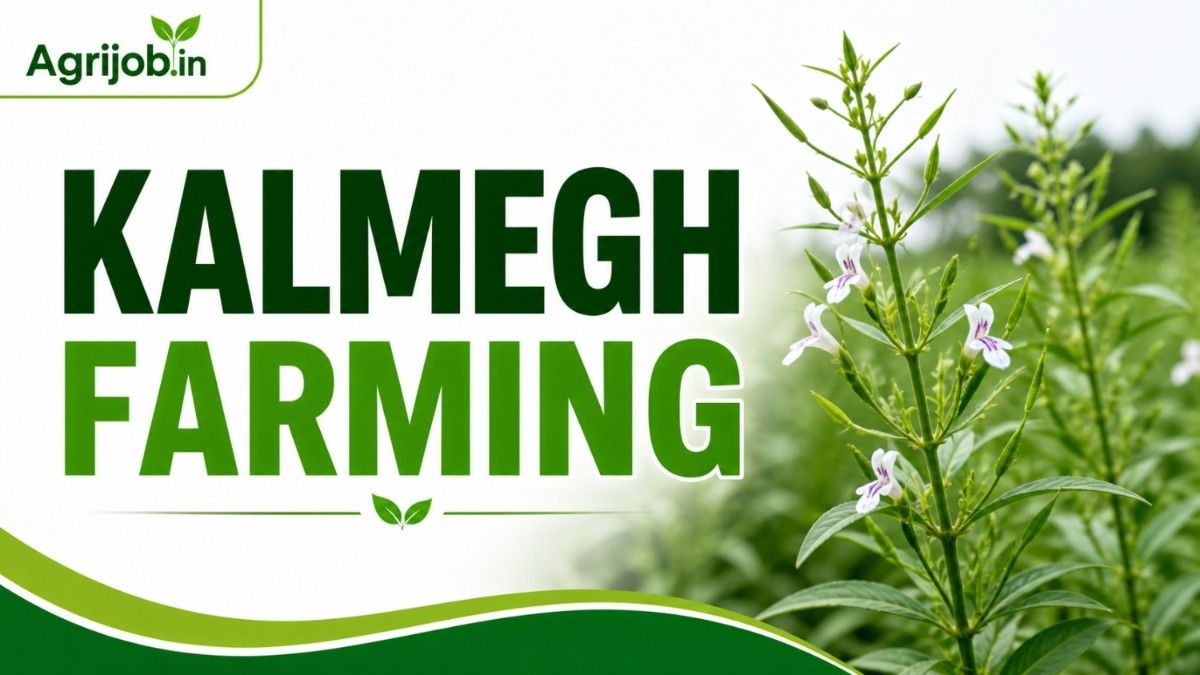
Kalmegh (Andrographis paniculata) is an annual medicinal herb in the family Acanthaceae, native to India and Sri Lanka, and widely used across Ayurveda, Siddha, and Unani medicine systems. The plant is used as a raw material for liver-protective formulations, immunity boosters, fever medicines, anti-inflammatory drugs, and nutraceuticals — products that together represent one of the fastest-growing segments of India’s Rs.1.5 lakh crore AYUSH industry.
Why is Kalmegh farming booming in 2026? Three powerful forces are converging. First, post-pandemic awareness of immunity-boosting herbs has permanently expanded the demand for Andrographis-based products. Second, the Government of India under the National Ayush Mission is actively pushing contract farming of priority medicinal plants, including Kalmegh, with direct buy-back arrangements facilitated by the National Medicinal Plants Board (NMPB). Third, pharma companies are paying Rs.55–Rs.70/kg for certified dry Kalmegh — versus Rs.40–Rs.50/kg at the open mandi — making a direct tie-up worth pursuing for any serious farmer or agri-entrepreneur.

Between 2,000 and 5,000 tonnes of Kalmegh is traded annually in India under its trade name, yet domestic cultivation still falls short of pharmaceutical-grade demand, creating a reliable supply gap that guarantees buyer interest for GAP-certified growers through at least 2028.
Kalmegh Market Rate 2026 – Mandi vs Pharma Contract Price
Understanding the pricing structure for Kalmegh farming is the first step to maximising income. There are 3 distinct price channels available to Indian farmers in 2026:
| Selling Channel | Price per kg (2026) | Annual Earning (15 qtl/acre) | Payment Mode | Buyer Risk |
|---|---|---|---|---|
| Open Mandi / Trader | Rs.40–Rs.55/kg | Rs.60,000–Rs.82,500 | Spot cash | High – price fluctuates |
| Direct Pharma Contract | Rs.55–Rs.70/kg | Rs.82,500–Rs.1,05,000 | Pre-agreed / advance | Low – guaranteed rate |
| NMPB Cluster Buy-Back | Rs.58–Rs.65/kg | Rs.87,000–Rs.97,500 | Post-harvest 30 days | Very Low – Govt backed |
| Export (CIF price) | Rs.70–Rs.140/kg | Rs.1,05,000–Rs.2,10,000 | LC / wire transfer | Medium – certification needed |
The standard pharma contract rate in 2026 is Rs.60/kg for dried aerial parts meeting quality norms: andrographolide content above 1%, moisture below 10%, and no synthetic pesticide residue. IndiaMART listings show dry Kalmegh herb trading between Rs.55 and Rs.78/kg from established suppliers, confirming that the Rs.60/kg contract rate is firmly achievable for certified farm output.
Kalmegh Farming Income Per Acre – Full Cost & Profit Table 2026
Here is a realistic cost-and-income analysis for 1 acre of Kalmegh farming under contract in Bihar, UP, and Madhya Pradesh conditions in 2026:
| Input / Output Item | Rain-fed (Bihar/UP) | Irrigated (MP/AP) |
|---|---|---|
| Land Preparation | Rs.3,000 | Rs.4,000 |
| Seeds / Seedlings | Rs.2,000 | Rs.2,500 |
| Fertiliser (FYM + DAP) | Rs.4,000 | Rs.5,500 |
| Irrigation | Rs.1,500 | Rs.4,000 |
| Labour (weeding, harvest) | Rs.5,000 | Rs.6,000 |
| Drying & Transport | Rs.2,000 | Rs.2,500 |
| Total Input Cost | Rs.17,500 | Rs.24,500 |
| Dry Yield per Acre | 1,200–1,500 kg | 1,500–2,000 kg |
| Contract Rate (Rs.60/kg) | Rs.72,000–Rs.90,000 | Rs.90,000–Rs.1,20,000 |
| Net Profit per Acre | Rs.54,500–Rs.72,500 | Rs.65,500–Rs.95,500 |
| Annual Earning (2 harvests) | Rs.1,09,000–Rs.1,45,000 | Rs.1,31,000–Rs.1,91,000 |
Even at the lower rain-fed Bihar estimate, net profit of Rs.54,500–Rs.72,500 per acre per season makes Kalmegh 2 to 3 times more profitable than wheat or paddy, which deliver Rs.26,000–Rs.34,000 per acre under typical irrigated conditions. With ratoon cropping (allowing the plant to regenerate after the first cut), farmers in southern states can achieve 2 full harvests per year from the same plot, nearly doubling annual income.
Kalmegh Cultivation Guide – Soil, Sowing & Harvesting
Kalmegh is a hardy kharif-season herb that adapts to most Indian agro-climatic zones. Follow this cultivation calendar for maximum yield and pharma-grade quality:
- 🌱 Soil Requirement: Well-drained loamy or sandy-loam soil with pH 6.0–7.5. Waterlogging causes root rot; raised beds improve drainage in flat Bihar/UP fields.
- ☀️ Climate: Warm tropical climate, 25–35°C. Tolerates partial shade. Annual rainfall of 600–1,200 mm is adequate; supplemental irrigation needed in dry months.
- 📅 Sowing Time: May–June (northern India) for main Kharif crop. Seedlings are raised in nursery for 4 weeks, then transplanted at 60 cm × 30 cm spacing.
- 🌿 Seed Rate: 1–1.5 kg seeds per acre for direct sowing; 500 g for nursery raising. ICAR and KVK supply certified high-andrographolide-content seed varieties.
- 💧 Irrigation: 3–4 light irrigations total: at transplanting, 21 days, 45 days, and pre-harvest. Avoid excess moisture in flowering stage.
- 🌾 Fertilisation: 8–10 tonnes FYM per acre at land preparation + 25 kg N + 20 kg P₂O₅ per acre as basal dose. Top dress 15 kg N at 45 days.
- 🪲 Pest/Disease Management: Generally low pest incidence. Leaf spot (Cercospora) managed by Mancozeb 0.2% spray. Avoid synthetic pesticides to maintain pharma-grade status.
- ✂️ Harvesting: Harvest aerial parts (leaves + stems) at early-flowering stage, 90–100 days after transplanting. Use sickle or brush-cutter; leave 10 cm stump for ratoon crop.
- 🌬️ Drying: Spread evenly under shade or in solar dryer; moisture must be below 10% for pharma acceptance. Avoid direct sun drying which degrades andrographolide.
- 📦 Packaging: Pack in HDPE jute-laminated bags of 25–50 kg. Label with harvest date, andrographolide content test result, and farm GAP certification number.
Pharma Company Direct Tie-up – 7-Step Process for Kalmegh Farmers
Securing a direct pharma tie-up is the single most important step in Kalmegh farming profitability. It eliminates the middleman, guarantees a price before sowing, and often includes free seed supply and technical support. Here is the complete 7-step process:
- Register with State Medicinal Plants Board (SMPB): Visit your state’s SMPB office or the nearest Krishi Vigyan Kendra (KVK) and register as a medicinal plant grower. Most states have dedicated AYUSH district-level officers who maintain farmer databases. Registration is free and takes 1–2 working days.
- Join or Form an FPO / Cluster: Pharma companies prefer to contract with Farmer Producer Organisations (FPOs) or clusters of 10+ farmers to ensure supply volumes of at least 5–10 tonnes per batch. Contact your district agriculture office or NABARD district office to join an existing FPO or get support forming one under the 10,000 FPO scheme.
- Get VCSMPP Certification: Apply for the National Medicinal Plants Board’s Voluntary Certification Scheme for Medicinal Plant Produce (VCSMPP) — jointly run by NMPB and Quality Council of India (QCI). This GAP-based certification is the entry ticket for pharma-grade pricing and is usually completed within 60–90 days of farm inspection. Apply at nmpb.nic.in.
- Conduct Soil & Water Testing: Most companies like Himalaya Drug Company require a basic soil test (NPK, pH, heavy metal screen) and water test before signing a contract. KVK soil testing labs charge Rs.200–Rs.500 per sample. Retain the test certificate — it is required for contract documentation.
- Approach AMAM-Affiliated Companies: The Association of Manufacturers of Ayurvedic Medicine (AMAM) has signed an MoU with NMPB to facilitate buy-back agreements. Send a formal expression of interest (a single A4 letter) mentioning your farm size, FPO name, estimated supply capacity, and VCSMPP certificate number to companies including Dabur, Himalaya, Hamdard, and Zandu. NMPB also circulates annual farmer-company matching lists on its portal.
- Negotiate and Sign the Contract: A standard medicinal plant contract specifies: guaranteed buy-back price (Rs.55–Rs.70/kg), quality parameters (andrographolide %, moisture %), advance seed/input supply terms, harvest schedule, and payment timeline (typically 15–30 days post delivery). Always ensure the contract is on company letterhead with authorised signatory and witnessed by the FPO or SMPB representative. Do not sow before the contract is signed.
- Supply and Get Paid: Deliver at the company’s designated collection point or their district aggregation centre. Companies like Dabur have 1,400+ farmers under contract across 13 states with established collection infrastructure. Payment is typically by RTGS/NEFT within 15–30 days of delivery and quality acceptance.
Companies That Buy Kalmegh – AYUSH Pharma Buyers List 2026
India has over 9,000 licensed Ayurvedic and AYUSH manufacturing units, and a significant number actively procure raw Kalmegh herb. Here are the major buyers organised by procurement model:
| Company | Procurement Mode | Coverage States | Contact Point |
|---|---|---|---|
| Dabur India Ltd. | Direct contract (1,674+ farmers, 13 states) | UP, Bihar, MP, Rajasthan, Uttarakhand | Dabur Raw Material Procurement – Ghaziabad |
| Himalaya Drug Company | Contract via GMCL & NAAM Foundation | Maharashtra, Karnataka, AP, TN | Himalaya Farm Connect – Bengaluru |
| Patanjali Ayurved | Direct + cluster farming | UP, Uttarakhand, Bihar, HP | Patanjali Herbal Park – Haridwar |
| Hamdard Laboratories | Open tender + FPO contract | UP, Bihar, WB, Delhi NCR | Hamdard Procurement Cell – New Delhi |
| Zandu Pharmaceuticals | Trader network + direct for large orders | Maharashtra, Gujarat, MP | Zandu Ayurvedic Division – Mumbai |
| AYUSH Herbals / Regional Units | IndiaMart / direct approach | All India | IndiaMART platform listing |
| NMPB Cluster Buy-Back | Govt-facilitated buy-back scheme | All 29 states | nmpb.nic.in |
For agriculture graduates and agri-entrepreneurs, the NMPB portal and your State Medicinal Plants Board are the best starting points. NMPB has signed MoUs with the Association of Manufacturers of Ayurvedic Medicine (AMAM) specifically to match certified farmer clusters with pharmaceutical buyers at pre-fixed rates — eliminating the need to cold-call companies individually.
Government Subsidy for Kalmegh Farming – NMPB & AYUSH Schemes 2026
Kalmegh farming in 2026 benefits from multiple government support schemes that directly reduce input costs and improve farmer profitability. Here are the 4 key schemes every Kalmegh farmer must know:
- 🌿 National Ayush Mission (NAM) – Medicinal Plant Component: Provides 30% cultivation subsidy for Kalmegh, one of 55 priority medicinal species. Individual farmers receive direct benefit transfer (DBT) subsidy on seed cost, land preparation, and irrigation infrastructure. Apply through your State AYUSH department or district NMPB office. Learn more at ayush.gov.in.
- 📋 VCSMPP Quality Certification – NMPB + QCI: Free or low-cost GAP certification under the Voluntary Certification Scheme for Medicinal Plants Produce. Certified farmers receive premium pricing from pharma buyers (typically Rs.5–Rs.10/kg above non-certified rates) and preferential access to NMPB buy-back agreements. Apply at nmpb.nic.in.
- 🏭 NABARD FPO Support: NABARD provides equity grants and working capital support to Farmer Producer Organisations (FPOs) dealing in medicinal plants. FPO-level collective bargaining significantly improves contract terms with pharma companies. Contact your NABARD district office for FPO formation assistance.
- 💰 PM-KISAN & PMFBY: Kalmegh farmers are eligible for the PM-KISAN income support of Rs.6,000/year and can insure their medicinal plant crop under the Pradhan Mantri Fasal Bima Yojana (PMFBY), which covers crop loss due to natural calamities. Enrol through your nearest Common Service Centre (CSC) or at pmfby.gov.in.
| Scheme | Subsidy/Benefit | Eligibility | Apply At |
|---|---|---|---|
| NAM Medicinal Plants | 30% on cultivation cost | Any registered Kalmegh farmer | State AYUSH / NMPB office |
| VCSMPP Certification | Premium Rs.5–Rs.10/kg extra | Farmers with min 0.5 acre | nmpb.nic.in |
| NABARD FPO Support | Rs.15 lakh equity grant per FPO | FPO of 10+ farmers | NABARD district office |
| PMFBY Crop Insurance | Crop loss cover up to 70% | All landholding farmers | pmfby.gov.in / CSC |
| PM-KISAN | Rs.6,000/year income support | All small & marginal farmers | pmkisan.gov.in |
Who Should Grow Kalmegh in 2026?
Kalmegh farming with a pharma tie-up is not just for experienced farmers. Here are the 8 profiles who should seriously consider this medicinal crop opportunity in 2026:
- 🎓 B.Sc. Agriculture / B.Sc. Horticulture Graduates: Your technical knowledge of soil management, pest control, and GAP documentation is exactly what pharma companies look for in a contract farmer partner. NMPB gives preference to trained agriculture graduates for cluster leadership roles.
- 🌾 Small & Marginal Farmers (1–5 acres): Kalmegh’s low input cost (Rs.17,500–Rs.24,500/acre) and high net return (Rs.65,000–Rs.90,000/acre) make it one of the best options for farmers wanting to move beyond subsistence wheat/paddy farming with minimal capital.
- 👩🌾 Women Farmers & SHG Members: Several pharma companies including Himalaya Drug Company actively partner with women Self-Help Groups (SHGs) for medicinal plant cultivation, often providing free seeds, training, and transport support.
- 🏘️ SC/ST Farmers: Eligible for enhanced subsidy rates and priority access to NMPB cluster programs. Many state governments in Bihar, MP, and Chhattisgarh have dedicated tribal medicinal plant cultivation schemes with 50–75% subsidy tiers.
- 💼 Agri-Entrepreneurs & FPO Promoters: Forming or leading an FPO to aggregate Kalmegh supply from 10–20 farmers creates a viable agri-business model — earning a margin on procurement aggregation while also owning farmland output.
- 🧑💻 Agriculture Extension Workers & ATMA Agents: Government extension workers who help farmers set up Kalmegh contracts earn social credibility and can develop side-income by facilitating VCSMPP certification processes for a fee.
- 🏡 Part-Time Farmers with Off-Farm Income: Because Kalmegh is a low-maintenance crop requiring only 3–4 labour visits per season, it suits professionals or salaried individuals who own agricultural land and want passive income without full-time farming commitment.
- 🌏 Export-Oriented Farmers & Agri-Exporters: Certified organic Kalmegh commands Rs.70–Rs.140/kg in export markets (Netherlands, Australia, Kuwait). Farmers with NPOP organic certification can access these premium channels via herbal export companies registered with APEDA.
Kalmegh Contract Farming vs Open Mandi Selling – Which Is Better?
| Parameter | Contract Farming (Pharma Tie-up) | Open Mandi Selling |
|---|---|---|
| Price Certainty | Guaranteed Rs.55–Rs.70/kg pre-sowing | Fluctuates Rs.40–Rs.78/kg |
| Price Level | Rs.60/kg standard (2026) | Rs.45–Rs.55/kg average |
| Net Profit (1 acre) | Rs.65,000–Rs.90,000 | Rs.45,000–Rs.65,000 |
| Market Risk | Very low – buyer locked before sowing | High – glut can crash prices |
| Input Support | Free seeds, training, soil testing from buyer | No support |
| Quality Standards | Strict – andrographolide %, moisture % | Visual grade only |
| Payment Timeline | 15–30 days post delivery | Immediate (but lower price) |
| Documentation Needed | VCSMPP cert, soil test, FPO membership | None |
| Best For | Farmers with 1+ acre, 2+ seasons experience | New farmers testing the crop |
High-Value Medicinal Farming Terms You Must Know
Whether you are an agriculture graduate pursuing Kalmegh farming or researching medicinal crop careers, these 10 high-value terms define the commercial landscape in 2026:
- 🌿 Andrographolide: The primary bioactive diterpene lactone in Kalmegh that pharma companies test for. Standard pharma acceptance requires minimum 1% andrographolide in dry herb; premium extract grades contain 10–20% for Rs.1,200–Rs.3,000/kg finished extract prices.
- 📋 GAP (Good Agricultural Practices): A set of farming standards covering soil treatment, pesticide use, harvest hygiene, and post-harvest handling. GAP compliance is mandatory for pharma contracts and is the backbone of the VCSMPP certification process.
- 🏭 NMPB (National Medicinal Plants Board): The apex government body under Ministry of AYUSH that coordinates medicinal plant cultivation subsidies, buy-back agreements, and quality certification. All Kalmegh farmers should register here at nmpb.nic.in.
- 🌱 Ratoon Cropping: The practice of allowing Kalmegh to regenerate from its root stump after the first harvest, enabling a second crop without replanting cost. This reduces input cost by Rs.5,000–Rs.8,000/acre for the second harvest.
- 💊 AYUSH Industry: The Rs.1.5 lakh crore sector encompassing Ayurveda, Yoga & Naturopathy, Unani, Siddha, and Homeopathy. India’s AYUSH market is growing 15–20% annually, driving sustained demand for raw herbs including Kalmegh.
- 📜 VCSMPP Certification: Voluntary Certification Scheme for Medicinal Plants Produce, jointly operated by NMPB and Quality Council of India. Certified farmers earn Rs.5–Rs.10/kg price premium from pharma buyers and qualify for government buy-back schemes.
- 🌾 FPO (Farmer Producer Organisation): A collective of farmers that aggregates produce for better bargaining power. FPOs are preferred by pharma companies for Kalmegh contracts because they ensure minimum supply volumes of 5–10 tonnes per batch.
- 🔬 Hepatoprotective Herb: A herb that protects and strengthens liver function. Kalmegh’s hepatoprotective properties make it a core raw material for liver-health products — one of Ayurveda’s fastest-growing product segments with 20%+ annual demand growth.
- 📦 Pharma-Grade Dry Herb: Dried Kalmegh meeting pharmaceutical quality standards: moisture below 10%, no heavy metal contamination, andrographolide content tested by HPLC, free of synthetic pesticide residues. Pharma-grade herb earns Rs.55–Rs.70/kg vs Rs.40–Rs.50/kg for trader-grade.
- 🌐 APEDA (Agricultural & Processed Food Products Export Development Authority): The government body that registers and supports agricultural exporters. Kalmegh farmers producing export-quality certified organic herb can register with APEDA to access Rs.70–Rs.140/kg export pricing channels.
Frequently Asked Questions – Kalmegh Farming 2026
What is Kalmegh farming and why is it profitable in 2026?
Kalmegh farming refers to the commercial cultivation of Andrographis paniculata for the AYUSH and pharmaceutical industry. In 2026, Kalmegh farming is highly profitable because pharma companies offer guaranteed buy-back rates of Rs.55–Rs.70 per kg through direct contract farming tie-ups — generating net profits of Rs.65,000–Rs.90,000 per acre per season, which is 3 to 4 times higher than conventional crops like wheat or paddy in the same agro-climatic zones.
What is the market price of Kalmegh per kg in 2026?
The open mandi price of dry Kalmegh herb in 2026 ranges from Rs.45 to Rs.78 per kg depending on quality and andrographolide content. Under direct pharma company tie-up contracts, farmers receive a guaranteed rate of Rs.55–Rs.70 per kg, with Rs.60/kg being the most commonly offered standard contract rate for dried herb meeting GAP and VCSMPP certification requirements.
How much Kalmegh yield can I expect per acre?
A well-managed Kalmegh crop under irrigated conditions yields 15–20 quintals (1,500–2,000 kg) of dry herb per acre per season. Rain-fed farms in Bihar and UP typically achieve 12–15 quintals per acre. With ratoon cropping — allowing the plant to regenerate after the first cut — farmers can obtain a second harvest and push annual yield to 25–35 quintals per acre.
Which pharma companies buy Kalmegh from farmers in India?
Major pharma and AYUSH companies that procure Kalmegh through contract farming in India include Dabur India Ltd. (1,674+ contract farmers across 13 states), Himalaya Drug Company, Patanjali Ayurved, Hamdard Laboratories, and Zandu Pharmaceuticals. The National Medicinal Plants Board (NMPB) also facilitates buy-back agreements between the Association of Manufacturers of Ayurvedic Medicine (AMAM) and registered farmer clusters.
What government subsidy is available for Kalmegh farming?
Kalmegh is listed among the 55 priority medicinal plant species eligible for a 30% cultivation subsidy under the National Ayush Mission (NAM), operated by the Ministry of AYUSH, Government of India. Additional support is available through NMPB for VCSMPP quality certification, NABARD for FPO formation, and PM-KISAN income support of Rs.6,000/year for eligible landholding farmers.
How do I get a direct pharma company tie-up for Kalmegh farming?
To get a direct pharma tie-up, first register with your State Medicinal Plants Board or nearest KVK, then join or form an FPO of 10+ farmers, obtain VCSMPP certification from NMPB, and approach AMAM-affiliated companies with your farm profile and supply capacity. You can also register on the NMPB portal at nmpb.nic.in, where companies post procurement requirements. Always sign a written contract specifying the buy-back price before sowing your Kalmegh crop.
What is the net income per acre from Kalmegh farming in 2026?
At a contract rate of Rs.60/kg and a yield of 15–18 quintals per acre, gross revenue from Kalmegh farming is Rs.90,000–Rs.1,08,000 per acre. After deducting total input costs of Rs.17,500–Rs.24,500 per acre (seeds, labour, fertiliser, irrigation, drying), net profit per acre ranges from Rs.65,500 to Rs.90,500 per season — significantly higher than wheat’s Rs.26,000–Rs.34,000 per acre.
Which states in India are best for Kalmegh cultivation?
The top Kalmegh farming states in India are Andhra Pradesh, Tamil Nadu, West Bengal, Odisha, Bihar, Uttar Pradesh, Madhya Pradesh, and Maharashtra. Bihar and UP are emerging hotspots in 2026 because of low land costs, abundant kharif-season acreage, proximity to major Patanjali and Dabur procurement centres, and strong NMPB-KVK extension support for new medicinal plant growers.
Is Kalmegh farming suitable for agriculture graduates without land?
Yes — agriculture graduates without land can participate in Kalmegh farming through several models: (1) lease 1–2 acres of farmland for Rs.8,000–Rs.15,000/acre/year and operate as a contract farmer, earning Rs.50,000–Rs.75,000 net per acre after lease cost; (2) work as an FPO coordinator aggregating 10–20 farmers and earning a service fee; or (3) provide VCSMPP certification consultancy services to Kalmegh growers seeking pharma tie-ups. All three paths are viable careers for B.Sc. Agriculture / B.Sc. Horticulture graduates in 2026.
For more agriculture career guides and government job notifications for agri-graduates, explore the latest articles on Agrijob.in Agriculture Careers and Agrijob.in Farming Business Guides.
This guide is regularly reviewed and updated for accuracy. Bookmark this page for the latest Kalmegh farming rates, pharma tie-up contacts, and government scheme updates. | Last Updated: June 2026