
RUHS Medical Officer Syllabus 2026 is now officially defined by the Rajasthan University of Health Sciences (RUHS), Jaipur for the Medical Officer Direct Recruitment Examination 2026, covering 600 vacancies under the Medical, Health & Family Welfare Department, Government of Rajasthan. The written exam carries 100 objective-type MCQ questions worth 100 marks, with a 2-hour duration and no negative marking. This guide covers the complete MBBS subject-wise syllabus, exam pattern, category-wise vacancy breakdown, salary details, and a step-by-step preparation strategy to help MBBS graduates crack the RUHS MO exam on their first attempt.

The RUHS Medical Officer Syllabus 2026 comprises all subjects studied during the 4.5-year MBBS curriculum as prescribed by the National Medical Commission (NMC), including Anatomy, Biochemistry, Physiology, Pathology, Microbiology, Pharmacology, Community Medicine, Medicine, Surgery, Obstetrics & Gynaecology, Pediatrics, Psychiatry, Dermatology, Ophthalmology, Orthopedics, ENT, Anaesthesiology, and Forensic Medicine. The exam has 100 MCQs in 120 minutes with no negative marking. Salary after selection is approximately Rs.56,700 per month (Pay Level 14, Grade Pay Rs.5,400), with applications open from 14 September to 13 October 2026 on ruhsraj.org.
- Conducting Body: Rajasthan University of Health Sciences (RUHS), Jaipur
- Post Name: Medical Officer (Medical)
- Total Vacancies: 600 Posts
- Advertisement No.: MODRE-2026 (No. 04/2026)
- Application Start Date: 14 September 2026
- Application Last Date: 13 October 2026
- Admit Card Date: 8 December 2026
- Exam Date: 13 December 2026 (Tentative, Jaipur)
- Total Marks: 100 MCQs (100 Marks)
- Exam Duration: 120 Minutes
- Negative Marking: None
- Syllabus Basis: Full 4.5-year NMC/MBBS Curriculum
- Salary (Approx.): Rs.56,700/month (Pay Level 14)
- Application Fee: Rs.5,000 (General/EWS/BC) | Rs.2,500 (SC/ST)
- Official Website: ruhsraj.org / ruhsmomedical.com
- What Is the RUHS Medical Officer Syllabus 2026?
- Who Should Read This Guide?
- Salary & Pay Scale Details
- Eligibility Criteria & Application Fee
- RUHS MO Exam Pattern 2026
- Subject-Wise MBBS Syllabus (Complete Breakdown)
- Vacancy & Category-Wise Reservation Breakdown
- Expected Cut-Off & Preparation Strategy
- RUHS MO vs Other Medical Officer Exams
- Advantages and Disadvantages of RUHS MO Post
- Important Medical Terms and High-Frequency Topics
- Important Dates & Timeline
- Important Links
- Conclusion
- Key Takeaways
- Frequently Asked Questions
What Is the RUHS Medical Officer Syllabus 2026?
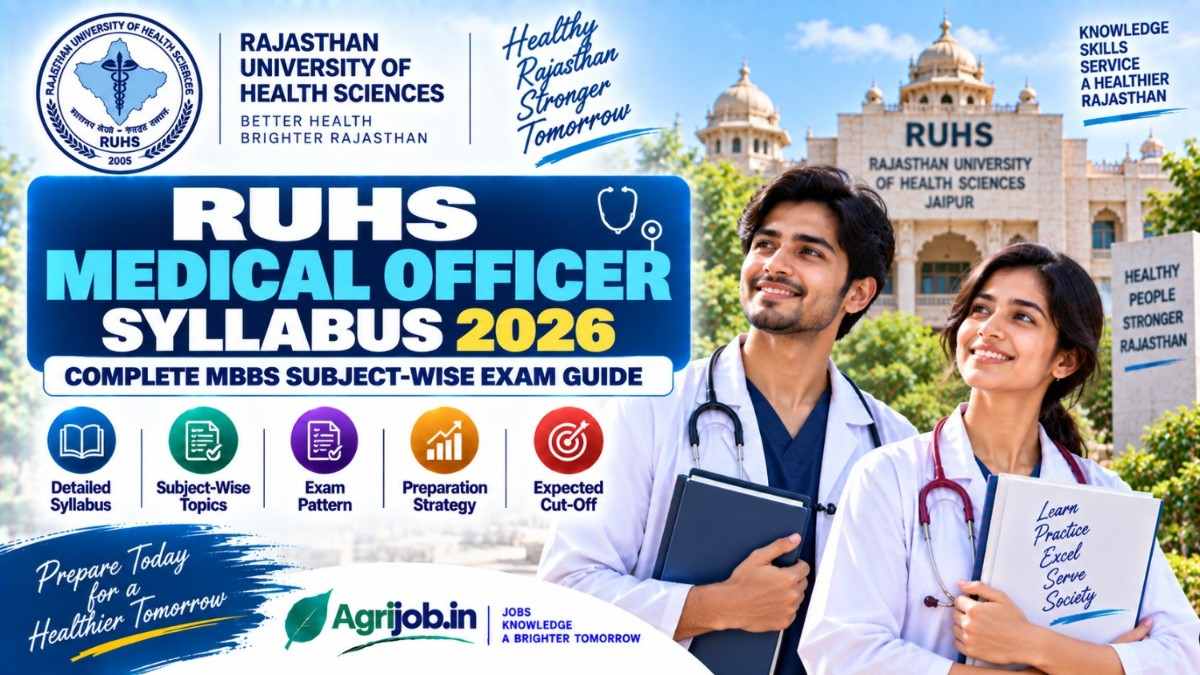
The RUHS Medical Officer Syllabus 2026 is the official examination curriculum prescribed by the Rajasthan University of Health Sciences (RUHS) for the Medical Officer Direct Recruitment Examination 2026, which has opened 600 government doctor posts in Rajasthan. Unlike most competitive exams that use a narrowly defined subject list, the RUHS MO syllabus is comprehensively based on the complete 4.5-year MBBS curriculum as defined by the National Medical Commission (NMC) — or as prescribed by the competent authority in force at the time of the examination.
This means every subject studied across all four and a half years of an MBBS programme — from first-year pre-clinical subjects like Anatomy, Biochemistry, and Physiology, through second-year para-clinical subjects like Pathology, Microbiology, and Pharmacology, to final-year clinical subjects including Medicine, Surgery, Obstetrics & Gynaecology, Pediatrics, Community Medicine, Psychiatry, Dermatology, Ophthalmology, Orthopaedics, ENT, and Forensic Medicine — is fair game in the RUHS MO examination. The exam tests a doctor’s command of the entire medical sciences curriculum in a single 100-question OMR test.

The examination is conducted offline in OMR format, with 100 objective-type (MCQ) questions of 1 mark each, completed within 120 minutes, and with no negative marking — a significant advantage that rewards both preparation and strategic guessing on uncertain questions.
Who Should Read This Guide?
This complete RUHS Medical Officer Syllabus 2026 guide is designed for:
- 🏥 MBBS graduates registered with the Rajasthan Medical Council (RMC) who are actively preparing for the RUHS Medical Officer Direct Recruitment Examination 2026
- 🎓 MBBS interns completing their rotations in 2026 who intend to register with the RMC and apply before 13 October 2026
- 📋 Private hospital doctors in Rajasthan seeking to transition into the stable government healthcare sector at Pay Level 14
- ⏱️ Candidates who appeared in the RUHS MO 2024 cycle and are using this notification as a second attempt with focused preparation
- 📚 Fresh MBBS graduates appearing in their first government medical officer exam and needing a structured subject-wise preparation plan
- 🌿 SC/ST/BC/MBC/EWS category candidates seeking clarity on their reservation benefits, reduced fee structure, and age relaxation for this recruitment
- 🔎 PG aspirants taking a gap year who want a government doctor job as a backup while continuing preparation for MD/MS entrance exams
- 👨⚕️ Bonafide Rajasthan residents who have completed MBBS from a recognised university anywhere in India and have valid RMC registration by the exam date
RUHS Medical Officer Salary & Pay Scale 2026
Selected candidates under the RUHS Medical Officer Recruitment 2026 will be placed on the Pay Scale of Rs.15,600–Rs.39,100 with Grade Pay Rs.5,400 (Pay Level 14) as per Rajasthan Government Pay Matrix rules. With applicable allowances, the estimated in-hand salary during the probation period is approximately Rs.56,700 per month. Post-probation, the gross monthly package rises further with DA, HRA, and other state government allowances.
| Pay Component | Amount |
|---|---|
| Pay Scale (Basic) | Rs.15,600 – Rs.39,100 |
| Grade Pay | Rs.5,400 |
| Pay Level | Level 14 (Rajasthan Pay Matrix) |
| Dearness Allowance (DA) | As per Rajasthan Govt. revision |
| House Rent Allowance (HRA) | As per posting location |
| Medical Allowance | As admissible under state rules |
| Estimated Monthly In-Hand (Probation) | Approx. Rs.56,700 |
| Estimated Annual Package (Entry Level) | Approx. Rs.6.8 lakh – Rs.8.5 lakh |
This places the RUHS Medical Officer post among the highest-paying state government medical officer positions in Rajasthan, ahead of many contractual government doctor roles in the state that offer Rs.35,000–Rs.45,000/month without permanence or benefits. The post is a permanent government appointment, meaning it includes pension, gratuity, paid leave, and long-term job security.
Eligibility Criteria & Application Fee
Before diving into the syllabus, ensure you meet every eligibility requirement for the RUHS MO Recruitment 2026:
- ✅ Educational Qualification: MBBS degree from a university recognised by the National Medical Commission (NMC)
- ✅ Registration: Valid registration with the Rajasthan Medical Council (RMC) is mandatory by the date of the written examination
- ✅ Minimum Age: 22 years (as on 01 January 2027)
- ✅ Maximum Age: 45 years (General/EWS); up to 55 years with applicable state reservations
- ✅ Nationality: Indian citizen; Bonafide resident or eligible under Rajasthan Govt. service rules
| Age Category | Minimum Age | Maximum Age |
|---|---|---|
| General / EWS | 22 years | 45 years |
| SC/ST/OBC/MBC/EWS Male (Rajasthan) | 22 years | 50 years (45 + 5) |
| SC/ST/OBC/MBC/EWS Female (Rajasthan) | 22 years | 55 years (45 + 10) |
| General Female (Rajasthan) | 22 years | 50 years (45 + 5) |
| Ex-Servicemen | 22 years | 50 years |
| Widow / Divorced Women | 22 years | No upper limit |
| Category | Application Fee |
|---|---|
| General / OBC / EWS / MBC | Rs.5,000/- |
| SC / ST (Rajasthan State) | Rs.2,500/- |
RUHS Medical Officer Exam Pattern 2026
The RUHS MO 2026 written examination is a single-stage offline OMR-based test. Understanding the exact exam structure helps you plan preparation time per subject group and approach the paper strategically on exam day.
| Particulars | Details |
|---|---|
| Exam Type | Offline (OMR Sheet) |
| Total Questions | 100 Objective Type (MCQ) |
| Total Marks | 100 |
| Each Question | 1 Mark |
| Duration | 120 Minutes (2 Hours) |
| Negative Marking | None |
| Exam Medium | English |
| Syllabus Basis | Full NMC MBBS Curriculum (4.5 years) |
| Minimum Qualifying Marks | As per RUHS official rules (check Information Booklet) |
| Exam Date (Tentative) | 13 December 2026 (Sunday), Jaipur |
Since there is no negative marking in the RUHS MO 2026 exam, always attempt all 100 questions — even those you are uncertain about. Statistically, random guessing on an MCQ with 4 options gives you a 25% expected accuracy rate, which translates to approximately 2–3 additional marks on a 10-question uncertain block. In a highly competitive exam, those extra marks could be the difference between making the merit list or not. Never leave any question unanswered.
RUHS Medical Officer Subject-Wise MBBS Syllabus 2026
The complete RUHS Medical Officer Syllabus 2026 covers all subjects of the 4.5-year MBBS curriculum as prescribed by the NMC. Below is the comprehensive subject-wise and topic-wise breakdown for all 18 subjects — use this as your preparation roadmap:
1. Anatomy
- Gross Anatomy (regional and systemic)
- Microanatomy (Histology — tissues and organs)
- Embryology (general and organ-specific development)
- Genetics (chromosomal disorders, Mendelian inheritance)
- Neuroanatomy (central and peripheral nervous system)
2. Biochemistry
- Biological cell — structure and function
- Biomolecules (proteins, carbohydrates, lipids, nucleic acids)
- Enzymes — kinetics, inhibition, clinical significance
- Metabolic pathways (glycolysis, TCA cycle, oxidative phosphorylation)
- Metabolic interrelationships (gluconeogenesis, ketogenesis)
- Food assimilation and nutrition
- Hormones — biochemistry of endocrine system
- Molecular Biology (DNA replication, transcription, translation)
- Immunology (antibody structure, hypersensitivity, complement)
- Environmental biochemistry
- Cancer and tumour markers (biochemistry of oncology)
3. Physiology
- General Physiology (cell membrane, homeostasis)
- Nerve–Muscle physiology (action potential, neuromuscular junction)
- Blood (haematopoiesis, coagulation, blood groups)
- Respiratory System (ventilation, gas exchange, control of breathing)
- Cardiovascular System (cardiac cycle, ECG, regulation of BP)
- Gastrointestinal System (digestion, absorption, GI motility)
- Nutrition (BMR, nutritional requirements)
- Environmental Physiology (high altitude, diving, heat regulation)
- Reproduction (male and female reproductive physiology)
- Kidney (GFR, tubular functions, RAS, micturition)
- Neurophysiology (reflexes, sensory and motor systems, special senses)
- Yoga — physiological basis
4. Forensic Medicine & Toxicology
- Forensic Medicine — legal medicine, identification, injuries, wounds
- Toxicology — common poisons, management of poisoning cases
5. Microbiology
- General Microbiology — classification, morphology
- Bacteriology — medically important bacteria
- Bacterial staining and cultivation techniques
- Common tests for bacterial identification
- Parasitology — protozoa, helminths, ectoparasites
- Virology — important viruses, laboratory diagnosis
- Mycology — pathogenic fungi and fungal infection diagnosis
- Collection and transport of clinical samples
- Host–Parasite relationship; bacterial and viral genetics
- Immunity to infection; immunodiagnosis; vaccines
- Sterilization and disinfection methods
- Bacteriology of water and air; gastrointestinal infections
6. Pathology
- General Pathology (cell injury, inflammation, repair, neoplasia)
- Systemic Pathology (organ-specific disease processes)
- Haematological disorders and laboratory investigations
7. Pharmacology
- General Pharmacology (pharmacokinetics, pharmacodynamics)
- Autonomic Nervous System (ANS) and Peripheral Nervous System (PNS) drugs
- Central Nervous System (CNS) drugs — sedatives, antiepileptics, antipsychotics
- Autacoids (histamine, serotonin, prostaglandins, NSAIDs)
- Cardiovascular system drugs — antihypertensives, antiarrhythmics, diuretics
- Gastrointestinal and respiratory system drugs
- Hormones and endocrine pharmacology
- Chemotherapy — antibiotics, antiparasitics, antifungals, antivirals, anticancer drugs
- Miscellaneous — vitamins, vaccines, drug interactions, adverse effects
8. Anaesthesiology
- Preoperative evaluation and optimization of patients
- IV cannulation skills and intravenous access
- Oropharyngeal and nasopharyngeal airway insertion
- Bag-Mask Ventilation technique
- Attaching and interpreting pulse oximeter, BP cuff, and ECG monitor
9. Community Medicine (Social and Preventive Medicine)
- Behavioural Sciences and health education
- Environment — environmental health, sanitation, water quality
- Biostatistics — data collection, analysis, measures of central tendency
- Epidemiology — study designs, measures of disease frequency
- Nutrition — nutritional status assessment, deficiency diseases
- Maternal and Child Health (MCH) services
- Rehabilitation — community-based rehabilitation
- Epidemiology of communicable and non-communicable diseases
- Important National Health Programmes (NHM, Ayushman Bharat, NTEP, NACP, etc.)
- Occupational Health and industrial hygiene
- Health Administration, Health Economics, and Health Planning
- Geriatrics and counselling
10. Dermatology & Venereology
- Infective dermatoses (bacterial, fungal, viral skin infections)
- Infestations (scabies, lice)
- Melanin synthesis and pigmentary disorders
- Allergic disorders and drug eruptions
- Urticaria, erythema multiforme, vesiculobullous diseases
- Psoriasis — pathogenesis and management
- Syphilis — stages and treatment
- Gonococcal and non-gonococcal sexually transmitted infections
- HIV infection and AIDS — dermatological manifestations
- Dermatological emergencies
11. Medicine (Internal Medicine)
- Clinical Pharmacology applied to medicine
- Nutritional and metabolic disorders (diabetes, obesity, dyslipidemias)
- Water, electrolyte, and acid-base imbalance
- Critical Care Medicine — ICU management, mechanical ventilation
- Pain management and palliative care
- Medical Psychiatry — psychosomatic illness, delirium
- Poisonings — common toxidromes and management
- Environmental and occupational hazards
- Immune response and infections — bacterial, viral, parasitic
- Cardiovascular system disorders — IHD, heart failure, hypertension, arrhythmias, RHD
12. Obstetrics & Gynaecology
- Basic Sciences — reproductive anatomy, physiology of menstruation, fertilisation
- Obstetrics — normal and abnormal pregnancy, labour, and puerperium
- Gynaecology — menstrual disorders, pelvic inflammatory disease, benign and malignant tumours
- Contraception — all methods of family planning
- Neonatology and recent advances in perinatal medicine
13. Ophthalmology
- Microbiology and pharmacology of the eye
- Disorders of the Lid and Lacrimal Apparatus
- Conjunctivitis, Trachoma, Ophthalmia Neonatorum
- Keratitis, corneal ulcers, Scleritis, and Episcleritis
- Glaucoma, cataract, retinal disorders, and strabismus
14. Orthopedics
- Paediatric Orthopedics — congenital and developmental disorders
- Orthopedic Oncology — bone and soft tissue tumours
- Management of Trauma — fracture principles, dislocation, compartment syndrome
- Sports Medicine and rehabilitation
- Physical Medicine and Rehabilitation (PMR)
- Orthopedic Neurology — peripheral nerve injuries
- Disorders of Spine — spondylosis, disc prolapse, spinal deformities
- Radiology and imaging in orthopedics
15. Otorhinolaryngology (ENT)
- Oral cavity and oropharynx disorders
- Ear — anatomy, otitis media, otosclerosis, deafness
- Nose — rhinitis, sinusitis, nasal polyps, epistaxis
- Larynx and trachea — laryngitis, foreign body, tumours
- ENT instruments and operative procedures
16. Pediatrics
- Vital statistics, growth and development milestones
- Nutrition — breastfeeding, complementary feeding, malnutrition (SAM, MAM)
- Immunization schedule (IAP and National Immunisation Programme)
- Infectious diseases in children — common and vaccine-preventable
- Haematology — anaemia, thalassemia, haemophilia in children
- Respiratory system disorders (pneumonia, bronchiolitis, asthma)
- Gastrointestinal tract disorders (diarrhoea, ORS, intussusception)
- Central Nervous System (febrile seizures, meningitis, hydrocephalus)
- Cardiovascular system (congenital heart diseases, acyanotic/cyanotic)
- Genito-urinary system (UTI, nephrotic syndrome, nephritic syndrome)
- Neonatology — birth asphyxia, LBW, jaundice, sepsis, NEC
- Pediatric emergencies and fluid-electrolyte management
- Genetics, behavioural problems, surgical problems, and therapeutics
17. Psychiatry
- Behavioural Sciences and psychology applied to medicine
- Emotion and its application to health — stress, coping mechanisms
- Cognitive process and memory
- Psychiatric disorders — classification (ICD-10 / DSM-5)
- Personality disorders
- Schizophrenia — types, features, treatment
- Bipolar disorders and depression
- Anxiety neurosis, phobia, and OCD
- Substance use disorders and de-addiction
18. Surgery
- Skin — wounds, burns, skin grafts, skin tumours
- Head and Neck — thyroid, parathyroid, salivary glands, lymph nodes
- Arteries and Veins — peripheral vascular disease, varicose veins, DVT
- Breast — benign and malignant conditions, breast cancer management
- Oesophagus — disorders including cancer, achalasia, GERD
- Stomach and Duodenum — peptic ulcer disease, gastric cancer
- Small Intestine — obstruction, Crohn’s disease
- Colon and Rectum — colorectal cancer, inflammatory bowel disease
- Appendix — appendicitis, complications
- Acute Abdomen — peritonitis, abdominal trauma
- Urology — BPH, renal calculi, bladder tumours, renal tumours
RUHS MO 2026 Vacancy — Category-Wise Reservation Breakdown
The 600 RUHS Medical Officer posts are distributed across social categories as per the Rajasthan Government Reservation Policy, with additional sub-allocation for General Male, General Female, Widow, and Deserted Woman sub-categories:
| Category | Total Posts | General (Male) | General (Female) | Widow | Deserted Woman |
|---|---|---|---|---|---|
| Unreserved (UR) | 216 | 152 | 43 | 17 | 4 |
| Economically Weaker Section (EWS) | 60 | 42 | 12 | 5 | 1 |
| Backward Class (BC) | 126 | 89 | 25 | 10 | 2 |
| Scheduled Caste (SC) | 96 | 68 | 19 | 8 | 1 |
| Scheduled Tribe (ST) | 72 | 51 | 15 | 5 | 1 |
| Most Backward Class (MBC) | 30 | 21 | 7 | 2 | 0 |
| Total | 600 | — | — | — | — |
The Unreserved (UR) category holds the largest share with 216 posts, followed by Backward Class (BC) at 126. Non-Bonafide Residents of Rajasthan are treated as Unreserved (UR) candidates for all reservation and age relaxation purposes, with no additional benefits.
Expected Cut-Off & 6-Step Preparation Strategy
RUHS has not published an official historical cut-off for the Medical Officer examination in the public domain. However, based on the exam pattern (100 MCQs, no negative marking), the number of seats (600), and typical competition levels for Rajasthan government doctor posts, the following expected cut-off benchmarks can guide your preparation target:
| Category | Expected Safe Score (Out of 100) | Recommended Target Score |
|---|---|---|
| Unreserved (UR) | 68–75 marks | 75+ marks |
| EWS / BC | 62–70 marks | 70+ marks |
| SC / ST | 55–65 marks | 65+ marks |
| MBC | 58–66 marks | 66+ marks |
With the exam tentatively scheduled for 13 December 2026 and applications closing 13 October 2026, candidates have approximately 8–10 weeks from the application deadline to prepare. Here is a proven 6-step preparation strategy:
- Map your MBBS subjects by weightage in Week 1: High-yield subjects for competitive MO exams historically include Medicine, Surgery, Obstetrics & Gynaecology, Paediatrics, Community Medicine, and Pharmacology — these six subjects together account for approximately 60–70% of typical MCQ question banks. Prioritize these first.
- Revise clinical subjects using standard reference books in Weeks 2–5: Harrison’s Principles of Internal Medicine or Davidson’s for Medicine; Bailey & Love for Surgery; DC Dutta for Obs & Gynae; Nelson’s Essentials for Pediatrics; KD Tripathi for Pharmacology; and KM Park’s Preventive & Social Medicine for Community Medicine and National Health Programmes.
- Cover pre-clinical and para-clinical subjects in parallel in Weeks 2–4: Anatomy (BD Chaurasia), Physiology (Guyton), Biochemistry (Vasudevan), Pathology (Robbins or Harsh Mohan), Microbiology (Ananthanarayan), and Pharmacology can be revised from MCQ-focused revision books for competitive exams.
- Focus specifically on Community Medicine and National Health Programmes: Community Medicine questions are consistently present in all government medical officer exams and are entirely factual — ideal for scoring. Cover all major national health programmes including NHM, Ayushman Bharat, PM-JAY, Mission Indradhanush, NTEP, NACP, PMSMA, JSSK, and POSHAN Abhiyan.
- Practice 2–3 full-length MCQ mock tests per week from Week 4 onwards: Use INICET, NEET-PG, or USMLE Step 2-style MCQ banks covering the same MBBS curriculum. Analyse wrong answers subject-wise. Track accuracy per subject and allocate extra revision time to your weakest two or three subjects.
- Final revision and consolidation in the last 2 weeks before 13 December 2026: Stop adding new material 10 days before the exam. Focus on high-yield single-liners — normal laboratory values, drug mechanisms and side effects, WHO/NMC definitions, and epidemiological data points for national health programmes. Attempt all 100 questions on exam day without exception.
RUHS MO 2026 vs Other Government Medical Officer Exams
How does the RUHS Medical Officer examination compare with other government MO recruitment examinations in India?
| Feature | RUHS MO 2026 (Rajasthan) | MPESB MO Exam | UP NHM MO | UPSC CMS |
|---|---|---|---|---|
| Salary | Rs.56,700/month (approx.) | Rs.56,000–Rs.72,000 | Rs.45,000–Rs.55,000 | Rs.56,100–Rs.1,77,500 |
| Total Vacancies | 600 | Varies annually | Varies annually | ~479 (2024 cycle) |
| Total Marks | 100 | 100 | 100 | 500 (Paper 1 + Paper 2) |
| Duration | 120 minutes | 120 minutes | 180 minutes | 2 × 120 minutes |
| Negative Marking | No | Yes (0.25) | No | Yes (1/3) |
| Syllabus | Full MBBS Curriculum (NMC) | Full MBBS Curriculum | Clinical Subjects Only | MBBS + Clinical |
| Restriction | RMC Registration Required | MP Domicile Preferred | UP Residency | Pan India |
| Selection Process | Written + Document Verification | Written + Counselling | Written + Interview | Written + Interview + Medical |
| Best For | Rajasthan MBBS doctors seeking permanent govt post | MP MBBS doctors | UP doctors / NHM experience seekers | Top All-India MO rank holders |
For Rajasthan-based MBBS graduates, the RUHS Medical Officer 2026 recruitment is the single most important opportunity in the current hiring cycle. With 600 permanent posts (the largest RUHS MO recruitment in recent memory), a salary of approximately Rs.56,700/month, no negative marking, and a single-stage written exam, this is a high-value, accessible path to a lifelong government medical career. Candidates who are simultaneously preparing for PG entrance exams (NEET-PG / INICET) are especially well-positioned — their PG preparation directly covers the RUHS MO syllabus — and should apply without hesitation.
Advantages and Disadvantages of the RUHS Medical Officer Post
Advantages (Pros):
- ✅ Permanent Government Employment: A confirmed appointment (not contractual), with job security, pension, gratuity, and government medical benefits for life
- ✅ Competitive Salary: Approximately Rs.56,700/month at entry — significantly above private nursing homes and most contractual government roles
- ✅ No Negative Marking: Zero penalty for wrong answers — every question is a free opportunity to score
- ✅ Single-Stage Selection: No separate interview round — written exam score alone determines merit, removing subjectivity from selection
- ✅ Large Number of Posts: 600 vacancies across all categories — the highest RUHS MO count in years, giving broader chances across all reservation brackets
- ✅ PG-Preparation Synergy: Candidates preparing for NEET-PG or INICET can simultaneously target this exam with the same study material
Disadvantages (Cons):
- ❌ Mandatory RMC Registration: Candidates without Rajasthan Medical Council registration by the exam date are ineligible — no exceptions even if MBBS is complete
- ❌ High Application Fee: At Rs.5,000 for general category candidates, the application cost is significant compared to most other government job exams
- ❌ Broad Syllabus: Covering the entire 4.5-year MBBS curriculum in a single 100-question paper requires comprehensive revision across 18+ subjects
- ❌ Limited Posting Choice: Government doctors are posted by administrative order — remote or underserved areas of Rajasthan are common first postings
High-Frequency Topics and Important Medical Terms in RUHS MO Exam
Based on previous government Medical Officer examination question patterns across Rajasthan and other Indian states, the following subjects and topics generate the highest number of MCQs and should receive maximum preparation time:
- Medicine — Cardiovascular System: Questions on IHD, heart failure, hypertension management, ECG interpretation, and valvular heart disease are consistently high-yield in all MO exams
- Community Medicine — National Health Programmes: NHM, Ayushman Bharat (PM-JAY), NTEP (End TB Mission 2025), NACP Phase 5, Mission Indradhanush, and POSHAN Abhiyan — dates, targets, and beneficiary criteria are frequently tested
- Pharmacology — Drug Mechanisms and Side Effects: Drug of choice (DOC) questions, first-line antibiotic choices for common infections, and drug adverse effect profiles are among the most common single-liner MCQs
- Obstetrics — Obstetric Emergencies: Eclampsia, antepartum haemorrhage, postpartum haemorrhage, and cord prolapse management protocols are tested across all government MO exams
- Pediatrics — Immunization and Neonatology: The IAP / NIP immunization schedule, Apgar Score, NEC, birth asphyxia, and management of SAM are repeatedly tested
- Microbiology — Bacteriology and Vaccines: Gram staining, culture media, specific test reactions (Mantoux, Widal, VDRL), and vaccine schedules — particularly BCG, OPV, IPV, and COVID-19 vaccine biology
- NMC: National Medical Commission — the statutory body that replaced the Medical Council of India (MCI) in 2020 and now prescribes the MBBS curriculum that forms the basis of the RUHS MO Syllabus 2026
- RMC: Rajasthan Medical Council — the state body whose valid registration is mandatory for all applicants by the date of the RUHS MO written examination
- OMR Sheet: Optical Mark Recognition answer sheet — used in the offline RUHS MO 2026 exam; candidates must use only Black Ball-Point Pen and must not make multiple marks in any bubble
- Rajasthan Medical Services Rules-1963: The governing regulatory framework under which the RUHS Medical Officer Direct Recruitment Examination 2026 is conducted by the Directorate of Medical Health & Family Welfare, Government of Rajasthan
Important Dates & Timeline — RUHS MO 2026
| Event | Date |
|---|---|
| Short Notification Released | 13 August 2026 |
| Detailed Information Booklet Released | 14 September 2026 |
| Online Application Opens | 14 September 2026 |
| Online Application Last Date | 13 October 2026 (11:59 PM) |
| Admit Card Download | 8 December 2026 |
| Written Exam Date (Tentative) | 13 December 2026 (Sunday), Jaipur |
| Result Declaration | To be notified by RUHS |
| Document Verification | Post Result |
| Final Appointment Order | Post Verification Clearance |
Important Links — RUHS Medical Officer 2026
| Link | URL |
|---|---|
| Official RUHS Portal (Apply Online) | ruhsraj.org |
| RUHS MO Application Portal | ruhsmomedical.com |
| National Medical Commission (NMC) — Syllabus Authority | nmc.org.in |
| Rajasthan Medical Council (RMC) — Registration Verification | rajmedi.rajasthan.gov.in |
| RUHS Medical Officer Recruitment 2026 — Complete Guide | agrijob.in/ruhs-medical-officer-recruitment-2026 |
| Meghalaya Staff Nurse Syllabus 2026 | agrijob.in — Meghalaya Staff Nurse Syllabus |
| RRB Paramedical Syllabus 2026 | agrijob.in — RRB Paramedical Syllabus |
Conclusion
The RUHS Medical Officer Syllabus 2026 covers the entire 4.5-year MBBS curriculum across 18 subjects as prescribed by the National Medical Commission — and with 600 permanent government posts on offer, no negative marking, and a salary of approximately Rs.56,700/month, this is the most significant government medical officer opportunity for MBBS doctors in Rajasthan in 2026. Apply at ruhsraj.org before 13 October 2026, prepare strategically across the 18 subject areas outlined in this guide, and target 70+ marks in the 13 December 2026 written examination to secure your position in one of Rajasthan’s most respected government healthcare roles.
- The RUHS MO Syllabus 2026 covers the complete 4.5-year NMC MBBS curriculum across 18 subjects — no subject is excluded from the exam scope
- The exam format is 100 MCQs in 120 minutes with zero negative marking — attempt every question without exception
- Selected doctors receive approximately Rs.56,700/month (Pay Level 14, Grade Pay Rs.5,400) as a permanent Rajasthan government employee
- With 600 vacancies (the largest RUHS MO drive in recent years), the general/UR cut-off is projected at 68–75 marks — target 75+ to be safe
- Valid Rajasthan Medical Council (RMC) registration by the exam date (13 December 2026) is a hard eligibility requirement — get it in order before applying
- Apply at ruhsmomedical.com or ruhsraj.org by 13 October 2026 — the admit card is available from 8 December 2026
Frequently Asked Questions About RUHS Medical Officer Syllabus 2026
What is the RUHS Medical Officer Syllabus 2026?
The RUHS Medical Officer Syllabus 2026 comprises all subjects covered during the 4.5-year MBBS curriculum as prescribed by the National Medical Commission (NMC) and the competent authority. This includes 18 subjects from pre-clinical (Anatomy, Biochemistry, Physiology), para-clinical (Pathology, Microbiology, Pharmacology, Forensic Medicine), and clinical subjects (Medicine, Surgery, Obs & Gynae, Pediatrics, Community Medicine, Psychiatry, Dermatology, Ophthalmology, Orthopedics, ENT, Anaesthesiology). The exam has 100 MCQs in 120 minutes with no negative marking.
How many questions are in the RUHS MO 2026 exam?
The RUHS Medical Officer 2026 written examination has exactly 100 objective-type MCQ questions, each carrying 1 mark, for a total of 100 marks. The exam duration is 120 minutes. There is no negative marking for wrong answers, which means candidates should attempt all 100 questions without any risk of score reduction for incorrect answers.
What is the salary of a RUHS Medical Officer 2026?
Selected Medical Officers under RUHS 2026 will receive a pay scale of Rs.15,600–Rs.39,100 with Grade Pay of Rs.5,400 (Pay Level 14) under Rajasthan Government Pay Matrix rules. With DA, HRA, and other state government allowances, the estimated in-hand salary during the probation period is approximately Rs.56,700 per month. This is a permanent government post, not a contractual position.
Is there negative marking in the RUHS Medical Officer exam 2026?
No — the RUHS Medical Officer 2026 written examination has no negative marking. Candidates should attempt all 100 questions without exception, as wrong answers carry zero penalty. This is a significant strategic advantage compared to UPSC CMS or MP-PEB MO exams, which have negative marking at 0.25–0.33 per wrong answer. Every unattempted question is a missed scoring opportunity in the RUHS MO exam.
What is the total number of vacancies in RUHS Medical Officer 2026?
RUHS has announced 600 Medical Officer (Medical) vacancies under Advertisement No. MODRE-2026 (No. 04/2026). These are distributed as: Unreserved (216), Backward Class (126), Scheduled Caste (96), Scheduled Tribe (72), EWS (60), and Most Backward Class (30). Each category is further split into sub-quotas for General Male, General Female, Widow, and Deserted Woman candidates.
What is the eligibility criterion for RUHS Medical Officer 2026?
Candidates must hold an MBBS degree from a university recognised by the National Medical Commission (NMC) and must have valid registration with the Rajasthan Medical Council (RMC) by the date of the written examination. Age must be between 22 and 45 years as on 01 January 2027, with relaxations available for SC/ST (up to 50–55 years), General Female Rajasthan (up to 50 years), and Widow/Divorced Women (no upper age limit). Application is online through ruhsraj.org or ruhsmomedical.com.
What is the application fee for RUHS Medical Officer 2026?
The application fee for RUHS Medical Officer 2026 is Rs.5,000 for General, OBC, EWS, and MBC candidates. SC and ST candidates of Rajasthan State pay a reduced fee of Rs.2,500. All fees are non-refundable and must be paid online through the RUHS application portal. The last date to apply and pay the fee is 13 October 2026.
When is the RUHS Medical Officer exam date 2026?
The RUHS Medical Officer written examination is tentatively scheduled for 13 December 2026 (Sunday), preferably to be held in Jaipur, with RUHS potentially adding more cities later. Admit cards will be available for download from 8 December 2026 on ruhsraj.org. Applications are open from 14 September to 13 October 2026 on ruhsmomedical.com.
Which books should I use to prepare for the RUHS MO exam 2026?
For high-yield clinical subjects: Harrison’s Principles of Internal Medicine or Davidson’s for Medicine; Bailey & Love’s Short Practice of Surgery; DC Dutta’s Textbook of Obstetrics; Nelson’s Essentials of Pediatrics; KM Park’s Preventive & Social Medicine for Community Medicine and National Health Programmes; and KD Tripathi’s Essentials of Medical Pharmacology. For MCQ practice, use INICET/NEET-PG MCQ banks from authors like Mudit Khanna or Arvind Arora — these directly cover the MBBS NMC curriculum that forms the RUHS MO Syllabus 2026.
Can MBBS graduates from outside Rajasthan apply for RUHS MO 2026?
Yes — MBBS graduates from any recognized university in India can apply for RUHS Medical Officer 2026, regardless of where they completed their degree. However, valid registration with the Rajasthan Medical Council (RMC) by the date of the written examination is a non-negotiable requirement. Candidates who completed MBBS outside Rajasthan must obtain RMC registration before the exam date. Non-Bonafide Residents of Rajasthan are treated as Unreserved (UR) candidates and receive no age relaxation beyond the standard 22–45 age band.
This guide is reviewed and updated regularly for accuracy. Bookmark this page for the latest RUHS Medical Officer Syllabus, exam dates, admit card links, and result updates. Always cross-verify key dates, eligibility, and application details directly on the official RUHS website at ruhsraj.org and ruhsmomedical.com before submitting your application.