

Soil testing for farmers determines exactly how much nitrogen, phosphorus, and potassium a field needs before a single rupee is spent on fertilizer. Indian farmers currently apply NPK in a ratio of roughly 6.7:2.4:1 against the scientifically ideal 4:2:1, wasting input money and quietly damaging soil health season after season. This 2026 guide is for smallholder and commercial farmers, Krishi Vigyan Kendra (KVK) field staff, and agribusiness advisors who want a practical, field-tested process for sampling, testing, and reading soil reports correctly. Below you’ll find the exact sampling method, real testing costs, the free government Soil Health Card scheme, how to interpret your report, and the questions Indian farmers ask most.

Soil testing for farmers means collecting a representative sample from a field and having a lab analyse it for 12 parameters — pH, EC, organic carbon, NPK, sulphur, and five micronutrients — so fertilizer is applied based on actual soil need. Under India’s free Soil Health Card scheme, 25.89 crore cards have been issued since 2015, helping farmers cut fertilizer use by 8–10% and raise crop yields by 5–6%.
- Government scheme: Soil Health Card (now the “Soil Health & Fertility” component of RKVY)
- Launched: 19 February 2015 at Suratgarh, Rajasthan
- Cost: Free under the government scheme; Rs.1,200–Rs.3,000 per sample at private agri-labs
- Parameters tested: 12 — pH, EC, Organic Carbon, N, P, K, Sulphur, Zinc, Iron, Copper, Manganese, Boron
- Testing cycle: Every 2 years per landholding
- Cards issued so far: 25.89 crore (as of March 2026, PIB data)
- Sampling depth: 15 cm for shallow-rooted crops, 30 cm for deep-rooted crops
- Reported impact: 8–10% less fertilizer use, 5–6% higher yield
- Apply at: soilhealth.dac.gov.in or your nearest KVK / Agriculture Department office
- What Is Soil Testing and Why Does It Matter for Farmers?
- Who Should Get Their Soil Tested?
- Soil Testing Cost and Money Saved on Fertilizer
- Eligibility and Documents for the Free Soil Health Card
- How to Collect a Soil Sample and Get It Tested
- Soil Testing vs Soil Health Card: What’s the Difference?
- Pros and Cons of Regular Soil Testing
- Important Terms Every Farmer Should Know
- Soil Health Card Timeline and Testing Cycle
- Important Links for Soil Testing in India
- Conclusion
- Frequently Asked Questions
What Is Soil Testing and Why Does It Matter for Farmers?
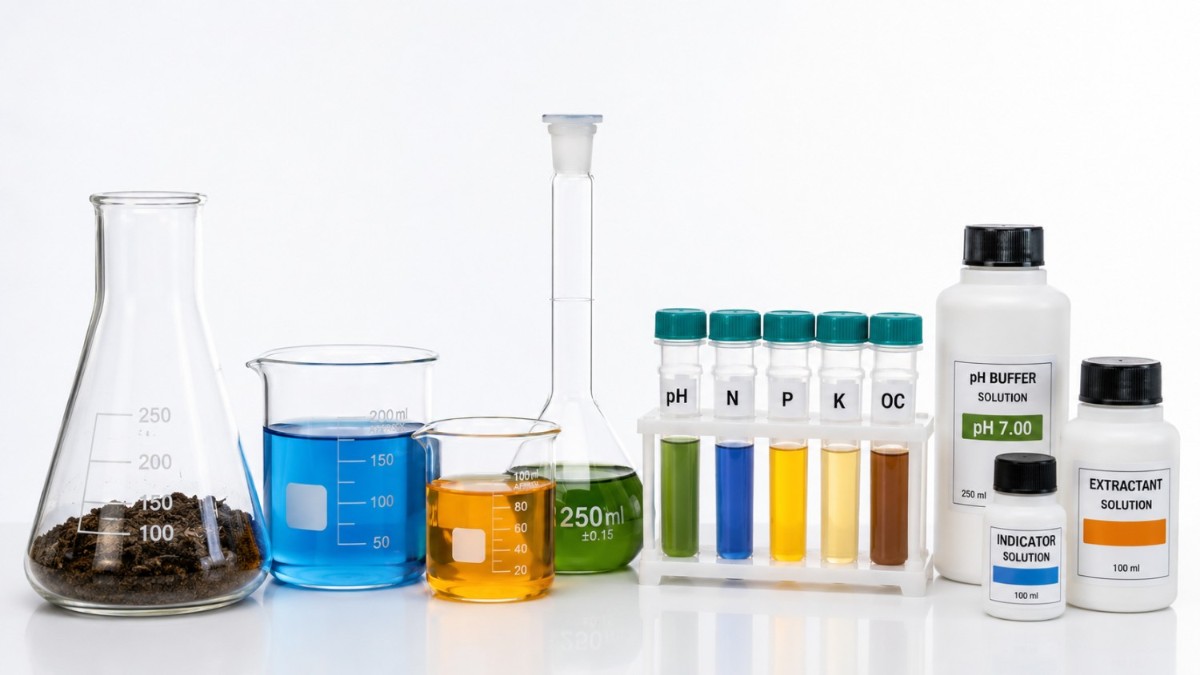
Soil testing is a laboratory analysis of a soil sample that measures nutrient levels, pH, salinity, and organic carbon so a farmer knows exactly what a field needs before buying fertilizer. It replaces guesswork with data, and it is the single biggest lever a farmer has for cutting input costs without cutting yield.
Most Indian farmers apply fertilizer by habit rather than by soil need. Nationally, the actual NPK application ratio runs close to 6.7:2.4:1, far from the ideal 4:2:1 balance experts recommend. This imbalance shows up as nitrogen overuse, phosphorus buildup, and widespread potassium and micronutrient shortfalls — problems a Rs.0 government soil test can catch early.

- Nitrogen (N): drives leafy, vegetative growth and chlorophyll production
- Phosphorus (P): supports root development and flowering
- Potassium (K): strengthens stems, improves disease resistance and grain filling
- Zinc, Boron, Iron, Manganese, Copper: needed in small doses but widely deficient — nearly 49% of Indian soils are zinc-deficient
A soil test report typically bands each parameter as low, medium, or high against standard ICAR/IISS Bhopal reference values, so a farmer can see at a glance where the field stands.
| Parameter | Low | Medium | High |
|---|---|---|---|
| Nitrogen (N) | <280 kg/ha | 280–560 kg/ha | >560 kg/ha |
| Phosphorus (P) | <10 kg/ha | 10–25 kg/ha | >25 kg/ha |
| Potassium (K) | <108 kg/ha | 108–280 kg/ha | >280 kg/ha |
| Organic Carbon | <0.5% | 0.5–0.75% | >0.75% |
| pH | <6.5 (acidic) | 6.5–7.5 (normal) | >7.5 (alkaline) |
Who Should Get Their Soil Tested?
Soil testing for farmers isn’t limited to large landholders. Anyone growing crops for income or subsistence benefits from knowing what’s in the ground beneath the crop.
- 🌾 Smallholder farmers with 1–2 acres who want to avoid overspending on urea and DAP
- 🚜 Commercial and contract farmers scaling cash crops like cotton, sugarcane, or vegetables
- 🌱 New farmers leasing or inheriting land with no fertility history
- 🧪 Organic and natural farming practitioners tracking organic carbon build-up over seasons
- 🥭 Horticulture and orchard growers who need age- and crop-specific nutrient recommendations
- 💧 Farmers switching to drip or precision irrigation who need baseline salinity (EC) data
- 🏫 Agriculture students and KVK trainees studying soil science and extension work
- 🌍 Farmers reporting stagnant or declining yields despite regular fertilizer use
Soil Testing Cost and Money Saved on Fertilizer
Government soil testing under the Soil Health Card scheme is completely free, including sample collection, lab analysis, and the printed report. Private agri-labs charge separately if a farmer wants faster turnaround or additional parameters like heavy metals.
The real value shows up on the input bill. Farmers who follow Soil Health Card recommendations report an 8–10% cut in chemical fertilizer use and a 5–6% increase in crop yield, according to government data — a combination that directly raises net farm income per acre.
| Testing Route | Typical Cost | Turnaround |
|---|---|---|
| Govt. Soil Health Card (KVK / Agri Dept.) | Free | 4–8 weeks |
| Village-Level Soil Testing Lab (VLSTL) | Free to nominal fee | 1–2 weeks |
| Private agri-testing lab (basic NPK+pH) | Rs.1,200–Rs.1,500/sample | 3–7 days |
| Private lab (full 12-parameter panel) | Rs.2,000–Rs.3,000/sample | 7–14 days |
For most farmers, the free government route through a KVK or district Agriculture Department office is the better first step. See our seed, fertilizer and pesticide subsidy guide to combine soil-test-based recommendations with available input subsidies.
Eligibility and Documents for the Free Soil Health Card
Every landholding farmer in India is eligible for a free Soil Health Card — there is no income, land-size, or crop-type restriction. The scheme is designed to reach all 28 states and union territories where it currently operates.
- Aadhaar card (for identity verification and portal login)
- Land ownership document — khata/khatauni, 7/12 extract, or equivalent state land record
- Mobile number linked to Aadhaar (for OTP login and SMS updates)
- Farm location details (village, block, district, survey number)
- No application fee — sample collection, testing, and the printed card are all free
| Category | Application Fee | Notes |
|---|---|---|
| All farmer categories (SC/ST/OBC/General) | Rs.0 (free) | 75% of lab costs are jointly funded by Central and State governments |
| Tenant / leased-land farmers | Rs.0 (free) | Land-owner consent or local revenue record usually required |
How to Collect a Soil Sample and Get It Tested
Correct sampling matters as much as the lab analysis itself — a poorly collected sample gives a misleading report even from the best lab. Here is the standard zig-zag method used under India’s Soil Health Card programme.
- Divide the field into uniform units — separate areas that differ in soil colour, slope, drainage, or past fertilizer use into their own sampling units (2.5 hectares in irrigated areas, up to 10 hectares in rainfed areas).
- Clear the surface — remove stones, crop residue, and litter from each sampling spot before digging.
- Cut a V-shaped pit to a depth of 15 cm for shallow-rooted crops (cereals, vegetables) or 30 cm for deep-rooted crops (sugarcane, orchards), and slice a 2–3 cm wide vertical strip from top to bottom.
- Repeat in a zig-zag pattern across the unit, collecting 8–15 sub-samples that avoid bunds, manure heaps, tree shade, and irrigation channels.
- Mix and quarter — combine all sub-samples in a clean bucket, mix thoroughly, and quarter the pile down to about 500 grams of composite sample.
- Pack and label — place the sample in a clean cloth or polythene bag with farmer name, village, survey number, and crop details.
- Submit to your KVK, Agriculture Department office, or upload details on soilhealth.dac.gov.in for tracking.
- Collect your Soil Health Card once testing is complete — usually within 4–8 weeks under the government scheme — and apply the crop-wise fertilizer recommendations it lists.
Sample during the fallow period or between crop rows, after harvest and before the next sowing — never right after a fresh fertilizer or manure application, since this can distort nutrient readings for weeks.
Soil Testing vs Soil Health Card: What’s the Difference?
Soil testing is the underlying lab process; the Soil Health Card is the government’s free, standardised delivery of that process. Farmers often ask which one to choose — the table below breaks down the practical differences.
| Factor | Private Soil Testing | Government Soil Health Card |
|---|---|---|
| Cost | Rs.1,200–Rs.3,000/sample | Free |
| Turnaround | 3–14 days | 4–8 weeks |
| Parameters tested | Customisable, sometimes more (e.g. heavy metals) | Fixed 12 parameters |
| Fertilizer recommendation | Varies by lab | Standardised, crop-wise, printed on card |
| Best for | Urgent results, export crops, specialised parameters | Routine 2-yearly testing for most farmers |
| Digital record | Lab-dependent | Stored on national SHC portal with GIS mapping |
| Access point | Any NABL-listed private lab | KVK, Agri Dept., Common Service Centre (CSC) |
We recommend the free government Soil Health Card for routine, every-2-year testing on most farms, and a private lab only when you need results within days or a specialised parameter the SHC panel doesn’t cover.
Pros and Cons of Regular Soil Testing
✅ Pros
- Cuts wasted spending on unnecessary fertilizer
- Raises yield through balanced, crop-specific nutrition
- Catches micronutrient deficiencies before they hurt yield
- Reduces environmental runoff from over-fertilization
- Free under the government Soil Health Card scheme
❌ Cons
- Government reports can take 4–8 weeks to arrive
- Poor sample collection technique gives misleading results
- Recommendations only cover the crops listed on the card
- Needs repeating every 2 years to stay accurate
Important Terms Every Farmer Should Know
- NPK Ratio: the proportion of Nitrogen, Phosphorus, and Potassium applied to a field; India’s ideal ratio is 4:2:1, against an actual average closer to 6.7:2.4:1.
- Integrated Nutrient Management (INM): combining chemical fertilizer with organic manure and bio-fertilizers based on soil test data for long-term fertility.
- Electrical Conductivity (EC): a soil-salinity indicator measured in dS/m; high EC signals salt stress risk for crops.
- Organic Carbon (OC): a proxy for soil organic matter and biological health; below 0.5% is considered low.
- Krishi Vigyan Kendra (KVK): ICAR’s district-level farm science centre — over 1,000 across India — that offers free soil sample collection and training.
- Village-Level Soil Testing Lab (VLSTL): a rural apprenticeship-linked lab bringing testing closer to farmers.
- Rashtriya Krishi Vikas Yojana (RKVY): the umbrella central scheme that has funded the Soil Health Card programme since 2022–23.
- Precision Farming Tools: GPS, drones, and sensors increasingly used alongside soil tests for zone-specific fertilizer application — see our precision farming guide for costs and ROI.
- AI-Powered Soil Analysis: emerging Indian agritech startups now offer app-based soil scans; read our AI in agriculture roundup for examples.
- Lime and Gypsum Requirement: soil amendments recommended on the card for acidic (lime) or alkaline/sodic (gypsum) soils.
Soil Health Card Timeline and Testing Cycle
| Year / Period | Milestone |
|---|---|
| 19 Feb 2015 | Soil Health Card scheme launched at Suratgarh, Rajasthan |
| 2015–2017 (Phase I) | 10.74 crore cards issued |
| 2017–2019 (Phase II) | 11.69 crore cards issued |
| 2022–23 | Scheme merged into RKVY as the “Soil Health & Fertility” component |
| Feb 2025 | Rs.1,706.18 crore released to states/UTs for scheme implementation |
| Mar 2026 | 25.89 crore cumulative Soil Health Cards issued (PIB, Rajya Sabha reply) |
| Every 2 years | Each landholding is due for a fresh soil sample and updated card |
Important Links for Soil Testing in India
| Resource | Link |
|---|---|
| Official Soil Health Card Portal | soilhealth.dac.gov.in |
| Dept. of Agriculture & Farmers Welfare | agriwelfare.gov.in |
| ICAR (Indian Council of Agricultural Research) | icar.org.in |
| PIB — Soil Health Indicators Status (Mar 2026) | pib.gov.in press release |
| NABARD (agri credit & rural finance) | nabard.org |
| Agrijob.in — Soil Health Card 2026 Guide | Apply, download & use your SHC |
| Agrijob.in — Input Subsidy Guide | Seed, fertilizer & pesticide subsidies |
Conclusion
Soil testing for farmers is the cheapest input decision you’ll make all season — free under the government scheme, and worth thousands of rupees in avoided fertilizer waste even when done privately. Start with the zig-zag sampling method above, apply for your free Soil Health Card at soilhealth.dac.gov.in or your nearest KVK, and re-test every two years to keep recommendations current. Bookmark this guide — we update it whenever official Soil Health Card data changes.
- Soil testing for farmers is free under India’s Soil Health Card scheme, tested across 12 parameters.
- 25.89 crore Soil Health Cards have been issued nationwide as of March 2026.
- Correct sampling (15–30 cm depth, 8–15 sub-samples, zig-zag pattern) is as important as the lab test itself.
- Following soil-test recommendations cuts fertilizer use by 8–10% and raises yield by 5–6%.
- Retest every 2 years, since nutrient status changes with every cropping cycle.
- Apply at soilhealth.dac.gov.in or through your nearest KVK to start today.
Frequently Asked Questions About Soil Testing for Farmers
What is soil testing and why is it important for farmers?
Soil testing is a lab analysis of a soil sample for nutrients, pH, and organic carbon. It matters because it tells a farmer exactly which fertilizers a field needs, preventing both wasteful overuse and yield-limiting deficiencies.
Is soil testing for farmers free in India?
Yes. Under the government’s Soil Health Card scheme, sample collection, lab analysis, and the printed report are entirely free. Private labs charge Rs.1,200–Rs.3,000 per sample for faster or more detailed testing.
How often should a farmer get soil tested?
The Soil Health Card scheme retests every landholding every 2 years. Farmers changing crops, adding heavy fertilizer, or noticing declining yield can test more frequently through a private lab.
What 12 parameters does a Soil Health Card test?
It tests pH, Electrical Conductivity (EC), Organic Carbon (OC), Nitrogen (N), Phosphorus (P), Potassium (K), Sulphur (S), and five micronutrients — Zinc, Iron, Copper, Manganese, and Boron.
How do I collect a soil sample correctly?
Cut a V-shaped pit 15–30 cm deep at 8–15 spots across the field in a zig-zag pattern, avoiding bunds and manure heaps, then mix and quarter the combined soil down to about 500 grams for submission.
Soil testing vs Soil Health Card — which should I choose?
For routine, every-2-year testing, the free government Soil Health Card is the better choice. Choose a private lab only when you need results within days or parameters the SHC panel doesn’t cover.
How much can soil testing save on fertilizer costs?
Government data shows farmers following soil-test-based recommendations cut chemical fertilizer use by 8–10% while raising crop yield by 5–6%, a combination that improves net income per acre.
How do I apply for a Soil Health Card online?
Visit soilhealth.dac.gov.in, register with your Aadhaar-linked mobile number and land details, or visit your nearest Krishi Vigyan Kendra or Common Service Centre for offline registration and sample collection.
What if my soil test shows a nutrient deficiency?
The Soil Health Card lists crop-wise fertilizer and organic manure recommendations for your specific deficiency. Applying only the recommended dose corrects the shortfall without overspending on unnecessary inputs.
Last Updated: August 2026. This guide is reviewed and updated regularly for accuracy — bookmark this page for the latest Soil Health Card and soil testing information.
Disclaimer: This article is for general informational purposes only and does not constitute official government advice. Soil test parameters, subsidy amounts, and scheme details can change — always verify current figures on soilhealth.dac.gov.in or with your local Agriculture Department office before making input purchase decisions.