

Makhana — also called fox nuts or lotus seeds — delivers 9.7g of protein, 14.5g of dietary fibre, and just 0.1g of fat per 100g, making it one of the most nutrient-dense snacks available in India today. If your evening snack is still a packet of chips or namkeen, you are leaving serious nutrition on the table. This guide is for health-conscious Indians aged 18–60 who want to make smarter food choices without overhauling their diet. Below you will find the top 10 science-backed health benefits of makhana, a complete nutrition breakdown, expert comparison with popular dry fruits, and answers to the most common questions nutritionists receive about this aquatic superfood.

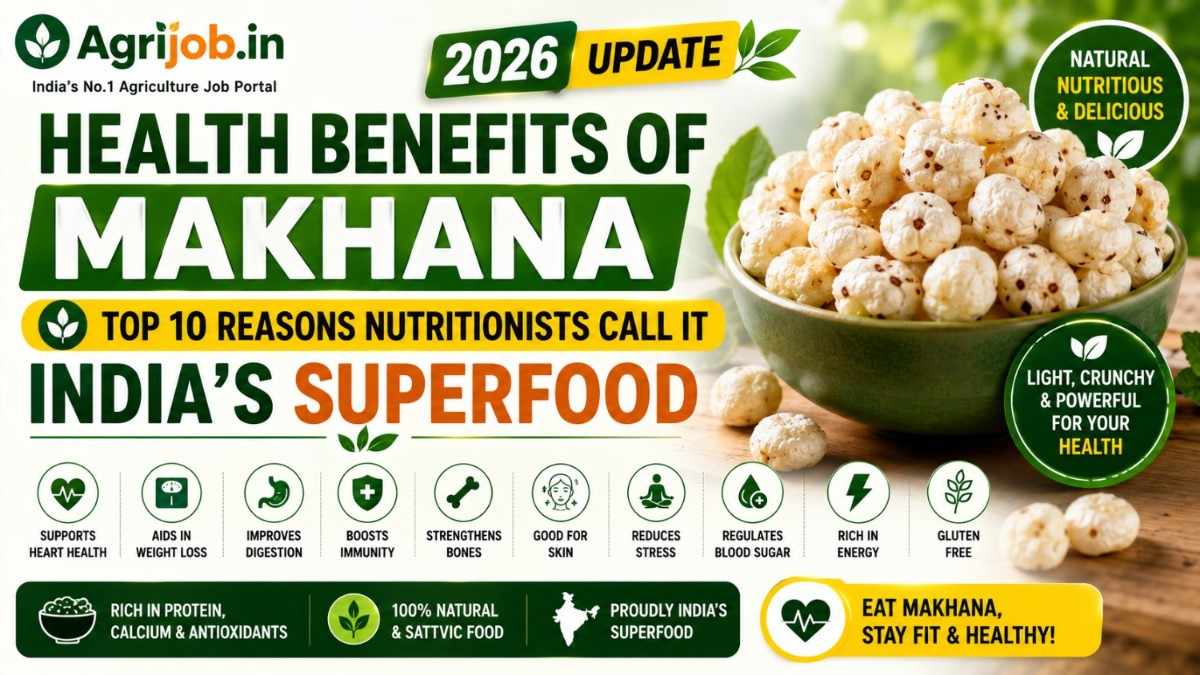
Makhana (fox nuts) is scientifically validated as a superfood because it contains 9.7g protein and 14.5g fibre per 100g with virtually zero fat (0.1g), a low glycaemic index of approximately 55–65, and powerful antioxidants like kaempferol and quercetin — making it simultaneously beneficial for weight loss, diabetes management, heart health, and bone strength.
- Botanical Name: Euryale ferox Salisb. (Prickly Water Lily seed)
- Calories per 100g: ~347 kcal (ICMR Indian Food Composition Tables 2017)
- Protein per 100g: 9.7g (complete protein, EAAI 89–93%)
- Dietary Fibre per 100g: 14.5g (58% of daily recommended intake)
- Fat per 100g: 0.1g (lowest of any popular Indian snack)
- Glycaemic Index: ~55–65 (low GI — safe for diabetics)
- Key Minerals: Calcium 60mg · Magnesium 67mg · Potassium 500mg · Phosphorus 222mg
- Key Antioxidants: Kaempferol, Quercetin, Gallic acid, Chlorogenic acid
- India’s Production Share: >90% of global supply (Bihar state)
- GI Tag: Mithila Makhana received Geographical Indication tag in August 2022
- Government Recognition: Makhana Board announced in Union Budget 2025-26 (₹476.03 crore scheme)
- What Is Makhana and Why Do Nutritionists Call It a Superfood?
- Who Should Eat Makhana Every Day?
- Top 10 Health Benefits of Makhana — Science-Backed
- Makhana Nutrition Per 100g — Complete Breakdown
- Makhana for Weight Loss — How It Works
- Makhana vs Popular Dry Fruits — Which Is Healthier?
- Advantages and Disadvantages of Eating Makhana Daily
- How to Eat Makhana — Step-by-Step Guide for Maximum Benefit
- Important Nutrition Terms Related to Makhana
- Important Links
- Conclusion
- Key Takeaways
- Frequently Asked Questions About Health Benefits of Makhana
What Is Makhana and Why Do Nutritionists Call It a Superfood?
Makhana is the edible popped seed of the prickly water lily plant (Euryale ferox Salisb.), harvested from stagnant ponds and oxbow lakes across Bihar, Manipur, and Assam. Nutritionists call it India’s superfood because it is the only common snack that simultaneously delivers high protein, very high fibre, near-zero fat, zero cholesterol, and a rich antioxidant profile — a nutritional combination unmatched by almonds, cashews, or even roasted chana.
A 2026 peer-reviewed study published in the IP Journal of Nutrition, Metabolism and Health Science confirmed that makhana is “rich in complex carbohydrates and resistant starch, moderate in high-quality protein, low in fat, and contains minerals such as magnesium, calcium, potassium, and iron” alongside “phenolic compounds and flavonoids associated with strong antioxidant capacity.” India produces over 90% of the world’s makhana supply, almost entirely from Bihar’s Mithilanchal region, and the Indian government’s Union Budget 2025-26 allocated ₹476.03 crore to a new National Makhana Board — an acknowledgement of its economic and nutritional significance.

In Ayurveda, makhana has been used for centuries as a kidney tonic, digestive aid, and anti-ageing food. Modern nutrition science has now validated many of these traditional claims through preclinical studies on its antidiabetic, cardioprotective, and hepatoprotective effects.
Who Should Eat Makhana Every Day?
Makhana suits virtually every dietary profile, but it delivers maximum benefit for these specific groups:
- 🏋️ Fitness enthusiasts and gym-goers — 9.7g protein per 100g with near-zero fat makes it an ideal post-workout recovery snack.
- 💊 People managing Type 2 diabetes — low glycaemic index (55–65) prevents blood sugar spikes; studies show improved insulin sensitivity with regular consumption.
- ❤️ Heart patients and hypertensive individuals — potassium (500mg/100g) and zero cholesterol make it one of the safest snacks for cardiovascular health.
- ⚖️ Anyone on a weight loss diet — high fibre content promotes satiety; just 30g of roasted makhana has only 104 calories and keeps hunger away for hours.
- 🦴 Postmenopausal women and elderly individuals — calcium (60mg) and phosphorus (222mg) per 100g support bone density and help prevent osteoporosis.
- 🌾 Vegetarians and vegans — complete protein profile (EAAI 89–93%) with essential amino acids, making it a premium plant-based protein source.
- 🤰 Pregnant and lactating women — magnesium, iron, and folate content support foetal development and maternal health.
- 🧘 People observing fasts (Navratri, Ekadashi, Mahashivratri) — sattvic food approved for fasting; provides sustained energy without heavy digestion load.
Top 10 Health Benefits of Makhana — Science-Backed (2026)
The health benefits of makhana are backed by peer-reviewed research from institutions including ICMR, ICAR, and Bihar Agricultural University. Here are the 10 most significant, ranked by scientific evidence strength:
1. Exceptional Weight Management Without Calorie Deprivation
A standard 30g serving (roughly one cup) of roasted makhana contains only 104 calories, 2.9g protein, and 4.4g fibre. The combination of high fibre and high protein triggers satiety hormones (GLP-1 and PYY), reduces total calorie intake at subsequent meals, and slows gastric emptying — keeping you full for 2–3 hours. Unlike oily snacks that spike blood sugar and cause a crash, makhana provides steady energy without the craving cycle. Research published in 2022 found that higher fibre intake is linked to measurable weight loss and reduced cardiovascular risk.
2. Blood Sugar Control — A Safe Snack for Diabetics
Makhana has a glycaemic index of approximately 55–65, classifying it as a low-GI food. This means it releases glucose slowly into the bloodstream, preventing the sharp spikes and energy crashes associated with high-GI snacks like crackers, biscuits, or namkeen. A 2023 study found that germinated makhana seeds administered to diabetic mice improved blood sugar regulation, increased antioxidant enzyme activity, and benefited kidney health. A 2019 animal study isolated a specific compound from makhana seeds that improved blood sugar and insulin levels in diabetic rats. Nutritionists at Dr. Mohan’s Diabetes Specialities Centre recommend roasted makhana as a guilt-free diabetic-friendly evening snack.
3. Heart Health Protection Through Multiple Pathways
Makhana protects the heart through at least four distinct mechanisms. First, its potassium-to-sodium ratio of 500:1 is one of the best of any food — DASH diet evidence shows adequate potassium intake reduces systolic blood pressure by 5–11 mmHg. Second, the flavonoids kaempferol and quercetin reduce LDL (bad) cholesterol and protect against atherosclerosis. Third, makhana contains zero cholesterol. Fourth, a 2006 study in Molecular and Cellular Biochemistry found that makhana extract reduced myocardial ischaemic reperfusion injury in isolated rat hearts — a direct cardioprotective effect. Replacing fried evening snacks with 30g of roasted makhana is one of the simplest evidence-based dietary changes for cardiovascular risk reduction.
4. Powerful Antioxidant Action — Slows Ageing at the Cellular Level
Makhana contains at least four major antioxidant compounds: kaempferol, quercetin, gallic acid, and chlorogenic acid. These neutralise free radicals — unstable molecules that damage DNA and accelerate ageing, cancer risk, and neurodegeneration. Kaempferol specifically has been shown in studies to inhibit inflammatory pathways and protect cells from oxidative stress. A 2011 study in the Journal of Agricultural and Food Chemistry isolated 19 bioactive compounds from Euryale ferox seeds, including 3 newly identified sesquineolignans with potent antioxidant activity. This antioxidant richness is why dermatologists and nutritionists frequently cite makhana as a natural anti-ageing food.
5. Bone Strength — Calcium + Phosphorus Synergy
Every 100g of makhana provides 60mg of calcium and 222mg of phosphorus — two minerals that work synergistically for bone mineralisation. Phosphorus (222mg = 32% of daily recommended intake) is particularly notable; it is required for calcium absorption into bone tissue. For postmenopausal women, children under 12, and elderly individuals over 60, regular makhana consumption contributes meaningfully to preventing osteoporosis and reducing fracture risk. Among plant-based Indian snacks, makhana offers one of the best calcium-to-calorie ratios available.
6. Gut Health and Digestion Improvement
The 14.5g of dietary fibre per 100g — including resistant starch — ferments in the large intestine and selectively feeds beneficial gut bacteria like Bifidobacterium and Lactobacillus. This produces short-chain fatty acids (SCFAs) that strengthen the gut barrier, reduce intestinal inflammation, and improve bowel regularity. Resistant starch is not absorbed as glucose, which lowers the effective calorie count and contributes to makhana’s low glycaemic response. For the 30–40% of urban Indians who experience chronic constipation or irritable bowel symptoms, adding makhana to the daily diet is a simple, evidence-supported dietary intervention.
7. Kidney Health and Detoxification Support
Traditional Chinese medicine and Ayurveda have used makhana as a kidney tonic for centuries. Modern research supports this: makhana’s antioxidants protect kidney cells from free radical damage, while its mild diuretic properties promote healthy urine flow and reduce the risk of kidney stone formation. The 2023 diabetic mouse study mentioned above specifically noted improved kidney health markers alongside blood sugar benefits. The high water content and low sodium load of makhana make it suitable for people managing early-stage chronic kidney disease (CKD) — though those on dialysis or with advanced CKD should consult their nephrologist before increasing potassium intake.
8. Anti-Inflammatory Properties — Protection Against Chronic Disease
Chronic inflammation underlies arthritis, diabetes, heart disease, and certain cancers. Makhana’s flavonoids (kaempferol, quercetin) and phenolic acids directly inhibit pro-inflammatory cytokines such as IL-6 and TNF-α. Kaempferol — also found in green tea and broccoli — is one of the best-studied natural anti-inflammatory compounds, with dozens of peer-reviewed studies confirming its mechanism. Regular consumption of anti-inflammatory foods like makhana has been associated with reduced C-reactive protein (CRP) levels, a key biomarker of systemic inflammation. Replacing inflammatory snacks (trans-fat-laden chips, fried namkeen) with makhana is a meaningful dietary shift for anyone with a family history of inflammatory conditions.
9. Brain Health and Stress Reduction
Makhana contains the amino acid L-arginine, which improves cerebral blood flow, and tryptophan, a precursor to serotonin and melatonin. Serotonin stabilises mood; melatonin regulates sleep cycles. Magnesium (67mg per 100g) is a well-documented natural anxiolytic — low magnesium levels are consistently correlated with anxiety and depression in clinical studies. For working professionals experiencing cognitive fatigue, a small handful of makhana in the afternoon provides sustained energy, mild mood stabilisation, and improved focus without the caffeine crash. It is also considered a sattvic food in Ayurveda — believed to promote mental clarity and calm the nervous system.
10. Skin Health and Anti-Ageing Benefits
The antioxidants in makhana — particularly gallic acid and chlorogenic acid — neutralise reactive oxygen species (ROS) that damage collagen and elastin in skin tissue, causing wrinkles and sagging. Makhana’s anti-ageing enzyme (kaempferol) helps repair damaged proteins at the cellular level. Its zinc content supports wound healing and collagen synthesis, while magnesium promotes better sleep — the period during which most skin cell regeneration occurs. Nutritionists increasingly recommend makhana as a dietary supplement to expensive skincare routines, noting that antioxidant-rich diets consistently outperform topical applications for long-term skin health.
Makhana Nutrition Per 100g — Complete Breakdown
The following data is sourced from the ICMR Indian Food Composition Tables 2017 and cross-verified against USDA FDC data:
| Nutrient | Per 100g (Raw) | % Daily Value |
|---|---|---|
| Calories | 347 kcal | 17% |
| Protein | 9.7g | 19% |
| Total Fat | 0.1g | <1% |
| Carbohydrates | 76.9g | 26% |
| Dietary Fibre | 14.5g | 58% |
| Calcium | 60mg | 6% |
| Phosphorus | 222mg | 32% |
| Magnesium | 67mg | 16% |
| Potassium | 500mg | 11% |
| Iron | 3.5mg | 19% |
| Cholesterol | 0mg | 0% |
| Glycaemic Index | ~55–65 (Low GI) | — |
Source: ICMR Indian Food Composition Tables 2017 | USDA FDC | Cross-verified against organicmandya.com nutrition analysis (June 2026)
Makhana for Weight Loss — How It Works and How Much to Eat
Makhana supports weight loss through three simultaneous mechanisms: it keeps you full (high fibre and protein suppress appetite hormones), it prevents blood sugar crashes (low GI prevents rebound hunger), and it replaces high-calorie processed snacks with a nutrient-dense alternative. A 30g serving — roughly one standard cup of roasted makhana — has only 104 calories compared to 150+ calories in a similar serving of chips or biscuits.
For weight management, nutritionists recommend 20–30g of dry-roasted makhana (without oil) as an afternoon snack or pre-workout fuel. Avoid flavoured or oil-fried varieties sold in supermarkets — these can contain 200+ calories per serving, negating the weight-loss benefit. Pair makhana with a cup of green tea or black coffee for maximum appetite suppression.
Always dry-roast makhana in a heavy-bottomed pan on low heat for 8–10 minutes — no oil, no ghee. This drives off 5–8% moisture, concentrating all nutrients and making seeds crispier. Adding oil increases calories by 20–35% without proportionally increasing protein, destroying the weight-loss advantage. Season with rock salt, turmeric, or chaat masala after roasting for flavour without extra fat.
Makhana vs Popular Dry Fruits — Which Is Healthier?
| Parameter | Makhana | Almonds | Cashews | Walnuts | Roasted Chana |
|---|---|---|---|---|---|
| Calories (per 100g) | 347 kcal | 579 kcal | 553 kcal | 654 kcal | 364 kcal |
| Protein (per 100g) | 9.7g | 21.2g | 18.2g | 15.2g | 22.5g |
| Fat (per 100g) | 0.1g | 49.9g | 43.8g | 65.2g | 5.1g |
| Dietary Fibre (per 100g) | 14.5g | 12.5g | 3.3g | 6.7g | 10.1g |
| Glycaemic Index | ~55–65 (Low) | ~15 (Very Low) | ~25 (Low) | ~15 (Very Low) | ~28 (Low) |
| Cholesterol | Zero | Zero | Zero | Zero | Zero |
| Best For | Weight loss + diabetes + heart + fasting | Protein + brain health | Energy + immunity | Brain + omega-3 | Pure protein |
| Cost (approx.) | Rs.300–Rs.500/kg | Rs.800–Rs.1,200/kg | Rs.600–Rs.900/kg | Rs.800–Rs.1,400/kg | Rs.80–Rs.120/kg |
Makhana is not the highest-protein snack (roasted chana wins that category at 22.5g/100g) and almonds have a lower GI. But makhana is the only snack that simultaneously offers near-zero fat, very high fibre (58% RDA), acceptable protein, low GI, zero cholesterol, and powerful antioxidants — all at a cost under Rs.500/kg. For people managing weight, diabetes, and heart health concurrently (very common in urban India over 40), makhana is objectively the most versatile everyday superfood choice. Verdict: Add makhana, don’t replace other nutritious snacks — variety wins.
Advantages and Disadvantages of Eating Makhana Daily
A balanced assessment of makhana is essential for making informed dietary decisions:
Advantages
- ✅ Virtually fat-free — 0.1g fat per 100g; lowest of any Indian snack
- ✅ Rich in dietary fibre — 14.5g per 100g supports gut health and weight management
- ✅ Safe for diabetics — low glycaemic index does not spike blood sugar
- ✅ Heart-friendly — zero cholesterol, high potassium, and cardioprotective antioxidants
- ✅ Gluten-free and allergen-friendly — safe for those with celiac disease or nut allergies
- ✅ Approved for fasting — sattvic food widely accepted across Hindu, Jain, and Buddhist fasting traditions
- ✅ Affordable superfood — Rs.300–Rs.500/kg, significantly cheaper than almonds or walnuts
Disadvantages
- ❌ Moderate protein only — 9.7g protein is good but less than roasted chana (22.5g) or almonds (21.2g)
- ❌ High potassium caution for advanced CKD patients — 500mg potassium per 100g may not suit individuals on potassium-restricted renal diets
- ❌ Commercial flavoured versions are unhealthy — oil-fried or butter-coated makhana packets in supermarkets can have 200+ calories; always check labels
- ❌ Hard texture risk for dental work — dry-roasted seeds are moderately hard; those with dental implants or braces should eat cautiously
How to Eat Makhana for Maximum Health Benefits — Step-by-Step
- Choose raw, unprocessed makhana — buy whole white seeds, ideally with the GI-tagged “Mithila Makhana” label for quality assurance.
- Check for freshness — fresh makhana should be pure white, uniformly round, and snap crisply when broken. Yellow or soft seeds are stale.
- Dry-roast on low heat for 8–10 minutes — use a heavy iron pan (tawa) without any oil or ghee; stir continuously until seeds turn crispy.
- Season after roasting, not before — sprinkle rock salt, turmeric, pepper, or chaat masala only after removing from heat to prevent burning spices.
- Measure your portion — 20–30g per serving — use a kitchen scale the first few times; one cup of popped makhana is approximately 25–30g.
- Eat as a mid-morning or afternoon snack — ideal between 10–11 AM or 3–5 PM; consuming before dinner can reduce overall calorie intake by suppressing evening appetite.
- Store in an airtight container — roasted makhana stays crispy for 5–7 days at room temperature; avoid refrigerating as moisture makes them soggy.
- Incorporate into meals — add to makhana kheer, matar makhana curry, raita, or trail mixes for variety without losing nutritional value.
Important Nutrition Terms Related to Makhana Health Benefits
Understanding these key terms helps you evaluate makhana’s health claims accurately:
- Glycaemic Index (GI) — A scale (0–100) measuring how quickly a food raises blood sugar. Makhana scores 55–65 (low GI), meaning it releases glucose slowly and safely.
- Kaempferol — A plant flavonoid in makhana with proven anti-inflammatory, anti-cancer, and cardioprotective properties; also found in green tea and broccoli.
- Quercetin — An antioxidant flavonoid that reduces LDL cholesterol, lowers blood pressure, and protects against oxidative cell damage.
- Resistant Starch — A type of starch in makhana that bypasses digestion, feeds gut bacteria (prebiotic effect), and lowers the effective calorie count.
- EAAI (Essential Amino Acid Index) — A protein quality score; makhana scores 89–93%, indicating it is a near-complete protein with all essential amino acids present.
- Euryale ferox — The botanical name of the prickly water lily plant whose seeds are processed into makhana (also called Gordon nut, fox nut, or lotus seed).
- GI Tag (Geographical Indication) — Legal protection ensuring “Mithila Makhana” can only be marketed under that name if grown in Bihar’s Mithilanchal region, similar to Darjeeling tea.
- Sattvic Food — In Ayurveda, foods that promote mental clarity, positive energy, and spiritual well-being. Makhana is classified as sattvic and is therefore approved for religious fasting.
- SCFAs (Short-Chain Fatty Acids) — Produced when makhana’s fibre ferments in the gut; they strengthen the intestinal lining, reduce inflammation, and support immunity.
- Phytochemicals — Bioactive plant compounds in makhana (phenolics, flavonoids, alkaloids) responsible for its antioxidant, anti-inflammatory, and anti-ageing effects.
Important Links — Makhana Research and Official Sources
| Resource | Link |
|---|---|
| ICMR Indian Food Composition Tables 2017 (official nutritional data) | icmr.gov.in |
| ICAR — Indian Council of Agricultural Research (makhana crop research) | icar.org.in |
| APEDA — Agricultural and Processed Food Products Export Development Authority | apeda.gov.in |
| National Makhana Board — Union Budget 2025-26 Announcement (DD News) | ddnews.gov.in |
| Healthline — Makhana health benefits (medically reviewed) | healthline.com |
| Agrijob.in — Agriculture Jobs and Farming Guides (home) | agrijob.in |
Conclusion — Why Makhana Deserves a Permanent Place in Your Diet
The health benefits of makhana are not marketing hype — they are backed by peer-reviewed research, ICMR nutritional data, and over a thousand years of Ayurvedic use. With 9.7g protein, 14.5g fibre, zero cholesterol, low glycaemic index, and powerful antioxidants like kaempferol and quercetin, makhana is the rare superfood that genuinely delivers on all its promises at an accessible price point of Rs.300–Rs.500/kg. The Indian government’s ₹476.03 crore investment through the National Makhana Board (announced in Budget 2025-26) underlines its national nutritional significance.
Your next step: swap your current evening snack for 25–30g of dry-roasted makhana for 30 days and observe the difference in energy, digestion, and appetite control. Bookmark this page — we update it regularly with the latest research on makhana nutrition and health benefits.
- Makhana provides 9.7g protein and 14.5g fibre per 100g with only 0.1g fat — the best protein-to-fat ratio of any popular Indian snack.
- Its low glycaemic index (55–65) makes it safe for Type 2 diabetics; 2023 research confirmed improved blood sugar regulation in animal models.
- Potassium (500mg/100g) and zero cholesterol make makhana one of the safest daily snacks for heart patients and hypertensive individuals.
- India produces over 90% of global makhana supply; “Mithila Makhana” holds a GI tag since 2022 and the government allocated ₹476.03 crore to the National Makhana Board in 2025-26.
- Always dry-roast makhana without oil for maximum health benefit; avoid commercial flavoured varieties with added fats and sodium.
- A 30g daily serving (≈104 calories) is the recommended portion for weight management and sustained energy without excess calorie intake.
Frequently Asked Questions About Health Benefits of Makhana
What are the main health benefits of makhana?
The main health benefits of makhana include weight management (high fibre and protein suppress appetite), blood sugar control (low glycaemic index of 55–65), heart protection (zero cholesterol, high potassium), antioxidant defence (kaempferol, quercetin), bone strengthening (calcium and phosphorus), improved digestion (resistant starch and fibre feed gut bacteria), kidney health support, anti-inflammatory action, brain health (magnesium and tryptophan), and anti-ageing skin benefits. All ten benefits are backed by peer-reviewed research published in Indian and international nutrition journals.
How much makhana should I eat per day?
Nutritionists recommend 20–30g of dry-roasted makhana per day for healthy adults — roughly one standard cup. This provides approximately 104 calories, 2.9g protein, and 4.4g dietary fibre. For weight loss, eat it as an afternoon snack between 3–5 PM. For diabetes management, consume before or between meals to prevent blood sugar spikes. Do not exceed 50g per day if you are monitoring potassium intake (advanced CKD patients should consult a nephrologist).
Is makhana good for diabetes?
Yes, makhana is excellent for people managing Type 2 diabetes. Its glycaemic index of approximately 55–65 classifies it as a low-GI food, meaning it releases glucose slowly without causing sharp blood sugar spikes. A 2023 animal study found that germinated makhana seeds improved blood sugar regulation and increased antioxidant enzyme activity in diabetic subjects. Its high fibre content further slows glucose absorption in the gut. Dr. Mohan’s Diabetes Specialities Centre recommends roasted makhana as a guilt-free diabetic-friendly snack.
Does makhana help with weight loss?
Makhana is highly effective for weight loss when eaten as a replacement for high-calorie snacks. A 30g serving has only 104 calories with 2.9g protein and 4.4g fibre. The fibre triggers satiety hormones (GLP-1 and PYY) that suppress appetite and reduce calorie intake at subsequent meals. The low glycaemic index prevents blood sugar crashes that drive snack cravings. Studies show that diets high in fibre (over 25–38g daily) are consistently associated with measurable weight loss. The key rule: always dry-roast without oil — adding ghee or cooking oil increases calories by 20–35%.
What is the nutritional value of makhana per 100g?
Per 100g of raw makhana (ICMR Indian Food Composition Tables 2017): approximately 347 kcal, 9.7g protein, 0.1g fat, 76.9g carbohydrates, 14.5g dietary fibre, 60mg calcium, 222mg phosphorus, 67mg magnesium, 500mg potassium, 3.5mg iron, and 0mg cholesterol. The glycaemic index is approximately 55–65 (low GI). Makhana also contains antioxidants kaempferol, quercetin, gallic acid, and chlorogenic acid, plus essential amino acids with an EAAI score of 89–93%.
Is makhana better than almonds?
Makhana and almonds serve different nutritional purposes. Almonds contain more protein (21.2g vs 9.7g) and healthy omega fats, making them superior for muscle building and brain health. However, makhana has significantly less fat (0.1g vs 49.9g), more dietary fibre (14.5g vs 12.5g), and a lower cost (Rs.300–500/kg vs Rs.800–1,200/kg). For people managing weight, diabetes, or heart conditions who need a low-calorie, low-fat snack, makhana is the better daily choice. The ideal approach is to include both in a varied diet rather than substituting one for the other.
Can I eat makhana during fasting (Navratri, Ekadashi)?
Yes, makhana is one of the most popular and widely accepted fasting foods across Hindu, Jain, and Buddhist fasting traditions. It is classified as a sattvic food in Ayurveda — pure, light, and spiritually aligned. During Navratri, Ekadashi, and Mahashivratri fasts, makhana is typically consumed roasted with rock salt and ghee, or made into a makhana kheer with milk and sugar. Its high fibre and protein content provide sustained energy throughout long fasting days without the heaviness of heavier grain-based foods.
Are there any side effects of eating too much makhana?
Makhana is generally safe for healthy adults. However, consuming very large quantities (over 100g daily) may cause digestive discomfort — bloating or flatulence — due to the high fibre and resistant starch content. People with advanced chronic kidney disease (CKD Stage 4–5) on potassium-restricted diets should limit intake because makhana contains 500mg potassium per 100g. Those with dental implants or braces should eat cautiously as dry-roasted seeds are firm. Commercially flavoured makhana packets often contain excess sodium and oil — always check nutritional labels before purchasing.
What does the Indian government say about makhana as a superfood?
The Indian government has formally recognised makhana’s nutritional and economic importance through several official initiatives. In August 2022, the government awarded “Mithila Makhana” a Geographical Indication (GI) tag protecting Bihar’s Mithilanchal producers. In Union Budget 2025-26, Finance Minister Nirmala Sitharaman announced the establishment of a National Makhana Board in Bihar under a ₹476.03 crore Central Sector Scheme (2025–2031) to boost production, processing, value addition, and export. The Makhana Research Centre has been granted national institution status, and APEDA actively promotes makhana in international food markets.
This guide is reviewed and updated regularly to reflect the latest peer-reviewed nutrition research and official government data on makhana health benefits. Bookmark this page for the most current information. Data sourced from ICMR Indian Food Composition Tables 2017, USDA FDC, IP Journal of Nutrition Metabolism and Health Science (2026), and official government portals including ddnews.gov.in and apeda.gov.in.
The information in this article is for educational purposes only and does not constitute medical advice. Consult a registered dietitian, physician, or endocrinologist before making significant dietary changes, especially if you have diabetes, chronic kidney disease, cardiovascular conditions, or are pregnant or lactating. The health benefits described are based on available research; individual results may vary. Agrijob.in is not a medical institution.