

Crop Disease Survival Guide 2026 – 10 Deadly Threats and How to Beat Them
Crop disease management in India 2026 has never been more urgent — Indian farmers lose an estimated 10–35% of crop output every season to pests and diseases, with severe outbreaks pushing losses beyond 90% in affected fields. This guide is written for cotton, paddy, tomato, and wheat farmers across India who want to identify threats early, act fast, and protect their livelihoods using proven Integrated Pest Management (IPM) strategies. Whether you grow Bt cotton in Punjab, Basmati paddy in Haryana, or tomatoes in Karnataka, this 2026-updated guide covers every major disease threatening your crop — along with practical, ICAR-backed control steps you can use right now.

India’s most dangerous crop diseases in 2026 include Pink Bollworm in cotton (up to 90% green boll damage), Southern Rice Black-Streaked Dwarf Virus in paddy (30–50% yield loss), Leaf Curl Virus in tomato (60–100% yield loss if untreated), and Wheat Blast fungus (potential 13% global reduction in wheat output). Integrated Pest Management (IPM) — combining cultural, biological, and need-based chemical controls — is the only sustainable, ICAR-recommended approach to managing all these threats in 2026.
- Estimated Annual Crop Losses (India): 10–35% of total output; valued at Rs. 90,000 crore+ by CARE estimates
- Pink Bollworm (PBW) Damage: 5–90% green boll damage on cotton; Bt resistance confirmed in multiple states
- Rice Dwarf Virus (SRBSDV) Yield Loss: 30–50% per ICAR research; up to 7% of Punjab-Haryana production at risk
- Tomato Leaf Curl Virus Loss: 60–100% yield wipeout possible if vector (whitefly) is uncontrolled
- Wheat Blast Global Threat: 13% reduction in world wheat production projected if blast spreads unchecked
- SRBSDV Spread Area (2026): 6 Punjab districts + 5 Haryana districts confirmed affected as of Kharif 2026
- PBW Pheromone Trap Action Threshold: 5–8 moths per trap for 3 consecutive days = spray immediately
- IPM Adoption in India: Only 7–22% of farmers currently receive IPM advice from extension officers (ICAR 2026)
- Government Scheme: NFSM-funded Pink Bollworm Management Strategy operational since 2018–19
- Recommended First Step: Contact nearest Krishi Vigyan Kendra (KVK) for free field diagnosis and advisory
- What Is Crop Disease and Why 2026 Is a Critical Year?
- Who Should Read This Crop Disease Guide?
- Pink Bollworm (PBW) in Cotton — India’s Biggest Pest Threat
- Rice Dwarf Virus (SRBSDV) — The Paddy Killer Spreading North India
- Tomato Leaf Curl Virus — 100% Loss Risk for Vegetable Farmers
- Wheat Blast — The Fungal Pandemic Knocking on India’s Door
- 6 More Deadly Crop Diseases Indian Farmers Must Know in 2026
- How to Use IPM — Step-by-Step Field Protocol for 2026
- Chemical vs Biological Control — Which Works Better?
- Pros and Cons of Integrated Pest Management
- Important Terms Every Farmer Must Know About Crop Disease
- Important Dates and Spray Schedules for Kharif-Rabi 2026–27
- Important Links — Official Resources for Farmers
- Conclusion
- Key Takeaways
- Frequently Asked Questions
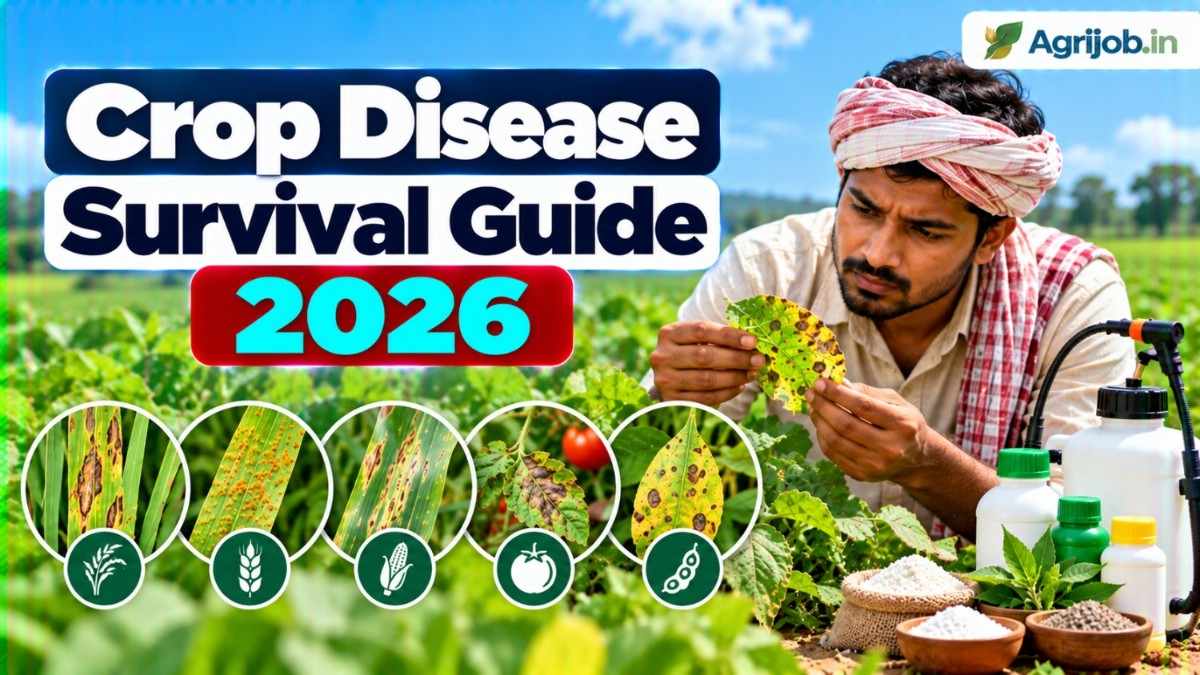
What Is Crop Disease and Why 2026 Is a Critical Year for Indian Farmers?
A crop disease is any disruption to the normal growth and development of a plant caused by pathogens (fungi, bacteria, viruses, nematodes), environmental stress, or insect pests that act as disease vectors. In India, crop diseases collectively destroy 10–35% of agricultural output annually, translating into income losses that push millions of farming families into debt or distress. In 2026, three converging factors make crop disease management more critical than ever: climate change expanding pest habitats northward, confirmed Bt-resistance in Pink Bollworm, and a new viral outbreak — Southern Rice Black-Streaked Dwarf Virus (SRBSDV) — spreading across Punjab and Haryana for the third consecutive Kharif season.
ICAR (Indian Council of Agricultural Research) has classified Integrated Pest Management (IPM) as the national standard for plant protection since 1985, but as of 2026, only 22% of Indian farmers receive IPM advice through extension channels. The rest rely on chemical dealers — often leading to pesticide overuse, resistance buildup, and recurring outbreaks. This guide bridges that gap with field-ready information sourced directly from ICAR, Central Integrated Pest Management Centres (CIPMCs), and Punjab Agricultural University (PAU) advisories published in 2026.

Who Should Read This Crop Disease Survival Guide?
- 🌾 Cotton farmers in Punjab, Haryana, and Rajasthan battling repeated Pink Bollworm outbreaks on Bt cotton in Kharif 2026–27
- 🌾 Paddy growers in the Indo-Gangetic Plains — particularly in Karnal, Kurukshetra, Kaithal, Ambala, Yamunanagar, and Ludhiana — where SRBSDV has been confirmed in 2026
- 🍅 Tomato and chilli farmers in Karnataka, Andhra Pradesh, Tamil Nadu, and Maharashtra dealing with Leaf Curl Virus and whitefly pressure
- 🌾 Wheat growers in border states near Bangladesh (West Bengal, Bihar, Odisha) who face the growing threat of Wheat Blast disease
- 🧑🌾 Beginner and first-generation farmers who have never formally been trained in IPM and want a clear, practical starting point
- 🏛️ Agriculture students, KVK workers, and extension agents looking for an updated, citable 2026 reference for field advisories
- 💼 Agri-input dealers and crop advisors who want a 360-degree disease management reference to serve farmer clients better
- 📱 Farmers already using digital advisory apps (like ICAR’s Crop Doctor) who want deeper background knowledge to interpret alerts correctly
Pink Bollworm (PBW) in Cotton — India’s Biggest Pest Threat in 2026
Pink Bollworm (Pectinophora gossypiella) is India’s most economically destructive cotton pest in 2026, causing 5–90% green boll damage in affected fields across Punjab, Haryana, and Rajasthan. The crisis deepened after PBW developed confirmed resistance to the Bt toxins (Cry1Ac and Cry2Ab) built into India’s widely planted genetically modified Bt cotton — meaning the primary biotech defense has been compromised. ICAR-CICR (Central Institute for Cotton Research), Sirsa, has recorded pink bollworm infestations in Punjab’s Kharif 2026–27 cotton crops, particularly in Muktsar, Bhatinda, and Mansa districts.
The pest’s life cycle makes it especially difficult to control. Female moths lay 80–100 eggs on young cotton plants. Larvae hatch, penetrate bolls, and feed inside — invisible from the outside until severe damage has already occurred. A key aggravating factor in 2026: farmers who stored infested cotton crop residues and old bolls near their fields unknowingly created a massive pest reservoir, supplying the next season’s moth population. The Government of India has been disseminating the “IRM-Dissemination of Pink Bollworm Management Strategies” programme under the National Food Security Mission (NFSM) since 2018–19, but field-level adoption remains incomplete.
Pink Bollworm — Damage Symptoms to Watch For
- 🔴 Shedding of squares: Flower buds (squares) shed before opening — first visible sign of early infestation
- 🔴 Rosette flowers: 5–10 out of every 100 flowers appear closed and rose-shaped — a classic PBW hallmark
- 🔴 Green boll damage: Opening infested green bolls reveals pink larvae feeding inside the seed
- 🔴 Damaged lint: Harvested cotton shows stained or reduced lint quality due to larval feeding in mature bolls
- 🔴 Early boll drop: Bolls fall before maturing, directly reducing yield per plant
Pink Bollworm Control — Proven IPM Protocol (ICAR 2026)
- Install pheromone traps early: Place 2 traps per acre, 40–50 days after sowing. Check daily. If 5–8 moths are trapped for 3 consecutive days, the Economic Threshold Level (ETL) has been crossed — act immediately.
- Remove and destroy infested material: Collect all rosette flowers, infested bolls, and damaged squares and burn or bury them away from the field. Never stack infested crop residue near the field boundary.
- Crop residue management: After harvest, plough infested cotton stalks and bolls into the soil or destroy them completely. Stacked residue is the primary inoculum source for the next season.
- Biological control: Apply Trichogramma egg parasitoids (Trichogramma chilonis) or Bacillus thuringiensis (Bt) sprays in the early infestation phase — before larvae enter the boll. This is most effective at the egg/neonatal stage.
- Chemical control (need-based only): After crossing ETL, apply recommended insecticides as advised by your local CIPMC or KVK. Do not mix pesticides and fungicides unless specifically recommended. Rotate chemical classes to delay resistance.
- ICAR AI-monitoring (2026 pilot): ICAR-CICR has deployed AI-based pheromone traps in Muktsar, Bhatinda, and Mansa (Punjab) that send hourly pest population updates to farmers’ mobile phones. Farmers in these districts should register with their KVK to access this system.
Never mix pesticides with fungicides unless your local KVK specifically recommends it. The most common mistake farmers make is spraying too early (before ETL is reached) and too often — this kills natural enemies (parasitic wasps, spiders) that normally keep PBW populations in check, creating a rebound infestation that is far worse than the original. Monitor first, spray only when the ETL threshold is confirmed.
Rice Dwarf Virus (SRBSDV) — The Paddy Killer Spreading Across North India in 2026
Southern Rice Black-Streaked Dwarf Virus (SRBSDV) — also known as the “stunting virus” or “Fiji virus” — is a double-stranded RNA virus in the Fijivirus genus that has been spreading through paddy fields of Punjab and Haryana for the third consecutive Kharif season in 2026. ICAR-IARI (Indian Agricultural Research Institute), New Delhi, confirmed SRBSDV as the causative agent of the rice dwarfing disease now affecting both Basmati and non-Basmati rice varieties. Research data shows the virus can cause 30–50% yield reduction; Haryana Rice Millers Association estimates a 7% fall in Punjab-Haryana rice production as a result.
In 2026, the virus has been confirmed in 6 Punjab districts (Ludhiana, Muktsar, Bhatinda, Mansa, and others) and 5 Haryana districts including Karnal, Kurukshetra, Ambala, Yamunanagar, and Kaithal — with hundreds of acres of early-transplanted paddy already affected. The primary vector is the white-backed planthopper (Sogatella furcifera), a long-range migratory insect that IARI scientists believe arrived through human trade routes from China, where SRBSDV was first detected in 2001. The virus is not seed-borne and cannot be chemically cured once a plant is infected.
Rice Dwarf Virus — How to Identify It in Your Paddy Field
- 🟡 Stunted plant height: Infected plants grow to only 1/3 to 1/2 the height of healthy plants — noticeable 20–30 days after transplanting
- 🟡 Dark green, stiff leaves: Leaves appear darker than normal, narrower, and stand upright due to stiffness
- 🟡 White chlorotic specks: Tiny white or pale spots on leaf blades, especially on older leaves
- 🟡 Shallow roots: Affected plants can be pulled out of the soil with little effort — root system is severely underdeveloped
- 🟡 Poor tillering: Infected plants produce fewer tillers, drastically reducing potential yield per plant
- 🟡 Onset timing: Symptoms appear 20–30 days after transplanting, particularly in early-transplanted nurseries
SRBSDV Control — What Farmers in Punjab and Haryana Must Do Now
- Monitor nurseries daily: Check rice nurseries from day 10 after sowing. The virus must be caught at the nursery stage — once a field is transplanted with infected seedlings, the damage is done.
- Remove symptomatic seedlings before transplanting: Any seedling showing stunting, dark green colour, or stiff narrow leaves must be removed and destroyed. Do not transplant infected seedlings under any circumstance.
- Control the white-backed planthopper vector: Apply 120 grams of Chess (Pymetrozine 50% WG) or 80 grams of Osheen/Token per acre in 200 litres of water, as advised by Haryana Agriculture Department and the Rice Research Station, Kaul. Spray directed at the base of plants where planthoppers congregate.
- Delay early transplanting where possible: SRBSDV symptoms are most severe in early-transplanted crops because planthopper migration peaks in early Kharif. Delaying transplanting by 10–15 days reduces vector pressure.
- Contact KVK immediately on noticing symptoms: PAU experts have asked every farmer who sees suspected SRBSDV symptoms to report to their nearest Krishi Vigyan Kendra or contact PAU directly. Do not replant before confirmation — replanting on virus-infected soil without controlling the vector leads to re-infection.
- Do not replant without vector management: Farmers in Kaithal and Karnal who ploughed under infected crops and immediately replanted without controlling planthopper populations faced second-round infections in 2026. Control the vector first, replant second.
Tomato Leaf Curl Virus — 100% Yield Loss Risk for Vegetable Farmers
Tomato Leaf Curl Virus (ToLCV) is caused by begomoviruses from the family Geminiviridae and is transmitted exclusively by the whitefly (Bemisia tabaci). Tamil Nadu Agricultural University (TNAU) and IIHR Bengaluru both rank it among the most damaging diseases of tomato and chilli in India. The virus can cause 60–100% yield loss once it establishes in a field, especially in crops sown during February–May (summer), when whitefly populations peak. There is no cure once a plant is infected — every management strategy must focus on prevention and vector control.
Leaf Curl Virus Symptoms in Tomato
- Upward or downward curling of young leaves (primary diagnostic sign)
- Yellow mottling, crinkling, and leaf surface distortion
- Severely reduced leaf size and shortened internodes (“bunchy top” appearance)
- Twisted and deformed stems with abnormal branching
- Very few flowers; small, deformed fruits with negligible market value
Tomato Leaf Curl Virus — Control Protocol for 2026
- Use virus-tolerant or resistant varieties: IIVR Varanasi, IIHR Bengaluru, and TNAU have released leaf curl-tolerant tomato hybrids. Ask your local seed supplier or KVK for the current 2026 list of certified tolerant varieties for your region.
- Cover nursery seedlings with nylon net: Covering nursery beds with 40-mesh nylon nets for 25–30 days after sowing blocks whitefly entry. Research shows this method alone can delay TLCV spread by 3–5 weeks and significantly improve final yield.
- Remove and destroy all symptomatic seedlings before transplanting: Never transplant any seedling showing curling or mottling — a single infected plant in the nursery can contaminate the entire main field via whitefly vectors.
- Control whitefly with neem oil: Spray neem oil (1500–10000 ppm) at 3–5 ml per litre at first sign of whitefly activity. Repeat every 10–14 days. Neem is safe, residue-free, and approved under IPM protocols.
- Use TNAU-recommended insecticides when needed: For heavy whitefly pressure, TNAU’s April 2026 pest forecast recommends spraying dimethoate 30 EC (500 ml/ha) and repeating 15 days later if whitefly pressure continues. Spray timing must target the vector before the virus establishes in the crop.
- Strict crop rotation: Do not grow tomato, chilli, brinjal, or tobacco continuously in the same plot. Weed species (Croton, Datura, Parthenium) act as virus reservoirs — clear all weeds from field borders before and during the crop cycle.
Wheat Blast — The Fungal Pandemic Threatening India’s Food Security in 2026
Wheat Blast, caused by the fungal pathogen Magnaporthe oryzae pathotype Triticum (MoT), is a rapidly spreading disease that can wipe out an entire wheat crop within days of infection. First identified in Brazil in 1985, it has now spread to 20 countries and poses a direct threat to India’s wheat belt. Globally, wheat blast alone has the potential to reduce worldwide wheat production by 13%, according to CIMMYT (International Maize and Wheat Improvement Center) data. For India, the risk zone includes West Bengal and Bihar (bordering Bangladesh, where blast was confirmed in 2016), and climate models show that warming conditions could make Madhya Pradesh and Uttar Pradesh increasingly vulnerable by 2030.
Wheat Blast Symptoms and How to Identify Them
- Small, oval to spindle-shaped leaf lesions that begin as pale or brown spots — often with a yellow halo
- The pathogen targets the wheat ear (spike), causing it to shrivel, bleach, and produce empty or underdeveloped grains
- Partial or total head blighting — the spike turns white or bleached while the rest of the plant appears green
- The fungus spreads through infected seeds, crop residues, and airborne spores capable of long-distance travel
- Symptoms escalate rapidly under warm and humid conditions (above 25°C with >90% humidity for 24+ hours)
India’s Protective Measures Against Wheat Blast (2026)
- Cultivate blast-resistant varieties: CIMMYT and ICAR have developed wheat varieties carrying the Rmg8 and 2NS resistance genes. Request certified blast-resistant seed from your State Agriculture Department before the Rabi season.
- Observe the wheat cultivation ban near Bangladesh border: The Government of India has banned wheat cultivation within 5 km of the Bangladesh border and declared a “wheat holiday” for three years in affected zones of West Bengal. Strictly follow these notifications — violating them puts your neighbours’ crops at risk.
- Seed treatment before sowing: Treat wheat seed with systemic fungicides as recommended by your State Agriculture Department before every Rabi sowing. Never sow untreated or home-saved seed from a previous season in blast-prone areas.
- Destroy crop residues: The wheat blast fungus can survive on infected seeds and crop residues for up to 22 months. Burn or deep-bury all residue after harvest — never leave it on the surface or use it for composting in affected regions.
- Monitor and report: If you see the characteristic bleached wheat ear in an otherwise green field, immediately report to your nearest State Agriculture Department office or KVK. Early containment is the only tool India currently has against a full outbreak.
6 More Deadly Crop Diseases Indian Farmers Must Know in 2026
Beyond the four headline diseases above, Indian farmers face a range of additional threats in Kharif-Rabi 2026–27. Each of these has caused significant documented losses and requires specific management actions.
- 🦠 Bacterial Leaf Blight (BLB) of Rice: A bacterial disease (Xanthomonas oryzae pv. oryzae) causing yellowing and drying of leaf margins. TNAU’s April 2026 pest forecast has flagged BLB in major rice-growing districts of Tamil Nadu. Management: spray Streptomycin Sulphate (200 ppm) + Copper Oxychloride 50% WP (2.5 g/litre), and avoid excess nitrogen fertilizer that promotes lush, disease-susceptible growth.
- 🦠 Fusarium Wilt of Tomato: Caused by Fusarium oxysporum f. sp. lycopersici, this soil-borne fungal pathogen is widespread in warmer states including Telangana, Andhra Pradesh, and Karnataka. Characteristic symptom: one-sided wilting with brown vascular discolouration when the stem is cut. Management: crop rotation for 4–5 years with non-solanaceous crops; use Fusarium-resistant hybrids (marked F/FF/FFF on seed packets); soil drenching with bio-agents like Trichoderma viride.
- 🦠 Bacterial Wilt (Tomato and Brinjal): Caused by Ralstonia solanacearum, this is the deadliest bacterial disease of tomato in India — cultivation has been abandoned in entire regions due to its persistence in soil. Diagnostic sign: cut stem placed in water shows milky bacterial ooze streaming from vascular tissue. Management: crop rotation with crucifers; use resistant rootstocks; maintain strict field hygiene; avoid waterlogged conditions.
- 🦠 Late Blight of Tomato and Potato (Phytophthora infestans): The same pathogen responsible for the Irish Potato Famine of 1845–49 continues to cause outbreaks across India. Water-soaked lesions with white downy growth on leaf undersides are the signature symptom. Management: spray Metalaxyl + Mancozeb (Ridomil MZ, 0.25%) or Cymoxanil + Mancozeb preventively in humid conditions; destroy all volunteer plants and crop debris.
- 🦠 Alternaria Leaf Blight: Affects groundnut, cotton, tomato, and other crops. TNAU’s 2026 pest forecast notes 10–15% PDI (percent disease incidence) in groundnut in some districts. Management: spray Tebuconazole 50% WDG at 0.6 g/litre for control; use certified disease-free seed.
- 🦠 Tobacco Streak Virus (TSV) — Alternaria Blight Complex: A virus transmitted by thrips that damages sunflower, cotton, and groundnut. TNAU 2026 advisories highlight TSV outbreaks in combination with Alternaria and bacterial blight. Management: control thrips population with blue sticky traps + neem-based sprays; remove infected plants and weeds from field borders.
How to Use Integrated Pest Management (IPM) — Step-by-Step Field Protocol for 2026
Integrated Pest Management (IPM) is the ICAR-recommended, government-adopted approach to crop protection that combines cultural, physical, biological, and need-based chemical controls to manage pest and disease pressure below economically damaging levels while minimising risks to health, the environment, and future crop seasons. As ICAR’s September 2026 advisory confirms, IPM emphasises prevention and monitoring first — chemical intervention is a last resort, not the starting point.
- Field selection and crop rotation planning: Before sowing, identify what was grown in the same field last season. If cotton followed cotton, or tomato followed tomato, soil-borne pathogens (Fusarium, Ralstonia) build up to damaging levels. Plan a rotation with cereals, pulses, or oilseeds to break disease cycles.
- Certified, treated, resistant seed: Always buy certified seed from a government-approved source. Choose varieties with built-in disease resistance where available. Treat seed with recommended bio-agents (Trichoderma, Pseudomonas) or chemical seed treatments before sowing.
- Field preparation and sanitation: Deep-plough the field before sowing to expose and destroy overwintering pests and fungal resting structures. Remove all crop residue, volunteer plants, and weed hosts from the field and surrounding borders.
- Set up monitoring systems: Install pheromone traps (for bollworm, fruit flies), yellow sticky traps (for whitefly, thrips), and blue sticky traps (for thrips) 7–10 days after sowing or transplanting. Check traps daily and record counts.
- Regular field scouting (minimum twice per week): Walk the field in a W-pattern, examining 20 plants per stop at 5 stops. Check leaves (top and bottom), stems, and fruit. Note first signs of disease — early identification is the single most important intervention.
- Apply biological controls as first response: When scouting reveals early infestation below ETL, deploy biological agents: Trichogramma (for lepidopteran eggs), Chrysoperla (for soft-bodied insects), Bacillus thuringiensis (for larval pests), Trichoderma (for soil-borne fungi). These are safe, residue-free, and preserve natural enemy populations.
- Use chemical control only after ETL is confirmed: Once the Economic Threshold Level is confirmed through your monitoring data, apply the most targeted, lowest-toxicity chemical that will control the pest. Follow label dosage exactly. Rotate chemical classes (organophosphate → pyrethroid → neonicotinoid) to delay resistance development.
- Post-harvest sanitation: After harvest, destroy all crop debris. Do not leave infested materials on the field — this is the most effective and cheapest disease prevention measure for the next season, and the one most frequently skipped.
Research by ICAR-NCIPM (National Centre for Integrated Pest Management) shows that farms adopting full IPM protocols see a 30–45% reduction in pesticide expenditure and a 15–25% improvement in net income within 2–3 seasons — because they stop buying unnecessary sprays and preserve natural predators that provide free pest control. The cost of 2 pheromone traps per acre (Rs. 80–150 each) pays for itself many times over if it prevents even one unnecessary chemical spray.
Chemical Control vs Biological Control — Which Works Better for Indian Farmers?
| Comparison Factor | Chemical Control | Biological Control (IPM) |
|---|---|---|
| Speed of action | Fast (24–72 hours) | Slower (5–14 days) |
| Cost per acre (average) | Rs. 800–2,500 per spray | Rs. 150–600 per application |
| Risk of pest resistance | High (builds up in 3–5 seasons) | Very low (natural diversity) |
| Impact on natural enemies | Kills beneficial insects (80–95% mortality) | Preserves and enhances natural predators |
| Residue risk (food safety) | High if not timed correctly | Minimal to zero |
| Soil health impact | Degrades soil microbiome over time | Improves soil biology |
| Government and export compliance | MRL violations block export market access | Fully compliant; preferred for Basmati export |
| Effectiveness against viruses (SRBSDV, ToLCV) | Cannot cure viral diseases — can only control vector | Same — prevention only; vector control critical |
| Long-term crop health | Declining (resistance + secondary pest flare-ups) | Improving season over season |
| Best for | Acute, above-ETL emergency outbreaks | Season-long sustainable crop protection |
The correct approach is neither “chemicals only” nor “biologicals only” — it is sequential and strategic. Use biological controls and cultural practices as your season-long foundation. Reserve chemical sprays for confirmed above-ETL situations only. This integrated sequence is exactly what ICAR recommends as the national standard for plant protection in 2026, and what the top Basmati exporters from Punjab require from their contract farmers.
Advantages and Disadvantages of Integrated Pest Management
Advantages of IPM
- ✅ Reduces pesticide costs by 30–45%: Fewer, more targeted sprays mean lower input costs across the full season
- ✅ Delays or prevents resistance development: Rotating chemical classes and using bio-agents prevents pests from evolving resistance to any single control tool
- ✅ Protects natural enemies: Preserving beneficial insects (parasitic wasps, ladybirds, Chrysoperla) provides free, ongoing pest control that compounds over seasons
- ✅ Improves crop quality and market access: Produce from IPM farms meets Maximum Residue Limit (MRL) standards required for export markets — especially important for Basmati rice and mangoes
- ✅ Supported by government: India has adopted IPM as national policy since 1985 with 31 Central IPM Centres across 28 states providing free training and bio-agents
Disadvantages of IPM
- ❌ Requires more knowledge and time: IPM demands regular field scouting, pest identification skills, and record-keeping — skills most farmers have not received formal training in
- ❌ Slower initial response: Biological controls take days to work — in a fast-escalating outbreak, this lag can be costly if the decision to switch to chemicals is delayed
- ❌ Access to quality bio-agents is uneven: In many districts, good-quality Trichoderma, Trichogramma, and biopesticides are not consistently available — making it difficult to follow the full protocol
Important Terms Every Farmer Must Know About Crop Disease Management
- Economic Threshold Level (ETL): The pest population density or crop damage level at which the value of crop loss exceeds the cost of control. Spraying before ETL is wasteful; spraying after wastes yield. For Pink Bollworm, ETL = 5–8 moths per pheromone trap for 3 consecutive days.
- Integrated Pest Management (IPM): India’s national plant protection policy since 1985, combining cultural, biological, physical, and need-based chemical methods to keep pest populations below economically damaging levels.
- Pheromone Trap: A device baited with synthetic female sex pheromone that attracts male moths of a specific pest species, allowing farmers to monitor pest population levels and time interventions accurately. Cost: Rs. 80–150 per trap.
- Economic Injury Level (EIL): The actual pest population at which economic damage begins — slightly above ETL. ETL is set conservatively below EIL to allow time for control actions to take effect before damage crosses the threshold.
- Biopesticide: A pest control product derived from natural sources — microorganisms (Bt, Trichoderma), plant extracts (neem oil), or other biological materials. Biopesticides are approved for use in certified organic farming and leave no chemical residues.
- Bacillus thuringiensis (Bt): A soil bacterium that produces toxins lethal to specific insect larvae (caterpillars, bollworms, cutworms) but safe for mammals, birds, and beneficial insects. Used as a biopesticide spray and as the active gene in Bt cotton and Bt brinjal.
- Trichoderma viride / harzianum: A beneficial soil fungus used as a biocontrol agent against soil-borne pathogens (Fusarium, Pythium, Rhizoctonia). Applied as seed treatment or soil drench. Available from CIPMC centres and some KVKs at subsidised rates.
- Maximum Residue Limit (MRL): The maximum concentration of a pesticide residue permitted in food by law. Indian MRLs are set by FSSAI; export MRLs (EU, USA, Japan) are much stricter. Exceeding MRL = crop rejection + export ban.
- CIPMC (Central Integrated Pest Management Centre): Government centres established in 28 states under the Ministry of Agriculture that monitor pest situations, produce and release bio-agents, and train extension workers and farmers in IPM — free of charge.
- Resistance Management: A strategy to delay or prevent pests from developing resistance to pesticides by rotating chemical classes (organophosphates → pyrethroids → neonicotinoids → diamides) and integrating non-chemical controls into every spray programme.
Important Dates and Spray Schedules for Kharif-Rabi 2026–27
| Crop / Disease | Critical Action Window |
|---|---|
| Cotton / Pink Bollworm — Pheromone trap installation | 40–50 days after sowing (July–August for Kharif 2026) |
| Paddy nursery — SRBSDV monitoring begins | Day 10 after nursery sowing; daily inspection until transplanting |
| Paddy — Planthopper vector control spray | 20–30 days after transplanting if planthoppers detected |
| Tomato — Nylon net nursery coverage period | First 25–30 days after sowing in nursery bed |
| Tomato — First whitefly / Leaf Curl Virus scouting | From transplanting; twice-weekly monitoring mandatory |
| Wheat — Blast-resistant seed procurement | Before Rabi sowing (October–November 2026 in border states) |
| Wheat — Crop residue destruction (post-Rabi) | Within 7–10 days of harvest; before summer ploughing |
| All crops — Post-harvest sanitation | Within 2 weeks of harvest — destroy all residue before next season |
Important Links — Official Resources for Farmers
| Resource | Link |
|---|---|
| ICAR Official Portal — Crop Protection | www.icar.org.in |
| ICAR-CICR (Pink Bollworm Research) | www.cicr.org.in |
| TNAU Pest Forecast — Monthly Advisory 2026 | agritech.tnau.ac.in |
| Ministry of Agriculture — Plant Protection | agricoop.nic.in |
| National Centre for IPM (NCIPM), Pusa | www.ncipm.org.in |
| Punjab Agricultural University (PAU) Advisory | www.pau.edu |
| Agriculture Jobs and Career at Agrijob.in | www.agrijob.in |
Conclusion — Protecting Your Crop in 2026 Starts with Early Action
Crop disease management in India 2026 demands a new level of farmer preparedness — because the threats are evolving faster than ever, from Bt-resistant Pink Bollworm in cotton fields to the rapidly spreading Southern Rice Black-Streaked Dwarf Virus now confirmed in 11 districts across two states. The good news is that every disease covered in this guide is controllable when identified early and managed with the right combination of cultural, biological, and targeted chemical tools. The single most important action any farmer can take right now is to begin regular, twice-weekly field scouting — every other IPM practice flows from what that monitoring reveals. Contact your nearest Krishi Vigyan Kendra (KVK) for free field diagnosis, government-supplied bio-agents, and official 2026 spray advisories before the situation in your field escalates.
- Pink Bollworm has developed resistance to Bt cotton toxins — pheromone trap monitoring and IPM are now mandatory, not optional, for all cotton farmers in 2026
- Southern Rice Black-Streaked Dwarf Virus (SRBSDV) has spread to 11 districts in Punjab and Haryana and can reduce paddy yields by 30–50%; there is no cure — prevention through vector control is the only strategy
- Tomato Leaf Curl Virus can cause 60–100% yield loss — nylon net nursery protection and regular whitefly monitoring are the two cheapest and most effective interventions available
- Wheat Blast has reached India’s eastern borders — blast-resistant seed varieties and post-harvest residue destruction are the primary protective measures for Rabi 2026–27
- Integrated Pest Management (IPM) reduces pesticide costs by 30–45% and improves net farm income within 2–3 seasons — contact your nearest Central IPM Centre (CIPMC) for free training and bio-agents
- Bookmark this page — Agrijob.in updates this guide every season with the latest ICAR and State Agriculture Department advisories for Indian farmers
Frequently Asked Questions About Crop Disease Management India 2026
What is the most dangerous crop disease in India in 2026?
The most dangerous threats in 2026 are the combination of Pink Bollworm in cotton (5–90% boll damage, Bt resistance confirmed), Southern Rice Black-Streaked Dwarf Virus in paddy (30–50% yield loss across Punjab and Haryana), and Tomato Leaf Curl Virus in vegetables (60–100% yield loss potential). Each of these can cause near-total crop failure if not detected and managed in the early stages of infestation.
How do I identify Southern Rice Black-Streaked Dwarf Virus (SRBSDV) in my paddy field?
Look for plants that are significantly shorter (1/2 to 1/3 normal height), with stiff, narrow, dark green leaves, white chlorotic specks on the leaf blade, and very shallow root systems that allow the plant to be pulled out with minimal force. Symptoms become visible 20–30 days after transplanting. If you see these signs, contact your nearest Krishi Vigyan Kendra (KVK) or Punjab Agricultural University (PAU) immediately for confirmation and advisory. Do not replant without controlling the white-backed planthopper vector first.
Is there a chemical spray that cures Rice Dwarf Virus or Tomato Leaf Curl Virus?
No — there is currently no chemical treatment that can cure a plant already infected with SRBSDV or Tomato Leaf Curl Virus (ToLCV). Both are viral diseases for which there is no cure once infection is established. All management strategies are preventive: control the vector insect (white-backed planthopper for SRBSDV, whitefly for ToLCV) before it transmits the virus, use resistant or tolerant varieties, remove infected plants early, and practice strict nursery hygiene. Chemical sprays targeting the vectors are the indirect approach — they reduce transmission, not the disease itself.
What is the Economic Threshold Level (ETL) for Pink Bollworm, and when should I spray?
The Economic Threshold Level (ETL) for Pink Bollworm on cotton is reached when 5–8 moths are captured in a pheromone trap on 3 consecutive days, or when 5–10 out of 100 flowers show the characteristic “rosette” or closed shape, or when 2 out of 20 randomly opened green bolls contain pink larvae. When any one of these thresholds is confirmed, spray immediately with the insecticide recommended by your local Central Integrated Pest Management Centre (CIPMC) or Krishi Vigyan Kendra. Do not spray before ETL — this wastes money and kills natural enemies.
How can I protect my tomato crop from Leaf Curl Virus without using chemicals?
The most effective non-chemical protection for Tomato Leaf Curl Virus is covering your nursery beds with 40-mesh nylon nets for 25–30 days after sowing to physically block whitefly entry. Research shows this delays virus spread by 3–5 weeks and significantly improves final yield. Other non-chemical measures include using leaf-curl-tolerant varieties (available from IIVR Varanasi, IIHR Bengaluru, TNAU), removing all symptomatic seedlings before transplanting, and eliminating weed reservoir hosts (Croton, Datura, Parthenium) from the field and borders. Neem oil spray (3–5 ml/litre) controls whitefly organically.
What is Bt resistance in Pink Bollworm, and how serious is it in 2026?
Bt resistance in Pink Bollworm means that the pest has evolved to survive exposure to the insecticidal Cry proteins (Cry1Ac and Cry2Ab) built into India’s Bt cotton varieties. This is a confirmed, serious problem in multiple Indian states as of 2026, making Bt cotton’s primary defensive mechanism ineffective against PBW in affected regions. The first major outbreak was reported in Gujarat in 2015, and resistance has since spread northward. This makes field monitoring with pheromone traps, crop hygiene, and integration of biological controls not just recommended but absolutely essential — Bt cotton alone is no longer sufficient protection against Pink Bollworm.
Where can Indian farmers get free IPM training, bio-agents, and crop disease advisory?
Free IPM training, bio-agent supply (Trichoderma, Trichogramma, biopesticides), and crop disease advisory are available through India’s 31 Central IPM Centres (CIPMCs) operating in 28 states, all Krishi Vigyan Kendras (KVKs), and State Agriculture University extension wings such as Punjab Agricultural University (PAU), Tamil Nadu Agricultural University (TNAU), and Chaudhary Charan Singh Haryana Agricultural University (CCSHAU). Contact details for your nearest CIPMC are available at the Ministry of Agriculture portal: agricoop.nic.in.
Is wheat blast present in India in 2026, and should I be worried?
Wheat blast has not been confirmed in major wheat-growing states like Punjab, Haryana, or Uttar Pradesh as of 2026, but it has been confirmed in Bangladesh (since 2016) and poses a documented risk to India’s border states of West Bengal, Bihar, and Odisha. The Government of India has already implemented a cultivation ban within 5 km of the Bangladesh border and declared a “wheat holiday” in affected zones. Farmers in MP, UP, and Bihar should be aware of the risk and ensure they plant certified blast-resistant seed varieties for Rabi 2026–27, particularly those with the Rmg8 or 2NS resistance genes.
How much crop loss do Indian farmers suffer from pests and diseases every year?
India loses an estimated 10–35% of total agricultural crop output every year to pests, diseases, rodents, and weeds — a figure the Credit Analysis and Research Limited (CARE) valued at approximately Rs. 90,000 crore annually in an assessment cited in a Government of India Lok Sabha reply. Individual disease outbreaks can push losses far higher: Fusarium wilt can eliminate 100% of a tomato or cotton stand in a heavily infested field; Rice Dwarf Virus caused 30–50% yield reductions in affected paddy fields; and unchecked Pink Bollworm caused 90% green boll damage in some cotton fields during peak outbreak years.
Last Updated: October 2026 | This guide is reviewed and updated regularly to reflect current ICAR, PAU, TNAU, and Government of India advisories. Bookmark this page for the latest information on crop disease management in India.
Disclaimer: This guide provides general IPM and crop disease information based on ICAR, PAU, TNAU, and Government of India official sources. Crop disease situations, recommended chemicals, and spray schedules vary by state, district, season, and pest pressure. Always consult your nearest Krishi Vigyan Kendra (KVK) or State Agriculture Department for official, location-specific advisory before taking any pest management action. Chemical names and dosages mentioned are based on publicly available official government advisories; always verify with your local extension officer before application.