

Sheep diseases and care for wool quality is the most critical knowledge gap costing Indian sheep farmers an estimated Rs. 15,000–Rs. 40,000 per flock annually in preventable losses. Disease-stressed sheep produce wool that is thinner, weaker, and fetches 20–35% lower market prices. This guide is for sheep farmers, shepherds, and animal husbandry students across India who want to protect their flock and maximize wool quality in 2026.

Inside, you will find the 12 most damaging sheep diseases with their symptoms and treatments, the complete vaccination schedule recommended by India’s Department of Animal Husbandry and Dairying (DAHD), and 7 proven care practices from ICAR-CSWRI, Avikanagar to improve your wool yield and fibre quality.
Sheep diseases and care for wool quality are directly linked — disease-affected sheep produce 20–35% less wool with lower fibre quality. The 3 highest-impact diseases for wool damage in India are PPR (kills 30–90% of unvaccinated flocks), internal parasites (cause 15–25% fleece weight loss), and Sheep Pox (permanently damages wool follicles in adults). A structured 6-step care protocol combining vaccination, deworming every 6 months, balanced nutrition, and machine shearing can improve wool yield by up to 30%.
- India’s Sheep Population: 74.26 million (20th Livestock Census, DAHD)
- Major Wool-Producing States: Rajasthan, Jammu & Kashmir, Himachal Pradesh, Uttarakhand, Gujarat, Karnataka
- Annual Wool Loss Due to Diseases: Estimated 20–30% of total potential yield
- Most Dangerous Disease: PPR (Peste des Petits Ruminants) — kills 30–90% of unvaccinated flock
- Free Vaccination Programme: PPR vaccine free under National PPR Control Programme (DAHD, GOI); immunity lasts 3 years per dose
- FMD Vaccination: Free under NADCP — given every 6 months
- Deworming Frequency: Every 6 months minimum (more in high-rainfall areas)
- Wool Quality Key Parameter: Fibre diameter (microns) — disease lowers fibre quality and increases diameter unevenness
- Government Support: National Livestock Mission (NLM) offers subsidies for breed improvement and veterinary care
- Research Authority: ICAR-Central Sheep and Wool Research Institute (CSWRI), Avikanagar, Rajasthan
- What Is the Impact of Sheep Diseases on Wool Quality?
- Who Should Read This Sheep Disease and Care Guide?
- 12 Major Sheep Diseases — Symptoms and Treatment
- Complete Sheep Vaccination Schedule for India 2026
- How to Prevent Sheep Diseases — 7-Step Care Protocol
- Disease-Neglected vs. Disease-Managed Flocks — Comparison
- Pros and Cons of Intensive Sheep Health Management
- Important Terms in Sheep Health and Wool Quality
- Important Links for Sheep Farmers in India
- Conclusion
- Key Takeaways
- Frequently Asked Questions
What Is the Impact of Sheep Diseases on Wool Quality in India?
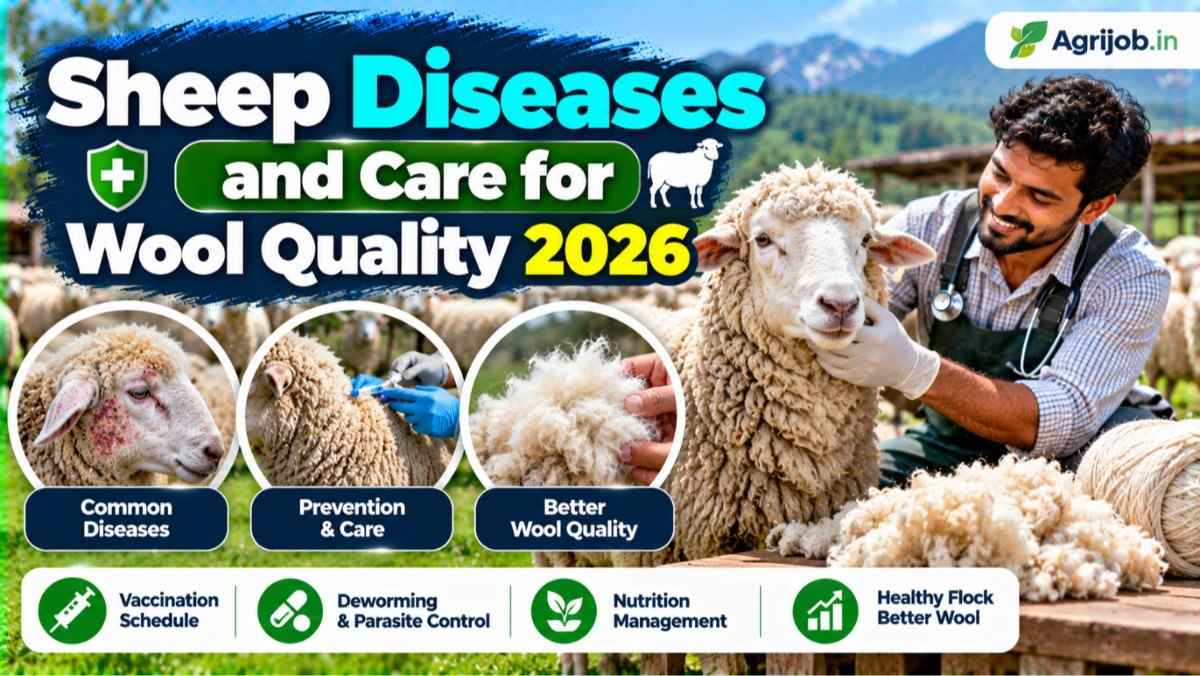
Sheep diseases and care for wool quality are inseparable in practice. When a sheep contracts a disease — whether viral, bacterial, parasitic, or nutritional — it redirects energy away from wool fibre production toward fighting infection. The result is a fleece that is lighter in weight, coarser in diameter, and weaker in tensile strength, all of which reduce its market value significantly.

According to ICAR-CSWRI, Avikanagar, the premier sheep research body in India, internal parasites alone can cause a 15–25% reduction in fleece weight. Sheep pox permanently damages wool follicles in adult sheep. PPR, if it does not kill the animal outright, leaves survivors with permanent respiratory weakness that limits feeding ability and slows wool regrowth for 6–12 months.
India’s wool sector loses an estimated Rs. 500–800 crore annually from disease-related production shortfalls, according to reviews published by ICAR researchers. The states of Rajasthan (which produces 45% of India’s total wool) and Jammu & Kashmir face the highest per-animal disease burden due to extreme climate, communal grazing, and limited veterinary access in remote areas.
| Disease Category | Average Wool Yield Loss | Wool Quality Effect |
|---|---|---|
| Internal Parasites (Worms) | 15–25% fleece weight loss | Dull coat, weak fibre, poor crimp |
| Sheep Pox | 20–40% in affected adults | Permanent follicle damage; scab residue in fleece |
| PPR (Survivor Sheep) | 10–20% post-recovery | Weak staple, poor growth rate for 6–12 months |
| External Parasites (Mites, Keds) | 10–30% fleece degradation | Wool tangling, staining, reduced lustre |
| Flystrike / Myiasis | Direct fleece destruction | Wool damaged at strike site; discolouration |
| Foot Rot (severe) | 5–15% indirect loss | Reduced grazing = poor nutrition = thin wool |
Who Should Read This Sheep Disease and Care Guide?
- 🐑 Sheep Farmers in Rajasthan, J&K, Himachal Pradesh, Uttarakhand: These states account for over 60% of India’s wool production — disease management here has the biggest national impact.
- 🌾 New Sheep Entrepreneurs Under NLM Scheme: If you have received subsidy for a sheep unit under the National Livestock Mission, this guide covers the veterinary protocols you must follow.
- 👨⚕️ Village-Level Veterinary Workers (VLWs): For primary diagnosis, vaccination records, and early intervention advice in field conditions.
- 📚 Animal Husbandry Students and Researchers: A quick reference for disease categories, symptoms, and evidence-based care protocols from ICAR and DAHD.
- 🧶 Wool Graders and Textile Processors: To understand why specific fleece defects (stain, weed, weakness) originate at the health management level, not just at shearing.
- 🏦 Sheep Farmers Seeking NABARD Loans: Banks and NBFCs require a veterinary health plan for sheep loan applications — this guide provides the framework.
- 🏕️ Nomadic Shepherds (Gujjars, Bakkarwals, Rabaris): Practical disease identification tips useful even without regular veterinary access.
- 🖥️ Agriculture Officers and Block Development Officers (BDOs): To design district-level sheep health camps and vaccination drives effectively.
12 Major Sheep Diseases — Symptoms, Treatment, and Wool Impact
The following 12 diseases are responsible for the majority of sheep mortality and wool quality loss in India. Each section follows the format recommended by India’s Department of Animal Husbandry and Dairying (DAHD) for quick field diagnosis.
1. PPR — Peste des Petits Ruminants (Goat Plague)
Type: Viral | Mortality: 30–90% in unvaccinated flocks | Wool Impact: High
PPR is the single most economically damaging disease for sheep and goat farmers in India. Caused by a Morbillivirus related to rinderpest, it spreads rapidly through direct contact. Symptoms include fever of 40–41°C, watery to purulent eye and nasal discharge, mouth ulcers, foul-smelling diarrhoea, and respiratory distress. Death occurs within 5–10 days from dehydration, pneumonia, and secondary infections.
Treatment: No specific antiviral exists. Supportive care — antibiotics for secondary infections and electrolyte therapy — can reduce mortality in valuable animals. Prevention through vaccination is the only effective strategy. The Government of India provides PPR vaccine free under the National PPR Control Programme (DAHD circular, January 2026). A single dose gives immunity for 3 years.
2. Sheep Pox (Variola Ovina)
Type: Viral | Mortality: 20–50% in lambs under 6 months | Wool Impact: Very High
Sheep pox is a highly contagious disease caused by Capripoxvirus. According to Tamil Nadu Agricultural University’s (TNAU) animal husbandry portal, it causes mortality of 20–50% in animals below 6 months and causes permanent damage to wool and skin in adult sheep. Symptoms include high fever, skin nodules progressing to pocks, pneumonia-like respiratory distress, and acute enteritis. The pock lesions leave scars that destroy wool follicles permanently in affected skin zones.
Treatment: No specific treatment. Isolate affected animals immediately. Vaccinate all healthy animals in the flock within 48 hours of an outbreak. Annual vaccination before the monsoon season is recommended in endemic zones.
3. Foot and Mouth Disease (FMD / Khurpaka-Munhpaka)
Type: Viral | Mortality: Low (adults); Higher in lambs | Wool Impact: Moderate (indirect)
FMD causes high fever (40–41°C), blisters in the mouth and between hooves, excessive salivation, and severe lameness. While mortality in adult sheep is usually low, the extreme pain prevents proper grazing. Nutrition deficiency then directly reduces wool fibre diameter consistency and staple length. Under India’s National Animal Disease Control Programme (NADCP), FMD vaccine is provided free of cost every 6 months. In January 2026, Uttar Pradesh launched a vaccination drive covering 6.98 lakh animals under the FMD-CP’s seventh round.
4. Blue Tongue Disease
Type: Viral (Orbivirus, vector-borne) | Mortality: 2–30% | Wool Impact: High
Blue tongue is endemic in India and primarily affects sheep. It is transmitted by Culicoides midges (biting insects), not by direct contact. Symptoms include fever, inflammation and ulceration of the lips and tongue (the tongue may appear blue due to cyanosis), coronitis (inflammation at the hoof-skin junction), and lameness. Pregnant ewes may abort, severely impacting flock productivity. No specific cure exists; supportive care and isolation are key. Contact the nearest Veterinary Assistant Surgeon for ring vaccination during outbreaks.
5. Enterotoxaemia (Pulpy Kidney Disease)
Type: Bacterial (Clostridium perfringens Type D) | Mortality: Very high (often sudden death) | Wool Impact: Indirect
Enterotoxaemia most commonly kills the best-conditioned, fastest-growing lambs — the very animals that would produce the highest quality wool. It occurs when sheep overeat grain or lush pasture, causing an overgrowth of Clostridium perfringens bacteria. Animals are often found dead without prior visible symptoms. Vaccination with Enterotoxaemia (ET) vaccine at 3–4 months with a booster 3–4 weeks later, then every 6–12 months, is the standard prevention protocol.
6. Internal Parasites — Barber’s Pole Worm and Liver Fluke
Type: Parasitic | Mortality: Significant if untreated | Wool Impact: Very High
Internal worm infestations are among the most common causes of poor wool quality in Indian sheep. Haemonchus contortus (barber’s pole worm) causes severe anaemia — visible as pale eyelids and gums — bottle jaw (fluid accumulation under the jaw), rapid weight loss, and weakness. Liver fluke (Fasciola hepatica) causes bottle jaw, poor body condition, and reduced wool yield. Treatment uses anthelmintic drugs (dewormers). Sheep must be dewormed every 6 months; in high-rainfall areas and during monsoon, quarterly deworming is recommended by ICAR-CSWRI.
7. External Parasites — Sheep Scab (Mange / Scabies) and Keds
Type: Parasitic (Ectoparasites) | Mortality: Low (but severe welfare issue) | Wool Impact: Very High
Sheep scab, caused by Psoroptes ovis mites feeding on the skin surface, is an extremely contagious disease. Symptoms include intense itching, thickened and scaly skin, scabs, and severe wool loss. Sheep keds (Melophagus ovinus, a wingless fly) cause intense itching, wool discolouration from ked droppings, and reduced wool quality. Both ectoparasites directly destroy fleece value. Treatment includes insecticidal dips or pour-on formulations containing ivermectin or cypermethrin. Shearing before dipping improves treatment efficacy significantly.
8. Flystrike (Myiasis / Bheater)
Type: Parasitic (Blowfly larvae) | Mortality: High if untreated | Wool Impact: Catastrophic in strike zone
Blowfly strike is a severe summer and monsoon-season threat, especially in flocks with unshorn, wet, or dung-soiled fleeces. Female blowflies lay eggs in moist wool; larvae hatch within 12–24 hours and begin feeding on living flesh. Signs include restlessness, tail-wagging, biting at the fleece, a foul odour, and visible maggots on close inspection. Immediate treatment: clip and clean the affected wool area, remove all maggots manually, apply a flystrike-specific insecticide, and consult a veterinarian for wound care. Preventive shearing before summer (March–April) is the most effective strategy.
9. Foot Rot (Fussobacterium necrophorum + Dichelobacter nodosus)
Type: Bacterial | Mortality: Low (but severe economic loss) | Wool Impact: Moderate (indirect)
Foot rot causes severe lameness across multiple feet, a distinctive foul smell from the hooves, and separation of the hoof wall from the sole. Affected sheep cannot graze properly, leading to significant weight loss, reduced body condition, and consequently lighter, lower-quality wool fleeces. Treatment involves foot bathing with zinc sulphate or formalin solution, hoof trimming in dry conditions, and systemic antibiotics (penicillin or oxytetracycline) prescribed by a veterinarian. Keep affected animals in dry paddocks away from mud and standing water.
10. Pneumonia (Pasteurellosis)
Type: Bacterial | Mortality: Moderate to High | Wool Impact: Moderate
Pneumonia in sheep is most often caused by Pasteurella multocida or Mannheimia haemolytica. It presents as persistent coughing, nasal discharge progressing from clear to purulent (yellow-green), laboured breathing, fever (103–106°F), loss of appetite, droopy ears, and separation from the flock. Affected sheep rapidly lose body condition. Treatment requires broad-spectrum antibiotics (oxytetracycline, florfenicol, or penicillin) under veterinary guidance. Good ventilation in housing, avoiding overcrowding, and reducing dust and ammonia levels in sheds significantly reduce pneumonia risk.
11. Tetanus (Lockjaw)
Type: Bacterial (Clostridium tetani) | Mortality: High (90%+ if untreated) | Wool Impact: Indirect
Tetanus infects sheep through wounds from shearing, docking, castration, ear-tagging, or foot injuries. Symptoms include muscular stiffness, difficulty swallowing, rigidity of abdominal muscles, bloat, and uncoordinated walking. The animal typically dies within 3–10 days without treatment. Inject antitoxin first, then treat with penicillin. Prevention: vaccinate with a Clostridial multi-valent vaccine before shearing season and any routine procedures. Clean all instruments with disinfectant before use.
12. Coccidiosis
Type: Protozoal | Mortality: High in lambs | Wool Impact: Moderate
Coccidiosis is caused by Eimeria species and primarily affects lambs under 6 months. The main symptom is profuse, often bloody or mucus-stained diarrhoea. Lambs lose body condition rapidly and, if they survive, often remain stunted — permanently producing lower-quality, lighter fleeces. Treatment uses amprolium or sulphonamide drugs prescribed by a veterinarian. Strict pen hygiene — preventing faecal contamination of feed and water — is the most important preventive measure.
Complete Sheep Vaccination Schedule for India 2026
India’s Department of Animal Husbandry and Dairying (DAHD) and the Livestock Health and Disease Control Programme (LHDCP) provide several vaccines either free or at highly subsidized rates. Registering your flock on the Bharat Pashudhan portal ensures you receive timely vaccination notices and records.
| Disease | First Vaccination Age | Booster | Repeat Interval | Cost (Government Scheme) |
|---|---|---|---|---|
| PPR (Peste des Petits Ruminants) | 3 months of age | Not required | Every 3 years | Free under National PPR-CP |
| FMD (Foot & Mouth Disease) | 3–4 months of age | 3–4 weeks after 1st | Every 6 months | Free under NADCP |
| Sheep Pox | 3–4 months of age | 3–4 weeks after 1st | Every 12 months | Subsidised (state AH dept.) |
| Enterotoxaemia (ET) | 3–4 months of age | 3–4 weeks after 1st | Every 6–12 months | Subsidised |
| Haemorrhagic Septicaemia (HS) | 3–4 months of age | 3–4 weeks after 1st | Annually (before monsoon) | Often free at state camps |
| Blue Tongue | As directed by vet | As directed | Ring vaccination on outbreak | Contact state Animal Husbandry Dept. |
| Tetanus / Clostridial | Before shearing / procedures | Booster before each season | Annually | Paid — contact private vet |
Always deworm your sheep at least 15 days before vaccination. A high worm burden weakens the immune system and reduces the antibody response to vaccines by up to 40%, making vaccination far less effective. This is the single most overlooked step by sheep farmers in India.
How to Prevent Sheep Diseases and Improve Wool Quality — 7-Step Care Protocol
Based on guidelines from ICAR-CSWRI Avikanagar and the Department of Animal Husbandry and Dairying, the following 7-step protocol delivers the best results for disease prevention and wool quality improvement simultaneously.
- Follow the Annual Vaccination Calendar: Register your flock on Bharat Pashudhan. Schedule PPR (once every 3 years), FMD (every 6 months), Sheep Pox (annually before monsoon), and Enterotoxaemia (every 6–12 months). Never skip FMD or PPR — both are free government programmes with proven 96%+ coverage success in states that comply fully.
- Deworm Every 6 Months (Minimum): Use a broad-spectrum anthelmintic (albendazole, levamisole, or ivermectin — rotate classes to prevent resistance). Perform FAMACHA eye-colour scoring in high-worm-burden areas to prioritize animals most in need. In monsoon season and high-rainfall zones, deworm every 3–4 months.
- Control External Parasites — Dip or Pour-On Twice a Year: Use insecticidal dips (cypermethrin, deltamethrin) or pour-on formulations. Schedule one treatment before summer (April–May) to prevent flystrike, and one after monsoon (October–November) to control keds and mites. Always shear sheep before dipping for maximum skin contact.
- Provide Balanced Nutrition for Wool Growth: Wool fibre is 97% protein (keratin). Supplementing 50–100g of bypass protein (fish meal, soybean) per sheep per day during peak wool growth season (October–February) significantly improves fibre diameter consistency. Copper deficiency causes depigmentation and loss of crimp — supplement with copper-fortified mineral mixtures at 10g per sheep per day. Sulphur-containing amino acids (cysteine, methionine) in the diet directly stimulate wool follicle activity.
- Maintain Clean, Well-Ventilated Housing: Damp, overcrowded sheds cause pneumonia, footrot, and flystrike. Ensure 1.5–2 sq metres per adult sheep in enclosed housing. Clean dung from pens every alternate day. Use dry sand or wood ash as a litter material. Good ventilation cuts respiratory disease incidence by more than 50% in Indian conditions.
- Practice Timely Machine Shearing: Faulty hand-shearing leaves up to 25% of wool on the animal’s body and causes skin cuts that invite tetanus and flystrike infections. Shifting to electric machine shearing (available through state sheep corporations and CWDB camps) improves wool weight by 15–20%, reduces second-cuts, and produces a cleaner, longer staple. Shear twice a year — ideally in March–April and September–October.
- Quarantine New Animals for 30 Days: Every new animal introduced to your flock is a potential carrier of PPR, Sheep Pox, Scab, and internal parasites. Isolate new arrivals in a separate pen for 30 days. Vaccinate and deworm them before integration. This single practice prevents the most common and catastrophic disease outbreaks in sheep flocks across India.
Disease-Neglected vs. Disease-Managed Sheep Flocks — Key Comparison
| Parameter | Disease-Neglected Flock | Disease-Managed Flock |
|---|---|---|
| Annual Mortality Rate | 15–25% of flock | 3–5% of flock |
| Wool Yield Per Animal | 0.8–1.2 kg/year | 1.5–2.5 kg/year |
| Wool Fibre Diameter | Uneven, coarser due to stress | Consistent, finer — higher market grade |
| Fleece Contamination | High (dung tags, vegetable matter, mite damage) | Low (clean shearing, parasite-free) |
| Market Price of Wool | Rs. 20–40 per kg (carpet grade) | Rs. 60–150 per kg (fine/apparel grade) |
| Cost of Annual Healthcare per Sheep | Rs. 200–500 (mostly curative) | Rs. 300–600 (mostly preventive) |
| Net Income Difference | Base (reference point) | Rs. 800–2,500 more per sheep per year |
| Government Scheme Eligibility | Often ineligible (health records absent) | Eligible for NLM, NABARD, CWDB schemes |
| Lamb Survival Rate | 60–70% | 85–95% |
| Flock Replacement Cost | High (frequent deaths) | Low (healthy flock grows naturally) |
Disease-managed sheep farming consistently outperforms neglect-based traditional farming by Rs. 800–2,500 per sheep per year in net income. The investment in prevention (vaccines, dewormers, proper housing) costs Rs. 300–600 per sheep annually — a return of 3x to 5x. Farmers who follow the ICAR-CSWRI recommended protocol report wool grades shifting from carpet-quality (Rs. 25–40/kg) to apparel-quality (Rs. 80–150/kg) within 2–3 years. This is not a luxury — it is the difference between a profitable enterprise and one that barely survives.
Advantages and Disadvantages of Intensive Sheep Health Management
Intensive disease management and care is the recommended approach, but it comes with real-world trade-offs that every sheep farmer should understand before committing.
Advantages
- ✅ Wool yield increases 30–50% compared to unmanaged flocks over 2–3 years
- ✅ Wool fibre diameter becomes more consistent — enabling higher-grade pricing (apparel vs. carpet)
- ✅ Lamb survival rate rises from 60–70% to 85–95%, growing flock size faster without extra purchase costs
- ✅ Flock mortality drops from 15–25% to 3–5%, protecting capital investment
- ✅ Eligible for government subsidies: NLM, CWDB SWIS scheme, NABARD loans, and state sheep corporation services
- ✅ Better wool fetches Rs. 60–150/kg vs. Rs. 20–40/kg for disease-damaged carpet wool
Disadvantages
- ❌ Higher upfront investment in vaccines, dewormers, and veterinary fees (Rs. 300–600/sheep/year)
- ❌ Requires record-keeping (vaccination dates, deworming cycles) — a challenge for illiterate or elderly farmers
- ❌ Veterinary access is limited in remote hill and tribal areas, making the full protocol difficult to execute
- ❌ Machine shearing requires access to state camps or hired equipment — not available in all villages yet
Important Terms in Sheep Health and Wool Quality Management
Understanding these key terms helps sheep farmers communicate effectively with veterinarians, scheme officers, and wool buyers.
Fibre Diameter (Microns): The most important wool quality parameter. Finer microns (18–24 for Merino-cross; 30–40 for carpet breeds) command higher prices. Disease stress increases fibre diameter unevenness. ICAR-CSWRI’s 2026 genetic evaluation of Harnali sheep found that staple length and fibre diameter are both moderately heritable — meaning both breeding and health management matter equally.
Staple Length: The length of a wool lock from the skin to the tip after one full year’s growth. Disease disruption causes “tender” spots (weak zones) in the staple, which break during processing and reduce commercial value.
FAMACHA Scoring: A field method to detect barber’s pole worm burden by examining the colour of the sheep’s lower eyelid conjunctiva. A score of 1 (red) = healthy; 5 (white/pale) = severely anaemic and urgently needs treatment. Used widely by extension workers in India to identify priority animals for deworming without laboratory tests.
Anthelmintic Resistance: A growing problem in Indian sheep flocks where the same dewormer class is used repeatedly. Rotate between benzimidazoles (albendazole), macrocyclic lactones (ivermectin), and levamisole each deworming cycle to prevent resistance buildup.
Bharat Pashudhan: The Government of India’s national livestock identification and traceability portal (managed by DAHD). Registering sheep on this portal is required to access free PPR and FMD vaccination under LHDCP, and for livestock insurance schemes.
CWDB (Central Wool Development Board): Established 1987 under the Ministry of Textiles, Government of India. Runs the Sheep and Wool Improvement Scheme (SWIS) — a flagship programme providing health care, breed improvement, and capacity building for sheep breeders across India.
NLM (National Livestock Mission): DAHD’s central scheme running since 2014-15, revised from 2021-22. Supports breed improvement, entrepreneurship in sheep/goat farming, increased productivity, and welfare measures. Provides capital subsidies for setting up sheep units and veterinary infrastructure.
Bottle Jaw: A clinical sign (swelling under the jaw from fluid accumulation) seen in sheep heavily burdened with barber’s pole worm or liver fluke. It signals severe protein loss and anaemia requiring urgent treatment.
Important Links for Sheep Farmers in India
| Resource | Link |
|---|---|
| DAHD — Department of Animal Husbandry & Dairying (GOI) | dahd.nic.in |
| ICAR-CSWRI Avikanagar — Sheep Research Institute | icar.org.in |
| National Livestock Mission (NLM) — Scheme Portal | nlm.udyamimitra.in |
| TNAU — Disease Control and Management of Sheep | agritech.tnau.ac.in |
| Central Wool Development Board (CWDB) — SWIS Scheme | cwdb.gov.in |
Conclusion
Sheep diseases and care for wool quality are two sides of the same coin — you cannot improve one without managing the other. The 12 diseases covered in this guide are responsible for an estimated 20–30% of India’s annual wool production shortfall, and every one of them is either preventable through vaccination and management or significantly treatable with early detection. Following the 7-step care protocol — built on ICAR-CSWRI research and DAHD government guidelines — can realistically increase your flock’s wool yield by 30% and shift your wool grade from carpet-quality pricing to apparel-quality pricing within 2–3 years.
Register your flock on Bharat Pashudhan (dahd.nic.in) to access free PPR and FMD vaccination under the LHDCP, and contact your nearest Krishi Vigyan Kendra (KVK) or State Animal Husbandry Department for CWDB’s SWIS scheme benefits and NLM subsidies available in your district.
- PPR is the most dangerous disease for sheep in India — a single free vaccine dose protects for 3 years; do not skip it.
- Internal parasites cause 15–25% fleece weight loss annually — deworm every 6 months as a minimum; quarterly in high-rainfall zones.
- Disease-managed flocks earn Rs. 800–2,500 more per sheep per year than disease-neglected flocks.
- Shifting from hand-shearing to machine shearing alone improves wool weight recovery by 15–20% per animal.
- Always quarantine new sheep for 30 days before introducing them to your flock — this single step prevents the most common catastrophic outbreaks.
- Register on Bharat Pashudhan portal to access free government vaccines (PPR, FMD) and NLM scheme subsidies in your district.
Frequently Asked Questions About Sheep Diseases and Care for Wool Quality
What is the most dangerous disease for sheep in India?
PPR (Peste des Petits Ruminants), also known as Goat Plague, is the most dangerous disease for sheep in India. It is caused by a highly contagious Morbillivirus and can kill 30–90% of unvaccinated animals in an affected flock within 5–10 days. The Government of India provides PPR vaccine free of cost under the National PPR Control Programme run by DAHD, and a single dose gives immunity for 3 years. PPR vaccination is the single most important health intervention for any sheep farmer in India.
How do sheep diseases affect wool quality?
Sheep diseases affect wool quality through two main mechanisms. First, disease diverts the animal’s metabolic energy away from wool fibre production toward fighting infection, resulting in thinner, lighter, and weaker staples. Second, specific diseases cause direct physical damage — Sheep Pox permanently destroys wool follicles in affected skin areas, external parasites (mites, keds) stain and damage fleece fibres directly, and flystrike by blowfly maggots physically destroys the fleece at the strike site. A disease-stressed flock can lose 20–35% of its potential wool value in a single year.
How often should I deworm my sheep for better wool quality?
The minimum recommended deworming frequency for sheep in India is every 6 months. However, in high-rainfall states (Kerala, West Bengal, northeastern states, Western Ghats zones) and during the monsoon season, quarterly deworming is recommended by ICAR-CSWRI because warm, moist conditions accelerate worm lifecycle completion. Always deworm at least 15 days before vaccination to ensure the immune system responds effectively to vaccines. Rotate between anthelmintic drug classes (albendazole, levamisole, ivermectin) to prevent resistance development.
What is the vaccination schedule for sheep in India 2026?
The 2026 vaccination schedule for sheep in India, as per DAHD and state animal husbandry departments, includes: PPR vaccine at 3 months of age (repeat every 3 years — free under National PPR-CP); FMD vaccine at 3–4 months with a booster 3–4 weeks later, then every 6 months (free under NADCP); Sheep Pox vaccine annually before monsoon season; Enterotoxaemia vaccine at 3–4 months with a booster, then every 6–12 months; and Haemorrhagic Septicaemia vaccine annually before monsoon. Contact your nearest Veterinary Assistant Surgeon or block-level Animal Husbandry office for the exact schedule in your district.
What are the symptoms of PPR in sheep?
Symptoms of PPR in sheep include a sudden high fever of 40–41°C, watery discharge from the eyes and nose that progressively becomes thick and purulent (yellow-green pus), erosions and ulcers in the mouth and on the tongue, foul-smelling watery diarrhoea, severe respiratory distress with laboured breathing, and in pregnant ewes, abortion. Animals can die within 5–10 days. There is no specific antiviral treatment — supportive care (antibiotics for secondary infections, oral rehydration salts) can help valuable animals survive. The only effective protection is timely vaccination.
How can I improve sheep wool quality naturally?
To improve sheep wool quality naturally and cost-effectively: maintain a disease-free flock through vaccination and deworming; supplement the diet with 50–100g of bypass protein (fish meal or soybean) per sheep per day during peak wool growth (October–February); provide a copper and sulphur-containing mineral mixture (10g/sheep/day) as copper deficiency directly causes depigmentation and loss of crimp; ensure clean, well-ventilated housing; practice timely machine shearing twice a year; and avoid stress events (abrupt feed changes, overcrowding, predator harassment) during wool growth phases, as stress hormones cause fibre diameter fluctuation that creates tender spots in the staple.
What is Sheep Pox and how does it affect wool production?
Sheep Pox (Variola Ovina) is a highly contagious viral disease caused by Capripoxvirus. It causes a mortality of 20–50% in lambs under 6 months. In adult sheep, while mortality is lower, the disease causes high fever, skin nodules that progress to deep pock lesions, respiratory distress, and acute enteritis. The pock lesions leave permanent scars that destroy wool follicles in the affected skin areas, meaning those patches will produce little or no wool for the rest of the animal’s life. Annual vaccination with Sheep Pox vaccine, scheduled before the monsoon season, is the only effective prevention.
What government schemes are available for sheep health management in India?
Several government schemes support sheep health management in India: the Livestock Health and Disease Control Programme (LHDCP) by DAHD provides free PPR and FMD vaccines; the National Livestock Mission (NLM) offers capital subsidies for setting up sheep enterprises and breed improvement; the Central Wool Development Board (CWDB) runs the Sheep and Wool Improvement Scheme (SWIS) covering healthcare, breed improvement, and farmer training; state-level schemes include Rajasthan’s sheep breeding programme, Maharashtra’s Mahamesh Yojana, and Telangana’s Sheep Distribution Scheme. Farmers must register livestock on the Bharat Pashudhan portal (dahd.nic.in) to access most of these benefits.
How does proper shearing improve wool quality?
Proper shearing — ideally with electric machines — improves wool quality and yield in several ways. Faulty hand-shearing leaves up to 25% of wool on the sheep’s body and creates multiple small skin cuts that become entry points for tetanus bacteria and blowfly strike infections. Machine shearing produces a single, even cut close to the skin, maximising staple length and removing almost all harvestable fibre. Shearing twice a year (March–April before summer; September–October after monsoon) also prevents dung and vegetable matter from tangling deep into the fleece, which would degrade its commercial grade. The Central Wool Development Board (CWDB) organises machine shearing camps through state wool corporations.
Last Updated: October 2026 | This guide is reviewed and updated regularly for accuracy. Bookmark this page for the latest sheep disease and care information from official government sources.
Disclaimer: This article is for informational purposes only and is based on published guidelines from ICAR, DAHD, and TNAU. It does not replace professional veterinary advice. Always consult a qualified veterinarian for diagnosis and treatment of your animals.