

RRB Paramedical Audiologist & Speech Therapist 2026 (CEN 05/2026) has 2 vacancies at Pay Level 5 with a basic salary of Rs.29,200/month. The single-stage CBT has 100 questions — 70 from Professional Ability (Audiology & Speech Pathology) and 30 from General Awareness, Maths, Reasoning & Science. Apply online at rrbapply.gov.in before 14 October 2026.
- Notification: CEN 05/2026 — Ministry of Railways
- Total Paramedical Vacancies: 560 posts (All India)
- Audiologist & Speech Therapist Vacancies: 2 posts
- Pay Level: Level 5 (7th CPC) — Basic Rs.29,200/month
- Gross In-Hand (approx.): Rs.48,000–Rs.55,000/month (with DA 60%, HRA, TA)
- Application Dates: 15 September 2026 to 14 October 2026
- Apply At: rrbapply.gov.in
- Qualification: BASLP (Bachelor in Audiology & Speech Language Pathology) + RCI Registration
- Age Limit: 21–33 years (relaxation as per government norms)
- Exam Pattern: Single-stage CBT | 100 questions | 90 minutes | 1/3 negative marking
- Professional Ability Weightage: 70 marks out of 100
- Minimum Qualifying Cut Off: UR/EWS — 40% | OBC/SC — 30% | ST — 25%
RRB Paramedical Audiologist & Speech Therapist syllabus 2026 is the most critical document every BASLP graduate must study before attempting the CEN 05/2026 Computer-Based Test. With only 2 vacancies pan-India and lakhs of eligible candidates, knowing exactly what 70 marks of Professional Ability covers — from Diagnostic Audiology to Aural Rehabilitation — is the difference between selection and disappointment. This guide is for BASLP graduates and speech pathology professionals aged 21–33 who want a permanent railway government job in 2026. It covers the full CBT syllabus, subject-wise marks distribution, previous cut-off trends, and a proven 90-day preparation strategy to score 70+ out of 100.

📋 Table of Contents
- What Is RRB Paramedical Audiologist & Speech Therapist 2026?
- Who Should Apply for This Post?
- Salary & Pay Details — Level 5 (7th CPC)
- Eligibility & Age Limit with Relaxation Table
- RRB Paramedical Exam Pattern 2026 — Subject-Wise Marks
- Full Professional Ability Syllabus for Audiologist & Speech Therapist
- General Awareness, Maths, Reasoning & Science Syllabus
- Previous Year Cut-Off Marks — Category & Post Wise
- RRB Audiologist vs Other Paramedical Posts — Comparison
- Pros and Cons of RRB Paramedical Audiologist Post
- Important Terms in Audiology & Speech Pathology for CBT
- 90-Day Strategy to Crack RRB Paramedical CBT 2026
- Important Links Table
- Conclusion
- Key Takeaways
- Frequently Asked Questions
What Is the RRB Paramedical Audiologist & Speech Therapist 2026 Post?
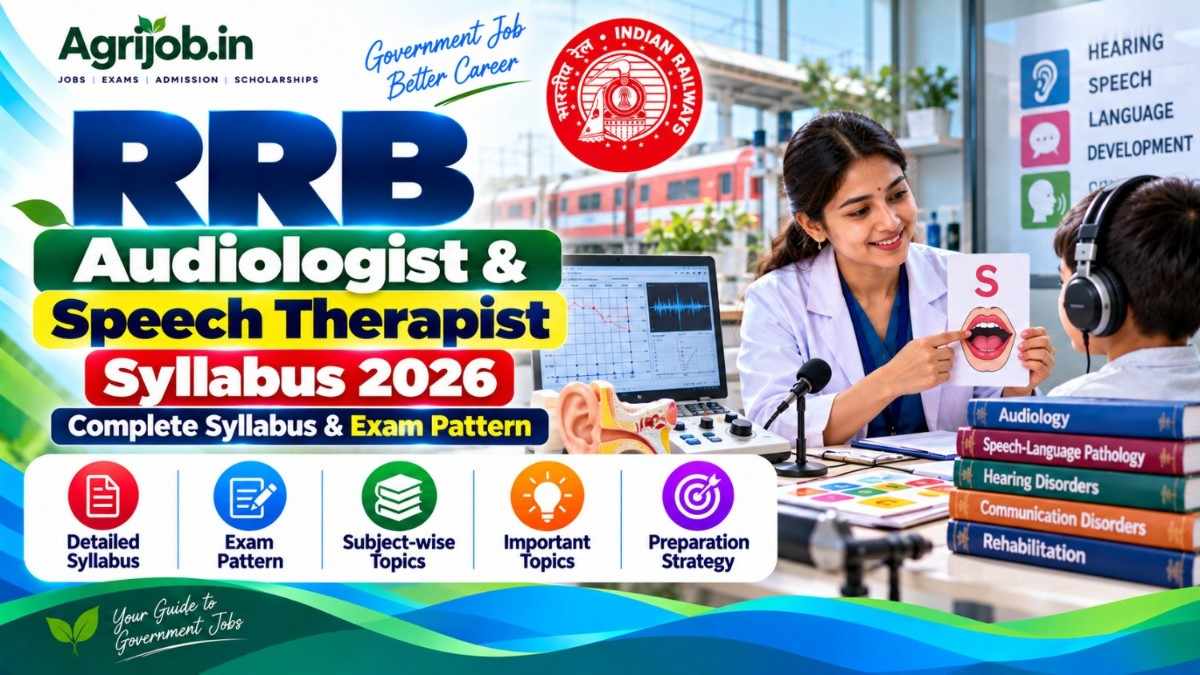
RRB Paramedical Audiologist & Speech Therapist is a permanent government post under the Ministry of Railways, recruited through a Computer-Based Test conducted by Regional Railway Recruitment Boards. Under CEN 05/2026, Railway Recruitment Board has notified 2 posts for Audiologist & Speech Therapist at Pay Level 5 of the 7th CPC pay matrix, with a starting basic salary of Rs.29,200 per month. Candidates placed in this role work in Railway Hospitals across India, providing clinical audiology services, hearing assessments, and speech-language therapy to railway employees and their families.
The post requires a BASLP degree (Bachelor in Audiology and Speech Language Pathology) from a recognized university and mandatory registration with the Rehabilitation Council of India (RCI). Selection is purely on CBT merit — no interview, no physical test. The 2026 notification (CEN 05/2026) is part of a consolidated paramedical drive covering 560 posts across all RRB zones.

Who Should Apply for the RRB Paramedical Audiologist Post?
- 🎓 BASLP Graduates (2022–2026) with valid RCI registration looking for their first government job in the healthcare sector
- 🏥 Audiologists working in private clinics or hospitals who want job security, pension, and railway medical benefits
- 🗣️ Speech-Language Pathologists aged 21–33 seeking a central government position with Grade Pay Level 5
- 📚 Fresh BASLP graduates who have scored well in university exams and are ready to attempt a competitive CBT within 3–6 months
- 👨⚕️ Candidates with an interest in Paediatric Audiology and Aural Rehabilitation, which form a large chunk of the Professional Ability section
- 🌍 Pan-India candidates willing to serve in any RRB zone — vacancies are distributed across zones and candidates must be mobile
- 🏛️ OBC, SC, and ST candidates seeking lower cut-off advantage with reservation benefits in an otherwise low-vacancy post
- ♿ PwBD candidates with HI or LD category eligible for reservation against specific PwBD vacancy cells in this post
Salary & Pay Details — RRB Paramedical Level 5 (7th CPC)
The Audiologist & Speech Therapist post sits at Pay Level 5 of the 7th CPC pay matrix, with a basic pay of Rs.29,200 per month. Adding the current Dearness Allowance (DA) of 60% (effective January 2026), House Rent Allowance, and Transport Allowance, the gross in-hand comes to approximately Rs.48,000–Rs.55,000/month depending on the city of posting. The table below shows the full salary break-up:
| Pay Component | Amount (Approx.) |
|---|---|
| Basic Pay (Level 5) | Rs.29,200/month |
| Dearness Allowance (DA @ 60%) | Rs.17,520/month |
| House Rent Allowance (X City — 27%) | Rs.7,884/month |
| HRA (Y City — 18%) | Rs.5,256/month |
| HRA (Z City — 9%) | Rs.2,628/month |
| Transport Allowance (approx.) | Rs.1,800–Rs.3,600/month |
| Total Gross (X City) | ~Rs.58,000–Rs.60,000/month |
| Total Gross (Y City) | ~Rs.52,000–Rs.55,000/month |
| Annual CTC (Approx.) | Rs.6.5–Rs.7.2 Lakh/year |
Beyond salary, railway employees at Level 5 receive free medical treatment for self and family at railway hospitals, LTC (Leave Travel Concession), pass facility for rail travel, and a pension under the National Pension System (NPS). The financial package makes this one of the better-paying entry-level healthcare government jobs in India for BASLP graduates.
Eligibility & Age Limit — RRB Paramedical Audiologist 2026
To apply for the RRB Paramedical Audiologist & Speech Therapist post under CEN 05/2026, candidates must fulfil the following educational and age eligibility criteria as mentioned in the official notification:
- Educational Qualification: Bachelor in Audiology, Speech Language Pathology (BASLP) from a recognized university
- RCI Registration: Must be registered with the Rehabilitation Council of India (RCI) — mandatory at the time of Document Verification
- Age Limit: 21 to 33 years as on 01.01.2026
- Nationality: Indian Citizen (as per Railway Service Rules)
| Category | Age Relaxation | Maximum Age |
|---|---|---|
| Unreserved (UR) | No relaxation | 33 years |
| OBC (Non-Creamy Layer) | +3 years | 36 years |
| SC / ST | +5 years | 38 years |
| PwBD (UR) | +10 years | 43 years |
| PwBD (OBC) | +13 years | 46 years |
| PwBD (SC/ST) | +15 years | 48 years |
| Ex-Servicemen (UR) | As per service rules | Up to 3 years after discharge |
- General / OBC / EWS: Rs.500 (Rs.400 refunded after appearing in CBT)
- SC / ST / PwBD / Ex-Servicemen / Women / Transgender / EBC: Rs.250 (fully refunded after appearing in CBT)
- Fee payment: Online only via rrbapply.gov.in
RRB Paramedical Exam Pattern 2026 — Subject-Wise Marks Distribution
The RRB Paramedical CBT 2026 is a single-stage, 90-minute Computer-Based Test with 100 objective-type multiple-choice questions carrying 100 marks. There is 1/3 negative marking for each wrong answer. The exam is conducted online at designated test centres across all RRB zones. Crucially, 70 out of 100 marks come from the Professional Ability section — which is post-specific and tests your BASLP degree knowledge directly.
| Subject | No. of Questions | Maximum Marks |
|---|---|---|
| Professional Ability (Post-Specific) | 70 | 70 |
| General Awareness & Current Affairs | 10 | 10 |
| General Arithmetic, General Intelligence & Reasoning | 10 | 10 |
| General Science | 10 | 10 |
| Total | 100 | 100 |
| Exam Parameter | Details |
|---|---|
| Mode of Exam | Computer-Based Test (CBT) — Online |
| Duration | 90 minutes (120 minutes for eligible PwBD with scribe) |
| Total Questions | 100 |
| Total Marks | 100 |
| Question Type | Objective Multiple Choice (4 options, 1 correct) |
| Marking Scheme | +1 for correct | −1/3 for wrong | 0 for unattempted |
| Medium of Exam | English and Hindi (and regional languages) |
| Stages After CBT | Document Verification → Medical Examination |
Key Insight: Since 70% of the paper is Professional Ability, a candidate who masters the BASLP syllabus thoroughly can easily score 55–65 in that section alone. The remaining 30 marks from General sections require only 2–3 weeks of focused preparation. This makes the CBT more about clinical knowledge than competitive exam skills.
Full Professional Ability Syllabus — Audiologist & Speech Therapist (70 Marks)
The Professional Ability section for RRB Paramedical Audiologist & Speech Therapist covers all major clinical and theoretical topics from the BASLP undergraduate curriculum. Based on the official notification and previous exam analysis, the syllabus spans two broad domains: Audiology and Speech-Language Pathology. Below is the complete topic-wise breakdown:
A — Speech and Language Development & Disorders
- Normal speech and language development milestones from birth to 12 years
- Language acquisition theories (Chomsky’s nativism, Skinner’s behaviourism, Piaget’s cognitive theory)
- Speech sound development — phonological processes, normal and disordered
- Language disorders — expressive, receptive, and mixed; specific language impairment (SLI)
- Developmental language delay vs. language disorder — differential diagnosis
- Bilingual language development — code-switching, code-mixing, sequential vs. simultaneous
- Augmentative and Alternative Communication (AAC) — symbols, devices, PECS
B — Basic Anatomy & Physiology Related to Speech & Hearing
- Anatomy of the outer, middle, and inner ear — pinna, ear canal, tympanic membrane, ossicles, cochlea, semicircular canals
- Physiology of hearing — sound transmission, hair cell transduction, auditory nerve pathways
- Anatomy of the vocal tract — larynx, pharynx, oral cavity, nasal cavity
- Mechanism of phonation — Bernoulli effect, myoelastic-aerodynamic theory
- Resonance systems and articulation — velum, tongue, lips, teeth
- Neural anatomy for speech — Broca’s area, Wernicke’s area, motor cortex, cerebellum
- Respiratory system anatomy for speech breathing — tidal vs. speech breathing
C — Diagnostic & Rehabilitation Audiology
- Pure Tone Audiometry (PTA) — air conduction, bone conduction, masking techniques
- Audiogram interpretation — types of hearing loss (conductive, sensorineural, mixed)
- Speech Audiometry — Speech Reception Threshold (SRT), Speech Discrimination Score (SDS), Word Recognition Score (WRS)
- Impedance Audiometry — tympanometry, stapedial reflex testing
- Auditory Brainstem Response (ABR) / Brainstem Evoked Response Audiometry (BERA)
- Otoacoustic Emissions (OAE) — DPOAE, TEOAE — applications in neonatal screening
- Hearing Aid selection, fitting, and evaluation — earmould, RECD, aided audiogram
- Cochlear implant candidacy, surgery overview, and post-implant rehabilitation
- Vestibular assessment — Caloric test, ENG/VNG, Dix-Hallpike manoeuvre
D — Psychology Related to Speech & Hearing
- Psychoacoustics — loudness, pitch, timbre, temporal resolution
- Psychological impact of hearing loss — stigma, social withdrawal, depression
- Counselling for hearing-impaired patients and parents of children with hearing loss
- Behaviour modification techniques in speech therapy — operant conditioning, shaping
- Attitude towards disability — ICF model (International Classification of Functioning)
E — Basic Acoustics
- Properties of sound — frequency (Hz), intensity (dB), wavelength, speed of sound
- Decibel scale — SPL (Sound Pressure Level) vs. HL (Hearing Level)
- Resonance, standing waves, and room acoustics
- Filters — low-pass, high-pass, band-pass; applications in audiological equipment
- Speech acoustics — formant frequencies of vowels, fricatives, plosives
- Noise — types (white, pink, narrow band), noise-induced hearing loss (NIHL)
F — Pathology of Hearing and Hearing System
- Outer ear pathologies — otitis externa, wax impaction, stenosis, atresia
- Middle ear pathologies — acute and chronic otitis media (COM), otosclerosis, cholesteatoma, tympanosclerosis
- Inner ear pathologies — presbycusis, Meniere’s disease, sudden sensorineural hearing loss (SSNHL), ototoxicity
- Retrocochlear pathologies — acoustic neuroma (vestibular schwannoma), central auditory processing disorders
- Congenital hearing loss — syndromic (Down syndrome, CHARGE, Waardenburg) vs. non-syndromic
- Noise-Induced Hearing Loss (NIHL) — OSHA standards, TTS vs. PTS
G — Phonetics & Phonology
- International Phonetic Alphabet (IPA) — classification of consonants and vowels
- Place, manner, and voicing of articulation — bilabial, labiodental, dental, alveolar, velar, glottal
- Distinctive features theory — Jakobson, Halle, Chomsky
- Phonological processes — assimilation, syllable structure, substitution processes
- Suprasegmental features — stress, intonation, rhythm, juncture
- Connected speech phonology — liaison, elision, assimilation in natural speech
H — Speech-Language Diagnostics & Therapeutics
- Articulation and phonological disorders — error types (substitution, omission, distortion, addition), assessment tools
- Stuttering — types (developmental, neurogenic, psychogenic), Van Riper therapy, GILCU, fluency shaping vs. stuttering modification
- Cluttering — differential diagnosis from stuttering
- Aphasia — Broca’s, Wernicke’s, global, anomic, conduction aphasia; BDAE, WAB assessment
- Dysarthria — types (flaccid, spastic, hypokinetic, hyperkinetic, ataxic, mixed); assessment using FDA, DIVA model
- Apraxia of Speech — childhood apraxia (CAS) vs. acquired apraxia; diagnosis and treatment
- Dysphagia — oral, pharyngeal, oesophageal phases; MBSS, FEES evaluation; diet modification
- Augmentative communication — PECS, VOCA, low-tech AAC boards
- Learning Disabilities — dyslexia, dyscalculia; WISC, TOLD assessment
I — Paediatric Audiology
- Neonatal hearing screening — UNHS protocol, NBHS, JCIH guidelines
- Behavioural observation audiometry (BOA), Visual Reinforcement Audiometry (VRA), Conditioned Play Audiometry (CPA)
- Auditory Neuropathy Spectrum Disorder (ANSD) — DPOAE present + ABR absent pattern
- Early Hearing Detection and Intervention (EHDI) — 1-3-6 protocol
- APD (Auditory Processing Disorder) in children — SCAN-C, dichotic tests
- Role of early intervention — critical period for language development
J — Management of the Hearing Impaired
- Hearing aid technology — BTE, ITE, ITC, CIC, RITE types; digital vs. analogue
- Hearing aid fitting protocols — DSL, NAL-NL1, NAL-NL2
- Assistive listening devices (ALDs) — FM systems, telecoil, captioning
- Educational placement — mainstream vs. special school; oral vs. total communication
- Indian Sign Language (ISL) — basics and advocacy
- Government schemes for hearing impaired — ADIP scheme, NHSP, RCI Act 1992, RPWD Act 2016
K — Voice & Laryngectomy
- Voice disorders — hyperfunctional (nodules, polyps), hypofunctional, neurogenic (vocal fold paralysis, spasmodic dysphonia)
- Laryngoscopy — direct and indirect; videostroboscopy interpretation
- Voice therapy approaches — Lee Silverman Voice Treatment (LSVT), resonant voice therapy, vocal hygiene
- Laryngectomy — total vs. partial; tracheoesophageal speech, oesophageal speech, electrolarynx
- Alaryngeal speech rehabilitation — post-surgical care and voice restoration
L — Hearing Conservation
- Occupational noise exposure — OSHA permissible limits (90 dB TWA 8 hours), NIOSH criteria
- Hearing conservation programme (HCP) — noise monitoring, audiometric monitoring, HPD selection
- Hearing protection devices (HPDs) — earplugs, earmuffs, NRR (Noise Reduction Rating)
- Engineering controls, administrative controls, and PPE hierarchy for noise control
- Railway-specific noise hazards — locomotive noise, station PA system exposure
M — Aural Rehabilitation & Its Instrumentation
- Auditory training — analytic and synthetic approaches; sound awareness to speech understanding hierarchy
- Lip reading (speech reading) — visual cues, McGurk effect
- Communication strategies training — repair strategies, anticipatory strategies
- Group aural rehabilitation programmes — LACE (Listening and Communication Enhancement)
- Cochlear implant mapping — T-level, C-level, MAP programming
- Instrumentation — audiometer (pure tone, speech), impedance meter, OAE machine, ABR system, hearing aid analyser, real ear measurement (REM) system
Based on the structure of BASLP university exams and the pattern of previous RRB Paramedical CBTs, expect the highest weightage from: Pure Tone Audiometry interpretation, Types of Hearing Loss, Stuttering therapy approaches, Aphasia types, Anatomy of the ear, OAE and ABR testing, and RCI/RPWD Act 2016. Cover these 7 areas first and you will likely secure 40–45 marks in Professional Ability before touching anything else.
General Awareness, Maths, Reasoning & Science Syllabus (30 Marks)
The remaining 30 marks of the RRB Paramedical CBT come from three general sections — 10 marks each. While these sections are less dominant than Professional Ability, they can be the tiebreaker at high-competition zones. Target 7–8 correct answers per section (avoiding negative marking) for a total score boost of 21–24 marks from these 30.
| Section (10 marks each) | Key Topics to Cover |
|---|---|
| General Awareness & Current Affairs | Railway news, national health schemes (NHSP, ADIP, PMJAY), RCI Act 1992, RPWD Act 2016, Science & Technology updates, Awards & Sports, Union Budget healthcare allocation, Ministry of Railways policies |
| General Arithmetic & Reasoning | Number series, Ratio & Proportion, Percentage, Average, Time & Work, Simple & Compound Interest, Blood relations, Coding-Decoding, Seating arrangements, Direction sense, Syllogisms, Analogies |
| General Science | Human anatomy basics (Class 10 level), Sound waves & properties (directly relevant to Audiology!), Electricity, Light, Chemistry of common medicines, Biology: cell structure, nervous system, immune system |
Previous Year Cut-Off Marks — Category-Wise & Post-Wise
No dedicated Audiologist & Speech Therapist cut-off exists in the public domain because the post appeared with minimal vacancies (4 in CEN 04/2024, 2 in CEN 05/2026). However, the broader RRB Paramedical cut-off trends across posts give a reliable benchmark. The table below consolidates data from CEN 02/2019, CEN 04/2024 CBT (held April 2025), and the final panel results:
| Post | Zone | UR Cut Off | OBC Cut Off | SC Cut Off | ST Cut Off | EWS Cut Off |
|---|---|---|---|---|---|---|
| Staff Nurse (CEN 02/2019) | WR | 70.73 | 68.21 | 70.17 | 64.75 | 63.74 |
| Staff Nurse (CEN 02/2019) | SCR | 58.26 | ~64.21 | 60.64 | 58.84 | 44.78 |
| Nursing Supt (CEN 04/2024) | WCR | 59.52 | — | 58.94 | — | 54.91 |
| Nursing Supt (CEN 04/2024) | WR | 58.14 | — | 57.40 | — | 54.61 |
| Pharmacist (CEN 04/2024) | WCR | 67.72 | — | — | — | — |
| Pharmacist (CEN 04/2024) | WR | 68.46 | 64.29 | 61.44 | — | — |
| Health & Malaria Insp (CEN 04/2024) | NR | 68.03 | 63.61 | 59.18 | — | — |
| ECG Technician (CEN 02/2019) | SCR | — | 54.76 | 55.78 | — | — |
Estimated Cut Off for Audiologist & Speech Therapist (CEN 05/2026): Given only 2 pan-India vacancies and a highly specialized Professional Ability section, the expected cut-off is 65–75 out of 100 for UR, 58–65 for OBC/SC, and 50–58 for ST. The minimum qualifying cut-off fixed by RRB (not merit cut-off) is 40% for UR/EWS, 30% for OBC/SC, and 25% for ST.
RRB Audiologist vs Other Paramedical Posts 2026 — Which Is Easier to Crack?
| Parameter | Audiologist & Speech Therapist | Pharmacist (Entry Grade) | Nursing Superintendent | Health & Malaria Inspector |
|---|---|---|---|---|
| Vacancies (CEN 05/2026) | 2 | 120 | 372 | 43 |
| Pay Level | Level 5 (Rs.29,200) | Level 5 (Rs.29,200) | Level 7 (Rs.44,900) | Level 6 (Rs.35,400) |
| Competition Level | Very High (few vacancies) | High | Very High | High |
| Required Qualification | BASLP + RCI | D.Pharm + Registration | B.Sc. Nursing | Diploma/B.Sc. |
| Professional Ability Marks | 70/100 | 70/100 | 70/100 | 70/100 |
| Subject Specialization Required | Very High | High | High | Moderate |
| Estimated UR Cut Off | 65–75 | 65–72 | 58–65 | 65–75 |
| Best For | BASLP graduates only | D.Pharm holders | B.Sc. Nurses | Science diploma holders |
For BASLP graduates, the Audiologist & Speech Therapist post is the only relevant post in CEN 05/2026. Although only 2 vacancies exist, a candidate who scores 70+ out of 100 in the CBT has a realistic chance of selection because the pool of well-prepared BASLP candidates attempting this exam is smaller than nursing or pharmacy. Dedicated preparation for 90 days — focusing 80% effort on Professional Ability — gives a genuine selection chance.
Pros and Cons of the RRB Paramedical Audiologist & Speech Therapist Post
| ✅ Pros (Advantages) | ❌ Cons (Disadvantages) |
|---|---|
| Permanent central government job with job security | Only 2 vacancies — extremely high competition per seat |
| Rs.29,200 basic + 60% DA + HRA + perks — solid package | Posting can be in any zone of India — must be mobile |
| Free medical facility at railway hospitals for self & family | Private practice not allowed while in government service |
| No interview — merit purely on CBT score (transparent) | Salary growth is incremental (slow compared to private sector) |
| Railway travel pass — significant free travel benefit | NPS pension (not old pension) — lower retirement benefit |
| RPWD Act 2016 protections — disability-inclusive workplace | Clinical autonomy lower than private practice settings |
Important Terms & Concepts in Audiology & Speech Pathology for RRB CBT
The Professional Ability section tests both clinical knowledge and technical terminology. Mastering these 10 high-yield terms ensures you can correctly answer definition-based and application MCQs in the exam:
- Audiogram: A graphical representation of hearing thresholds measured at different frequencies (250 Hz to 8000 Hz) for both ears; the single most tested clinical tool in Audiologist CBT questions.
- Sensorineural Hearing Loss (SNHL): Permanent hearing loss arising from damage to the cochlea or auditory nerve; the most common type among adults, not correctable by surgery.
- Tympanometry: An objective test measuring middle ear pressure and eardrum mobility to detect conditions like otitis media, fluid in the middle ear, and Eustachian tube dysfunction.
- ABR / BERA: Auditory Brainstem Response — an electrophysiological test recording neural activity from the auditory nerve to the brainstem; gold standard for objective threshold estimation in neonates.
- OAE (Otoacoustic Emissions): Sounds generated by the outer hair cells of the cochlea; presence of OAE indicates a normal functioning cochlea; widely used in newborn hearing screening programmes.
- Aphasia: An acquired language disorder resulting from brain damage (most commonly stroke in the dominant hemisphere) affecting speaking, understanding, reading, and/or writing.
- Stuttering: A fluency disorder characterized by repetitions, prolongations, and blocks in speech; prevalence approximately 1% in adults; male-to-female ratio approximately 3:1.
- RCI (Rehabilitation Council of India): The statutory body under the Ministry of Social Justice that regulates training standards and registers professionals in disability rehabilitation fields including audiology and speech therapy.
- Cochlear Implant: A surgically implanted electronic device that directly stimulates the auditory nerve, providing sound perception for individuals with severe-to-profound sensorineural hearing loss for whom conventional hearing aids provide no benefit.
- RPWD Act 2016: Rights of Persons with Disabilities Act, 2016 — Indian legislation covering 21 categories of disabilities (including speech and language impairment, hearing impairment) and mandating 5% reservation in government jobs for PwBD candidates.
90-Day Strategy to Crack RRB Paramedical Audiologist CBT 2026
With only 2 vacancies and an estimated merit cut-off of 65–75 for UR, you need a structured plan that prioritizes Professional Ability (70 marks) while building a reliable 20+ score in the General sections. Here is a proven 90-day study strategy:
- Days 1–20 — Foundation Phase (Core Clinical Audiology): Cover Anatomy & Physiology of the ear, Basic Acoustics, and Pathology of the Hearing System (Outer, Middle, Inner Ear). Create a one-page summary of each pathology (signs, audiogram pattern, treatment). Target: 20 core Audiology topics mastered.
- Days 21–40 — Diagnostic Audiology Mastery: Deep-dive into PTA interpretation, tympanometry types (Type A, B, C), ABR waveforms (Waves I to V latencies), OAE types, and Speech Audiometry. Practice reading audiograms daily — draw 10 sample audiograms per week and identify the type of hearing loss. Target: 30 MCQs per day on Diagnostic Audiology.
- Days 41–55 — Speech Pathology Clinical Block: Study Fluency Disorders (stuttering, cluttering), Motor Speech Disorders (apraxia, dysarthria), Aphasia syndromes, and Swallowing Disorders (dysphagia). Focus on differential diagnosis between similar conditions — this is where MCQ traps are set. Target: 40+ MCQs per day on Speech Pathology.
- Days 56–65 — Paediatric Audiology & Rehabilitation Block: Cover neonatal hearing screening (ABR, OAE), behavioural audiometry in children (BOA, VRA, CPA), ANSD, hearing aid fitting in children (DSL method), and cochlear implant rehabilitation. These topics overlap well and form a predictable cluster in the exam.
- Days 66–75 — General Sections Sprint: Dedicate 10 days exclusively to General Awareness (current affairs from last 6 months, RCI Act, RPWD Act 2016, railway news), General Arithmetic (10 formulas + 20 practice problems per day), and General Science (sound chapter from Class 9 physics — directly relevant to Audiology concepts).
- Days 76–85 — Full-Length Mock Tests: Attempt 10 full-length 100-question mock tests under timed conditions (90 minutes). Analyse wrong answers — do not skip post-test analysis. Target: Score 65+ in at least 5 consecutive mocks before the real exam.
- Days 86–90 — Revision & Consolidation: Revise your one-page topic summaries. Review all audiogram types, ABR wave latencies, therapy techniques, and legislation. Do not study new topics in the last 3 days — consolidate what you know.
With 1/3 negative marking, attempting 85 questions with 72 correct is better than attempting all 100 with 65 correct. In Professional Ability, skip a question only if you cannot narrow it down to 2 options. In General sections, never guess blindly — each wrong answer costs 0.33 marks. Practice this discipline in all mock tests.
Important Links — RRB Paramedical CEN 05/2026
| Link Name | URL |
|---|---|
| Official RRB Application Portal | rrbapply.gov.in |
| Indian Railways Official Website | indianrailways.gov.in |
| RCI — Rehabilitation Council of India | rci.gov.in |
| Ministry of Railways — Official Portal | india.gov.in/railways |
| RRB Paramedical CEN 05/2026 Notification PDF | Download from rrbapply.gov.in |
Conclusion — RRB Paramedical Audiologist & Speech Therapist 2026
The RRB Paramedical Audiologist & Speech Therapist post under CEN 05/2026 is a rare central government opportunity for BASLP graduates — one that combines a Rs.29,200 basic salary, permanent job security, and the prestige of serving Indian Railways healthcare. With only 2 vacancies across India, the stakes are high, but the Professional Ability section (70 marks) is entirely based on your BASLP degree — giving a well-prepared candidate a genuine edge over students from less specialized backgrounds. Apply at rrbapply.gov.in before 14 October 2026, build your 90-day study plan around this syllabus, and target a CBT score above 70 to maximise your selection probability. Bookmark this page — we update it every time new official data is released by the Railway Recruitment Board.
- CEN 05/2026 has 2 vacancies for Audiologist & Speech Therapist at Pay Level 5 — basic Rs.29,200/month; gross in-hand ~Rs.50,000–Rs.58,000/month.
- The CBT has 70 marks for Professional Ability (post-specific BASLP syllabus) + 30 marks for General sections — Professional Ability is the biggest differentiator.
- Estimated UR cut off is 65–75 out of 100; minimum qualifying marks: UR/EWS 40%, OBC/SC 30%, ST 25%.
- BASLP + valid RCI registration is mandatory — no RCI certificate means no selection regardless of CBT score.
- Follow the 90-day strategy: 60 days on Professional Ability → 10 days General sections → 10 days mocks → 10 days revision; target 70+ in CBT.
Frequently Asked Questions About RRB Paramedical Audiologist Speech Therapist Syllabus 2026
What is the syllabus for RRB Paramedical Audiologist & Speech Therapist 2026?
The RRB Paramedical Audiologist & Speech Therapist syllabus 2026 covers Professional Ability (70 marks) which includes Speech & Language Development, Anatomy & Physiology of Speech & Hearing, Diagnostic Audiology, Psychoacoustics, Basic Acoustics, Pathology of Hearing, Phonetics & Phonology, Speech Diagnostics & Therapeutics, Paediatric Audiology, Hearing Aid Management, Voice & Laryngectomy, Hearing Conservation, and Aural Rehabilitation. The remaining 30 marks cover General Awareness, General Arithmetic & Reasoning, and General Science.
How many questions are there in the RRB Paramedical CBT 2026?
The RRB Paramedical CBT 2026 has 100 objective-type multiple-choice questions for 100 marks, conducted in 90 minutes. There is 1/3 negative marking for each wrong answer. 70 questions are from Professional Ability (specific to your post) and 10 questions each from General Awareness, General Arithmetic/Reasoning, and General Science.
What is the salary of RRB Paramedical Audiologist & Speech Therapist in 2026?
The Audiologist & Speech Therapist post is at Pay Level 5 (7th CPC), with a basic salary of Rs.29,200 per month. Adding DA at 60% (from January 2026), HRA depending on city, and transport allowance, the gross in-hand salary is approximately Rs.48,000 to Rs.58,000 per month. Additional perks include free railway medical services, LTC, and rail pass facility.
Is RCI registration mandatory for RRB Paramedical Audiologist 2026?
Yes, RCI (Rehabilitation Council of India) registration is mandatory. As per CEN 04/2024 and CEN 05/2026 eligibility criteria, candidates must hold a valid BASLP degree from a recognized university AND be registered with RCI. The registration certificate must be produced at the time of Document Verification. Candidates who appear for CBT but cannot produce RCI registration at DV stage are automatically disqualified.
What is the expected cut off for RRB Paramedical Audiologist 2026?
Based on previous year cut-off data from CEN 02/2019 and CEN 04/2024 across comparable paramedical posts, the estimated merit cut-off for the Audiologist & Speech Therapist post in CEN 05/2026 is 65–75 out of 100 for UR/EWS, 58–65 for OBC and SC, and 50–58 for ST category. The official minimum qualifying cut-off set by RRB is 40% for UR/EWS, 30% for OBC/SC, and 25% for ST — but the actual merit cut-off will be significantly higher given the limited vacancies.
How many vacancies are there for Audiologist & Speech Therapist in CEN 05/2026?
CEN 05/2026 has notified 2 vacancies for Audiologist & Speech Therapist across all Indian Railway zones combined. This is the total pan-India vacancy count. Zone-wise distribution of these 2 posts will be available in the official notification at rrbapply.gov.in. Candidates can apply even if the vacancy is in a different zone as long as they are eligible.
What qualification is needed for RRB Audiologist & Speech Therapist 2026?
The educational qualification required is a Bachelor in Audiology, Speech Language Pathology (BASLP) from a recognized university, along with valid registration with the Rehabilitation Council of India (RCI). Candidates with a Master’s degree (M.Sc. Audiology or M.Sc. SLP) are also eligible, provided they also hold BASLP or equivalent at graduation level. The age limit is 21–33 years with standard category relaxations.
How is the selection done for RRB Paramedical Audiologist post?
Selection for the RRB Paramedical Audiologist & Speech Therapist post is done in three stages: (1) Computer-Based Test (CBT) — the only merit-deciding stage, (2) Document Verification (DV) where candidates shortlisted from CBT verify their degree, RCI registration, age proof, and category certificate in original, and (3) Medical Examination conducted at a Railway Hospital to verify fitness as per the medical standard prescribed for the post (B1 level). There is no interview or skill test.
Which topics carry the most marks in Professional Ability for Audiologist CBT?
Based on the scope of the BASLP syllabus and the pattern of previous RRB Paramedical exams, the highest-yield topics in Professional Ability are: Pure Tone Audiometry and audiogram interpretation, Types and causes of hearing loss, Diagnostic tools (ABR, OAE, Tympanometry), Aphasia and dysarthria differential diagnosis, Stuttering and cluttering therapy approaches, Paediatric hearing screening protocols, Hearing aid technology and fitting, and RCI Act 1992 + RPWD Act 2016 provisions. These 8 topic clusters alone can fetch approximately 40–50 marks out of 70 in Professional Ability.
How should I prepare for the RRB Paramedical Audiologist CBT in 90 days?
The most effective 90-day strategy is: allocate the first 75 days (80% of study time) entirely to Professional Ability — cover the 13 topic clusters in this syllabus sequentially, making one-page summaries per topic. Spend the next 10 days on General sections (Awareness, Maths, Science). The final 5 days should be dedicated to mock tests and revision only. Attempt at least 10 full-length mock tests before exam day, targeting 70+ in each. Do not leave any of the 13 Professional Ability topics uncovered — with 70 marks at stake, gaps in knowledge are too expensive to afford.
Last Updated: September 2026 | This guide is reviewed and updated every time the Railway Recruitment Board releases new information about CEN 05/2026. Bookmark this page for the latest RRB Paramedical Audiologist & Speech Therapist syllabus and cut-off updates.
Disclaimer: This article is for informational and exam preparation purposes only. Always verify vacancy count, eligibility, and syllabus from the official RRB notification at rrbapply.gov.in before applying. Salary and allowance figures are indicative and based on 7th CPC norms current as of September 2026.