

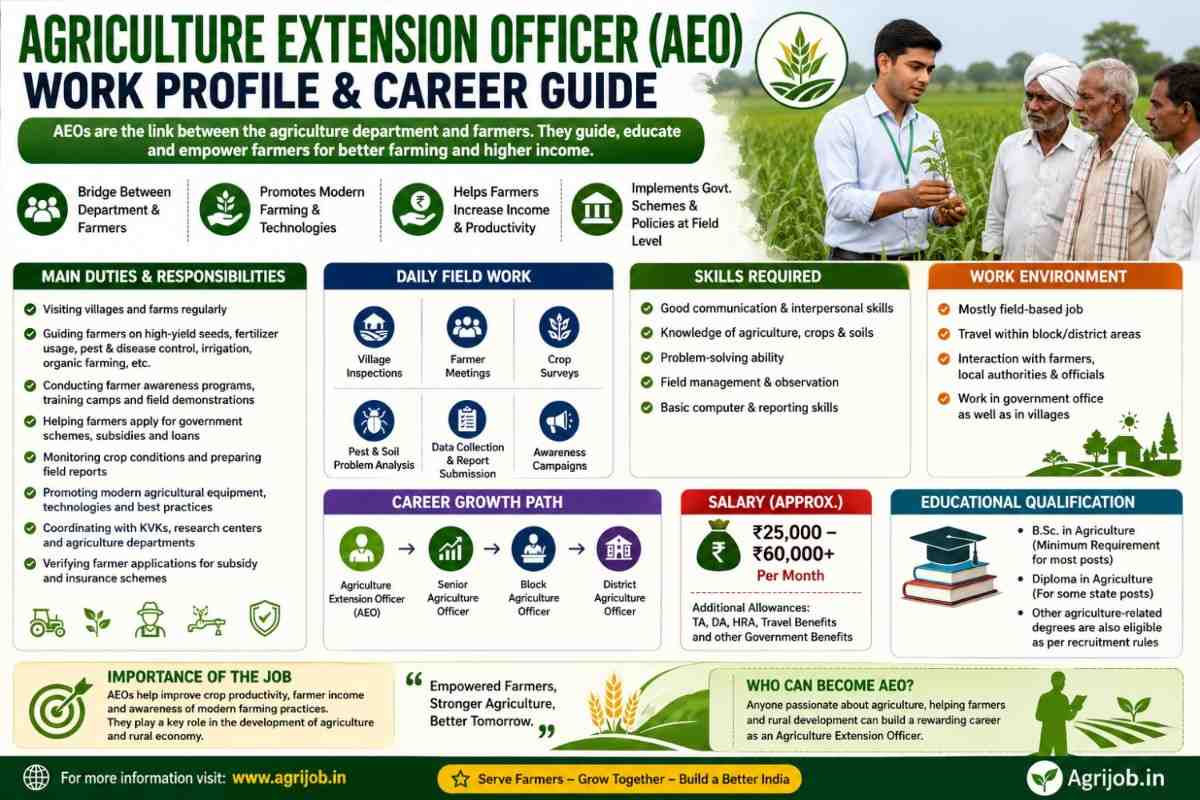
Best Crop Insurance Plans in India 2026 – PMFBY vs RWBCIS vs Private Insurance Compared
Choosing the best crop insurance plans in India in 2026 is one of the most important financial decisions a farmer can make. With unpredictable monsoons, rising input costs, and climate change creating new risks each season, crop insurance is no longer optional — it is the single strongest safety net available to Indian farmers. This comprehensive 2026 guide compares India’s top crop insurance options: Pradhan Mantri Fasal Bima Yojana (PMFBY), the Restructured Weather Based Crop Insurance Scheme (RWBCIS), and plans from the top private crop insurance companies in India — covering premium rates, eligibility, claim process, PMFBY 2026 online registration steps, and exactly how to check crop insurance status online in 2026.

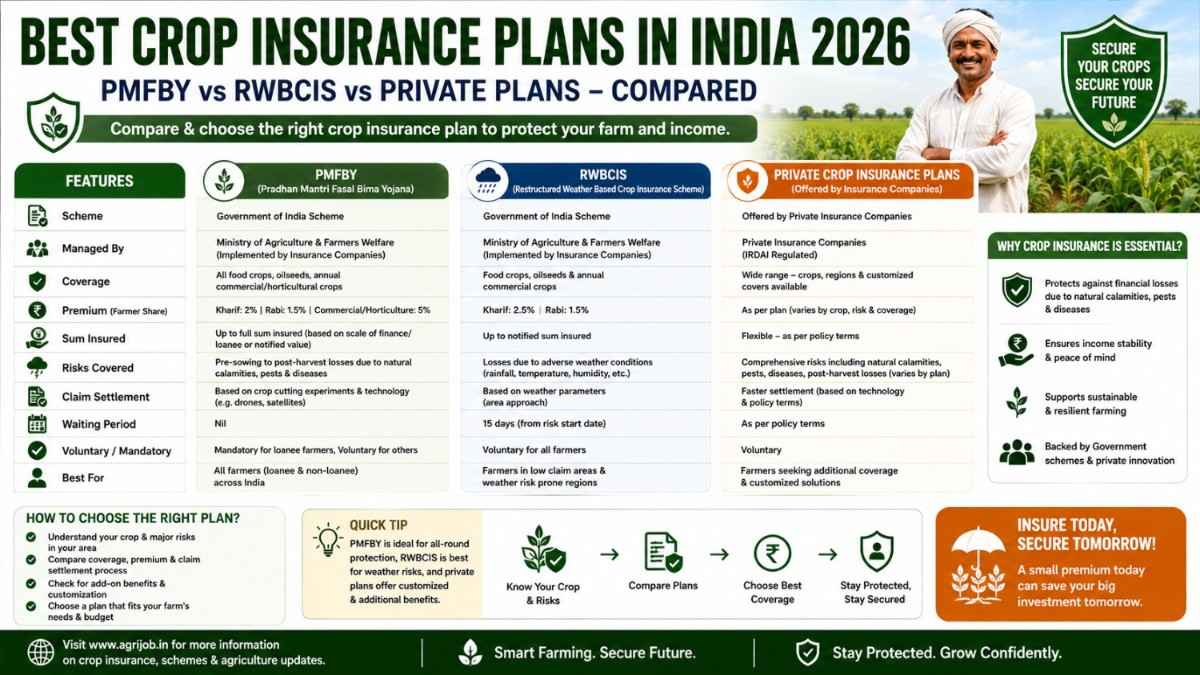
| Top Govt. Scheme | PMFBY – Pradhan Mantri Fasal Bima Yojana |
| Weather-based Scheme | RWBCIS – Restructured Weather Based Crop Insurance Scheme |
| Total Govt. Outlay (2021–26) | Rs.69,515.71 Crore |
| PMFBY Kharif Premium (Farmer) | 2% of Sum Insured |
| PMFBY Rabi Premium (Farmer) | 1.5% of Sum Insured |
| Commercial/Horti Crops | 5% or Actuarial rate (whichever less) |
| Total Claims Paid (to date) | Rs.95,000+ Crore |
| Districts Covered | 498 Districts across 21 States/UTs |
| New 2026 Add-ons | Wild Animal Attack + Paddy Inundation cover |
| Official Portal | pmfby.gov.in |
| Helpline | 14447 (Toll-free) |
📋 Table of Contents
- What is PMFBY – Pradhan Mantri Fasal Bima Yojana 2026?
- PMFBY 2026 Premium Rates – Kharif, Rabi & Commercial Crops
- PMFBY 2026 Eligibility Criteria & Crops Covered
- PMFBY 2026 Online Registration – Step-by-Step
- How to Check Crop Insurance Status Online 2026
- How to File a PMFBY Claim in 2026
- What is RWBCIS – Weather Based Crop Insurance Scheme?
- Private Crop Insurance Companies in India 2026
- PMFBY vs RWBCIS vs Private Insurance – Full Comparison
- Who Should Buy Which Crop Insurance Plan?
- High-Value Crop Insurance Terms Every Farmer Must Know
- Frequently Asked Questions (FAQ)
What is PMFBY – Pradhan Mantri Fasal Bima Yojana 2026?
Pradhan Mantri Fasal Bima Yojana (PMFBY) is India’s flagship government-backed crop insurance scheme, launched on February 18, 2016 by Prime Minister Narendra Modi. It is currently the world’s largest crop insurance scheme by enrolled farmers, administered by the Ministry of Agriculture and Farmers Welfare. The Union Cabinet approved continuation of PMFBY till 2025–26 with a total outlay of Rs.69,515.71 Crore for the period 2021–22 to 2025–26. The scheme has paid over Rs.95,000 Crore in claims to farmers across 498 districts in 21 States/UTs since launch.
PMFBY covers the complete crop cycle from pre-sowing prevented sowing to post-harvest losses (up to 14 days after harvesting). In 2026, the scheme uses AI-based crop loss assessments, satellite imagery, drones, GPS verification, and blockchain-backed payouts — making it one of the most technologically advanced best crop insurance plans in India.

PMFBY 2026 – Key Objectives
- 🌾 Provide financial protection to farmers against crop loss from natural calamities, pests, and diseases
- 💰 Stabilise farmer income in the event of crop failure via Direct Benefit Transfer (DBT) to bank accounts
- 📲 Enable digital, transparent claim settlement using satellite imagery and AI damage assessment
- 🌱 Encourage farmers to adopt modern agricultural practices without fear of financial devastation
- 🛰️ Introduce technology-driven yield estimation (YES-TECH) with minimum 30% remote sensing weightage
PMFBY 2026 – New Features & Updates
- 🆕 From Kharif 2026: Wild Animal Attack and Paddy Inundation added as new Add-on Covers under Localised Risk category — benefiting farmers in forest-adjacent and flood-prone areas
- ⚡ From Kharif 2025: All participating States must open an ESCROW account and deposit premium share in advance to ensure timely release of claims
- 📊 From Kharif 2024: Insurers automatically charged 12% per annum penalty if claims are not paid within 21 days of verification
- 🤖 AI-based crop loss assessment and drone surveys for accurate, faster damage estimation
- ⛓️ Blockchain-backed claim payouts for transparency and fraud prevention
- 📱 PMFBY mobile app and Krishi Rakshak portal for 24/7 status tracking and grievance registration
PMFBY 2026 Premium Rates – Kharif, Rabi & Commercial Crops
The pradhan mantri fasal bima yojana premium structure is designed so farmers pay a small, fixed percentage while the Central and State Governments subsidise the remaining premium — often up to 95–98% of the total actuarial premium. This makes PMFBY the most affordable among all best crop insurance plans in India.
| Crop Type / Season | Farmer’s Premium (% of Sum Insured) | Govt. Subsidy | Example: 1 Hectare Rice |
|---|---|---|---|
| Kharif Crops (Rice, Maize, Soybean, Groundnut, Cotton) | 2% | Up to 98% | ~Rs.200 premium |
| Rabi Crops (Wheat, Mustard, Gram, Barley, Lentil) | 1.5% | Up to 98.5% | ~Rs.150 per hectare |
| Annual Commercial / Horticultural Crops (Sugarcane, Cotton, Onion, Potato) | 5% or Actuarial Rate (whichever less) | Up to 95% | Varies by crop/state |
Central Government subsidy under PMFBY/RWBCIS is capped at premium rates up to 30% for unirrigated areas/crops and 25% for irrigated areas/crops. State Governments share the remaining subsidy burden. Loanee farmers (those with agricultural loans) are automatically enrolled under PMFBY unless they opt out in writing before the cut-off date.
PMFBY 2026 Eligibility Criteria & Crops Covered
Who is Eligible for Pradhan Mantri Fasal Bima Yojana 2026?
- 🌾 All farmers — land owners, tenant farmers, and sharecroppers — growing notified crops in notified areas
- 🤝 Tenant farmers and sharecroppers are eligible (where permitted by state policy) with valid documentation
- 🏦 Loanee farmers (with crop loans from banks) are automatically enrolled unless they opt out in writing
- ✅ Non-loanee farmers must voluntarily apply before the state-declared cut-off date
- 📋 Farmer must have an insurable interest in the crop being insured
- 🏦 Valid bank account (linked with Aadhar) is mandatory for Direct Benefit Transfer of claim amount
Crops Covered under PMFBY 2026
| Category | Crops Covered | Season |
|---|---|---|
| Food Crops (Cereals) | Rice, Wheat, Maize, Jowar, Bajra, Ragi | Kharif / Rabi |
| Pulses | Tur/Arhar, Gram, Moong, Urad, Lentil (Masoor) | Kharif / Rabi |
| Oilseeds | Groundnut, Soybean, Sunflower, Mustard, Sesame, Linseed | Kharif / Rabi |
| Commercial Crops | Cotton, Sugarcane, Jute, Tobacco | Kharif |
| Horticultural Crops | Onion, Potato, Tomato, Banana, Mango (state-specific) | Annual |
| New 2026 Add-ons | Wild Animal Attack, Paddy Inundation (localised risk) | Kharif 2026+ |
PMFBY 2026 Application Deadlines
- 🌧️ Kharif crops: Last date is typically July 31 (check state-wise notification for your district)
- ❄️ Rabi crops: Last date is typically December 31 (state-wise cut-off may vary)
- ⚠️ Always verify your district and crop-specific last date on pmfby.gov.in or your state agriculture department portal before applying
PMFBY 2026 Online Registration – Step-by-Step Guide
Completing your PMFBY 2026 online registration correctly is the most critical step to securing crop insurance protection for the season. The entire process is on pmfby.gov.in. You can also register at your nearest bank branch, Common Service Centre (CSC), or agriculture office. Follow these steps for online registration:
- 🌐 Visit the official portal: Go to pmfby.gov.in on your mobile or desktop browser.
- 👨🌾 Farmer Corner: Click on “Farmer Corner” on the homepage to access the registration and application section.
- 📱 Register / Login: Enter your mobile number, receive an OTP, and verify. If already registered, log in directly.
- 📋 Fill Application Form: Enter your full name, Aadhar card number, state, district, sub-district, village, crop type, season (Kharif/Rabi), and land area (in hectares).
- 📄 Land Details: Enter Khasra Number / Khata Number / Survey Number as applicable. Tenant farmers must upload a copy of the agreement with the land owner mentioning Khasra/Khata details.
- 🌾 Sowing Certificate: Upload a sowing certificate — a simple declaration mentioning crop sowing details signed by the Patwari, Sarpanch, or Pradhan of your village.
- 🏦 Bank Account Details: Enter your Aadhar-linked bank account number and IFSC code for DBT-based claim payment. Errors here cause claim transfer failures.
- 📸 Upload Documents: Upload scanned copies of Aadhar card, land records (Khasra/Khata), bank passbook, and sowing certificate as required.
- 💳 Pay Premium: Pay the subsidised premium as per your crop type and land area using Net Banking, UPI, or Debit Card. The PMFBY premium calculator on the portal shows the exact amount before payment.
- 🖨️ Download Policy Receipt: Download and print the policy receipt / application acknowledgement. Save your policy number — you will need it to check crop insurance status online later.
How to Check Crop Insurance Status Online in 2026
After completing your PMFBY 2026 online registration, tracking your application and claim status regularly is essential. Here is the exact process to check crop insurance status online in 2026:
Check PMFBY Application Status Online
- 🌐 Visit pmfby.gov.in and go to “Farmer Corner”.
- 📋 Click on “Application Status” from the menu.
- 🔢 Enter your Application Receipt Number or Aadhar Number.
- 📅 Select the crop Season (Kharif / Rabi) and Year (e.g., Kharif 2025 or Rabi 2025-26).
- ✅ Click “Submit” — your application and payment status will display on screen.
- 🖨️ Download or screenshot the status page for your records.
Check PMFBY Claim Payment Status Online
- 🌐 Visit pmfby.gov.in → “Farmer Corner” → log in with your registered mobile number.
- 📊 Click “Policy Status” or “Claim Status” — enter your Policy Number or Application ID.
- 💰 View the claim amount, payment status, UTR number, and date of DBT transfer to your bank account.
- 📞 If status shows “pending” beyond 21 days of claim verification, call helpline 14447 or file a grievance at the Krishi Rakshak Portal. Insurers are liable to pay 12% per annum interest for delays since Kharif 2024.
You can also check crop insurance status via your state’s agriculture portal (e.g., upagriculture.com for UP, mahaagri.gov.in for Maharashtra) or by calling the PMFBY toll-free helpline: 1800-180-1551 / 14447.
How to File a PMFBY 2026 Claim – Complete Process
Filing a Pradhan Mantri Fasal Bima Yojana claim in 2026 is simpler and faster than ever due to AI-based assessment and digital processing. Follow these steps immediately when your crop is damaged:
- ⏰ Report loss within 72 hours: Immediately inform the insurance company and agriculture department by calling 14447 or submitting a loss intimation on pmfby.gov.in. Delayed reporting can lead to rejection.
- 📋 Submit intimation details: Provide your policy number, crop type, cause of loss (flood, drought, hailstorm, pest, disease), and extent of damage.
- 🌾 Field survey: The insurance company deputes a surveyor or uses AI/drone-based assessment. For Localised Calamity (hailstorm, landslide, inundation), individual farm-level assessment is conducted.
- 📊 Crop Cutting Experiments (CCE): For widespread yield loss under PMFBY, state-government-conducted crop cutting experiments determine actual yield loss and hence claim amounts.
- 💰 Claim settlement: Once verified, the claim amount is transferred directly to your Aadhar-linked bank account via DBT. Under 2026 guidelines, 80% of claims are targeted to be settled within 30 days. Insurers pay 12% per annum interest for delays beyond 21 days of verification.
What is RWBCIS – Restructured Weather Based Crop Insurance Scheme 2026?
The Restructured Weather Based Crop Insurance Scheme (RWBCIS) was launched alongside PMFBY in 2016 and is India’s second major government crop insurance programme, also approved for continuation till 2025–26 under the Rs.69,515.71 Crore Cabinet outlay. Unlike PMFBY, which pays based on actual yield loss, RWBCIS uses weather parameters as proxies for crop loss — paying farmers automatically when specified weather triggers (like deficit rainfall, excess temperature, or high humidity) are breached at the reference weather station for their area.
RWBCIS 2026 – Weather Perils Covered
- 🌧️ Rainfall: Deficit rainfall, Excess rainfall, Unseasonal rainfall, Rainy days, Dry-spell
- 🌡️ Temperature: High temperature / heat stress, Low temperature / frost
- 💧 Relative Humidity: Abnormally high or low humidity levels during critical crop growth periods
- 💨 Wind Speed: High-speed winds causing crop damage during flowering or grain-filling stage
- 🌩️ Add-on products: Hailstorm and cloudburst cover available for farmers who already have base RWBCIS coverage
How RWBCIS Claims Work
RWBCIS divides the entire crop life cycle into distinct phases aligned with crop phenology. Each phase has a specific weather trigger threshold set by the state government. When actual weather data from the nearest reference weather station breaches the pre-set trigger, the payout is automatically calculated and transferred to farmers — without the need for crop cutting experiments or field surveys. This makes RWBCIS claims significantly faster than PMFBY claims. Both schemes are administered through pmfby.gov.in and the National Crop Insurance Portal (NCIP).
Private Crop Insurance Companies in India 2026
India has 10+ private crop insurance companies empanelled by the government under PMFBY and RWBCIS — each bringing additional standalone products and faster claim processing. All are IRDAI-registered and implement government schemes alongside their own crop insurance products. Here are the leading private crop insurance companies in India in 2026:
| Company | Govt. Scheme Implementation | Private Crop Plans | Helpline / Portal |
|---|---|---|---|
| ICICI Lombard General Insurance | PMFBY + RWBCIS | Weather-based, standalone crop cover | icicilombard.com |
| HDFC Ergo General Insurance | PMFBY + RWBCIS | Agriculture Crop Insurance Policy (ACIP) | hdfcergo.com | 1800-2-700-700 |
| Bajaj Allianz General Insurance | PMFBY + RWBCIS | Crop insurance + farm asset cover | bajajallianz.com |
| IFFCO-Tokio General Insurance | PMFBY + RWBCIS | Customised crop + livestock plans | iffcotokio.co.in |
| Reliance General Insurance | PMFBY + RWBCIS | RWBCIS Weather-based crop cover | reliancegeneral.co.in |
| Tata AIG General Insurance | PMFBY | Farm package insurance | tataaig.com |
| SBI General Insurance | PMFBY + RWBCIS | Crop + farm equipment cover | sbigeneral.in |
| Cholamandalam MS General Insurance | PMFBY + RWBCIS | Crop insurance for South India focus | cholainsurance.com |
| Future Generali India Insurance | PMFBY | Agriculture risk covers | futuregenerali.in |
| Universal Sompo General Insurance | PMFBY + RWBCIS | Customised crop + rural plans | universalsompo.com |
| Agriculture Insurance Company of India (AIC) | PMFBY + RWBCIS + WBCIS | Government-owned, widest coverage | aicofindia.com |
The Agriculture Insurance Company of India (AIC) is the only government-owned specialised crop insurer, making it the most widely available option across rural India. Private insurers like ICICI Lombard, HDFC Ergo, and Bajaj Allianz typically offer faster claim processing and additional standalone products, but their non-government plans carry higher premiums than PMFBY’s subsidised rates.
PMFBY vs RWBCIS vs Private Crop Insurance – Full Comparison 2026
Here is the definitive comparison of the best crop insurance plans in India in 2026 — covering every factor that matters to a farmer choosing between PMFBY, RWBCIS, and private insurance:
| Feature | PMFBY | RWBCIS | Private Insurance Plans |
|---|---|---|---|
| Type | Yield-based (actual crop loss) | Weather index-based (weather triggers) | Yield-based / Parametric / Package |
| Farmer Premium | 2% (Kharif) / 1.5% (Rabi) / 5% (Commercial) | Same as PMFBY rates | Higher – actuarial / market rate |
| Govt. Subsidy | Up to 98% subsidised | Up to 98% subsidised | None (or limited) |
| Claim Basis | Actual yield loss via Crop Cutting Experiments (CCE) + satellite data | Weather station data (automatic trigger-based payout) | Survey + policy terms |
| Claim Speed | 80% claims in 30 days (2026 target); 12% penalty for delay | Faster – no CCE needed; automatic on weather trigger | Fast for parametric; slower for survey-based |
| Coverage Scope | Full crop cycle: prevented sowing to post-harvest (14 days) | Specific crop growth phases matched to weather triggers | Varies by policy – can include farm equipment, livestock |
| Crops Covered | Kharif + Rabi + Commercial/Horti crops | Food crops, oilseeds, commercial/horti crops | Selected crops as per policy |
| Eligible Farmers | All farmers – loanee + non-loanee | All farmers – loanee + non-loanee | As per insurer terms |
| Registration Portal | pmfby.gov.in / banks / CSC | pmfby.gov.in / banks / CSC / Kshema app | Insurer website / agents / banks |
| Technology (2026) | AI, satellite, drones, blockchain, YES-TECH | Automated weather stations, IoT sensors | Varies; leading insurers use satellite + AI |
| Best For | All farmers – best value for subsidised premium | Farmers in drought/flood-prone areas needing faster payout | Commercial farmers needing custom or supplemental cover |
| Annual Govt. Outlay | Rs.69,515.71 Crore (2021–26) for PMFBY + RWBCIS combined | Self-funded / IRDAI regulated | |
Who Should Buy Which Crop Insurance Plan in 2026?
Not every crop insurance plan suits every farmer equally. Here is a targeted guide to help you pick the right plan from the best crop insurance plans in India based on your specific situation:
- 🌾 Small and marginal farmers (below 2 hectares): PMFBY is ideal — lowest possible premium (Rs.150–300 per hectare), maximum government subsidy, and comprehensive yield-based coverage. Register via the nearest CSC or bank branch before the cut-off date.
- 💧 Farmers in drought-prone / flood-prone zones: RWBCIS is more suitable — automatic weather-trigger-based claims without waiting for crop cutting experiments mean faster cash in hand when weather turns extreme.
- 🌿 Horticulture and commercial crop farmers (onion, potato, sugarcane, cotton): Both PMFBY (5% premium tier) and private plans from ICICI Lombard or HDFC Ergo are relevant — compare state-notified PMFBY cover vs private policy scope before choosing.
- 🏦 Loanee farmers (Kisan Credit Card / crop loan holders): You are automatically enrolled under PMFBY by your bank — but always verify enrolment by checking crop insurance status online before the season ends. Opt out only if you have arranged better private coverage.
- 🏭 Large commercial farms / agri-businesses: Combine PMFBY/RWBCIS (for subsidised base coverage) with a supplemental private crop insurance policy from Bajaj Allianz or Tata AIG for full protection of assets, equipment, and export-quality produce.
- 📖 First-time applicants / new farmers: Start with PMFBY via the pmfby.gov.in portal or nearest CSC — it is the simplest, most accessible, and most affordable starting point for pradhan mantri fasal bima yojana crop protection in 2026.
- ♿ Women farmers and tribal farmers: PMFBY has no discrimination by gender or community. Women farmers, tribal farmers, and SC/ST farmers all get the same subsidised premium rates and coverage benefits.
- 🌐 Tenant farmers and sharecroppers: Eligible for PMFBY where permitted by state policy. Carry a copy of the agreement with the land owner (mentioning Khasra/Khata number) for documentation during PMFBY 2026 online registration.
High-Value Crop Insurance Terms Every Farmer Must Know in 2026
Understanding these key terms will help you maximise your benefits from the best crop insurance plans in India and avoid costly mistakes during registration, claim filing, and status tracking:
- 📋 Sum Insured (SI): The maximum amount a farmer can claim under PMFBY/RWBCIS per crop per season. It is calculated based on Scale of Finance or Minimum Support Price (MSP) multiplied by the Notional Average Yield for the district.
- 📊 Actuarial Premium Rate: The full market-rate insurance premium calculated by actuaries based on historical crop loss data. Farmers under PMFBY pay only 1.5–5% while the government covers the remaining actuarial premium — often 20–40% of Sum Insured.
- 🌾 Crop Cutting Experiments (CCE): Scientific field experiments conducted by state government officials to estimate actual crop yield during harvest. CCE data determines the claim payout under PMFBY for widespread yield loss.
- 💳 Kisan Credit Card (KCC): A revolving credit facility for farmers used to access crop loans. KCC holders are automatically enrolled under PMFBY unless they opt out in writing — making it essential to check crop insurance status online if you have a KCC.
- 🏦 DBT (Direct Benefit Transfer): PMFBY and RWBCIS claims are paid directly to farmers’ Aadhar-linked bank accounts via DBT — eliminating middlemen and ensuring full claim amounts reach farmers.
- 🛰️ YES-TECH (Yield Estimation System using Technology): India’s 2026 remote sensing-based crop yield estimation system under PMFBY — uses satellite data with minimum 30% weightage, replacing partial reliance on manual CCE for faster yield assessments.
- 🌐 WINDS (Weather Information Network Data Systems): A national network of automated weather stations deployed under PMFBY for hyper-local weather data collection — improving RWBCIS trigger accuracy and claim reliability.
- ⛓️ ESCROW Account: From Kharif 2025, all participating States must deposit their share of the crop insurance premium in an ESCROW account in advance — ensuring insurance companies have funds to pay claims without waiting for state government transfers.
Frequently Asked Questions – Best Crop Insurance Plans India 2026
Which is the best crop insurance plan in India in 2026?
PMFBY (Pradhan Mantri Fasal Bima Yojana) is the best crop insurance plan in India for most farmers in 2026 — ultra-low subsidised premiums (2% Kharif, 1.5% Rabi), government backing, coverage across 498 districts, Rs.95,000+ Crore paid in claims, and new 2026 add-ons (Wild Animal Attack and Paddy Inundation cover). For weather-zone-specific faster claims, RWBCIS is better. Private plans from ICICI Lombard, HDFC Ergo, or Bajaj Allianz offer additional or faster coverage at higher premiums.
What is Pradhan Mantri Fasal Bima Yojana and how does it work?
Pradhan Mantri Fasal Bima Yojana (PMFBY) is India’s flagship government crop insurance scheme launched in 2016. Farmers pay a subsidised premium of just 2% (Kharif) or 1.5% (Rabi) of the Sum Insured, while the Central and State Governments subsidise the remaining premium — up to 95–98%. Coverage spans the full crop cycle: prevented sowing, mid-season adversity, yield loss at harvest, and post-harvest losses (within 14 days). Claims are paid via DBT to Aadhar-linked bank accounts.
How to do PMFBY 2026 online registration?
For PMFBY 2026 online registration: visit pmfby.gov.in → click Farmer Corner → register/login with your mobile number → fill crop and land details (Khasra/Khata number) → upload documents (Aadhar, land records, sowing certificate) → pay the subsidised premium online → download your policy receipt. You can also register at the nearest bank branch or CSC centre. Last date is July 31 for Kharif and December 31 for Rabi crops (check state-specific dates).
How to check crop insurance status online in 2026?
To check crop insurance status online in 2026: visit pmfby.gov.in → Farmer Corner → Application Status → enter your Application Receipt Number or Aadhar Number → select Season and Year → Submit. For claim payment status, log in to your farmer account and check “Claim Status” with your policy number. You can also call helpline 14447 or 1800-180-1551 (toll-free).
What is RWBCIS and how is it different from PMFBY?
RWBCIS (Restructured Weather Based Crop Insurance Scheme) pays farmers when pre-set weather parameters (rainfall, temperature, humidity, wind speed) breach defined thresholds at the reference weather station — without needing crop cutting experiments. PMFBY pays based on actual yield loss measured by CCE. RWBCIS is faster for weather-related losses; PMFBY is more comprehensive covering all types of crop loss. Both charge the same farmer-level premium rates and are administered through pmfby.gov.in.
Which are the top private crop insurance companies in India?
The top private crop insurance companies in India empanelled under PMFBY and RWBCIS are: ICICI Lombard General Insurance, HDFC Ergo General Insurance, Bajaj Allianz General Insurance, IFFCO-Tokio General Insurance, Reliance General Insurance, Tata AIG General Insurance, SBI General Insurance, Cholamandalam MS General Insurance, Future Generali India Insurance, and Universal Sompo General Insurance. Agriculture Insurance Company of India (AIC) is the government-owned specialist crop insurer with the widest rural reach.
What is the PMFBY premium for Kharif and Rabi 2026?
PMFBY 2026 farmer-level premium rates are: 2% of Sum Insured for Kharif crops (rice, maize, groundnut, soybean, cotton), 1.5% of Sum Insured for Rabi crops (wheat, mustard, gram, barley, lentil), and 5% of Sum Insured or actuarial rate (whichever less) for Annual Commercial and Horticultural crops. At these rates, insuring 1 hectare of rice costs approximately Rs.200 and 1 hectare of wheat costs approximately Rs.150 — the most affordable crop insurance premiums available globally.
What new features were added to PMFBY from Kharif 2026?
From Kharif 2026, PMFBY added two new Add-on Covers under the Localised Risk category: Wild Animal Attack cover (for farmers in forest-adjacent areas where crop damage by wildlife is common) and Paddy Inundation cover (for flood-prone paddy-growing areas). Both are opt-in add-ons for farmers already enrolled under the base PMFBY policy. Additionally, the 12% per annum penalty for delayed claim payment by insurers (introduced Kharif 2024) continues in 2026.
📌 Official Sources: pmfby.gov.in (Official PMFBY Portal, Govt. of India) | agricoop.nic.in (Ministry of Agriculture & Farmers Welfare) | irdai.gov.in (Insurance Regulatory and Development Authority of India)