
Best compact tractors for small farms 2026 — the right machine under $50,000 can transform 5–50 acres of hard manual work into productive, profitable farm operation year-round. But with 220+ compact tractor models available in the US market alone, choosing wrong costs you tens of thousands of dollars in poor resale value, dealer downtime, or a machine that simply cannot handle your actual workload. This 2026 buyer’s guide cuts through the marketing noise and honestly compares the top brands — John Deere, Kubota, Kioti, New Holland, and Mahindra — across every factor that matters: horsepower, price ($11,500–$49,000 range), transmission type, loader capacity, 5-year resale value, dealer network, and real total cost of ownership. Whether you manage a 3-acre hobby farm, a 25-acre livestock operation, or a 50-acre market garden, this guide covers the best compact tractor for every need, budget, and resale strategy in 2026.
| 2026 Price Range (Compact Tractors) | $11,500 – $49,000 (220+ models in US market) |
| Best Resale Value Brand | John Deere (retains 58% of value at Year 5; 16% better than most rivals) |
| Best Overall Value Brand | Kubota (resale rivals John Deere; 10-15% lower purchase price) |
| Best Budget Pick | Kioti CK2620 ($15,000–$20,000; most features per dollar) |
| HP Range (Compact Tractors) | 21–62 HP (sub-compact: 15–25 HP) |
| Horsepower Sweet Spot | 25 HP (to avoid Tier 4 DPF/DEF emissions equipment above 25 HP) |
| Loader Add-On Cost | $3,000–$6,000 above base tractor price |
| Ideal Farm Size Range | 1–50 acres (sub-compact best for 1–10 acres; compact for 10–50 acres) |
| Most Popular US Models (2026) | Kubota L2501, John Deere 1025R, John Deere 3025E |
| 5-Year Warranty Leader | John Deere (select 2026 compact models) |
- What Is a Compact Tractor — and Do You Actually Need One?
- How Much Horsepower Do You Need for a Small Farm?
- Top 5 Best Compact Tractors for Small Farms Under $50,000 in 2026
- Which Compact Tractor Has the Best Resale Value in 2026?
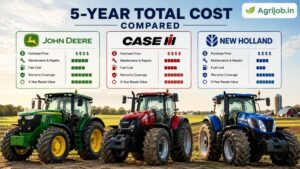
- 5-Year Total Cost of Ownership Comparison
- Hydrostatic vs Gear Transmission — Which Is Right for Your Farm?
- Dealer Network and After-Sales Support: Brand-by-Brand
- Who Should Buy Which Compact Tractor Brand?
- Complete Compact Tractor Comparison Table 2026
- Key Compact Tractor Terms You Must Know
- Frequently Asked Questions
What Is a Compact Tractor — and Do You Actually Need One?
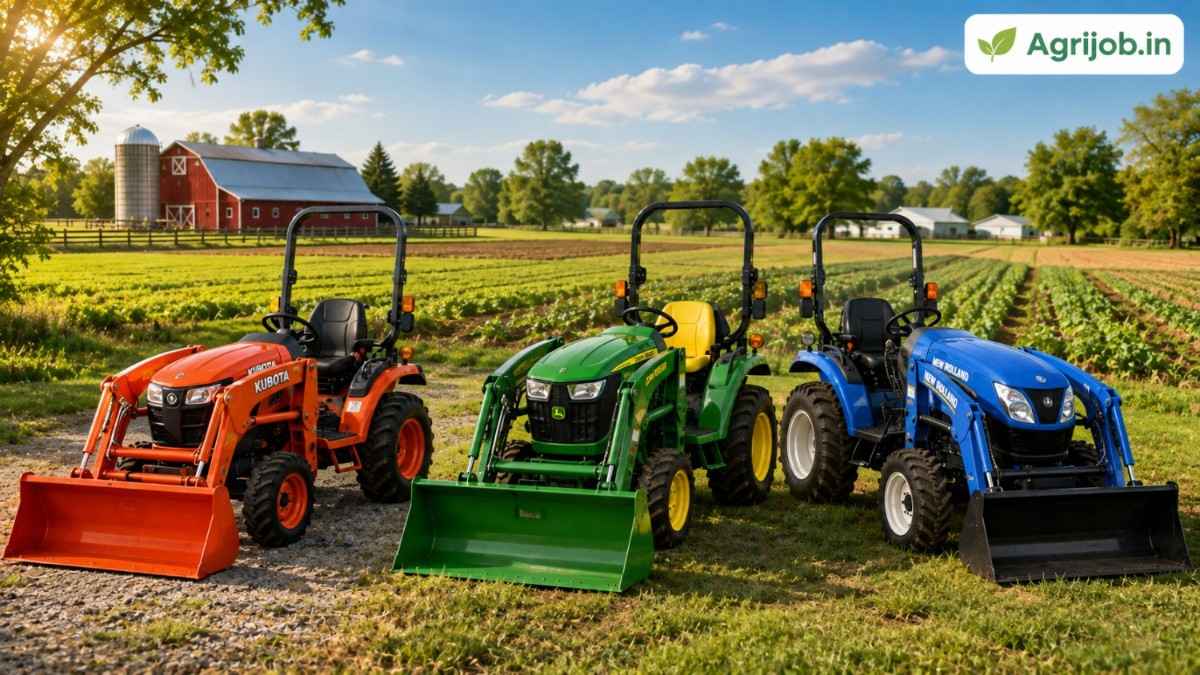
A compact tractor sits between a ride-on lawn mower and a full-size farm tractor — typically 20–62 HP, weighing 2,000–6,000 lbs, and designed for versatility rather than raw power. For small farm owners managing 2–50 acres, compact tractors offer the ideal balance of capability, maneuverability, and cost that full-size machines simply cannot match in tight spaces, orchards, livestock paddocks, and market gardens.
Here is what makes a compact tractor worth the investment for a small farm in 2026:
- 🚜 Year-round versatility: With the right attachments — front loader, rear mower, box blade, backhoe, rotary cutter, snow blower — a single compact tractor handles the majority of tasks on a 5–30 acre farm across all four seasons.
- ↔️ Maneuverability: Compact machines work in spaces that full-size utility tractors simply cannot reach — around barns, between orchard rows, in raised-bed market gardens, and through narrow barn doors.
- ⛽ Lower running costs: Compact tractors consume 1.5–3.5 litres of diesel per hour versus 5–10+ litres for large utility tractors — a major operating cost advantage for part-time and small-scale farmers.
- 💰 Resale value: Quality compact tractors from established brands like John Deere and Kubota hold 55–72% of their original value after 3–5 years — an important financial consideration when you plan to upgrade.
- 🌱 Lower soil compaction: Lighter weight means less soil compaction in market gardens, vegetable plots, and wet paddocks where heavy machinery does long-term crop damage.
The 2026 compact tractor market spans $11,500 to $49,000, with 220+ active models from brands including John Deere, Kubota, Kioti, New Holland, Mahindra, Massey Ferguson, Yanmar, and emerging electric options from Solectrac and Monarch. The sections below will identify the best compact tractor for every small farm profile and budget.
How Much Horsepower Do You Need for Your Small Farm in 2026?
The most common mistake small farm buyers make is focusing on engine horsepower (HP) rather than PTO horsepower — the power actually available to run implements. A tractor rated at 35 engine HP may deliver only 29 HP at the PTO due to hydrostatic transmission losses. Always match PTO HP to your heaviest implement requirement, not engine HP. Here is the practical 2026 HP guide by farm size and task:
| Farm Size / Task Profile | Engine HP Range | PTO HP Needed | Best Model Examples | Price Range |
|---|---|---|---|---|
| 1–5 acres: mowing, light loader, garden | 15–23 HP | 12–18 HP | John Deere 1023E, Kubota BX2380 | $11,500–$18,000 |
| 5–15 acres: mowing, loader, light tilling | 23–27 HP | 18–22 HP | John Deere 1025R, Kubota BX23S, Kioti CX2510 | $15,000–$25,000 |
| 15–30 acres: tilling, rotary cutting, post holes | 25–40 HP | 22–33 HP | Kubota L2501, Kioti CK3520, John Deere 3025E | $15,000–$32,000 |
| 30–50 acres: haying, heavy tilling, livestock | 40–60 HP | 34–50 HP | John Deere 4052R, Kioti NX5510, New Holland Boomer 55 | $28,000–$49,000 |
| Orchard / Vineyard (any size) | 25–45 HP Low Profile | 20–38 HP | Kioti NX4510, Massey Ferguson 2800M, Kubota L3302 | $22,000–$42,000 |
The 25 HP rule: Most compact tractors cluster around 25 HP deliberately — not by coincidence. Tractors above 25 HP manufactured after 2015 in the US must include Tier 4 Final emissions equipment: Diesel Particulate Filters (DPF) and Diesel Exhaust Fluid (DEF) systems that add complexity, cost, and maintenance requirements. Staying at or below 25 HP avoids all of this — a significant total cost of ownership advantage that every small farm buyer should factor in before choosing a more powerful model.
Top 5 Best Compact Tractors for Small Farms Under $50,000 in 2026
Based on 2026 pricing data, verified specifications, owner reviews, resale value history, and dealer network strength, here are the 5 best compact tractors for small farms across all budget ranges:
1. John Deere 1025R — Best Sub-Compact for Resale Value and Dealer Support
The John Deere 1025R is the benchmark sub-compact tractor for small farm buyers in 2026. At 23.9 HP with a hydrostatic transmission, it handles mowing, light loader work, and basic cultivation comfortably on farms up to 10 acres. The build quality, dealer support, and resale value are unmatched in the sub-compact segment. John Deere’s sub-compact models like the 1025R are frequently in high demand on the secondary market because they suit a wide range of users — from hobby farmers to landscape professionals — leading to slower depreciation and faster resale when you upgrade.
- 💰 Price range (new 2026): $17,000–$21,000 (base, without loader); add $3,000–$5,000 for a factory-matched 120R loader
- ⚙️ Horsepower: 23.9 HP engine / approx. 18 HP PTO
- 🔧 Transmission: Hydrostatic (Twin Touch pedal system — excellent for beginners)
- 📦 Lift capacity: 681 lbs at 24 inches behind pivot pins
- ✅ Best for: 3–10 acre hobby farms, lifestyle properties, weekend farmers valuing brand trust and resale
- ⚠️ Main weakness: Limited HP for larger implements; premium-priced vs competitors; front axle seals are a known weak point on high-hour machines
- 📈 5-year resale: Approx. 58–65% of original price — strongest in segment
2. Kubota L2501 — Best Overall Compact Tractor for Small Farms
The Kubota L2501 has achieved near-legendary status among small farm owners and tractor enthusiasts. Ranking among the most popular compact tractors in the USA, it combines genuine reliability, competitive pricing, and resale value that rivals John Deere at a 10–15% lower purchase price. Kubota’s mechanical injection system (no electronic sensors) makes the L2501 highly field-serviceable — a major advantage for farmers in remote locations. The L2501 delivers 24.8 HP gross — fractionally more than the John Deere 1025R — in a mechanically simple package that owners consistently report runs trouble-free for years with basic maintenance.
- 💰 Price range (new 2026): $15,000–$17,000 (base, without loader)
- ⚙️ Horsepower: 24.8 HP engine / 18.4 HP PTO (gear) or 16.4 HP PTO (HST)
- 🔧 Transmission: Gear drive or HST (treadle pedal on HST — allow 5–10 hours learning curve)
- 📦 Lift capacity: 1,918 lbs (gear) — class-leading for this HP range
- ✅ Best for: 5–20 acre small farms needing maximum lift capacity, mechanical simplicity, and long-term reliability
- ⚠️ Main weakness: Treadle pedal HST takes adjustment for operators used to standard automotive pedals
- 📈 5-year resale: Competitive with John Deere — holds value 10–15% better than most competing brands
3. Kioti CK2620 — Best Value Compact Tractor Under $25,000 in 2026
Kioti flies under the radar, but savvy buyers know these South Korean-built tractors — backed by Daedong Corporation — are the third-largest compact brand in North America for a reason. The Kioti CK2620 delivers a 26 HP diesel engine with loader lift capacity that often exceeds Kubota and John Deere at 15–20% lower purchase prices. Standard features that other brands charge extra for — telescoping 3-point links, dual auxiliary hydraulics — come included on Kioti models. The honest trade-off: Kioti resale value lags Kubota and John Deere by 20–25% in the 3–5 year window. For buyers planning to keep the tractor 7–10+ years, Kioti offers exceptional long-term value. Always confirm a local dealer is within 50 miles before purchasing.
- 💰 Price range (new 2026): $15,000–$20,000 (with loader package)
- ⚙️ Horsepower: 26 HP engine
- 🔧 Transmission: HST or Gear available
- 📦 Lift capacity: Strong for class — often exceeds rivals at same price point
- ✅ Best for: First-time buyers, DIY-minded operators comfortable with basic maintenance who want maximum specs for less money
- ⚠️ Main weakness: Resale value 20–25% lower than Kubota/John Deere; dealer network less dense than the major brands
- 📈 5-year resale: 40–50% of purchase price — lower than orange or green but offset by lower initial outlay
4. New Holland Workmaster Compact 40 — Best Mid-Range Compact for Versatility
New Holland’s Workmaster Compact 40 delivers 40 HP in a practical, well-priced package positioned between the entry sub-compacts and heavier compact utility tractors. Priced at $28,999 (reduced from $34,999 retail in 2026 promotional deals), the Workmaster Compact 40 offers competitive 0% financing through New Holland’s promotional programmes and a roomy operator platform with 360 VisionView cab on cab-equipped models. New Holland’s 3-cylinder turbocharged diesel with electronic fuel management and direct injection delivers solid power for mid-farm operations. Annual maintenance costs run $300–$600, and repair costs average $0.75–$1.50 per operating hour — competitive with Kubota in this range.
- 💰 Price range (new 2026): $28,999–$34,999 (promotional pricing active in 2026)
- ⚙️ Horsepower: 40 HP engine / competitive PTO output
- 🔧 Transmission: HST or Gear available
- 📦 Lift capacity: Strong three-point linkage for mid-range implements
- ✅ Best for: 15–35 acre operations needing mid-range power for tilling, hay operations, and loader work with New Holland dealer proximity
- ⚠️ Main weakness: Resale value lags John Deere and Kubota; requires 50-hour initial dealer service at approximately $600
- 📈 5-year resale: 50–58% of purchase price — moderate; good dealer support in paddy and grain belt states
5. John Deere 4052R — Best Compact Tractor Under $50,000 for Larger Small Farms
For small farms in the 30–50 acre range that need genuine compact utility power without crossing into the full-size tractor category, the John Deere 4052R delivers 52 HP, top-tier hydraulics, operator comfort, and long-term resale strength in a compact frame. Loader-equipped pricing typically falls between $41,000 and $49,000 depending on cab selection — fitting within the under-$50,000 envelope. The 4052R includes LoadMatch™ technology, which automatically adjusts ground speed to prevent engine stalling during loader work — a feature that significantly reduces operator fatigue on all-day tasks. John Deere’s dealer network and parts availability nationwide make the 4052R one of the most practically supported compact tractors in its price range.
- 💰 Price range (new 2026): $41,000–$49,000 (with loader, without cab)
- ⚙️ Horsepower: 52 HP engine with LoadMatch technology
- 🔧 Transmission: Hydrostatic (dual pedal) or PowerReverser gear
- 📦 Lift capacity: Up to 2,194 lbs — genuine heavy-duty compact utility performance
- ✅ Best for: 30–50 acre operations, commercial small farms, and buyers requiring the highest resale value in the sub-$50K compact segment
- ⚠️ Main weakness: Premium pricing is the highest in this list; note higher repair costs vs entry Kubota/Kioti
- 📈 5-year resale: 58–67% — best in class at this price point
Which Compact Tractor Has the Best Resale Value in 2026?
Resale value is the single most important financial factor for small farm buyers who plan to upgrade in 3–7 years — and it changes the entire value calculation between brands. Here is the honest 2026 resale picture based on industry depreciation data:
| Brand | Year 1 Depreciation | 3-Year Resale % | 5-Year Resale % | Resale Speed | Value for Resale Buyers |
|---|---|---|---|---|---|
| John Deere | 23–26% | 65–72% | 58–67% | Very fast (strong buyer demand) | ⭐⭐⭐⭐⭐ Best |
| Kubota | 22–25% | 60–68% | 55–63% | Fast (legendary demand) | ⭐⭐⭐⭐⭐ Excellent |
| New Holland | 24–27% | 52–60% | 48–55% | Moderate | ⭐⭐⭐ Good |
| Massey Ferguson | 25–28% | 50–58% | 45–53% | Moderate | ⭐⭐⭐ Good |
| Kioti | 27–32% | 45–52% | 40–48% | Slower | ⭐⭐ Average |
| Mahindra | 28–33% | 43–50% | 38–45% | Slower | ⭐⭐ Average |
The resale math makes a compelling case for premium brands. Consider this real-world scenario: You buy a John Deere compact for $30,000. After 5 years, you sell it for $18,000–$20,100. Net depreciation: $9,900–$12,000. A competing value brand at $24,000 sells for $9,120–$11,520 at Year 5. Net depreciation: $12,480–$14,880. The expensive John Deere actually costs $2,500–$2,900 less to own over 5 years despite the higher sticker price. This is precisely why Kubota and John Deere dominate the best value compact tractor debate despite higher initial prices — and why the strategic advice is to buy premium if reselling in 3–5 years, buy value brands if keeping 7–10+ years.
5-Year Total Cost of Ownership: Best Compact Tractors Compared
The formula for compact tractor TCO is straightforward: TCO = (Purchase Price + Maintenance + Fuel) minus Resale Value. For a typical small farm running 200–400 hours per year at $4.00/gallon diesel (2026 national average), here is how the top brands compare over 5 years:
| TCO Factor (5-Year) | John Deere 1025R | Kubota L2501 | Kioti CK2620 | New Holland WM Compact 40 |
|---|---|---|---|---|
| Purchase Price (with loader) | $22,000–$26,000 | $20,000–$23,000 | $17,000–$21,000 | $29,000–$35,000 |
| 5-Year Fuel Cost (300 hrs/yr @ $4/gal) | $3,000–$4,800 | $2,700–$4,500 | $2,700–$4,500 | $4,200–$6,000 |
| 5-Year Maintenance (owner service) | $3,000–$5,000 | $2,500–$4,500 | $2,000–$3,500 | $2,500–$4,500 |
| Insurance (5 years) | $1,200–$2,000 | $1,100–$1,800 | $900–$1,500 | $1,400–$2,200 |
| Gross 5-Year Cost | $29,200–$37,800 | $26,300–$33,800 | $22,600–$30,500 | $37,100–$47,700 |
| 5-Year Resale Value | $12,760–$17,420 | $11,000–$14,490 | $6,460–$10,080 | $13,920–$19,250 |
| Net 5-Year TCO | $11,780–$20,380 | $11,810–$19,310 | $12,520–$20,420 | $17,850–$28,450 |
| Best For | Resale in 3–5 years | Long-term + resale | Keep 7–10+ years | Mid-size operations |
The key insight: John Deere and Kubota net TCO figures are remarkably close — within $500–$1,000 of each other over 5 years despite Kubota’s lower sticker price, because both brands hold similar residual values. Kioti’s lower purchase price is partially offset by lower resale recovery, bringing its net TCO in line with premium brands for short-cycle owners. This analysis confirms that implement budget matters too: allocate 30–40% of your tractor purchase price for attachments (loader, tiller, mower) regardless of brand selected.
Hydrostatic vs Gear Transmission — Which Is Right for Your Small Farm?
Transmission choice affects daily usability more than almost any other specification. Getting this wrong means hours of frustration every week. Here is the honest breakdown for 2026 small farm buyers:
| Factor | Hydrostatic (HST) | Gear Drive |
|---|---|---|
| Operation style | Like an automatic car — no clutch, infinite speed variation | Manual — select gear, use clutch for direction changes |
| Best tasks | Loader work, tight maneuvering, frequent direction changes, beginners | Long-duration field work, tilling, mowing large areas efficiently |
| Power loss | 5–15% HP loss at PTO vs gear (heat dissipation) | Most efficient power delivery — full HP to PTO |
| Fuel efficiency | 5–10% more fuel in heavy use | More efficient in steady-state operations |
| Maintenance cost | Higher — hydraulic fluid and more complex service | Lower — simpler drivetrain, easier to field-service |
| Price premium | $1,500–$3,000 more than gear equivalent | Base pricing |
| Best for small farms? | Yes — for versatility, loader work, mixed tasks | Yes — for dedicated field work and maximum PTO power |
The 2026 market verdict: Hydrostatic transmissions dominate compact tractor sales in North America because most small farm buyers do more loader work and mowing than pure field tillage — and HST makes loader operation dramatically easier for casual and part-time operators. If your primary use is 80%+ tilling or heavy rotary cutting, gear drive gives you more PTO power for the same HP rating. For everything else, HST is the practical choice in 2026.
Dealer Network and After-Sales Support: Compact Tractor Brand-by-Brand
When your tractor breaks down on a Sunday morning during planting season, dealer proximity is worth more than any specification. Here is the 2026 dealer network reality for the top compact tractor brands:
- 🏆 John Deere — largest dealer network: The single widest dealer footprint in rural America. Few brands match John Deere’s reach across rural counties — a genuine safety net when parts or service are needed urgently. Premium pricing buys you the security of fast service nationwide. Toll-free: 1-800-537-8233.
- 🟠 Kubota — excellent national coverage: Dense dealer network, parts widely available at third-party stores (often same-day), and a reputation for fast turnaround service. Forum users consistently rate Kubota dealer satisfaction highly, with particular strength in the Southeast, Midwest, and Pacific Northwest.
- 🔵 New Holland — strong in grain and dairy belt states: Excellent dealer presence in Midwest grain belt, Northeast dairy states, and key southeastern markets. Service quality is strong but geographic gaps exist in some western mountain states — verify local availability before purchase.
- 🟡 Massey Ferguson — wide global parts network: MF’s parts network is among the widest globally, which translates to low servicing costs and broad aftermarket parts access. Dealer density in the US is lower than Kubota or Deere but strong in traditional farming communities.
- 🔶 Kioti — verify before buying: Third-largest compact brand in North America but dealer density is significantly lower than the top two. Kioti’s North Carolina headquarters ensures efficient parts distribution, but if your nearest dealer is over 50 miles away, factor in transport costs for service. Check kioti.com dealer locator before purchasing.
- 🔴 Mahindra — solid in the South and Midwest: Mahindra builds heavy and solid — the extra weight helps in ground engagement work. Dealer network is adequate in southeastern US and Midwest but can be sparse in mountain and Pacific states. Great for buyers near a Mahindra dealer who want maximum machine weight per dollar.
Who Should Buy Which Compact Tractor Brand in 2026?
The best compact tractor for your small farm is the one that matches your specific acreage, tasks, budget, and ownership timeline. Here is the definitive 2026 match guide:
- 🌾 Hobby farmer / lifestyle property (3–10 acres, plan to sell in 5 years): John Deere 1025R or 3025E. Superior resale value and dealer support justify the premium when you know you will be upgrading. The green paint pays for itself at trade-in time.
- 🌱 Market gardener or diversified small farm (5–25 acres, keeping long-term): Kubota L2501 or L3302. Best combination of reliability, lower purchase price, strong resale, and mechanical simplicity that DIY-capable farmers can service in the field.
- 💼 First-time farm buyer on a budget (any size, plan to keep 7–10 years): Kioti CK2620 or CK3520. Most features per dollar, solid South Korean engineering, and proven reliability for buyers comfortable with basic maintenance near a Kioti dealer.
- 🐄 Livestock farm with loader-heavy operations (10–30 acres): Kubota L3302 or John Deere 3025E. Both handle heavy loader cycles well with robust front axle designs. John Deere’s AutoConnect mower deck and Quik-Park loader allow implement changes without leaving the seat — a major daily time saver.
- 🍎 Orchard, vineyard, or row crop farmer (tight spaces, any acreage): Kioti NX4510 or Massey Ferguson 2800M low-profile series. Designed with narrow clearances and low-profile configurations for working between trees and vine rows without causing canopy damage.
- ❄️ Four-season property owner (snow removal + summer farming): John Deere 1025R with front blower and rear blade, or Kubota BX23S with backhoe package. Both are ideal year-round multi-tool platforms where versatility matters more than pure farm productivity.
- 🌍 Commercial small farm operator (30–50 acres, heavy daily use): John Deere 4052R or Kioti NX5510 HST Cab. The 4052R gives you industry-leading resale and dealer support; the NX5510 at approximately $38,000–$47,000 gives you comparable specs at a lower price for owners planning 10+ year retention.
- ⚡ Eco-conscious or low-noise property (horse farm, peri-urban): Electric options from Solectrac or Monarch Tractor are worth evaluating for light-duty tasks (mowing, light loader work) if you have solar charging and can tolerate mid-day charging breaks. Not yet suitable for all-day heavy field work in 2026.
Complete Best Compact Tractors Comparison Table 2026
Here is the complete side-by-side summary of the best compact tractors for small farms under $50,000 in 2026, covering every key buying factor:
| Factor | John Deere 1025R | Kubota L2501 | Kioti CK2620 | New Holland WM Compact 40 | John Deere 4052R |
|---|---|---|---|---|---|
| Price (with loader) | $20,000–$26,000 | $20,000–$23,000 | $17,000–$21,000 | $28,999–$35,000 | $41,000–$49,000 |
| Engine HP | 23.9 HP | 24.8 HP | 26 HP | 40 HP | 52 HP |
| Transmission | HST | Gear or HST | HST or Gear | HST or Gear | HST or PowerReverser |
| Lift Capacity | 681 lbs | 1,918 lbs (gear) | Strong for class | Strong mid-range | 2,194 lbs |
| Best Farm Size | 3–10 acres | 5–20 acres | 5–30 acres | 15–35 acres | 30–50 acres |
| 5-Year Resale | 58–65% | 55–63% | 40–48% | 48–55% | 58–67% |
| Net 5-Year TCO | $11,780–$20,380 | $11,810–$19,310 | $12,520–$20,420 | $17,850–$28,450 | Est. $14,000–$22,000 |
| Dealer Network | ⭐⭐⭐⭐⭐ Best | ⭐⭐⭐⭐⭐ Excellent | ⭐⭐⭐ Verify locally | ⭐⭐⭐⭐ Good | ⭐⭐⭐⭐⭐ Best |
| Emissions System | None (under 25 HP) | None (under 25 HP) | None (under 25 HP) | Tier 4 Final | Tier 4 Final |
| Best For | Resale + hobby farm | Value + reliability | Budget + long-term | Mid-power + versatility | Heavy-duty + resale |
| Overall Rating | ⭐⭐⭐⭐⭐ | ⭐⭐⭐⭐⭐ | ⭐⭐⭐⭐ | ⭐⭐⭐⭐ | ⭐⭐⭐⭐⭐ |
Key Compact Tractor Terms Every Small Farm Buyer Must Know in 2026
Understanding these terms before walking into a dealership will save you from overpaying for the wrong machine and help you evaluate every specification with confidence:
- ⚙️ PTO HP (Power Take-Off Horsepower): The actual power available at the shaft that drives implements like rotary cutters, tillers, and balers. Always lower than engine HP. Hydrostatic transmissions lose 5–15% of engine HP to heat — so a 25 HP HST tractor may deliver only 20–22 PTO HP. Match your heaviest implement’s PTO requirement before choosing a model.
- 📏 Lift Capacity at 24 Inches: The industry-standard measurement of how much weight a tractor’s 3-point hitch can lift at 24 inches behind the pivot pins. This is the honest spec — always lower than manufacturer “best case” figures. The Kubota L2501 gear model’s 1,918 lb lift at 24 inches is class-leading for its HP range.
- 🌊 HST (Hydrostatic Transmission): Works like an automatic car — no clutch, infinite speed variation via foot pedals or hand lever. Best for loader work, tight maneuvering, and beginners. Costs $1,500–$3,000 more than equivalent gear drive and uses 5–10% more fuel in heavy use.
- 🔵 Tier 4 Final Emissions (DPF/DEF): US EPA mandated emissions equipment for diesel engines above 25 HP. Adds Diesel Particulate Filters (DPF) and Diesel Exhaust Fluid (DEF) systems — increasing purchase cost, maintenance complexity, and long-term ownership expense significantly. Staying at or below 25 HP avoids this entirely.
- 💵 Total Cost of Ownership (TCO): Purchase price + fuel + maintenance + insurance minus resale value over your ownership period. Premium brands (John Deere, Kubota) frequently have lower TCO than value brands despite higher sticker prices due to superior resale value recovery.
- 📉 Residual Value: The percentage of original purchase price a tractor retains after a set number of years. John Deere: 58–67% at Year 5. Kubota: 55–63%. Kioti/Mahindra: 38–48%. Buying used targets higher-depreciation brands for the best value purchase; buying new targets premium brands for best resale recovery.
- 🔌 Category I vs Category II 3-Point Hitch: Category I (standard on most compact tractors) fits implements up to approximately 40–50 HP. Category II (available on larger compact utility tractors) fits heavier implements for 50–90 HP range. Ensure your planned implements match your tractor’s hitch category before purchasing.
- 🔁 ROPS (Roll-Over Protection Structure): The safety frame that protects operators in rollover accidents. All 2026 new tractors include ROPS. Foldable ROPS is a critical feature for orchard and low-clearance work — standard on Kioti NX series and some Kubota models but an add-on elsewhere.
- 🛻 R14 Tires: Agricultural R14 all-purpose tires have become the default recommendation for hobby farms and small property owners in 2026. They handle 80% of terrain conditions well — mud, grass, light gravel — rather than excelling in only one condition like deep-tread R1 or turf R3 tires.
- 🏦 USDA FSA Equipment Loan: The US Department of Agriculture’s Farm Service Agency offers operating and ownership loans for agricultural equipment at below-market rates for eligible small farm operators. Both new and used tractors from major brands qualify. See USDA FSA Farm Loan Programs for current terms.
Best Overall: Kubota L2501 — the gold standard of compact tractors. Legendary reliability, strong resale value matching John Deere at 10–15% lower purchase price, class-leading 1,918 lb lift capacity, and mechanical simplicity that owners can service themselves. This is the tractor to beat in 2026.
Best Resale Value: John Deere 1025R / 4052R — John Deere’s 5-year residual of 58–67% is unmatched in the segment, making it the right choice if you plan to upgrade in 3–5 years. The green premium pays for itself at trade-in.
Best Budget Value: Kioti CK2620 — more specs per dollar than any other brand under $25,000. Choose Kioti if you plan to keep the machine 7–10+ years and have a dealer within 50 miles.
Best Mid-Range Power: New Holland Workmaster Compact 40 — 40 HP with competitive 2026 promotional pricing at $28,999. Strong value for 15–35 acre operations requiring genuine field power without crossing the $50,000 threshold.
The bottom line: For 90% of small farms under 30 acres, the Kubota L2501 or John Deere 1025R will do everything you need for the next decade — pick based on whether you prioritize lowest purchase price (Kubota) or maximum resale value and dealer coverage (John Deere).
Frequently Asked Questions
What is the best compact tractor for a small farm in 2026?
The Kubota L2501 is widely rated the best compact tractor for small farms in 2026 for overall value — priced at $15,000–$17,000 base, 24.8 HP, legendary reliability, class-leading 1,918 lb lift capacity, and resale value that rivals John Deere. The John Deere 1025R ($17,000–$21,000) is the best sub-compact for resale value and dealer support on 3–10 acre properties. For the best features per dollar under $25,000, the Kioti CK2620 at $15,000–$20,000 is the standout pick for buyers near a Kioti dealer who plan long-term ownership. The right choice depends on your farm size, primary tasks, and whether you plan to resell within 5 years.
Which compact tractor holds its resale value best in 2026?
John Deere compact tractors hold resale value best in the best compact tractors 2026 market. Industry data shows John Deere compact tractors depreciate 23–26% in year one but retain approximately 58–67% of original price by year five — holding 16% more value than most competitive brands. Kubota is a very close second, with both brands holding value 10–15% better than Kioti, Mahindra, or Massey Ferguson. For buyers planning to sell or trade within 3–5 years, John Deere or Kubota will minimise total net depreciation cost despite higher purchase prices.
What horsepower compact tractor do I need for a small farm?
For a 1–10 acre farm focused on mowing and light loader work, a 20–25 HP sub-compact (John Deere 1025R, Kubota BX series) is sufficient. For 10–30 acres with tilling, rotary cutting, and post-hole digging, a 25–40 HP compact tractor (Kubota L2501, Kioti CK3520, John Deere 3025E) delivers the right power balance. For 30–50 acres with haying, livestock management, and heavy tilling, look at 40–60 HP compact utility tractors (John Deere 4052R, Kioti NX5510, New Holland Boomer 55). Most tractors cluster at 25 HP to avoid expensive Tier 4 emissions DPF/DEF systems required above 25 HP — a meaningful long-term cost and complexity consideration.
Is Kioti a good tractor brand for small farms in 2026?
Yes — Kioti is an excellent value choice for the right buyer in 2026. As the third-largest compact brand in North America, Kioti’s CK and NX series deliver specs that frequently exceed Kubota and John Deere at 15–20% lower purchase prices. Standard features — telescoping 3-point links, dual auxiliary hydraulics — come included that other brands charge extra for. The honest trade-off is resale value: Kioti depreciates 20–25% faster than Kubota or John Deere in the 3–5 year resale window. For buyers planning 7–10+ year ownership, Kioti delivers exceptional value. Always verify a Kioti dealer is within 50 miles of your property before purchasing.
What is the total cost of ownership for a compact tractor over 5 years?
For a $20,000–$25,000 compact tractor running 300 hours per year, the 5-year gross total cost of ownership including purchase price, fuel ($4.00/gallon diesel), maintenance, and insurance typically ranges from $26,000–$38,000 before resale recovery. After accounting for resale value, your net 5-year TCO for a John Deere or Kubota is approximately $11,800–$20,400 — meaning you recover 55–67% of your original outlay at resale. Lower-priced brands like Kioti or Mahindra have lower gross costs but higher net depreciation, meaning the real net ownership cost difference between premium and value brands is often smaller than buyers expect.
Should I buy a new or used compact tractor for my small farm?
Buying used saves significant money upfront: a 3–5 year old John Deere or Kubota compact tractor with under 500 hours typically sells for 55–65% of original price — saving $8,000–$15,000 versus new for comparable performance. The risks with used machines include unknown maintenance history, worn loader pins and bushings, and no factory warranty coverage. New tractors in 2026 benefit from active 0% APR financing promotions (John Deere, Kubota, and New Holland all have current offers), full warranty coverage, and the latest Tier 4-compliant engines. If buying used, always verify complete service records, test all hydraulic functions, and check 3-point hitch lift at the standard 24-inch measurement position.
What is the price range for compact tractors in 2026?
Compact tractors in 2026 range from $11,500 (John Deere 2025R base) to $49,000 (Bobcat CT5555 at the top of the under-$50,000 range), with 220+ active models available in the US market. The most popular purchase range is $17,000–$35,000 for capable 25–50 HP models equipped with a front loader. Key reference prices: Kioti CK2620 starts at $15,000–$20,000 with loader; Kubota L2501 at $15,000–$17,000 base; John Deere 1025R at $17,000–$21,000; New Holland Workmaster 25S from $22,000; John Deere 3025E at $18,000–$21,000; New Holland Workmaster Compact 40 at $28,999–$34,999. Always add $3,000–$6,000 for loader attachments to base tractor prices when budgeting.
What is the difference between a sub-compact and compact utility tractor?
Sub-compact tractors are typically 15–25 HP, weighing under 2,000 lbs — ideal for mowing, light loader work, and basic cultivation on 1–10 acre properties. Examples include the John Deere 1025R and Kubota BX2680. Compact tractors span 25–62 HP and weigh 2,500–6,000 lbs, handling tilling, rotary cutting, post-hole digging, and heavy loader work on 5–50 acre small farms — examples include the Kubota L2501, Kioti NX5510, and John Deere 3025E. Most compact tractors are deliberately engineered at or below 25 HP to avoid expensive Tier 4 Final emissions equipment (Diesel Particulate Filters and DEF systems) required on larger engines — a significant purchase price and maintenance cost consideration in 2026.
Last Updated: July 2026. This guide is regularly reviewed and updated with the latest tractor pricing, specification, and resale value data. Bookmark this page for updated comparisons as new 2026 model year compact tractors are announced. For official financing terms and current dealer promotions, visit John Deere, Kubota USA, and New Holland Agriculture official sites.